


Safe Sleeping Positions for Newborns: An Essential Guide for New Parents
When you bring your newborn home, their sleep instantly becomes your world. You’re navigating a sea of advice, but what’s the one thing you absolutely must know? The golden rule is refreshingly simple: always place your baby on their back for every single sleep, and that includes naps.
This isn't just a friendly suggestion; it's the single most effective action you can take to lower the risk of Sudden Infant Death Syndrome (SIDS).
The Golden Rule of Newborn Sleep Safety
As a new parent, you’re trying to keep a million things straight, but when it comes to safe sleeping positions for newborns, there’s one principle that is absolutely non-negotiable: Back to Sleep.
This isn't just a friendly tip—it's a life-saving practice championed by leading health authorities worldwide, including the American Academy of Pediatrics (AAP). Think of it as a seatbelt for sleep. It’s the most fundamental yet most powerful step you can take to protect your baby. The beauty of this rule is its simplicity; it cuts through the noise and gives parents a clear, reliable guideline from day one.
To make this crystal clear, let's break down the sleep positions in a simple, at-a-glance format.
Safe vs Unsafe Sleep Positions at a Glance
This quick comparison table lays out exactly what you need to know about where to place your baby for sleep.
| Sleep Position | Safety Level | Primary Reason |
|---|---|---|
| On the Back (Supine) | ✅ Safest | Keeps the airway clear and open, reducing the risk of SIDS and suffocation. |
| On the Stomach (Prone) | ❌ Unsafe | Increases the risk of rebreathing exhaled air, overheating, and airway obstruction. |
| On the Side | ❌ Unsafe | Unstable position; baby can easily roll onto their stomach, the highest-risk position. |
As you can see, the back is the only position that gets the green light from safety experts.
Why Consistency is Everything
The "Back to Sleep" rule isn't just for nighttime. It applies to every single sleep—daytime naps, overnight sleep, at your house, or at a caregiver's. Consistency is key to building a safe routine and ensuring your baby is always in the most secure position.
It’s true that some babies seem to settle better on their tummies, but the safety risk is just too significant to ever make that trade-off. If you're looking for a safe way to add a little extra comfort, a wearable blanket is a fantastic option. You can learn more in our guide covering what is a sleep sack. By sticking to this golden rule, you're building the safest possible foundation for your baby's sleep.
Why Back Sleeping Protects Your Baby
It’s completely normal to see the "Back to Sleep" rule and wonder why it's so important. This recommendation isn't just a random guideline; it’s grounded in a deep understanding of a newborn's unique anatomy. Once you understand the simple science behind it, you'll feel so much more confident every time you lay your little one down to sleep.
At its core, putting a baby on their back to sleep is all about protecting their airway. Think of it as a brilliantly designed system that needs to stay open and clear—and their sleeping position plays a huge role in making that happen.
A Simple Anatomy Lesson
One of the biggest fears new parents have is that their baby might spit up and choke while sleeping on their back. It's a totally understandable worry, but your baby’s body is actually built with a clever defense mechanism that works best in this exact position.
Here's a simple way to picture it: your baby has two main "pipes" in their throat. One is the windpipe (trachea) for breathing, and right behind it is the food pipe (esophagus) for swallowing. When your baby is lying on their back, the windpipe is positioned above the food pipe.
This layout means gravity is on your side. If your baby does happen to spit up, the milk has to travel uphill, against gravity, to get into the airway. On top of that, babies have a natural gag reflex that helps them cough up or swallow any fluid, providing another crucial layer of protection.
In contrast, when a baby is on their stomach, any spit-up can pool right at the opening of their windpipe. This makes it much easier for fluid to be inhaled, which is why back-sleeping is undeniably the safest choice.
The Power of a Public Health Revolution
The 'Back to Sleep' campaign, later renamed 'Safe to Sleep,' wasn't just a good idea—it was a public health triumph that has saved thousands of lives. Before the early 1990s, tummy sleeping was quite common in many Western countries. It was often recommended with the belief that it helped with digestion.
During that time, the rate of SIDS was tragically high, claiming around 5,000 infants in the U.S. each year.
The turning point came in 1992, when the American Academy of Pediatrics officially endorsed back sleeping. This was followed by the nationwide 'Back to Sleep' initiative in 1994, and the impact was immediate and profound. As more and more parents adopted this one simple change, SIDS rates were slashed by over 50% in the U.S. and other countries that promoted the practice. If you're interested in the data, you can read more about the history and impact of this initiative.
What About a Flat Head?
A very common concern parents have with back sleeping is positional plagiocephaly, otherwise known as "flat head syndrome." It’s true that a baby’s skull is soft and can flatten slightly from lying in the same position for long stretches.
The good news? This is almost always a temporary, cosmetic issue that has no effect on brain development.
You can easily prevent and manage it by making sure your baby gets plenty of supervised tummy time while they're awake. This does wonders for strengthening their neck muscles, encourages them to turn their head from side to side, and simply gives the back of their skull a break.
When you weigh this manageable condition against the life-saving benefits of back sleeping, the choice becomes clear. A little extra tummy time is a small price to pay for the profound protection that comes from following the safest sleeping position for newborns.
The Hidden Dangers of Stomach and Side Sleeping
We’ve all seen the picture: a baby looking perfectly peaceful, fast asleep on their tummy. While it might look cozy, this position—along with side sleeping—carries some serious hidden risks. This isn't about causing panic; it's about giving you the knowledge you need to keep your little one safe, every single time they sleep.
Sticking to the back-sleeping rule is the single most important thing you can do to create a safe sleep environment. Once you understand why the other positions are so risky, it becomes much easier to stay consistent, even on those long, tough nights.
The Problem with Stomach Sleeping
The number one danger with stomach sleeping is something called rebreathing. When a baby sleeps face-down, especially on a soft surface, their mouth and nose can get trapped in a small pocket of air against the mattress.
Instead of breathing in fresh oxygen, they start re-inhaling the carbon dioxide they just breathed out. It’s a bit like breathing into a paper bag—the air quickly becomes stale and low in oxygen.
Now, a healthy baby's brain should sense this and trigger them to wake up or turn their head. The problem is, some infants have an underdeveloped arousal response, meaning they don't get that life-saving wake-up call. This rebreathing cycle can cause oxygen levels to drop to a dangerous point.
But that's not the only issue. Stomach sleeping also comes with other risks:
- Airway Obstruction: A newborn’s airway is incredibly soft and flexible. If their head is turned sideways on a plush mattress, their nose and mouth can easily get blocked, making it hard to breathe.
- Overheating: Babies on their tummies have a harder time regulating their body temperature, and we know overheating is a major risk factor for SIDS.
The deep, still sleep that tummy-sleeping often produces can feel like a victory for exhausted parents. But that deep sleep is actually part of the danger, as it can prevent an infant from waking up if their breathing is compromised.
The Instability of Side Sleeping
At first glance, side sleeping might feel like a safe middle ground. It’s not. For a newborn, it's an incredibly unstable position. A baby placed on their side can easily—and often does—roll onto their stomach.
Because they didn't get into that position on their own, they often lack the neck strength and reflexes to lift their head and clear their airway. This accidental roll makes the side position just as dangerous, placing them in a high-risk situation without the skills to get out of it.
This is why pediatricians and safe sleep experts are so clear: both stomach and side sleeping are unsafe for infants.
But Why Does My Baby Seem to Prefer It?
It's a common observation from parents: my baby seems so much calmer on their tummy! The gentle pressure can feel comforting, almost like being back in the womb. It can also help suppress the startle (Moro) reflex that often jerks them awake.
However, a newborn's preferences don't line up with their safety needs. Their motor skills and arousal reflexes are still very immature, leaving them unable to protect themselves if their breathing is compromised. If you want to provide that snug, secure feeling, a swaddle or sleep sack is the way to go—but only when they are placed on their back.
Building a Safe Sleep Environment from the Ground Up
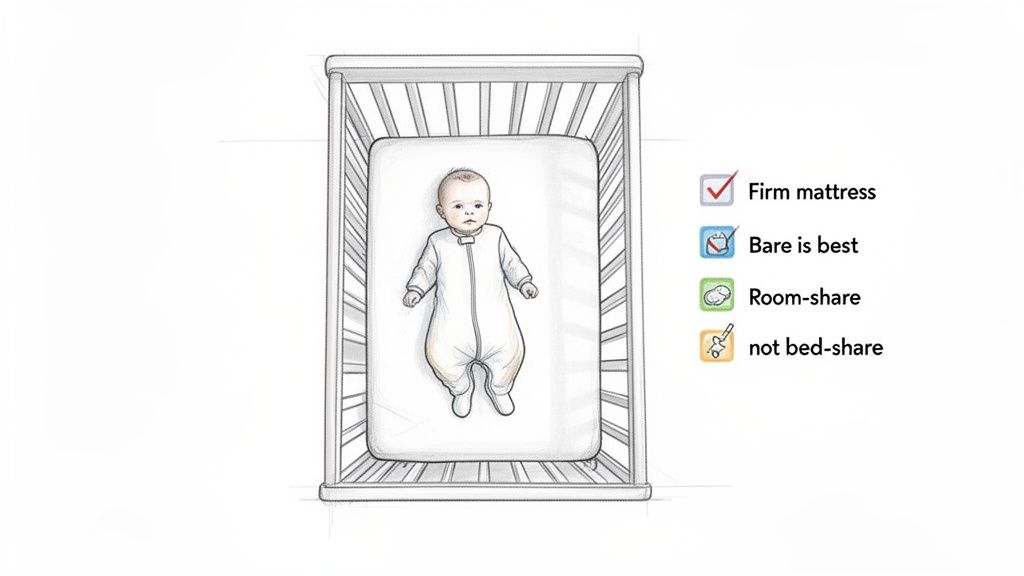
A baby’s sleeping position is just one piece of the puzzle. While placing your newborn on their back is a critical first step, it won’t offer full protection without an equally safe sleep environment. A firm surface is non-negotiable, and you can learn more in our guide to crib mattress safety standards. Think of it like this: buckling a seatbelt is vital, but you also need a car with working airbags and brakes to be truly protected. By consistently placing your baby on their back in a safe, well-prepared sleep space, you’re building a protective habit that safeguards them every single time.
Creating a secure sleep space is all about methodically removing potential hazards. You want your baby’s environment to support their safety, not compromise it. This means taking a close look at everything from the mattress they sleep on to the temperature of the room. A genuinely safe sleep setup is surprisingly simple: bare, firm, and consistent.
The Foundation: Firm and Flat
The single most important piece of furniture in your nursery is the mattress. A newborn’s sleep surface must be firm and flat. You can test this easily: it shouldn't indent or conform to the shape of your baby’s head when they lie on it.
A soft mattress might feel cozier to an adult, but for a baby, it poses a serious suffocation risk. If a baby manages to roll over or even just turn their face into a soft surface, it can create a small pocket of trapped air. This can lead to the dangerous rebreathing of carbon dioxide that we've been talking about.
Always use a mattress designed specifically for your crib, bassinet, or play yard. Make sure it fits snugly against the frame, leaving no gaps along the sides. The only bedding you need is a tight-fitting fitted sheet. That's it.
Why Bare Is Best
When it comes to your baby’s crib, less is always more. The American Academy of Pediatrics (AAP) couldn't be clearer on this: the sleep area should be completely empty except for the baby. This "bare is best" approach is the most effective way to eliminate common suffocation and strangulation hazards.
This means you should never have these items in the crib while your baby is sleeping:
- Pillows: Both decorative and functional pillows are a major suffocation hazard.
- Blankets: Any loose bedding can easily cover a baby’s face and obstruct their breathing.
- Crib Bumpers: Despite being marketed for "safety," bumpers actually increase the risk of suffocation, entrapment, and even strangulation. They are no longer recommended.
- Soft Toys or Stuffed Animals: These cute items can block a baby's nose and mouth if they turn their head into them.
The safest crib is a boring crib. A firm mattress with a fitted sheet is all your baby needs for safe, comfortable sleep.
Your Safe Sleep Environment Checklist
To make this crystal clear, here’s a simple checklist to run through when setting up your baby's sleep space. Following these AAP-backed guidelines is the best way to give yourself peace of mind.
| Component | Safe Practice | Why It Matters |
|---|---|---|
| Sleep Surface | Use a firm, flat mattress that fits snugly in a safety-approved crib, bassinet, or play yard. | Prevents suffocation from soft surfaces and entrapment in gaps. |
| Bedding | Use only a tight-fitting fitted sheet. No other bedding. | Eliminates the risk of suffocation and strangulation from loose blankets. |
| Crib Contents | Keep the crib completely bare. No pillows, bumpers, toys, or loose bedding. | Removes all potential objects that could block a baby’s airway. |
| Location | Place the crib in your room (room-sharing) for the first 6-12 months. | Can reduce the risk of SIDS by up to 50% by keeping baby close. |
| Temperature | Keep the room at a comfortable temperature (68-72°F or 20-22°C). Dress baby in one light layer more than an adult. | Prevents overheating, which is a known risk factor for SIDS. |
| Position | Always place your baby on their back for every sleep. | This is the single most effective action to reduce SIDS risk. |
Running through this mental checklist every time you put your baby down helps turn safe practices into solid habits.
Room-Sharing, Not Bed-Sharing
The AAP strongly recommends room-sharing—that is, keeping your baby's crib or bassinet in your room, close to your bed—for at least the first six months, and ideally for the first year. This simple practice can reduce the risk of SIDS by as much as 50%.
Having your baby nearby makes it so much easier to feed, comfort, and monitor them during the night. But it's critical to understand this is different from bed-sharing, which is not recommended. Adult beds are full of hazards for an infant, including soft mattresses, pillows, and blankets. If you want to dive deeper, we have a complete guide on how to create a safe sleep environment for infants.
Swaddles and Sleep Sacks: The Right Way
Swaddles can feel like a magic trick for calming a fussy newborn and taming their startle reflex. To be safe, though, they have to be used correctly.
- Proper Fit: The swaddle needs to be snug around the chest but loose around the hips and legs. Your baby should still be able to bend their legs up and out into a "frog" position to allow for healthy hip development.
- Back Only: A swaddled baby must always be placed on their back to sleep, without exception. A swaddle restricts their arm movement, making it impossible to push themselves up if they happen to roll onto their stomach.
- Know When to Stop: As soon as your baby shows any signs of trying to roll over (this often happens around 3-4 months), you must stop swaddling immediately. At that point, you can transition to a wearable blanket or sleep sack, which keeps them warm without pinning their arms down.
By focusing on these core principles—a firm surface, a bare crib, and the proper use of swaddles—you build a sleep sanctuary that truly protects your little one.
Navigating Real-World Sleep Challenges
Parenting books and advice are great, but babies rarely follow the script. Real life is messy. You'll face challenges like reflux, fussy nights, and the game-changing milestone of rolling over that will test your resolve.
This is where knowing how to adapt—without ever compromising on safety—becomes your superpower. Let's walk through some of the most common "what if" scenarios that can keep you up at night, so you can handle them with total confidence.
What If My Baby Has Reflux?
It's tough to see your little one uncomfortable from reflux. The spit-up, the fussiness—it’s natural to wonder if propping them up or trying a different sleep position might bring them some relief.
But even for babies with reflux, the science is crystal clear: back sleeping on a firm, flat surface is still the only safe option.
Medical experts are unanimous on this point. The risk of SIDS is simply too high to justify any alternative positions. Things like inclined sleepers, wedges, or pillows might seem helpful, but they're incredibly dangerous. They can cause a baby's head to slump forward, cutting off their airway, or lead them to roll into an unsafe position they can't get out of.
Instead of changing their sleep position, the solution lies in managing the reflux itself. Work with your pediatrician on strategies like these:
- Hold your baby upright for 20-30 minutes after each feeding.
- Burp them frequently, both during and after feeds, to get rid of trapped air.
- Try smaller, more frequent feedings to keep their little tummy from getting too full.
Your pediatrician is your best partner in this. They can help you create a plan to manage the reflux without ever compromising on a safe sleep environment.
The Big Milestone: When Your Baby Starts Rolling
It’s one of the most exciting moments—the day you see your baby roll over for the first time! It's a huge sign of their growing strength. But when it starts happening in the crib, it can spark a whole new wave of anxiety.
Here’s the simple rule to remember: Always place your baby on their back to sleep for their entire first year. However, once your baby can consistently roll from their back to their tummy and back again on their own, you can let them find their own sleep position.
This is a game-changer. It means you don’t have to spend the night anxiously peeking into the crib to flip them back over. Their ability to roll both ways is the signal that they have the strength and developmental maturity to move their head and keep their airway clear, no matter what position they wiggle into.
At this stage, the single most critical thing you must do is adjust their sleep environment. As soon as your baby shows signs of rolling, you must stop swaddling. Their arms need to be free so they can push up and safely reposition themselves.
Tummy Time: The Daytime Workout for Safer Nights
That strength your baby needs to roll over and keep themselves safe in the crib doesn't just magically appear. It's built, one minute at a time, during their waking hours with one crucial activity: supervised tummy time.
Think of tummy time as your baby's personal training session. It’s the hard work they do when they’re awake that directly prepares them for sleeping safely at night. While focusing on sleep positions is key, understanding essential awake-time practices like tummy time for newborns is just as vital for their development.
Here’s why it’s so important:
- It builds neck and upper body strength. This is the power they need to lift and turn their head, a life-saving skill if they roll onto their stomach.
- It develops motor skills. Tummy time is the foundation for rolling, sitting up, and eventually crawling.
- It helps prevent flat spots. By giving the back of their head a break, it helps prevent positional plagiocephaly.
Start with just a few minutes at a time, a couple of times a day. You can gradually add more time as your baby gets stronger. By making tummy time a fun and regular part of their daily routine, you are actively helping them build the skills they need to navigate their sleep space on their own.
Your Questions on Newborn Sleep Positions Answered
Even with all the expert advice out there, it’s only natural to have a few lingering questions. Real life with a newborn rarely fits neatly into a textbook, and you just want to know you’re doing everything right. Let's tackle some of the most common worries parents have.
What If My Baby Spits Up While Sleeping on Their Back?
This is probably the number one fear I hear from new parents, but I promise, your baby's body is built for this. When your baby is on their back, their windpipe (the airway) sits on top of their esophagus (the food tube).
Think of it like this: if they spit up, gravity naturally pulls the fluid down and away from their airway, back into the esophagus. It’s a brilliant bit of human engineering. A baby is actually more likely to choke if they're on their stomach, because any spit-up can pool right at the opening of their airway. Plus, babies have a powerful gag reflex that helps them cough up or swallow anything that comes up, adding another layer of safety.
The evidence on this is crystal clear. Since back-sleeping became the standard recommendation, SIDS rates have plummeted, and there has been no increase in choking deaths. This tells us back-sleeping is the safest choice, even for babies who spit up a lot.
My Newborn Only Settles on Their Stomach. Is It Ever Okay?
Oh, the temptation is real. When you're bone-tired and your baby finally seems content on their tummy, letting them sleep that way feels like a lifesaver. But the truth is, the risk of SIDS is just too high to ever let a baby sleep on their stomach without supervision.
That deep, settled sleep that tummy-sleeping can bring is part of the problem—it can make it harder for a baby to arouse themselves if they get into breathing trouble. The only time your baby should be on their stomach is for "tummy time," and only when they're awake and you're right there watching them. For every single nap and all nighttime sleep, consistency is your best friend. Always, always, always place them on their back.
When Can My Baby Start Sleeping on Their Stomach?
You should keep placing your baby on their back to sleep for their entire first year. The big turning point comes when your baby gets strong enough to roll over by themselves.
Once your baby can consistently roll from back to tummy and from tummy back to back, you can let them find their own comfortable sleep position. You don't have to spend your nights gently flipping them back over. This milestone shows they have the muscle strength and control to move their head and keep their airway clear if needed. Just make absolutely sure their sleep space is still completely bare at this stage, as soft bedding remains a suffocation hazard.
Are Sleep Positioners or Wedges Safe to Use?
No, they are not. Products like in-bed sleepers, positioners, nests, wedges, and loungers are not safe for sleep and should never be in your baby’s crib, bassinet, or play yard. The American Academy of Pediatrics (AAP) and the FDA have issued direct warnings against them because they create a serious suffocation risk.
It's far too easy for a baby to squirm and press their face into the soft sides of a positioner, blocking their airway. These products violate the most fundamental rule of safe sleep: "bare is best." All your baby needs is a firm, flat mattress with a fitted sheet. Anything else in the crib is an unnecessary danger.
Navigating newborn sleep can feel like one of the biggest challenges of early parenthood. But by arming yourself with this knowledge, you can approach every nap and every night with confidence. The "Back to Sleep" rule, combined with a safe, bare crib, is the most powerful tool you have to protect your little one. Stick with it, trust the science, and know that you’re giving your baby the safest possible start.
What part of the safe sleep rules did you find most surprising? Share your thoughts in the comments below—we’d love to hear from you!
At Hiccapop®, we're here to make the tough job of parenting just a little bit easier and a whole lot safer. From firm, supportive crib mattresses to travel gear that just makes sense, every product is designed with your baby’s safety and your peace of mind at the forefront. Find solutions you can trust at hiccapop.com.