


What Is a Sleep Sack and How Does It Keep Your Baby Safe?
Ever stood over your baby's crib in the middle of the night, caught in that classic parent panic? "Are they warm enough? Wait, are they too warm? Is that blanket too close to their face?" It’s a universal worry. So, what is a sleep sack? Simply put, it's the answer to that midnight anxiety.
Think of it as a wearable blanket: a cozy, safe sleeping bag designed just for your baby. It has armholes, zips up the front, and keeps them snug all night long without the risks of traditional loose bedding. No more kicked-off covers, no more dangerous bunching.
The Modern Fix for an Age-Old Problem
Sleep sacks aren't just another cute baby accessory; they're a brilliantly practical solution born from a real need for safer sleep. They solve the dilemma of keeping a baby warm without using a regular blanket, which is a major safety no-no.
The idea of wearable blankets really gained momentum after the American Academy of Pediatrics (AAP) launched its groundbreaking "Back to Sleep" campaign in 1994. This massive public health initiative educated parents on placing babies on their backs to sleep, which helped slash the rate of Sudden Infant Death Syndrome (SIDS) by over 50%. As parents became hyper-aware of creating a safe sleep environment, the sleep sack stepped into the spotlight as the perfect hero product.
But how do they really compare to other options, like a classic swaddle or traditional receiving blankets? Let's dive in.
Sleep Sacks vs. Swaddles vs. Blankets
For newborns, swaddles are pure magic. That tight, burrito-like wrap mimics the snug feeling of the womb and helps tame their startle reflex. But the moment your baby shows signs of rolling over, a swaddle becomes a hazard. That’s where the sleep sack comes in. It’s the perfect next step, offering a secure feeling while leaving their arms free—which is crucial for them to push up and reposition themselves if they roll.
Loose blankets, on the other hand, are a definite no-go in the crib for at least the first year. They pose a significant risk of suffocation, entanglement, and overheating. A sleep sack stays put, keeping your baby at a consistent, safe temperature with nothing to cover their face.
A sleep sack provides a safe, enclosed space that moves with your baby. It offers the warmth of a blanket and the security of a swaddle, but with the freedom and safety needed for growing infants and toddlers.
To make the choice even clearer, here's a quick side-by-side comparison.
Sleep Sack vs. Swaddle vs. Loose Blanket: At a Glance
This table breaks down the key differences to help you choose the safest option for your little one.
| Feature | Sleep Sack | Swaddle | Loose Blanket |
|---|---|---|---|
| Safety | High (eliminates loose bedding) | High (for non-rolling newborns) | Low (suffocation risk) |
| Age | Newborn to toddler+ | Newborn only (pre-rolling) | 12+ months recommended |
| Mobility | Arms free, legs can move | Arms restricted, snug fit | Unrestricted (and unsafe) |
Ultimately, the sleep sack is the most versatile and long-lasting solution for safe sleep, ready to carry your child from the newborn stage well into their toddler years.
Why Sleep Sacks Are a Safe Sleep Game Changer
If there's one reason parents fall head over heels for sleep sacks, it's this: safety. Peace of mind is the ultimate currency for new parents, and creating a secure sleep space is priority number one. A wearable blanket isn't just another product; it's a brilliant tool that directly tackles the biggest worries associated with infant sleep.
The single greatest danger in a crib is loose bedding. Blankets, pillows, and even those adorable handmade quilts can tragically pose a suffocation risk. A sleep sack eliminates that threat entirely. Since the "blanket" is worn by the baby, there's nothing loose that can accidentally cover their face or get them tangled up.
This simple, elegant design ensures your baby’s airways stay clear all night. A well-fitted sleep sack provides just the right amount of warmth without the risks of a traditional blanket. For a more detailed breakdown, you can read our guide on creating a safe sleep environment for infants.
Reducing SIDS Risk Through Smart Design
For years, the American Academy of Pediatrics (AAP) has been crystal clear: the safest crib is a bare crib. That means a firm mattress, a fitted sheet, and nothing else. Sleep sacks are designed to work perfectly within this vital recommendation.
But it’s not just about removing loose items. Sleep sacks also help with one of the trickiest parts of baby care: temperature regulation. Overheating is a known risk factor for SIDS, and it's all too easy to pile on one too many layers. Sleep sacks take the guesswork out of the equation. Many come with TOG (Thermal Overall Grade) ratings, offering a single, consistent layer of warmth that helps you keep your baby comfortable—not too hot, not too cold.
The numbers are compelling. Loose bedding is a factor in roughly 20% of sleep-related infant deaths, making its removal a huge step toward safety. This safety-first approach is why the baby sleep sack industry has boomed, growing from $380 million in 2020 to a projected $870 million by 2033. For those curious about the market, you can discover more insights from HTF Market Insights.
A sleep sack isn't just a product; it’s a strategy. By using one, you are actively following expert recommendations to create a safer sleep space and reduce known risks associated with SIDS.
Promoting Healthy Hip Development
While safety is the main event, there's another major benefit that often flies under the radar: healthy hip development. This is where sleep sacks truly shine, especially compared to an overly tight swaddle. A restrictive swaddle that holds a baby’s legs straight can interfere with proper joint development.
A sleep sack, however, is roomy at the bottom for a reason. That spacious, sack-like design gives your baby total freedom to kick, wiggle, and bend their legs into that natural "froggy" position. This is exactly what doctors recommend for healthy hip socket formation.
This design is so important that many sleep sacks are officially certified as "hip-healthy" by organizations like the International Hip Dysplasia Institute. So when you zip up that wearable blanket, you can feel good knowing you're not just keeping your baby safe, but also supporting their healthy physical growth.
How to Choose the Right Sleep Sack
Walking into a baby store can feel like stepping into a different universe, complete with its own language. You'll see terms like "muslin," "fleece," and the ever-mysterious "TOG." But don't worry—choosing the right sleep sack isn't as complicated as it sounds. It really boils down to two key things: fabric and warmth.
Decoding the Fabrics
The material of a sleep sack is all about your baby's comfort and the climate you live in. Each fabric offers something a little different.
- Cotton: The all-purpose champion. It's soft, breathable, and fantastic for year-round use in most moderate climates.
- Muslin: Think of muslin as an even more lightweight, airy version of cotton. It’s incredibly breathable and perfect for hot summer months or homes that stay nice and toasty.
- Fleece: For chilly nights and drafty rooms, fleece is your best friend. It provides serious warmth and has that super-cozy feel that’s perfect for winter.
- Bamboo: Known for its buttery-soft texture and natural temperature-regulating properties, bamboo fabric is a fantastic option that helps keep your baby comfortable whether it’s warm or cool.
Just think about your home's typical temperature. If you're constantly running the A/C, a light cotton or muslin sack is probably all you need. If your winters are harsh, fleece will be a lifesaver.
Understanding TOG Ratings
This is where parents often get stuck, but the concept is surprisingly simple. TOG stands for Thermal Overall Grade.
Think of a TOG rating like the warmth level of an adult duvet. A low number (like 0.5 TOG) is a light summer sheet, while a high number (like 2.5 TOG) is a thick winter comforter.
The goal is to match the sleep sack's TOG rating to the temperature of your baby's nursery. This prevents them from getting too hot or too cold, both of which can disrupt sleep and pose safety risks.
This infographic drives home why safe sleep practices, including dressing your baby properly, are so critical.
The data speaks for itself—making smart choices in the nursery, like choosing a sleep sack over a loose blanket, has a massive impact on reducing sleep-related dangers for infants.
A Practical Guide to TOG and Layering
So, how do you put this all into practice? It's about pairing the right sleep sack with the right sleepwear based on the room's temperature.
To take the guesswork out of those middle-of-the-night decisions, here’s a simple chart to help.
Choosing the Right TOG Rating for Your Nursery
This table will help you match the sleep sack's warmth (TOG) with your nursery's temperature, ensuring your little one is always comfy and safe.
| Room Temperature (°F / °C) | Recommended TOG Rating | What Baby Should Wear Underneath |
|---|---|---|
| 75-81°F / 24-27°C | 0.5 TOG (Lightweight) | Short-sleeved onesie or just a diaper. |
| 69-74°F / 21-23°C | 1.0 TOG (All-Season) | Long-sleeved cotton pajamas or a onesie. |
| 61-68°F / 16-20°C | 2.5 TOG (Winter Weight) | Long-sleeved pajamas and a long-sleeved onesie. |
| Below 60°F / 16°C | 3.5 TOG (Extra Warm) | Multiple warm layers, like footed pajamas and a long-sleeved onesie. |
When in doubt, check the back of your baby's neck or their chest—it should feel warm and dry, not sweaty or cool. For an even deeper dive, this guide on how to dress your baby for sleep is a fantastic resource.
By combining the right fabric with the correct TOG rating, you create a perfectly comfortable and safe sleep environment every single night.
Using a Sleep Sack From Newborn to Toddler
So, how does a sleep sack actually fit into your baby's routine? The great news is that a wearable blanket is one of the most versatile pieces of baby gear you can own. It’s designed to grow with your child, offering a safe and cozy sleep space from day one right through the toddler years.
The trick is simply knowing when and how to make the transitions along the way.
The Great Swaddle Escape
First up: moving on from the swaddle. For newborns, swaddles are pure magic, recreating that snug womb feeling and taming the startle reflex. But once your baby starts showing signs of rolling over—typically around 3 to 4 months old—that same swaddle becomes a safety risk.
The AAP is very clear on this. A baby who manages to roll onto their tummy while swaddled might not be able to use their arms to push up and clear their airway.
When you spot those first rolling attempts, it’s time to switch. Some babies do just fine going "cold turkey" straight into an arms-free sleep sack. For others, a more gradual approach works wonders.
- Try One Arm Out: For a few nights, swaddle your baby with one arm free to let them slowly get used to the freedom.
- Use a Transitional Product: You can find sleep sacks made just for this phase. They offer a bit more snugness than a standard sack but still allow for safe movement.
Getting the Fit Just Right
Once you've made the leap, proper fit is everything. It’s the key to both safety and comfort. A poorly fitting sleep sack can be just as dangerous as a loose blanket.
A correctly fitted sleep sack should be snug around the chest with arm and neck openings that aren’t too big. A good rule of thumb: you should be able to slide two fingers between the neckline and your baby’s chin—but no more. The openings must be small enough that the fabric can't ride up over their face.
While the top is snug, the bottom should be nice and roomy. Your baby needs plenty of space to kick their legs and flex their hips into that natural, frog-like position for healthy development.
Sizing Up as They Grow
Babies grow in the blink of an eye, and you’ll have to size up their sleep sack just like their clothes. Most brands base their sizing on age, height, and weight. Just keep an eye on the manufacturer's guidelines and move to the next size when your baby nears the upper limits.
It can be tempting to buy a larger size for them to "grow into," but please don't. A sack that's too big is a serious safety hazard if the neckline is too loose. A perfect fit is always the safest bet.
From Crib Climber to Confident Toddler
As your baby grows into a mobile toddler, their sleep needs change again. A common question is when to stop using a sleep sack, but there really isn't a deadline. Many toddlers happily use them until they're 2 or 3 years old.
For active toddlers who are walking, standing, and plotting their first crib escape, a sleep sack with feet is a fantastic solution. These give your child the same cozy comfort but have openings for their feet, letting them move around freely and safely. This simple change can often delay the need for transitioning to a toddler bed.
Ultimately, zipping up that sleep sack becomes a powerful sleep cue that lasts well into the toddler years, signaling that it’s time to wind down for a comforting, consistent routine.
Essential Features to Look for When Buying
You've figured out the right fabric and TOG rating, so you're ready to buy, right? Almost. The difference between a good sleep sack and a great one often comes down to the small details—the kinds of things you only appreciate in the dead of night.
Think about those 3 a.m. diaper changes. You're half-asleep, the room is dark, and the last thing you want is a battle with a fussy baby and a stubborn zipper. This is where thoughtful design features become your best friend.
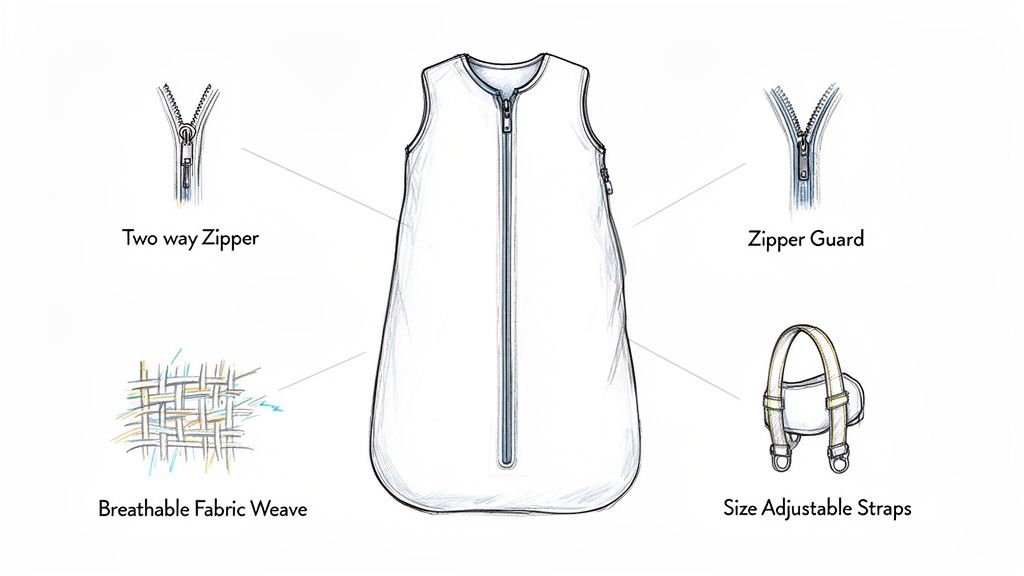
Zippers That Make Life Easier
The zipper is the unsung hero of the sleep sack. While a standard top-down zipper works, an inverted or two-way zipper is a total game-changer.
Here’s why these small upgrades matter:
- Two-Way Zippers: The holy grail for parents. They let you unzip from the bottom up for a diaper change without fully undressing your baby. Their chest and arms stay warm and cozy, minimizing disruption so they can drift right back to sleep.
- Zipper Guards: Look for a small fabric flap that covers the zipper pull at the neckline. This little detail, often called a "zipper garage," prevents the hard plastic or metal from scratching your baby's delicate chin.
- Quiet Zippers: It sounds minor, but some zippers are just loud. A quality, smooth-gliding zipper means you won't jolt a sleepy baby awake with a jarring zzzzip.
For an experienced parent, a two-way zipper isn't a luxury—it's a strategic tool. It’s the difference between a quick, sleepy diaper change and a full-blown wake-up call for the entire house.
Prioritizing Quality and Longevity
Let's be real—baby gear is an investment, and you want your purchases to last. A well-made sleep sack can handle countless cycles through the washing machine without pilling, fading, or losing its shape.
When shopping, look for reinforced stitching around the seams, neck, and armholes. This is a clear sign of durability that will hold up through all the kicking and wiggling.
Sleep sacks have become a nursery staple for a reason. Their popularity has skyrocketed, with the global market projected to hit $519.33 million by 2032. This growth reflects how parents have embraced them as a key safety tool. In fact, research shows that infants in sleep sacks maintain their core body temperature more stably, which can cut the risk of cold-stress-related SIDS by an estimated 33%. You can explore more research about the baby sleeping bag market to see just how essential they've become.
Simple Care for a Long Life
Finally, always check the care instructions. The best baby products are the ones that don't add another complicated step to your laundry routine. Most sleep sacks are machine washable, but it pays to know the specifics.
To get the most mileage out of your sleep sack:
- Zip it Up: Always close the zipper completely before washing to prevent snagging.
- Wash on Cold: Use a gentle cycle with cold water to protect the fabric's softness and color.
- Tumble Dry Low: Dry on a low heat setting, or even better, hang it to air dry. High heat can shrink natural fibers like cotton and bamboo.
Choosing a sleep sack with these smart features and caring for it properly means you're investing in a product that will provide safety, comfort, and convenience for many nights to come.
Common Sleep Sack Questions Answered
Even after doing all the research, it’s natural to have a few more questions. When it comes to our babies' sleep and safety, we all want to feel 100% confident. This last section tackles those common "what if" scenarios we hear from parents just like you.
Think of it as your go-to cheat sheet for all things sleep sack, giving you that extra bit of clarity and peace of mind.
Are Sleep Sacks Safe for Newborns?
Yes, absolutely. Sleep sacks are one of the safest sleep options for newborns, as long as you use the right size. Their biggest win is replacing loose blankets, which the American Academy of Pediatrics (AAP) strongly warns against to reduce the risk of Sudden Infant Death Syndrome (SIDS).
For the very first few weeks, many parents start with a swaddle-style sleep sack to calm the Moro (startle) reflex. But the moment your little one shows any sign of trying to roll over, it's critical to switch to an arms-out sleep sack.
The golden rule for newborn safety is fit. The neck opening can't be loose enough for their head to slip down into the sack. It should feel secure around their chest but give their hips and legs plenty of room to move.
What Should My Baby Wear Under a Sleep Sack?
This is a fantastic question, and the answer comes down to two things: the temperature of your baby's room and the TOG rating of the sleep sack. The goal is to keep your baby comfortable—not too hot, not too cold. Overheating is a serious risk, so layering correctly is key.
Here’s a simple cheat sheet:
- 1.0 TOG (All-Season) in a 68-72°F (20-22°C) room: A simple long-sleeved cotton onesie or footed pajamas usually does the trick.
- 0.5 TOG (Lightweight) in a warmer room above 73°F (23°C): A short-sleeved onesie or even just a diaper might be all they need.
- 2.5 TOG (Winter-Weight) in a cooler room below 68°F (20°C): You’ll want to layer up with a long-sleeved onesie underneath a pair of footed pajamas.
The best way to know for sure is to do a quick check. Gently feel the back of your baby's neck or their tummy—if they feel sweaty or clammy, they're too warm. If they feel a bit cool, you can add another light layer. Remember, their hands and feet often feel cool and aren't a great indicator of their core body temp.
When Should My Baby Stop Using a Sleep Sack?
Honestly, there’s no magic age when you have to stop. Many toddlers happily wear them until they're three or even older. The transition usually happens for practical reasons.
You might decide it’s time to ditch the sack when your child:
- Starts potty training and needs easy access at night.
- Becomes a little escape artist and starts trying to climb out of their crib.
- Moves to a toddler bed and simply prefers snuggling with a real blanket.
For toddlers on the move, sleep sacks with foot openings are a game-changer. They offer the same cozy, safe feeling but give them the freedom to stand up and walk around. At the end of the day, as long as your child is sleeping well and safely, there's no rush to give it up.
Can My Baby Overheat in a Sleep Sack?
Yes, it’s possible for a baby to get too warm if a sleep sack isn't used correctly. This is exactly why the TOG system was created—to help prevent overheating, a known risk factor for SIDS.
To keep your little one sleeping at a safe temperature, always stick to these guidelines:
- Match the TOG to the Room: A low-TOG (0.5) sack is for warm weather, while a high-TOG (2.5+) is for cold rooms.
- Don't Overdress: Be mindful of what they're wearing underneath. A heavy fleece sleep sack over fleece pajamas on a warm night is a recipe for overheating.
- No Hats Indoors: Babies regulate a lot of their temperature through their heads, so they should never wear a hat to sleep inside.
- Check for Signs: When you check on them, feel their neck or back. A flushed face, rapid breathing, or any sweat are clear signs they're too hot.
By paying attention to these simple factors, you can make sure your baby is sleeping not just soundly, but safely.
At Hiccapop, we believe parenting gets easier with the right tools. Our products are thoughtfully designed to give you peace of mind, knowing your child is safe, comfortable, and happy. We blend smart design with top-notch quality to create essentials that just work.
Shop Hiccapop today for innovative solutions that support your family’s journey.