


How Long Should My Child Be Rear-Facing? An Expert Guide
As a child safety expert, the question I hear most often is, "So, rear facing for how long is really necessary?" The answer is simpler and more important than you might think: keep them rear-facing for as long as humanly possible. The real milestone isn't turning them forward-facing. It's maximizing their safety by keeping them rear-facing until they hit the top height or weight limit of their convertible car seat—which is often until they're 4 years old or even older.
Why Rear-Facing Is the Gold Standard in Car Seat Safety
Let’s get straight to it. This isn't just a friendly suggestion; it's the absolute gold standard for keeping a small child safe in a car. The first step is to ditch the old idea that turning forward is some kind of rite of passage. The real achievement is giving your child the best protection that science and physics can offer.
Think of a rear-facing car seat as your child's personal bodyguard. In a crash, it acts like a catcher's mitt, cradling their entire body—head, neck, and spine—and absorbing the brutal forces of the impact. This is especially critical for young children, whose heads are disproportionately heavy and whose spines are still developing.
The Cradling Effect Explained
A forward-facing seat, in contrast, restrains the torso with a harness but leaves the head and neck vulnerable. In a frontal crash (the most common and most severe type), a child’s head gets whipped forward violently. That single motion puts immense, potentially catastrophic strain on their delicate neck and spine.
A rear-facing seat makes that violent motion impossible. The seat itself absorbs the impact, and the child's entire body moves with it in a gentle, supported way. That simple difference in physics is why rear-facing isn't just a rule; it's a crucial protective shield.
Lessons from Sweden's Safety Success
This whole idea of extended rear-facing isn't a new trend. It’s a proven, life-saving method that originated in Sweden way back in the 1960s. Their safety-first approach has led to remarkably low child injury and fatality rates in car accidents for decades.
The data is stunning: Swedish research shows that the risk of death or serious injury is roughly five times higher for toddlers in forward-facing seats compared to those who are rear-facing. You can learn more about the research behind Sweden's rear-facing success here.
This isn't about just meeting a minimum age requirement. It’s about anatomy, physics, and providing your little one with the highest level of protection during their most vulnerable years. Sticking with rear-facing until they max out their seat’s limits is one of the most impactful safety decisions you can make as a parent.
Understanding The Physics Of Car Seat Safety
To really get why the answer to "how long should my child be rear-facing?" is always longer, we need to talk about some simple physics and a little bit of anatomy. Don't worry, there won't be a quiz. It all comes down to one adorable, slightly wobbly feature of your toddler: their giant head.
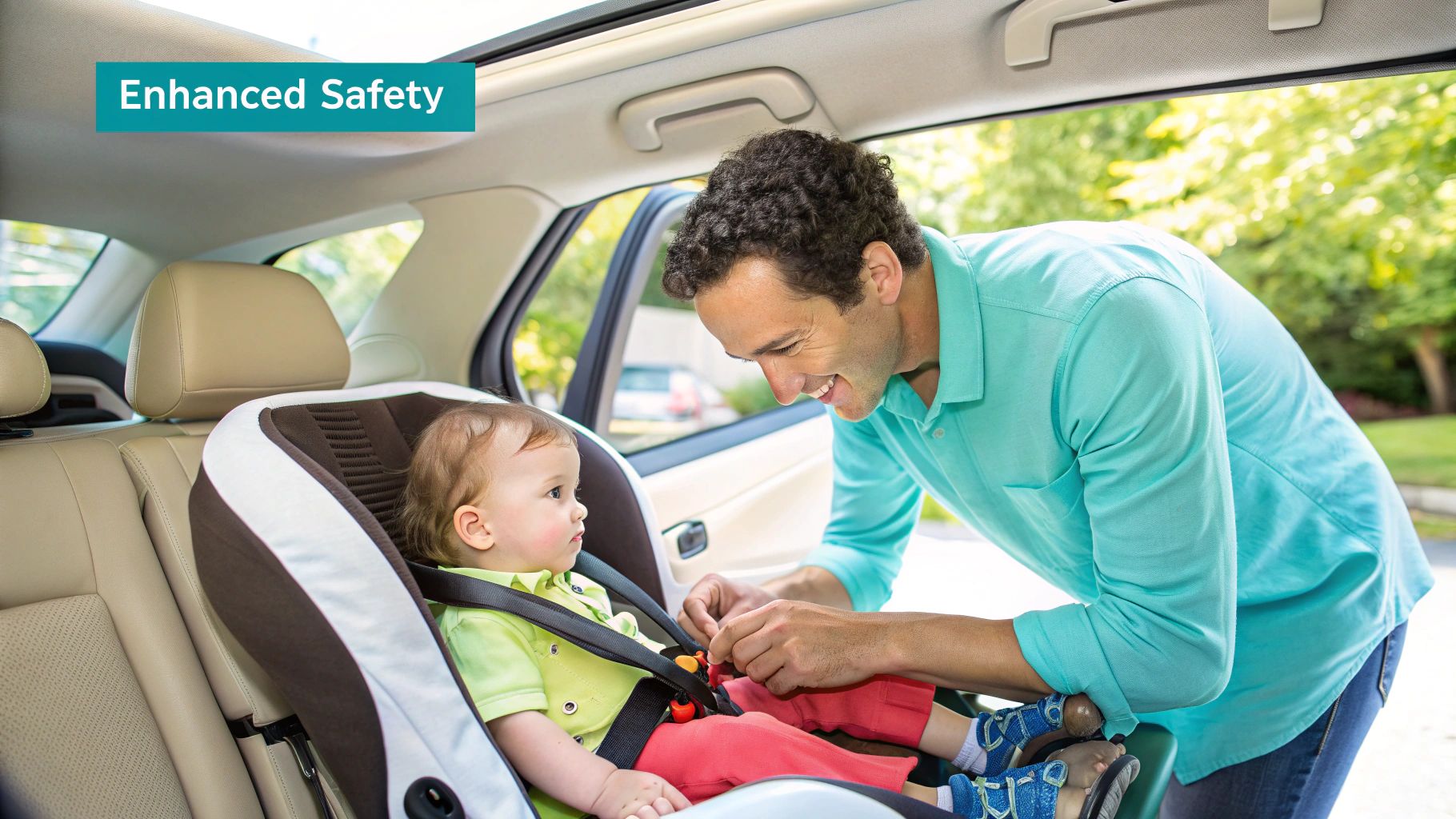
Believe it or not, a toddler’s head makes up a whopping 25% of their total body weight. For comparison, an adult’s head is only about 6%. This isn't just a fun fact for your next parent trivia night; it's the entire reason rear-facing is so critical.
The Bowling Ball On A Spring Analogy
Imagine balancing a heavy bowling ball on top of a soft, flexible spring. That bowling ball is your toddler's head, and the spring is their developing neck and spinal column. The bones in their spine are still hardening, and the ligaments connecting them are extra stretchy.
Now, picture what happens in a frontal crash—the most common and most dangerous type of collision.
- In a forward-facing seat, the five-point harness holds your child’s body back, but that heavy head is violently thrown forward. The force on their still-developing neck is immense, potentially leading to catastrophic spinal cord injuries.
- In a rear-facing seat, the dynamic changes completely. The entire back of the car seat acts like a protective shield, absorbing the crash forces and spreading them evenly across their back, neck, and head.
A rear-facing seat cradles them, moving with the force of the crash rather than against it. It’s the difference between being safely caught in a catcher's mitt and being snapped forward like a whip.
What The Crash Data Shows
This isn't just a theory; it's backed by decades of data. The science consistently shows a dramatic reduction in serious injuries for children who ride rear-facing.
A major U.S. study that analyzed 15 years of crash data found some striking numbers. One-year-olds in forward-facing seats were over five times more likely to be seriously injured than their rear-facing peers. The protective benefits were even more pronounced in side-impact crashes. You can read the full research about these injury statistics if you want to dive deeper into the science.
This data is why your car seat's rear-facing limits are the true guide, not a specific age on the calendar. Every single day your child rides rear-facing, they are benefiting from a proven system of protection that cocoons their most vulnerable body parts—the head, neck, and spine. It's the ultimate defense against the physics of a crash.
Navigating State Laws Versus Expert Advice
Here's where so many well-meaning parents get tripped up: the confusing gap between what the law requires and what’s actually safest for your child. It's one of the most important things to get straight when deciding how long to keep your little one rear-facing.
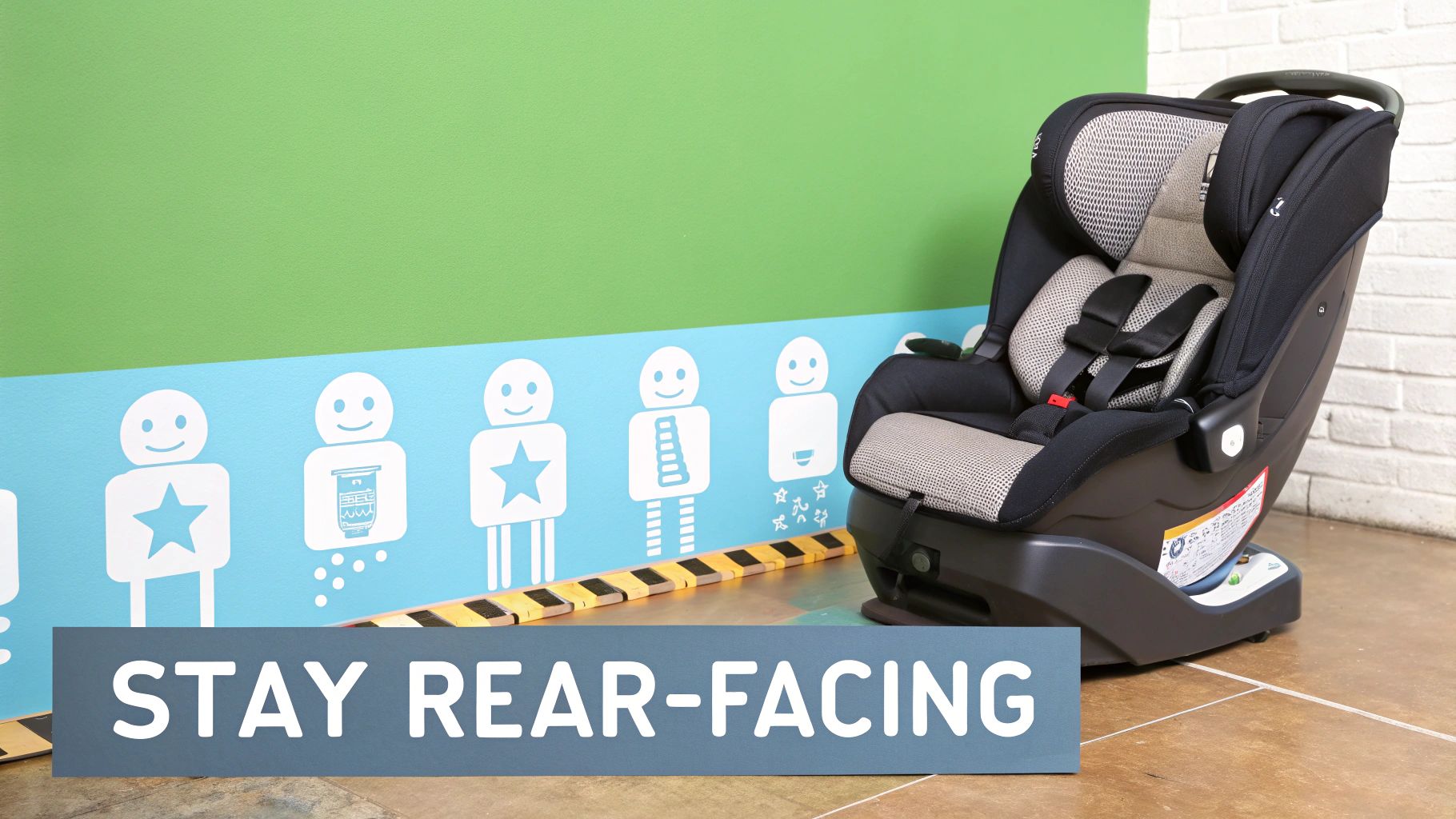
Simply put, state laws are the absolute minimum safety standard. The problem is, these regulations often lag years behind the latest scientific research. Your state might legally allow a child to ride forward-facing at age two, but every single safety expert will tell you that's far too soon.
That's because organizations like the American Academy of Pediatrics (AAP) and the National Highway Traffic Safety Administration (NHTSA) don't base their guidelines on legislative timelines. They base them on mountains of crash-test data and a deep understanding of a child's anatomy.
The Law Versus Best Practice
Think of it this way: the speed limit on a highway might be 65 mph, but when there's pouring rain and thick fog, the safest speed is much, much lower. Following the law just keeps you from getting a ticket; adjusting for the conditions is what actually keeps you safe.
Your state’s car seat law is the ticket-avoidance minimum. The AAP and NHTSA recommendations are your all-weather, best-case-scenario safety plan.
The data on this is crystal clear. The NHTSA estimates that car seats slash the risk of fatal injury by 71% for infants and 54% for toddlers in passenger cars. Organizations like the National Safety Council urge parents to keep children rear-facing for as long as their seat’s limits allow—a recommendation you’ll hear from virtually every certified child passenger safety technician.
To see just how different the minimums and the best practices are, let's compare them side-by-side.
Minimum Legal Requirements vs Safety Best Practices
| Guideline | Typical State Law (The Minimum) | Expert Recommendation (The Safest) |
|---|---|---|
| Minimum Age to Turn Forward-Facing | Often Age 2. Some states may still have outdated laws allowing it at Age 1. | As long as possible, until the child reaches the maximum rear-facing height or weight for their car seat. This is often between ages 3 and 5. |
| Primary Deciding Factor | The child's age. | The child's size in relation to their specific car seat's limits. |
| Source of Guidance | State legislative bodies, which can be slow to update laws. | Child safety organizations (AAP, NHTSA) using current crash data and biomechanics research. |
This table makes it obvious—the law is just a starting point. True safety lies in following the expert advice.
The most important takeaway is this: Ignore the calendar and your state’s minimum age laws. Instead, focus on the two guides that matter most for your child's safety.
Your Two Most Important Guides
When you feel the pressure to turn your child around—from well-meaning relatives or because their legs look "cramped"—these are the only two sources you need to listen to:
- Your Car Seat’s Manual: This is your number one rulebook. It will clearly state the maximum rear-facing height and weight limits for your specific seat. You must keep your child rear-facing until they reach one of those limits.
- The AAP’s Recommendation: The AAP’s guidance is simple and backed by science: keep your child in a rear-facing car safety seat for as long as possible, right up to the highest height and weight allowed by their seat's manufacturer.
By sticking to the limits of your car seat, you ensure your child gets every ounce of the protection that seat was engineered to provide. Aiming for the gold safety standard, not just the legal minimum, is one of the most powerful decisions you can make to protect your child on the road.
Busting the Biggest Rear-Facing Myths
If you've ever mentioned keeping your two-year-old rear-facing, you've probably heard it all. Well-meaning advice from friends, family, and even strangers online can make you second-guess your decision. It’s time to tackle the biggest myths head-on with clear, evidence-based facts so you can feel confident in your choice.
Let's clear up the confusion around these common concerns, so you can stick with the safest ride for your little one, backed by science.
Myth 1: My Toddler's Legs Are Scrunched Up!
This is the number one worry we hear from parents, and it makes perfect sense. You see their little legs bent or crossed, and your first thought is that they must be uncomfortable—or worse, that their legs could get hurt in a crash.
Here’s the good news: it’s not a safety issue. At all.
Kids are incredibly flexible, way more than we are. They’ll naturally find a comfy spot, whether that’s criss-cross applesauce, froggy-style, or resting their feet up on the vehicle’s back seat. How their legs look is not an indicator of their safety.
A broken leg is fixable; a spinal cord injury is not. This stark reminder from safety experts puts the whole “scrunched legs” concern into perspective. A rear-facing seat is designed to protect the head, neck, and spine—the parts of the body most vulnerable to devastating, life-altering injuries.
On top of that, studies of real-world crash data show that leg injuries for rear-facing kids are extremely rare. A forward-facing child's legs are actually more at risk, as they can fly forward and hit the back of the front seat with tremendous force.
Myth 2: They Get Bored and Can't See Anything
It's easy to assume that staring at the back of a seat is a one-way ticket to Boredom Town. But think about it from their perspective—a rear-facing toddler has a fantastic, panoramic view out the side and rear windows. They get to watch the world whiz by in a way that forward-facing passengers miss entirely.
Plus, you can use a crash-tested, shatter-resistant mirror to safely see your child and interact. This is perfect for making silly faces, singing songs, and offering reassurance, keeping them engaged and happy. Packing a special bag of "car-only" soft toys can also make every ride feel like a little adventure.
Myth 3: We Switched to a Convertible Seat, So It's Time to Turn Forward
This is a huge point of confusion for so many parents. It’s common to associate those infant "bucket" seats with rear-facing and then assume a convertible seat is the next step toward turning them around. In reality, a convertible seat is designed to do both—and it’s by far the safest in its rear-facing mode for as long as possible.
Think of it this way: your child is "graduating" to a bigger seat that allows them to stay rear-facing for much longer, often up to 40 or even 50 pounds. The switch from an infant seat isn't a signal to flip them around; it's an opportunity to extend their time in the safest possible position.
Always check your specific car seat manual for its maximum rear-facing height and weight limits. Once your child is much older and has outgrown their convertible and booster seats, you might be interested in our guide that discusses if inflatable booster seats are a safe option for travel.
Practical Tips For A Happy Rear-Facing Toddler
Knowing why you should keep your toddler rear-facing is the easy part. Actually dealing with a squirmy, snack-demanding co-pilot who would rather be anywhere else? That's a different story.
The good news is that with a few simple tricks, you can make extended rear-facing a breeze for everyone involved.
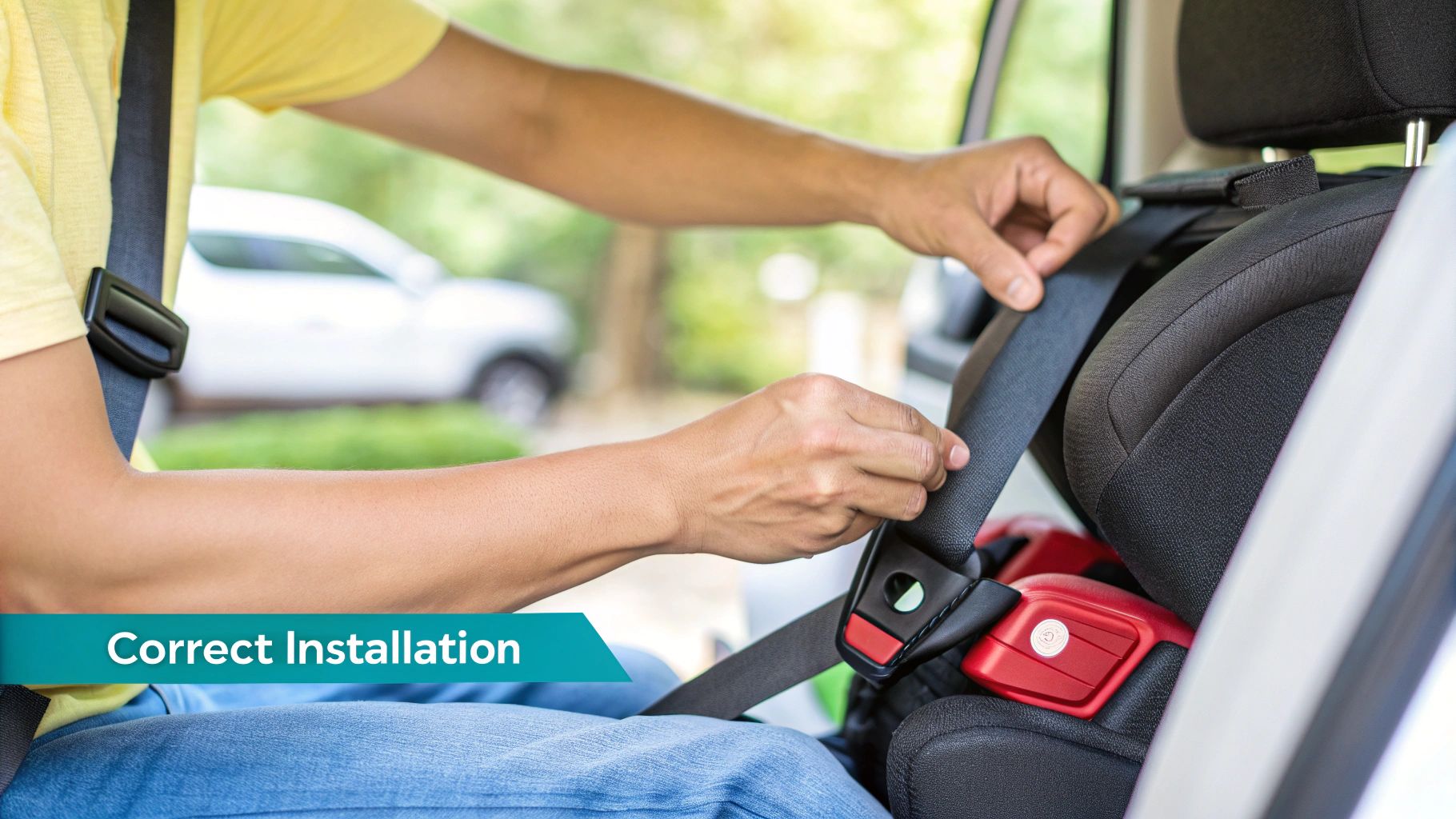
It all boils down to the right gear and a smart strategy. A few thoughtful choices can transform car rides from a daily battle into a peaceful cruise.
Create A Comfortable And Engaging Space
The secret to a happy rear-facing toddler is making their space feel less like a penalty box and more like a cozy command center. Simple additions can make a world of difference in their comfort and mood.
- Install a Car Seat Mirror: A crash-tested, shatter-resistant mirror is a total game-changer. It lets you make eye contact, share smiles, and see what’s going on back there without dangerously turning around. This reduces anxiety for both of you.
- Curate a "Car-Only" Toy Bag: Keep a small bag of soft, lightweight toys that only come out during car rides. The novelty makes them special and keeps your toddler entertained. Think fabric books, plush animals, or silicone teethers—nothing hard or heavy that could become a projectile in a sudden stop.
- Choose the Right Seat: When shopping for a convertible car seat, look for one with high rear-facing weight and height limits. Up to 50 pounds is ideal. Many modern seats also have compact designs that give front-seat passengers way more legroom.
Master The Art Of In-Car Snacking and Entertainment
Let’s be real: snacks are a parent’s secret weapon. But using them doesn’t have to mean your backseat looks like a flock of pigeons had a party in it.
Keeping a toddler content in their seat is less about complex entertainment systems and more about simple, consistent comforts. A familiar snack, a favorite soft toy, and the ability to see your smiling face in a mirror can solve most car ride woes.
Strategic planning is everything. Pack dry, less-messy snacks in a spill-proof container. For drinks, a no-spill straw cup is your best friend. This proactive approach keeps messes to a minimum and your toddler happily munching away. If you're planning a longer drive, you'll find more great ideas in our guide on traveling with car seats.
Finally, getting a wiggly toddler buckled in can feel like a wrestling match, especially in a tight parking spot. Try making it a game—"Let's blast off like a rocket!"—or sing a special car seat song. Turning the routine into a fun, predictable ritual can eliminate the struggle and get you on the road faster, ensuring you can keep them safely rear-facing for as long as possible.
Knowing When It Is Finally Time To Turn Forward
So, after all that, when is it actually time to make the switch?
The answer is beautifully simple, and it has nothing to do with their age, how their legs look, or what your neighbor did with their kids.
Your decision should be based purely on when your child physically outgrows the rear-facing limits of their specific car seat. This one rule removes all the guesswork and peer pressure. It lets you make a clear, safety-first decision based on facts, not feelings.
If you're looking for seats with higher limits to max out that rear-facing time, check out our guide to finding the right convertible car seat for travel.
The Definitive Checklist
Forget the calendar. Instead, grab your car seat manual or look at the stickers right on the side of the seat. You only need to turn your child forward-facing when they have met one of these two milestones.
-
They hit the maximum rear-facing weight limit. This is clearly printed on the car seat’s label and is often 40 or 50 pounds.
-
They hit the maximum rear-facing height limit. This isn't about their total height. A child has outgrown the seat's height limit when the top of their head is less than one inch from the top of the car seat shell or headrest.
That's it. Until your child meets one of those manufacturer limits, they are safest staying right where they are—happily and securely facing the back.
Conclusion: Trust the Science, Not the Calendar
Navigating the world of car seat safety can feel overwhelming, but the answer to "rear facing for how long?" is refreshingly clear: as long as possible. By letting your car seat's height and weight limits be your guide, you're choosing the safest possible ride for your child, backed by decades of research and data.
It's not about reaching a birthday; it's about protecting their developing head, neck, and spine. So tune out the myths, ignore the well-meaning but outdated advice, and feel confident in your decision to keep that seat turned around. You've got this.
What's the biggest rear-facing myth you've ever heard? Share it in the comments below—let's bust some myths together