


Naps for 2 Year Olds: Your Ultimate Guide to Peaceful Afternoons
If you’re asking, "Is my 2-year-old ready to stop napping just because they're fighting it?" the answer is almost always a resounding no. At this age, a midday nap isn't just a nice break for you—it's essential fuel for their brain development, helps them regulate those big toddler emotions, and is your best defense against the dreaded late-afternoon meltdown.
Most toddlers still absolutely need that daytime rest. Let's break down how to make it happen, even when your little one has other plans.
Understanding Your 2-Year-Old’s Nap Needs
Figuring out toddler sleep can feel like trying to solve a puzzle where the pieces keep changing shape. One week you have a solid routine, and the next, it’s total chaos. This is especially true around age two, a period packed with so many developmental leaps that sleep is bound to be affected.
The biggest shift you'll likely see is the move from two daily naps down to one solid afternoon nap. So, while it might look like your toddler is suddenly anti-sleep, what's really happening is that they're settling into a more mature sleep pattern. Their little bodies are learning to consolidate that daytime rest into one longer, more restorative stretch.
The Big Transition to One Nap
This transition is a major milestone. Research from the Sleep Foundation confirms that by age two, most toddlers have dropped down to a single nap. Their studies show the average nap for this age group is about 1 to 2 hours, alongside roughly 11 to 12 hours of nighttime sleep.
It’s not just about dropping a nap; it's about rebalancing their entire day. The new goal is to find a rhythm that gives them enough total sleep without letting them get overtired before their nap or bedtime.
Decoding Sleep Cues and Wake Windows
My best advice? Stop watching the clock and start watching your child. Their unique sleep cues are far more reliable than any rigid schedule.
You know your child best, but look for these classic signs they're ready for a rest:
- Yawning and eye-rubbing: The most obvious "I'm tired" signals.
- A sudden burst of goofy energy: When they get clumsy, silly, or hyper, it often means they've crossed into overtired territory.
- Getting whiny or clingy: If their emotional fuse is suddenly very short, it's a good bet their energy tank is empty.
Getting a handle on their "wake window"—the time they can comfortably stay awake between sleeps—is also a game-changer. For a 2-year-old who's on one nap, you're typically looking at a wake window of about five to six hours. For a more detailed breakdown, you can check out our guide on wake windows by age.
Flexible Nap Schedule for a 2 Year Old
Think of the schedule below as a starting point, not a strict set of rules. It’s a framework you can adapt to fit your child's natural rhythm and your family's daily life.
| Time | Activity |
|---|---|
| 7:00 AM | Wake up and breakfast |
| 9:30 AM | Morning snack |
| 10:00 AM-12:00 PM | Active playtime (outside is great!) |
| 12:00 PM | Lunch |
| 12:30 PM-2:30 PM | Nap Time |
| 3:00 PM | Afternoon snack |
| 5:30 PM | Dinner |
| 6:30 PM | Start bedtime routine |
| 7:30 PM | Bedtime |
Remember, the most successful routines are built around your child, not a clock. Consistency in the pattern of the day is what truly matters, not hitting every single time perfectly.
How to Handle the Two-To-One Nap Transition
Just when you feel like you've finally got the two-nap schedule down to a science, your toddler decides to change the game. One day, the morning nap is a sacred ritual; the next, they're protesting in their crib like it’s a personal injustice. This sudden resistance is often the very first clue you’re entering the infamous two-to-one nap transition.
This phase can feel a bit like sleep whiplash, but it's a perfectly normal milestone. Most toddlers make this shift between 15 and 18 months, but it's not at all uncommon for it to happen closer to their second birthday. The trick is to recognize the signs and manage the change with a gentle touch, so you don't end up with an overtired, grumpy little dictator running the show.
Remember, this isn't an overnight switch. It can be a bumpy process that lasts anywhere from a few weeks to a couple of months. Patience and flexibility are going to be your best friends here.
Spotting the Signs of Transition
So, how do you know if your 2-year-old is really ready to drop that morning nap, or if they're just having an off week? A true transition isn’t just one or two bad nap days. It’s a consistent pattern you'll see for at least a week or two.
Keep an eye out for these tell-tale signs:
- Flat-Out Refusing the Morning Nap: They might play, sing, or just chat with their stuffed animals for the entire nap period, never once looking sleepy.
- Taking Ages to Fall Asleep: Both the morning and afternoon naps suddenly become a battle, with your toddler taking 30 minutes or more to finally drift off.
- Naps Get Super Short: The morning nap turns into a 20-minute catnap, or they start waking up from their afternoon nap way earlier than usual.
- Bedtime Becomes a Battle: All of a sudden, your once-great sleeper is fighting bedtime like a champ or waking up for the day at 5 AM. This often happens because the two naps are giving them too much daytime sleep.
If you’re nodding your head to a few of these, it’s probably time to start thinking about the transition.
A Practical Roadmap for Dropping the Morning Nap
Navigating this change calls for a slow and steady approach. If you just yank the morning nap away cold turkey, you're likely to have an overtired, melting-down toddler on your hands by lunchtime. The goal is to phase it out smoothly.
A great way to start is by gradually shortening the morning nap. If it's usually an hour long, try capping it at 45 minutes for a few days. Then, trim it down to 30 minutes, and finally to 15. This gives their internal clock a chance to adjust without a major shock to their system.
As you shorten the morning nap, you'll need to nudge the afternoon nap a bit earlier. A toddler who used to nap at 2:00 PM might now be wiped out and ready by 12:30 PM. This is a crucial step to prevent them from getting so overtired that they can't fall asleep at all—the ultimate sleep paradox.
This visual guide shows how a simple, predictable flow—wake, play, nap, and bed—gives toddlers the structure they thrive on.
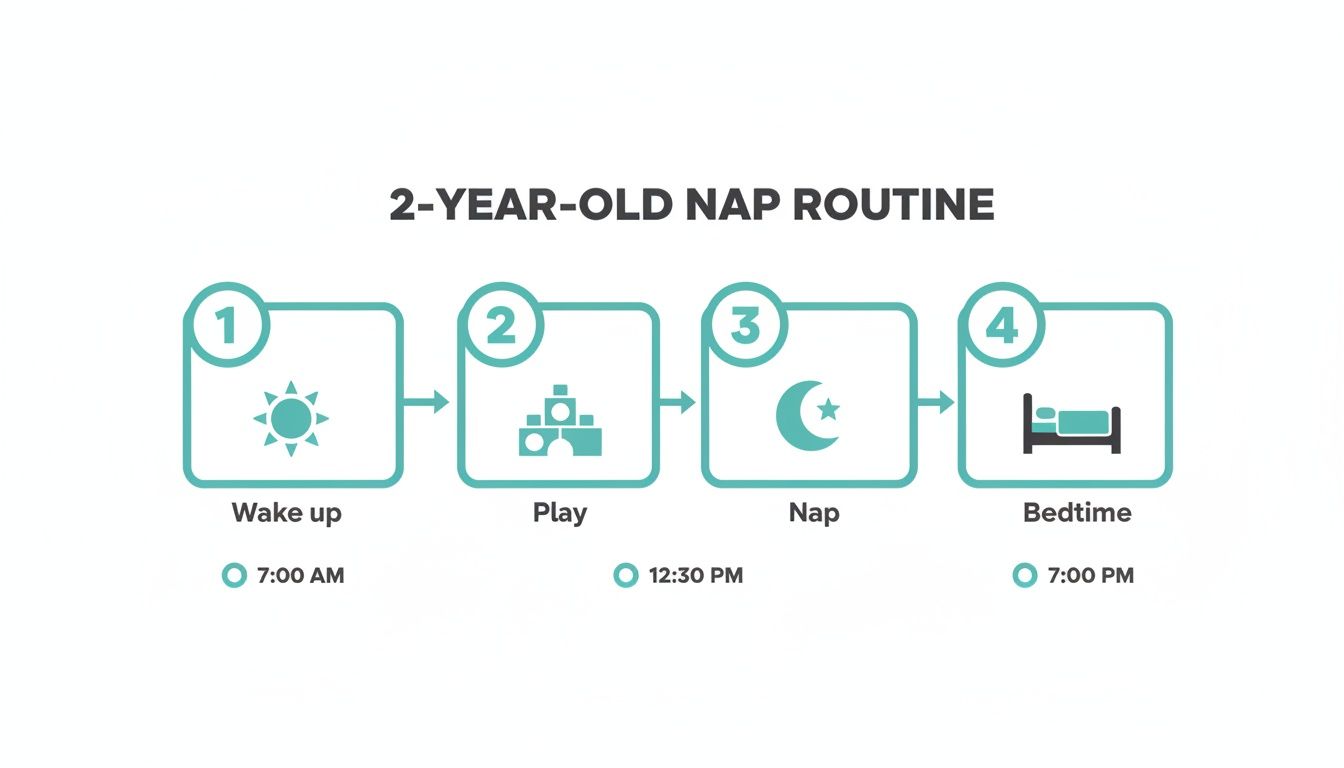
Having a consistent sequence of events helps signal to your toddler what’s coming next, which can make tricky transitions like dropping a nap much easier for everyone.
Embracing "Quiet Time" as a Bridge
Some days, your toddler will seem exhausted and desperate for that morning nap. On other days, they’ll fight it with every ounce of their being. For those nap-refusal days, don't just scrap the rest period altogether. This is the perfect time to introduce "quiet time."
Quiet time isn’t a punishment; it’s just a dedicated period for calm, independent play in their room. It ensures they still get a vital midday break to rest their body and brain, even if they don’t actually sleep.
Set a timer for 45-60 minutes and leave them with a few safe, low-key activities like board books, soft blocks, or a puzzle. You'd be surprised how often a toddler who refuses a "nap" will end up dozing off during quiet time once the pressure is off. This strategy preserves that much-needed restorative break in their day and, frankly, helps you keep your sanity. On days they do take a morning nap, just keep it short to protect that precious afternoon sleep.
The Real Reason Toddler Naps Prevent Meltdowns
Ever had one of those days where a missed nap turns your sweet 2-year-old into a tiny, raging monster over a broken cracker? You’re not alone. And it’s not just your toddler being difficult—there's some real science behind why that midday rest is your secret weapon against late-afternoon chaos.
Think of your toddler's brain as a computer that's been running a dozen new, high-energy programs all morning. A nap is the essential reboot. It gives their little mind a chance to process everything they’ve learned, sort through memories, and hit the reset button on their emotions. Without that break, their system gets completely overloaded, and that's when you see the meltdowns.

The Science Behind the Calm
It’s a night-and-day difference, right? On a good nap day, a trip to the playground is full of joyful energy and sharing. On a no-nap day, that same trip can end in a full-blown tantrum because another kid so much as looked at their favorite swing. This isn't a coincidence; it’s just biology.
Naps are absolutely critical for emotional regulation. Studies from the University of Colorado Boulder have found that toddlers who miss just one nap show less joy and interest and more anxiety and poor coping skills. This means they’re less likely to handle a neutral situation well, which dramatically cuts down on those "out of nowhere" meltdowns during the dreaded witching hour. That midday sleep gives them the tools to handle big feelings without getting completely overwhelmed.
A Tale of Two Toddlers
Let’s look at a classic real-world example. Meet Leo, a typical 2-year-old.
- Scenario 1 (No Nap): The family has a busy outing, and Leo skips his nap. By 4:00 PM, he’s a different child. He wails when his block tower tumbles, flings his snack across the room, and clings to his parents, crying inconsolably. Bedtime becomes a two-hour-long battle.
- Scenario 2 (With a Nap): Leo gets a solid two-hour nap at 1:00 PM. At 4:00 PM, his block tower falls over, and he just shrugs and starts rebuilding. He eats his snack, plays happily, and bedtime is a calm, 20-minute routine.
What changed? Just that one essential midday rest. The nap refilled his emotional and physical battery, giving him what he needed to handle the rest of the day.
Understanding the 'why' behind the nap can be the motivation you need to stay consistent. It’s not just about getting a break for yourself; it’s about giving your child’s brain and body the restorative break they desperately need to thrive.
How Naps Build a Happier Kid
Protecting that afternoon nap does more than just sidestep today's meltdown; it lays the groundwork for better emotional health down the road. Consistent naps for 2 year olds help them build resilience and learn how to manage frustration—skills they’ll use for the rest of their lives.
When toddlers are well-rested, they are:
- More Cooperative: They actually have the mental energy to listen and follow simple directions.
- Less Prone to Frustration: A small challenge doesn’t immediately feel like the end of the world.
- More Engaged and Curious: They have the focus to really learn from and explore their environment.
If daily outbursts are wearing you down, we have more strategies in our guide on how to stop toddler tantrums.
Ultimately, that quiet hour in the afternoon isn’t just about getting some sleep. It's an investment in a calmer, happier child—and a much more peaceful evening for the whole family.
Creating a Pre-Nap Routine That Actually Works
Let's be honest, sometimes the pre-nap "routine" feels more like a frantic chase around the living room that leaves everyone exhausted. If that sounds familiar, you're not alone. But here’s the secret weapon you’ve been looking for: a simple, predictable ritual that signals to your toddler’s brain, "Hey, it’s time to wind down."
This isn’t about a complicated checklist or a perfect performance. It’s all about consistency. A solid pre-nap routine doesn’t need to be long, either. In fact, 15-20 minutes is the sweet spot. The goal is to create a sequence of calming activities that your child comes to associate with sleep, making the transition from full-throttle playtime to quiet naptime so much smoother.
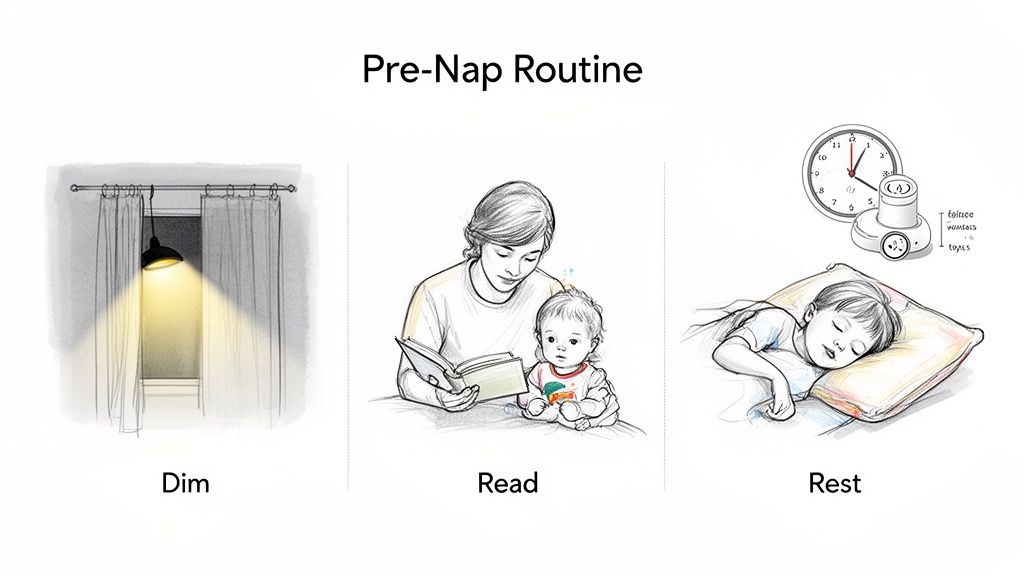
Building Your Naptime Ritual
Think of your routine as a short, comforting story you tell your child every day before their nap. The plot is always the same, moving from active to quiet, gently guiding them toward rest. You don't have to do every single thing on a list, but keeping the core elements consistent is what really matters.
Here are some simple, effective ideas that work wonders:
- Give a heads-up. A simple "Five more minutes until naptime!" can work wonders. This little announcement helps them mentally prepare for the shift and gives them a sense of control over their day.
- Dim the lights. This is a powerful, non-verbal cue. Lowering the lights tells their brain to start producing melatonin, the sleepy-time hormone.
- Turn on some white noise. A fan, a sound machine—whatever you choose. A consistent, boring sound can drown out distracting household noises and become a strong sleep association.
- Read a story or two. Cuddling up with a book is the perfect way to wind down. Choose calming stories, like the gentle rhythm found in toddler-friendly picture books like "Brown Bear, Brown Bear, What Do You See?".
- End with a cuddle and a song. A final hug, a kiss, and singing the same short song every single day creates a beautiful, loving end to the routine.
The magic isn't in any one specific activity you choose, but in its predictability. When your toddler knows exactly what to expect, they feel secure, and cooperation becomes much more likely.
Crafting the Perfect Sleep Cave
The nap environment is just as crucial as the routine itself. Think dark, cool, and quiet. I call it a "sleep cave" because it helps minimize every possible distraction and encourages that deep, restorative rest they need.
A dark room is truly non-negotiable. It’s amazing how a tiny sliver of light can be stimulating enough to keep a curious toddler awake. This is where blackout curtains become your best friend. Seriously, they're one of the best investments you can make for better naps for 2 year olds.
Also, check the temperature. A room that’s a bit cool, ideally between 68-72°F (20-22°C), promotes better sleep than one that's too warm and stuffy.
Handling Routine Resistance
So, what happens when your toddler digs their heels in and resists the routine with every fiber of their little being? The first rule is to stay calm and consistent. Getting into a power struggle just adds fuel to the fire. Instead, acknowledge their feelings—"I know you want to keep playing with your trucks, but it's time for our story before nap"—while lovingly holding the boundary.
One of the biggest culprits of nap resistance is pre-nap screen time. The blue light from tablets and phones can seriously mess with melatonin production, making it physically harder for your toddler to fall asleep. My rule of thumb is to end all screen time at least 30-60 minutes before you even start the nap routine.
If you’re still facing a regular battle, try offering simple, controlled choices. Let them pick between two books or two pairs of pajamas. This gives them a little bit of autonomy without derailing the ultimate goal: getting that much-needed rest.
Navigating Common Nap Challenges and Regressions
Even when you've done everything right—the perfect routine, the cozy, dark room—you're still going to hit a few bumps in the road. It’s a toddler’s job to test boundaries, and naptime is often the main stage for their budding independence.
From sudden nap strikes to that infamous 2-year sleep regression, these challenges are completely normal. The real secret is knowing how to handle them without losing your sanity. Just when you think you have it all figured out, your 2-year-old will inevitably throw you a curveball. Your best defense is a calm, consistent response that gently guides them back to their sleep routine.
The Notorious 2-Year-Old Sleep Regression
Is your once-fantastic napper suddenly boycotting naps, fighting bedtime, and waking up at all hours? Welcome to the 2-year sleep regression. This isn’t your toddler deciding they’re done with naps for good; it’s a temporary storm caused by massive developmental leaps.
This phase is usually fueled by a perfect storm of new skills: their language is exploding, their desire for independence is fierce, and separation anxiety can make a comeback. They’re realizing they are their own little person with big opinions, and one of those opinions is, "I don't want to nap!"
Frustrating as it is, this regression is actually a positive sign of their cognitive growth. You can dive deeper into what to expect by reading our comprehensive sleep regression timeline.
Here's the most important thing to remember: A regression is not a sign they're ready to drop their nap. Your job is to hold the boundary, stay consistent, and ride out the wave.
The Nap Strike: What to Do When They Flat-Out Refuse
One of the most common—and frustrating—challenges is the nap strike. Your toddler is clearly exhausted, rubbing their eyes and getting whiny, yet they protest sleep with every fiber of their being. It’s so tempting to just give in and call it a day. Don’t.
This is the time to enforce a mandatory "quiet time."
- What it is: A non-negotiable hour of calm, independent play in their room. This ensures they still get a restorative break in their day and, crucially, prevents them from becoming a horribly overtired mess by bedtime.
- How to do it: Explain the new rule simply: "You don't have to sleep, but you do have to rest in your room." Leave a few safe, low-key toys, like board books or soft blocks, within reach.
- The likely outcome: More often than not, once the pressure to "nap" is off, they’ll fall asleep on their own during quiet time. Even if they don't, you still get a much-needed break, and they get essential downtime. It's a win-win.
Handling Boundary-Testing Behaviors
Two-year-olds are masters of the stall tactic. "I need a drink." "One more story." "My sock feels funny." Sound familiar? They are also pros at the "jack-in-the-box" game—popping out of bed a dozen times the second you leave the room.
For the constant escape artist, the silent return method is your best friend. Without making eye contact or saying a word, calmly and silently lead them back to their bed. The first day, you might do this 10, 20, or even 50 times. It’s exhausting, but your boring, consistent response will eventually teach them that leaving their room gets them zero attention.
When Developmental Leaps Interfere
Big milestones like potty training can throw a massive wrench into your nap schedule. All of a sudden, your toddler has a brand-new, legitimate reason to get out of bed: they have to use the potty!
Accidents are just part of the process, and knowing how to handle them quickly is key. For instance, having a plan for how to clean pee off a mattress can save you a ton of stress and keep their sleep space hygienic and inviting.
To manage this new development, build a potty trip into the very beginning of your pre-nap routine. This helps empty their bladder and makes it less likely to become a last-minute stall tactic. Be prepared for a few accidents, but stick with the routine. Your consistency through these big changes will help them settle back into their nap schedule much more quickly.
Why Naps Today Create a Better Tomorrow
When you're in the thick of it, trying to get a protesting toddler to nap can feel like a thankless, uphill battle. On those days, it helps to remember you're not just fighting for a quiet afternoon—you're making a profound investment in your child's future.
This midday rest is about so much more than just recharging a physical battery. During this critical downtime, their brain is hard at work. It's busy cementing memories, processing all the new skills they're learning, and laying the groundwork for emotional resilience.
The Long-Term Payoff of a Midday Rest
The benefits of a consistent nap routine reach far beyond today's mood. A growing body of research shows a powerful link between regular napping in early childhood and positive outcomes years down the road. It’s not just about a calmer kid this afternoon, but a more capable one tomorrow.
In fact, studies have found that napping around age two is linked to better emotional regulation and memory consolidation. One study published in Child Development even found that napping helps preschoolers learn and retain new information more effectively.
You can read more about these long-term nap benefits in various research findings.
By protecting that precious nap time, you're not just preventing a tantrum. You're actively contributing to your child's future happiness and success in school.
Your Efforts Today Matter
So, when you find yourself holding a firm boundary with a toddler who would rather do anything but sleep, remember what you're building. Every nap is another brick in the foundation for a healthier, more resilient, and more capable child.
The key takeaways are simple but powerful:
- Consistency creates a sense of security and makes nap time a predictable part of the day.
- Patience is your best tool for navigating the inevitable regressions and challenges that pop up.
- A positive sleep environment helps make rest feel safe and inviting, not like a punishment.
Keep going. Those peaceful afternoons—and the brighter tomorrows they create—are well worth the effort. What’s your go-to trick for a successful naptime? Share it in the comments below!
Your Top 2-Year-Old Nap Questions, Answered
Even when you have a great nap routine down, questions always seem to pop up—usually right in the middle of a naptime standoff. I've been there. Let’s tackle some of the most common nap dilemmas I hear from parents so you can have quick, clear answers when you need them most.
What’s the Best Time for a 2-Year-Old to Nap?
For most toddlers on a one-nap schedule, the sweet spot is typically right after lunch, somewhere between 12:30 PM and 1:00 PM. This usually works out to be about five or six hours after they first woke up for the day, which is perfect for heading off that dreaded overtired meltdown.
But remember, the clock is just a guide. The real expert is your child. Pay close attention to their unique sleepy cues—are they rubbing their eyes, yawning, or getting a little wobbly? Those are your golden signals that it's time to wind down. Getting this timing right is the secret to a restful nap that doesn't mess with bedtime later.
How Long Should a 2-Year-Old Nap?
On average, a solid nap for a 2-year-old should last anywhere from 1.5 to 2.5 hours. That's usually the perfect amount of time to recharge their batteries for a happy afternoon without making it harder for them to fall asleep at night.
If your little one is constantly waking up from short naps feeling grumpy, it might be time to look at their sleep environment or daily schedule. On the other hand, if their naps are regularly pushing past that 2.5-hour mark and bedtime has become a battle, you might need to gently wake them to keep nighttime sleep on track.
My 2-Year-Old Fights Naps but Is Clearly Exhausted. What Do I Do?
First off, take a deep breath. This is an incredibly common—and frustrating—phase. A sudden nap strike is almost always a temporary regression or your toddler testing their newfound independence. It very rarely means they're ready to drop their nap entirely.
The most important thing is to stay consistent. Don't throw in the towel on naptime just yet. Instead, reframe it as mandatory "quiet time" in their room for at least an hour.
This quiet time is non-negotiable. It ensures their body and mind still get a chance to rest, even if they don't sleep. You’ll often find that once the pressure to sleep is gone, they'll drift off on their own, ending the power struggle for good.
Are Car Naps Okay for My 2-Year-Old?
A car nap is definitely better than no nap at all, but it’s best not to make it a regular habit. Naps in a moving car are typically lighter and less restorative than sleep in a dark, quiet room. They just don't provide the same deep rest.
Think of car naps as your emergency backup for those chaotic days when a nap at home just isn't in the cards. If a car nap does happen, always double-check that your child is buckled in safely and correctly. Just be prepared—they might be a bit more tired or cranky than they would be after a solid nap in their own bed.
At Hiccapop, we know that the little details make all the difference in your child's comfort and safety, especially during naptime. Our products are thoughtfully designed to support your family through every milestone. Take a look at our collection of toddler essentials at our website.