


How to Stop Toddler Tantrums: A Realistic Guide for Parents
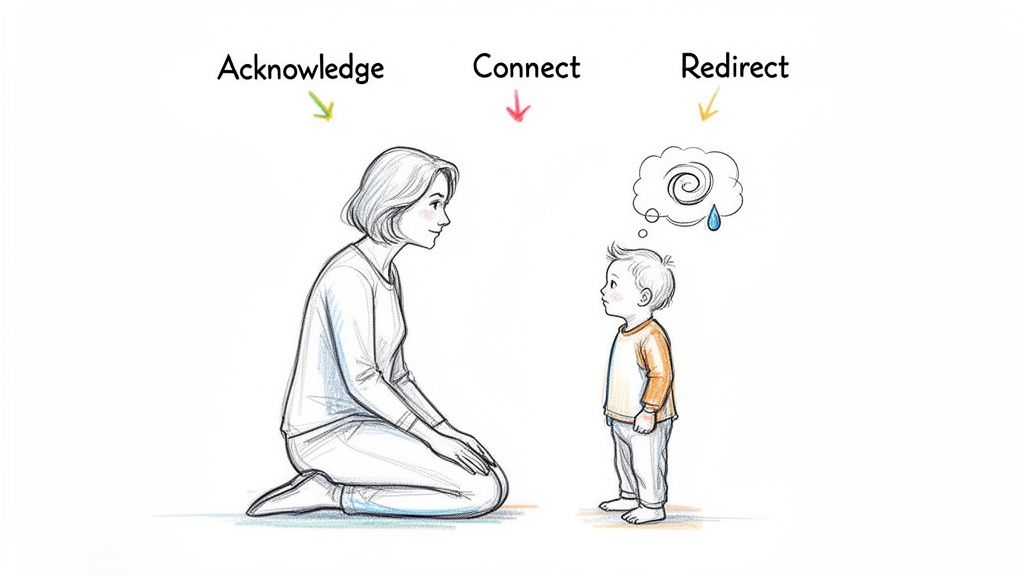
If you want to stop toddler tantrums, the secret isn't a magic trick. It's about shifting your mindset. You first have to understand what's really going on in that little head, stay as calm as you can, and then follow a simple framework: Acknowledge their feelings, Connect with them, and then gently Redirect their focus. This approach turns you from a frustrated enforcer into a compassionate guide for a little person who is simply overwhelmed.
Understanding Why Toddler Tantrums Happen
Welcome to the club no one wants to join: The Toddler Meltdown Support Group. If you're reading this, you’ve probably witnessed a tiny, adorable human transform into a screaming, floor-thumping ball of fury over a broken cracker or the sheer audacity of you serving milk in the wrong color cup.
First, let's get one thing straight: you are not alone, and your child is not being "bad." Tantrums are a completely normal—and maddening—part of development.
Think of your toddler's brain as a house under construction. The downstairs—the part that controls raw, powerful emotions like anger and frustration—is fully wired and operational. But the upstairs—the prefrontal cortex, responsible for logic, reason, and impulse control—is still waiting on the contractors to finish.
When your toddler gets upset, their emotional brain completely floods the system. Without that logical "upstairs" brain to help them process what's happening, they're swept away by the storm. This emotional tidal wave is what we call a tantrum.
They aren't giving you a hard time; they are having a hard time. This perspective shift is the single most important step in learning how to stop toddler tantrums before they even start.
Internalizing this simple truth moves you from a place of frustration ("Why are they doing this to me?") to a place of empathy ("How can I help them through this?"). You’re no longer fighting a battle; you’re a safe harbor in a storm they can't control.
The Science Behind the Storm
If it feels like these outbursts are constant, you aren't imagining things. Research shows that tantrums are incredibly common, peaking to the point where a staggering 91% of 30- to 36-month-olds experience them. While some toddlers between 18 and 60 months can have a tantrum about once a day, the good news is that most are surprisingly short. The average meltdown lasts just three minutes, with many fizzling out in under 60 seconds. You can dig into the data on tantrum frequency in this study from the National Center for Biotechnology Information.
Your Foundational Framework: Acknowledge, Connect, Redirect
When you're in the heat of the moment, you don’t have time for complicated parenting theories. You need a simple, memorable plan. That's where the Acknowledge, Connect, Redirect framework comes in. It’s your go-to strategy for responding effectively and turning a moment of chaos into an opportunity for connection.
Let’s break down exactly what that looks like.
For those moments when you feel your own frustration rising, this simple table can be your anchor.
The 'Acknowledge Connect Redirect' Framework
A quick-reference guide to the three core steps for responding to a tantrum, providing a memorable script to use when emotions are high.
| Step | What It Means | Example In Action |
|---|---|---|
| Acknowledge | Be their emotional mirror. Name the feeling you see without judgment. | "You are so angry that we have to leave the park." |
| Connect | Get on their level. Show them you see things from their perspective. | "It's really hard to stop playing when you’re having so much fun. I get it." |
| Redirect | Once they feel heard, gently shift their focus to what’s next. | "When we get home, should we read a book or build with your blocks first?" |
Mastering this simple sequence helps you stay grounded while giving your child the co-regulation they desperately need to calm their nervous system. It’s not about giving in to demands; it’s about giving them the emotional support to get through a tough moment.
Become a Tantrum Detective to Uncover Triggers
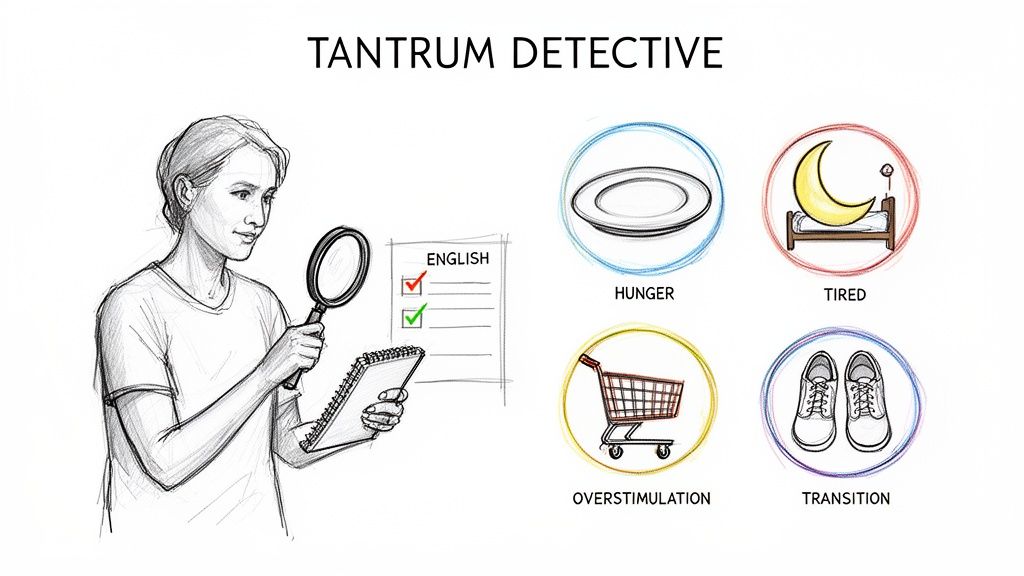
If you want to get a handle on toddler tantrums, the single best thing you can do is stop them before they even start. This means shifting your mindset from being a reactive manager of meltdowns to a proactive "tantrum detective." Your mission is to spot the patterns and find the hidden triggers behind your child’s emotional storms.
Most of us know the classic culprits, often remembered by the acronym H.A.L.T. — Hungry, Angry, Lonely, Tired. And for good reason! A toddler running on empty is practically a guaranteed meltdown.
But the real detective work starts when you dig deeper. Toddler triggers can be surprisingly subtle and are often unique to your child’s personality. By observing what happens right before the chaos erupts, you can start connecting the dots and see the storm clouds gathering long before they break.
Moving Beyond the Obvious Triggers
To really get what’s setting your toddler off, you have to try and see the world through their eyes. A quick trip to the grocery store might seem simple to you, but for a little one, it can be a full-blown sensory assault of bright lights, beeping scanners, and overwhelming choices.
Let’s look at some of these less obvious, yet powerful, triggers:
- Overstimulation: Too much noise, activity, or visual chaos can completely overload a toddler's developing nervous system. Think busy birthday parties, crowded stores, or even just a long day of errands.
- Understimulation: The opposite is just as potent. A bored toddler will often create their own drama, sometimes just to see what happens.
- Communication Frustration: Their little minds are working way faster than their vocabularies. Imagine knowing exactly what you want but not having the words to say it—it’s a recipe for an explosion.
- Transitions: This is a big one. Moving from something fun (playing at the park) to something they have to do (get in the car) feels like a sudden and unfair punishment to a toddler.
- A Craving for Autonomy: Toddlers have a fierce, natural drive to be independent. When they hear "no" constantly or have everything done for them, they push back. This isn't just defiance; it's a deep developmental need to feel some control over their own little world.
The daily battle over putting on shoes isn't really about the shoes. It's about a tiny person's desperate need to assert, "I can do it myself!" Recognizing this changes your entire approach.
Instead of a power struggle, you can offer simple, empowering choices. "Do you want to wear the red shoes or the blue shoes today?" or "Do you want to put your shoes on by the door or on the stairs?" This small shift validates their need for control and can sidestep the meltdown entirely.
Tracking Patterns and Finding Solutions
Start keeping a mental (or even a written) log. When a tantrum hits, ask yourself: What time is it? What happened just before? Was my child hungry or tired? Were we in a rush? Before long, you'll start to see patterns.
For example, you might notice that meltdowns always seem to strike around 11:00 AM. This could be a huge clue that their nap schedule isn't working anymore. As they grow, sleep needs change fast. If you’re in that tricky phase, our guide on how to handle the transition to one nap has some great, practical advice.
Here are a few common scenarios and what your detective work might reveal:
| Trigger Scenario | Detective's Observation | Proactive Solution |
|---|---|---|
| The Grocery Store Meltdown | Child is overwhelmed by the lights, sounds, and people. The tantrum peaks in the candy aisle. | Go shopping after a nap and a snack. Give your child a specific "job," like holding the shopping list or finding the bananas. |
| The "Leaving the Park" Screams | The transition from fun to leaving feels sudden and jarring to the child. | Give consistent warnings. "We have 5 more minutes, then it’s time to go home for lunch!" A visual timer on your phone works wonders, too. |
| The "Get Dressed" Battle | The child is asserting their independence and desire for control over their own body. | Offer limited, acceptable choices. "Do you want to wear the dinosaur shirt or the truck shirt today?" |
When you put on your detective hat, you’re not just trying to figure out how to stop toddler tantrums. You’re learning to speak your child’s unique emotional language, which is the foundation of a stronger, more peaceful connection.
Your Proactive Prevention Playbook
Okay, so you've put on your detective hat and figured out what makes your little one tick—and what makes them explode. Now it's time to shift from just reacting to tantrums to actively preventing them.
The secret isn't about walking on eggshells or bubble-wrapping your toddler's world. It's about building an environment that feels secure, predictable, and empowering for them. When a toddler feels understood and has a little bit of control, the need for a tantrum often just melts away.
The Power of Predictability
Think of it like this: toddlers are like tiny sailors on a big, unpredictable ocean. Consistent routines are their anchor. When they know that snack time follows playtime, and bath time follows dinner, their world feels safe and manageable. That predictability alone can head off a huge amount of the anxiety and resistance that fuel those epic meltdowns.
A solid routine is probably your single most powerful prevention tool. I'm not talking about a rigid, minute-by-minute schedule, but a reliable rhythm to the day. This structure helps regulate their internal clocks for sleeping and eating, which keeps two of the biggest tantrum triggers (Hunger and Tiredness) at bay.
Consistency around sleep is especially critical. An overtired toddler has almost zero capacity for emotional regulation. If you do one thing, make it creating a peaceful, predictable bedtime routine. For families struggling with this, exploring different toddler sleep training methods can be a game-changer, setting you on a path to more restful nights for everyone.
Create a 'Yes Space'
Toddlers are wired to explore, touch, and test everything. It’s their job! But when their entire day is filled with "No," "Don't touch that," and "Stop," it creates a massive amount of frustration that has to go somewhere—and it usually comes out as a tantrum.
A "Yes Space" completely flips this dynamic. This is simply a designated area in your home—a corner of the living room, their bedroom—where everything is safe for them to touch and explore. Fill it with age-appropriate, open-ended toys and remove anything fragile or dangerous.
Suddenly, you've created a world where you can say "yes" to their curiosity. This freedom fulfills their deep need for autonomy and dramatically cuts down on those daily power struggles.
Give Feelings a Name
A huge source of toddler frustration comes from having giant emotions with no words to express them. They feel angry, but it just comes out as a scream. They feel disappointed, but it looks like them throwing their cup on the floor.
You can prevent so many of these explosions by giving them a simple emotional vocabulary. Start naming feelings as they happen, for both them and yourself.
- "You look so frustrated that the blocks keep falling down."
- "It's sad when our friend has to go home, isn't it?"
- "I feel so happy when we cuddle and read books together."
Giving them simple words like "mad," "sad," and "happy" is like giving them a release valve. It teaches them that emotions are normal and gives them a tool—words—to use instead of a full-blown meltdown.
By narrating their emotional world, you are building the foundation of emotional intelligence. You're showing them that feelings have names, they are manageable, and you are there to help them through it.
Putting these strategies into practice is all about making that mental shift from reacting to meltdowns to actively preventing them. The table below shows how this looks in a few common, everyday situations.
From Meltdown Moment to Proactive Plan
This table contrasts those all-too-familiar tantrum triggers with a simple, proactive strategy you can use to avoid the outburst altogether.
| Common Trigger Scenario | The Typical Reaction | A Proactive Prevention Strategy |
|---|---|---|
| Getting ready to leave the house, and your toddler refuses to put on their coat. | "We are going to be late! Put your coat on right now!" This creates a power struggle and a meltdown. | Start the transition early. Offer a simple choice: "It's time to go. Do you want to wear your blue coat or your red jacket?" |
| Your toddler is having fun with a toy, but it’s dinnertime. | You grab the toy and say, "Okay, playtime is over, time to eat." The abrupt change triggers tears and resistance. | Give a five-minute warning using a visual timer. "In five minutes, we're going to say bye-bye to the blocks and wash our hands for dinner." |
| At the store, your toddler sees a cookie and starts screaming for it. | "No! We are not having cookies before dinner. Stop crying!" This invalidates their desire and escalates the tantrum. | Feed them a healthy snack before you go to the store. Give them a job, like finding the apples, to keep them engaged and focused. |
Look, the goal here isn't to create a world with zero tantrums—that’s just not realistic. It’s about building a supportive, predictable environment that makes tantrums happen a lot less often, and with way less intensity. Life becomes more peaceful for everyone.
Navigating the Meltdown in Real Time
Let's be realistic: even with the best prevention strategies, tantrums are going to happen. They are a biological rite of passage in toddlerhood, not a sign that you're failing as a parent. So, when that emotional storm inevitably hits, what’s the game plan? This is your guide for the heat of the moment.
The single most important thing you can do is stay calm. When your toddler is melting down, their logical brain has completely checked out. It’s flooded with pure emotion. Your calm, steady presence acts as an anchor for them—a process called co-regulation, where they essentially borrow your calm to find their own.
I know, it’s much easier said than done. Take a deep, slow breath. Repeat this mantra in your head: They are having a hard time, not giving me a hard time. Your regulated nervous system is truly your most powerful tool.
Your In-the-Moment Toolkit
When the screaming starts, the goal isn't to shut it down immediately but to guide your child through the emotional tidal wave safely. First, get down on their level. Squatting or sitting brings you into their world and makes you seem less like a towering authority figure.
Then, use a quiet, empathetic, and steady voice. Acknowledge their enormous feelings without trying to fix them or pass judgment. This is the part that really matters; it helps them feel seen and understood, which is often what they’re desperate for.
"I see you are so angry that we have to leave the park. It is really hard to stop playing when you're having so much fun. I get it."
See what that script does? It validates their experience without caving on the boundary. You aren't saying they can stay longer—you're just saying you understand why they're so upset. That distinction is everything.
Of course, prevention is always the best medicine. Creating predictable routines and a safe 'yes space' can dramatically cut down on meltdowns before they even start.
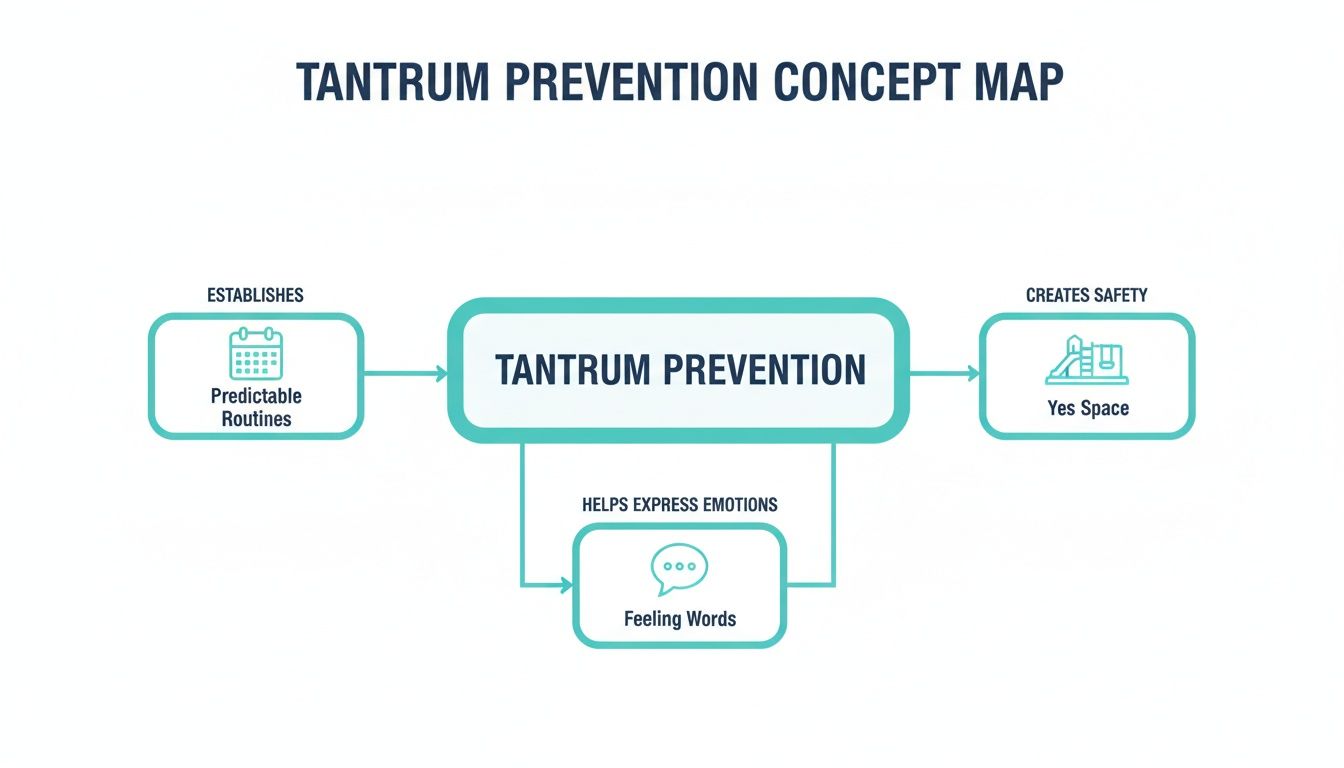
This just goes to show how a structured environment helps a toddler feel secure, which is key to preventing the kind of emotional overload that leads to a tantrum.
Handling Tantrums at Home vs. in Public
A tantrum in your living room feels worlds away from one in the middle of the grocery store. Your strategy has to adapt to the setting.
-
At Home: This is your safe zone. Make sure the area is clear of anything they could hurt themselves with and then give them some space. You can sit quietly nearby to show you’re there for them, but without directly engaging with the tantrum itself. This removes the "audience" and teaches them that a meltdown isn't a tool to get what they want.
-
In Public: This one’s tough, mostly because we feel so judged. Your number one priority is to calmly remove your child from the situation. Scoop them up, say, "We're going to a quiet place to calm down," and head for the car or an empty corner. Try to ignore the stares—every single parent has been there.
For a deeper dive into these techniques, a comprehensive guide on how to handle temper tantrums offers more fantastic, practical strategies for these real-time meltdowns.
When Tantrums Get Physical
It's unsettling when a tantrum turns physical—hitting, kicking, or throwing things. At that point, safety for everyone involved becomes the immediate priority.
Your response needs to be calm but incredibly firm. You might say, "I won't let you hit me," while gently holding their hands or moving just out of reach. The goal is to set a clear boundary on the behavior without shaming the feeling behind it. It's perfectly okay to be angry; it is not okay to hit.
Most toddler tantrums, even the intense ones, burn out pretty quickly. The American Academy of Child and Adolescent Psychiatry notes that most outbursts last between 2 to 15 minutes. Their advice is to stay calm, ensure safety, and wait out the storm. Once the tantrum subsides, praising your child for calming down helps reinforce that positive behavior and shows them the way out for next time.
The Aftermath: Repairing and Reconnecting
The storm has passed. The screams have quieted, the tears have dried, and your little one is now a puddle of exhaustion. Let's be honest—so are you. What you do in these quiet moments is just as critical as how you navigated the meltdown itself.
This is all about repair and reconnection. The goal is to move forward together without shame or lectures. Right after a tantrum, your child’s brain is still flooded with stress chemicals. They’re emotionally fragile. What they need now isn’t a lesson; it’s a powerful reminder of your unconditional love.
From Chaos to Calm Connection
Once your toddler is finally calm and open to it, the first step is to offer a simple, powerful connection. This isn't the time to rehash what went wrong or explain why their behavior was out of line. It’s about reinforcing their emotional safety and showing them your relationship is stronger than any outburst.
A simple, reassuring script can work wonders. Get down on their level, make gentle eye contact, and say something soft and loving.
"That was a really big feeling. You were so upset we had to leave the park. We're okay now. I love you."
This kind of statement does a few things at once: it labels the emotion, validates their experience (without condoning the behavior), and immediately reassures them that your bond is secure. You’re teaching a profound lesson: even after a big, messy conflict, relationships can be repaired.
The Power of a Simple Reset
After validating their feelings, it's time for what I call a "reset." This is just a quiet, shared activity that helps you both shift gears and move on from the intensity of the moment. The key is to choose something calm and connecting—this isn't a reward, but a way to help your frayed nervous systems sync back up.
Good options for a reset include:
- A warm hug: That physical comfort can release oxytocin, the "love hormone," helping both of you feel grounded and connected.
- Reading a familiar book: Sharing a quiet story creates a point of shared focus and comfort. It signals that things are back to normal.
- A sip of water: This simple act can be surprisingly grounding. It's a physical way to reset.
- Listening to a calm song: Music has an incredible ability to soothe the nervous system and completely change the emotional atmosphere in the room.
The reset isn't about pretending the tantrum didn't happen. It's about modeling a healthy way to move forward after a difficult emotional experience. You're showing your toddler that emotions are manageable and don't have to ruin the rest of the day.
Common Pitfalls to Avoid Post-Tantrum
What you don’t do after a tantrum is just as crucial as what you do. Some common reactions, while understandable in the moment, can unfortunately make a child feel anxious or ashamed, which can actually lead to more behavioral issues down the road.
Here’s what to steer clear of:
- Lecturing: Your toddler's logical brain is still offline. A long-winded explanation about why they were wrong will just go in one ear and out the other. Save it.
- Holding a grudge: Giving them the cold shoulder or acting resentful teaches them that love is conditional, which is deeply unsettling for a young child.
- Shaming: Using phrases like, "You're a bad girl for screaming," attaches their identity to their behavior. This is incredibly damaging. Always separate the child from the action.
Navigating these moments takes immense patience, and it's essential to remember that you can't pour from an empty cup. For more on this, check out our guide on the importance of parenting self-care. By focusing on repair and connection, you’re not just ending one tantrum; you're building a foundation of emotional resilience that will last a lifetime.
When a Tantrum Isn't Just a Tantrum
We’ve all been there—a full-blown meltdown over a broken cracker or the "wrong" color socks. While that's standard-issue toddler behavior, sometimes your gut tells you something else is going on. It’s so important to listen to that instinct.
Most of the time, tantrums are just a messy but normal part of growing up. But in some cases, they can be a sign that your child needs a different kind of support. This isn't about raising alarm bells; it's about empowering you with the knowledge to get your child help if they need it.
Signs to Pay Attention To
Think of these as gentle prompts, not a diagnostic checklist. If you're consistently seeing one or more of these patterns, it’s a good idea to chat with your pediatrician.
- Serious Aggression: Is your child regularly trying to hurt themselves during a tantrum, like banging their head against the floor? Or are they frequently lashing out and injuring you, a sibling, or a pet?
- Meltdowns That Won't End: A typical tantrum is intense but usually burns out pretty quickly. If your child's meltdowns are consistently lasting longer than 20-25 minutes, that could signal a deeper struggle.
- Getting Worse, Not Better: Tantrums usually peak around age two or three and then start to fade. If your child is over four and their tantrums are actually getting more frequent or intense, it's worth looking into.
- Struggling to Recover: Even with all your best efforts to help them calm down, does your child seem unable to pull themselves out of the tantrum? If they can't co-regulate with your help, something else might be at play.
Behaviors like these can sometimes be connected to things like sensory processing issues, communication delays, or other developmental conditions. For parents navigating these specific challenges, resources outlining strategies for stopping a child's ADHD tantrums can offer targeted and helpful guidance.
Your pediatrician is the best place to start. Before you go, jot down a few notes with specific examples of what you're seeing and how often it happens. This will give them a clear picture and help you figure out the best next steps together.
Frequently Asked Questions About Toddler Tantrums
Even with the best strategies in your back pocket, some tantrum situations can still leave you feeling completely baffled. Let's tackle some of the most common questions I hear from parents about handling those tough moments.
Is It Ever Okay to Ignore a Tantrum?
Yes, but there’s a crucial difference between ignoring the behavior and ignoring the child.
If your toddler is having a meltdown purely for attention or because they didn’t get that extra cookie, and you know they're in a safe place, ignoring the tantrum itself can be a powerful tool. You can stay nearby calmly, without making eye contact or speaking. This sends a quiet message: meltdowns don't work to get what you want.
That said, you should never, ever ignore a child who is genuinely overwhelmed, hurt, or in distress. The point isn't to withdraw your love and support; it's to stop reinforcing the outburst. You are always their safe place to land.
How Do I Handle Tantrums That Happen Right at Bedtime?
Ugh, the dreaded bedtime battle. These are almost always fueled by one of two culprits: they're either overtired or feeling a bit of separation anxiety. Your best defense is a rock-solid, predictable, and calming bedtime routine that kicks off a good 30–60 minutes before lights out.
A familiar sequence—maybe a warm bath, jammies, a story, then a final cuddle—is like a signal to your toddler's brain that it's time to power down. If the tantrum still starts, acknowledge their feelings ("I know you want to keep playing, but our bodies need to rest now") but hold the line on the routine.
A little pro tip: offer a tiny, acceptable choice. Letting them pick their pajamas or which of two books you'll read gives them a small hit of the control they're craving. You'd be amazed how often this simple trick can diffuse the entire power struggle.
Why Are My Toddler's Tantrums So Much Worse With Me?
This one feels so personal and is just plain exhausting, I know. But try to look at it from a different angle: it’s actually a sign of how safe they feel with you.
Your toddler knows your love is unconditional. That security gives them the freedom to let out their biggest, ugliest, most overwhelming feelings without fear that you'll leave them. They're essentially saving their worst for the person they trust the most.
They know you’ll still be there when the storm passes. So while it's incredibly hard in the moment, take a deep breath. You are their safe harbor, and this is a testament to the incredible bond you've built.
At Hiccapop, we get that parenting is a journey—full of amazing moments, tough challenges, and a whole lot of learning as you go. We're here to create smart, safe, and genuinely useful products that make your life just a little bit easier, so you can focus on what really matters.
Check out our full line of parent-approved solutions at https://hiccapop.com.