


How to Prevent Car Sickness in Toddlers: Your Guide to Peaceful Family Rides
Dealing with a car-sick toddler is one of those parenting rites of passage nobody asks for. One minute, you’re cruising along, singing songs; the next, you hear that sound from the back seat. That sinking feeling can derail any trip, whether it’s a cross-country adventure or a simple run to the grocery store. The good news? Car sickness is totally manageable, and preventing it often starts with understanding what’s happening in their little bodies.
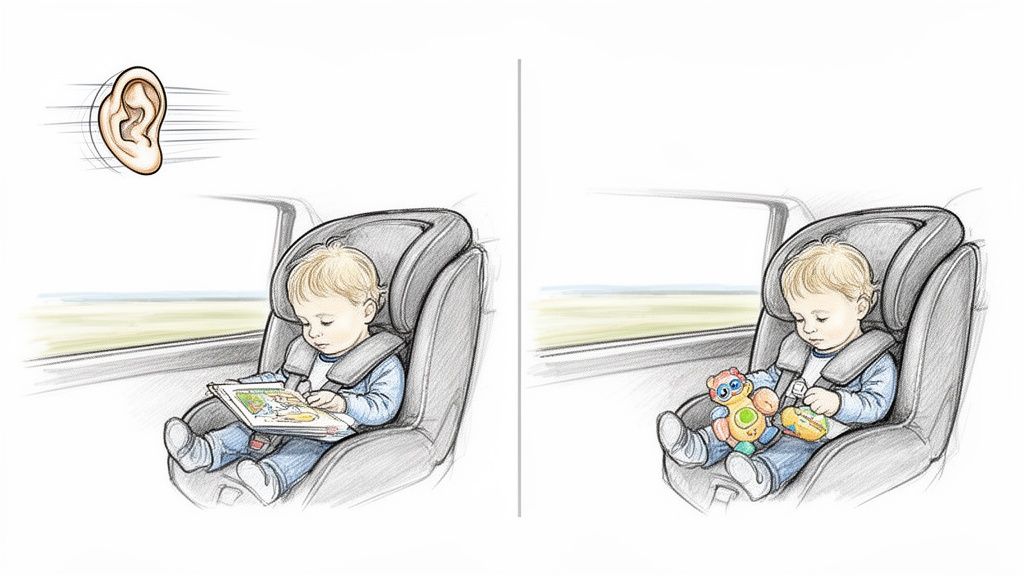
It all comes down to a sensory mismatch. Your toddler's brain is getting scrambled signals—their inner ear feels the motion of the car, but their eyes, often focused on a toy or the seat in front of them, see a stationary world. This conflict is what triggers that dreaded queasiness.
The key is to help your toddler's brain sync up what their eyes see with what their body feels. Simple strategies, like making sure they can see out the window and getting fresh air circulating, can make a world of difference.
Why Do Toddlers Get Car Sick, Anyway?
If you've ever wondered why your toddler seems especially prone to car sickness, you're not alone. It’s not something you’re doing wrong; it's a simple, yet powerful, case of sensory confusion in a developing brain.
This phenomenon, officially called motion sickness, kicks in when your child’s brain gets scrambled signals. Their inner ears, which are still getting the hang of things, feel every bump, turn, and stop. They’re shouting, "We're moving!"
But their eyes? They're often glued to a toy, a book, or the back of the seat in front of them. From their perspective, everything is perfectly still. Their eyes are reporting back, "Nope, we're not going anywhere."
Faced with this conflicting data, the brain gets confused. In a strange, ancient protective reflex, it defaults to thinking it might have been poisoned. The quickest solution? Hit the eject button. That's when the nausea, and often vomiting, begins.
It's a Totally Normal Developmental Phase
If it feels like your child is the only one getting sick on every winding road, take comfort in knowing this is incredibly common. Children between the ages of 2 and 12 are most susceptible because their sensory systems are still learning to work together.
In fact, multiple studies have found that roughly 35–43% of pre-pubertal children will experience motion sickness at some point. It’s a well-documented part of growing up, as you can read more about on the Mayo Clinic's children's health resources.
The real secret to avoiding a mess is learning to spot the early warning signs. Keep an eye out for these subtle cues:
- Sudden Quietness or Irritability: A cheerful kid who suddenly goes quiet or gets fussy is often the first sign something’s up.
- Yawning and Drowsiness: They might start yawning a lot or seem unusually sleepy.
- Pale or Flushed Skin: Notice if their skin suddenly looks pale, clammy, or even a bit green.
- Cold Sweats: A light sweat breaking out on their forehead is a classic giveaway.
Parenting Pro-Tip: Catching these cues early is your superpower. The second you notice a shift in your toddler's mood, it's time to act. Pull over if you can, crack a window for fresh air, or start a game of "I Spy" to get them looking out at the horizon.
How to Set Up Your Car for a Smooth Ride
Turning your car into a comfort zone for a travel-sensitive toddler begins long before you even turn the key. A few simple adjustments to their environment can be the difference between a peaceful drive and an emergency roadside cleanup. The goal is to create a calm, stable, and sensory-friendly space that won't overwhelm them.
One of the most effective things you can do is improve their line of sight. When a forward-facing toddler can see the horizon out the window, their eyes can confirm the movement their inner ear is feeling. This simple visual cue helps their brain make sense of the conflicting signals that trigger nausea.
Optimize Car Seat Positioning and Height
While a properly positioned car seat is a safety must, small tweaks can also make a huge difference in warding off car sickness. If your toddler is forward-facing, make sure their seat is high enough to give them a clear view out the side and front windows.
- Check the Height: Is your little one just staring at the back of the passenger seat? That’s a recipe for a queasy ride. Some harnessed seats naturally sit higher in a vehicle, but if not, this is where a booster seat can really help once they're old enough.
- Central Placement: If you only have one child in the back, consider placing their car seat in the middle position, if your vehicle’s manual and the seat’s instructions allow for it. This spot often provides the best, most stable forward-facing view.
Getting the installation perfect is critical for both safety and a smooth ride. For a detailed walkthrough, take a look at our comprehensive car seat installation tips to ensure everything is secure.
Manage Airflow and Temperature
Nothing makes a queasy tummy worse than a stuffy, hot car. Think of fresh, cool air as one of your best tools in the fight against motion sickness.
Make it a habit to cool the car down before you start driving. Point the air vents toward the back—but maybe not directly in their face—to keep a steady, comfortable breeze circulating. Even on a cooler day, cracking a back window just an inch can provide enough fresh air to keep nausea from setting in.
Conduct a Smell Audit
A toddler's sense of smell is far more sensitive than ours, and strong odors can be a major trigger for an already unsettled stomach. What smells perfectly fine to you might be overpowering for them.
Ditch that "New Car Scent" pine tree freshener hanging from your rearview mirror. Be mindful of lingering smells from last night’s takeout or that spilled coffee. For a travel-sensitive kid, a neutral-smelling car is a happy car.
This isn’t just a hunch; it’s a significant issue for countless families. Research shows that children between 2–12 years are a high-risk group. In fact, some population surveys have found that 50–67% of travelers experience car sickness at some point. You can read the full research on motion sickness in passengers to see the data behind why so many families are looking for ways to prevent it.
Your Pre-Trip and On-the-Road Game Plan
When you’re trying to head off toddler car sickness, a little bit of planning goes a long, long way. Thinking ahead before you even buckle them in can stop most issues before they start, turning a potentially miserable drive into just another part of the adventure.
It all starts with when you leave. If you can swing it, try to time your departure with your toddler’s usual naptime. A sleeping kid is a kid who isn't feeling sick, making this the gold standard for peaceful, long-distance trips.
Fueling Up the Right Way
Before hitting the road, offer your toddler a light, bland snack. From my experience, a little something in their stomach often works better than a completely empty one, which can sometimes make nausea even worse.
Think simple and easy to digest.
- Plain crackers
- A handful of pretzels
- Dry cereal
Steer clear of anything heavy, greasy, or super sugary. A big breakfast of syrupy pancakes and sausage right before a two-hour drive is practically asking for trouble. Keep it small and simple.
A well-thought-out packing list is also a lifesaver. This smart road trip packing guide is a great resource for making sure you’re prepared for anything the road throws at you.
Master the Art of the Smooth Ride
Once you're moving, how you drive makes a huge difference. Every sudden stop and sharp turn feels ten times bigger in the back seat. I always tell parents to imagine they're driving with a full, uncovered pot of soup on the passenger seat—that's the kind of smoothness you’re aiming for.
Driver's Ed for Parents: Think smooth. Gentle acceleration away from stoplights, taking corners a little wider and slower, and leaving tons of room for gradual braking all help create a more stable, less queasy-making environment for your little one.
These small tweaks really cut down on the sensory confusion that triggers a sick stomach. For a deeper dive into managing long drives, our guide on how to survive a road trip with a toddler is full of parent-tested advice.
Choose Your Distractions Wisely
Keeping a toddler occupied is essential, but you have to pick the right kind of distraction. The goal is always to encourage them to look up and out the window, not down at their lap.
This means putting away the tablets, coloring books, and even picture books for the car ride. Any activity that forces their head down creates that classic sensory mismatch: their eyes see something stationary, but their inner ear feels the car moving.
Instead, turn to activities that engage their ears or get them looking at the horizon.
Car-Sickness-Friendly Entertainment:
- Audiobooks and Stories: Engaging podcasts or audiobooks can capture their full attention without them ever needing to look down.
- Sing-Along Playlists: Nothing passes the time like a family concert on wheels. Get their favorite tunes ready to go.
- Window Games: Classics like "I Spy" (with my little eye, something outside!) or looking for different colored cars are perfect for getting them to focus on the world whizzing by.
By being intentional about your timing, snacks, driving style, and entertainment, you can set the stage for a much happier, vomit-free journey.
Packing Your Car Sickness Survival Kit
As any parent who's been through it knows, a little preparation goes a long way. Having a pre-packed “go-bag” for car sickness can transform a potentially trip-ruining moment into a manageable hiccup. When you have everything you need within arm's reach, you can handle messes without the panic, and that makes all the difference.

The trick is to keep it all in one spot so you aren't digging around under seats while your toddler is in distress. A simple tote bag on the passenger floor or a seat-back organizer works perfectly. If you're looking for a broader packing list, our guide on travel essentials for toddlers is a great place to start.
Your Essential Car Sickness Go-Bag
To make things easy, I’ve put together a checklist of must-haves for both preventing an incident and cleaning up if one happens.
| Item Category | Specific Items | Why You Need It |
|---|---|---|
| Soothing & Prevention | • Bland, dry snacks (crackers, pretzels, Cheerios) | Helps settle a queasy tummy without being too heavy or greasy. |
| • Small water bottle with a straw | Small, cool sips can be very soothing and prevent dehydration. | |
| • Ginger or peppermint lozenges/chews | Great natural remedies for older toddlers, but check with your pediatrician first. | |
| The Cleanup Crew | • Wet wipes and paper towels | For the initial cleanup of your child, the car seat, and everything in between. |
| • Sealable plastic bags (e.g., Ziploc gallon bags) | Absolutely essential for quarantining soiled clothes and containing odors. | |
| • A complete change of clothes for your toddler | Don't forget the socks! Pack a full head-to-toe outfit. | |
| • A spare shirt for you | Trust me on this one. You're often in the splash zone. | |
| • Old towels or disposable absorbent pads | Place one under your child before you leave to protect the car seat. |
This little kit has been a lifesaver on our family trips, and I hope it brings you the same peace of mind on the road.
Dealing with the Aftermath
Even with perfect preparation, sometimes sickness just happens. When it does, knowing how to effectively remove vomit smell from your car is a game-changer. That lingering odor can be a trigger for future episodes, so getting rid of it quickly is key.
Key Takeaway: Think of this kit as your roadside reassurance. It’s not just about cleaning up a mess—it’s about having the confidence to pull over, calmly handle the situation, and get back to making happy memories without letting a little motion sickness ruin your day.
When to Consider Remedies and Medications
Sometimes, you do everything right. You've got the windows cracked, you’re driving like a chauffeur, and you’ve packed all the right snacks. And yet, your toddler is still miserable every time you get in the car. When you’ve exhausted all the natural strategies, it’s completely normal to start wondering what else is out there. This is where the conversation about remedies and medications usually begins, but it's one you absolutely must start with your pediatrician.
Trying to figure this out on your own can feel like a minefield. Your doctor is your best guide here, helping you make an informed choice based on your child's specific age, weight, and overall health.
Over-the-Counter Medications
For children over the age of two, your pediatrician may bring up certain over-the-counter (OTC) antihistamines. The one you’ll probably hear about most is Dimenhydrinate, which you've likely seen sold under brand names like Dramamine for Kids. These work by blocking the mixed signals in the brain that trigger nausea and dizziness.
But it’s not as simple as just picking a box up at the pharmacy.
- Timing is Key: For these to work, they have to be in your child's system before the motion starts. That means giving them a dose 30 to 60 minutes before you leave the driveway.
- Dosage is Crucial: Never, ever guess the dose. Your pediatrician will give you a specific amount based on your child’s exact weight, which is much safer than relying on the general age guidelines on the packaging.
- Side Effects are Possible: The most common side effect is drowsiness, which honestly, can be a blessing on a long car ride. But be aware that some kids have the opposite reaction and become hyper or agitated.
Always talk to your pediatrician before giving your child any medication for car sickness. They’ll help you weigh the benefits against the potential downsides and make sure you’re choosing the safest and most effective option for your little one.
Natural and Alternative Options
If you’re not quite ready to go the medication route or you're looking for things to try alongside other strategies, some parents have good luck with a few non-pharmaceutical remedies. What works is really individual to each child, but these are generally safe and often worth a shot.
Acupressure Wristbands
You’ve probably seen these—they’re elastic bands with a little plastic button that puts gentle pressure on a specific point on the inner wrist. The theory is that this pressure point helps disrupt nausea signals. While the scientific proof for toddlers is a bit thin, they are completely harmless and many parents are firm believers.
Ginger and Peppermint
These have been go-to tummy-tamers for generations for a reason.
- Ginger: If your toddler is old enough, a small ginger chew or a few sips of flat, real ginger ale can sometimes help settle a queasy stomach.
- Peppermint: Just the scent of peppermint can be soothing. Try putting a couple of drops of peppermint essential oil on a cotton ball and tucking it into a car vent—just make sure it’s safely out of your child’s reach.
It's important to remember that while OTC medications are an option, they really do require a doctor's guidance. When dosed correctly, a medication like dimenhydrinate can offer 4–6 hours of relief for children over 2 years old. However, because of potential side effects like drowsiness or agitation, it’s not something you’d want to use routinely without your doctor’s explicit advice. For more in-depth information, you can find helpful guidelines for preventing motion sickness in children here.
Your Road to Smoother Travels
Let’s be honest: dealing with car sickness is no fun for anyone. It's stressful for you and miserable for your little one. But remember, this is almost always a temporary phase. By understanding the causes and being proactive, you can turn dreaded car rides back into happy family adventures.
The key is a combination of preparation and observation. Set your car up for success with good airflow and a clear line of sight, plan your trips around nap times, and choose snacks and activities wisely. And most importantly, learn to spot those early warning signs so you can intervene before their tummy gets the best of them.
With a few smart strategies and a well-stocked survival kit, you’ll be ready to handle whatever the road throws your way. You've got this!
What are your go-to tricks for preventing car sickness? Share your parent-tested tips in the comments below—we’d love to hear what works for your family!
At Hiccapop, we're all about creating smart, parent-approved solutions that make life with little ones easier and safer. From travel gear to nursery essentials, we design every product with your family's peace of mind at the forefront. Discover the difference on https://hiccapop.com.