


How to Dress Your Baby for Sleep: A Parent's Practical Guide
Dressing your baby for sleep can feel like a nightly puzzle, especially when you're a new parent trying to get everything just right. The good news? It's simpler than it seems. The golden rule is to dress your baby in one more light layer than what you would find comfortable in the same room. This simple guideline helps you sidestep the biggest risk: overheating.
The Foundation of Safe and Comfortable Baby Sleep
Figuring out the right sleepwear isn't about guesswork; it's about understanding the basics of safety and comfort. It’s a common misconception that babies need to be bundled up like tiny burritos, but that old advice can actually be dangerous. The real goal is to keep your baby at a stable, comfortable temperature—not too hot, and not too cold.
Overheating is a serious concern, as it's a known risk factor for sleep-related infant deaths. The American Academy of Pediatrics (AAP) specifically warns against overheating and covering a baby’s head, as both create an unsafe sleep environment. This advice is more critical than ever, with recent data showing a troubling 12% increase in Sudden Unexpected Infant Death (SUID) rates between 2020 and 2022.
The One-Layer-More Rule
The easiest place to start is with the "one-layer-more" guideline. If you're comfortable in a t-shirt, your baby might need a long-sleeve onesie plus a lightweight sleep sack. It’s a straightforward way to keep them from getting too warm or too chilly.
Remember, a wearable blanket or sleep sack counts as a layer. It's a much safer alternative to loose traditional blankets, which have no place in a crib with a baby under 12 months old. For a full breakdown of creating a hazard-free nursery, check out our guide on establishing a safe sleep environment.
Why Fabric Choice Matters
When it comes to Baby Sleepwear, breathable fabrics are your best friend. Materials like cotton, bamboo, and merino wool are fantastic choices because they help regulate body temperature by wicking away moisture. Fleece and other synthetic fabrics can be great for colder nights, but since they can trap heat, it’s best to use them with a little extra caution.
Parenting Pro Tip: Always skip hats, hoods, or beanies for indoor sleep. Babies release excess heat through their heads to regulate their body temperature, and covering them can quickly lead to overheating. Save those adorable hats for your daytime adventures!
Mastering the TOG System for Perfect Sleepwear
Ever looked at a baby sleep sack label, seen the term "TOG," and wondered what on earth it meant? You're not alone. But trust me, understanding this little acronym is a game-changer for parents.
Think of TOG (Thermal Overall Grade) as a simple warmth rating for your baby's pajamas or sleep sack, just like the tog rating on your own duvet. It takes all the guesswork out of dressing your baby for bed. No more midnight worrying about whether they're too hot or too cold—you can just match the TOG to the temperature of their room. Higher TOG means more warmth; lower TOG is for milder nights.
The push toward systems like this isn't just about comfort; it's a huge step forward in sleep safety. Moving away from traditional loose blankets to precisely rated sleepwear is more important than you might think.
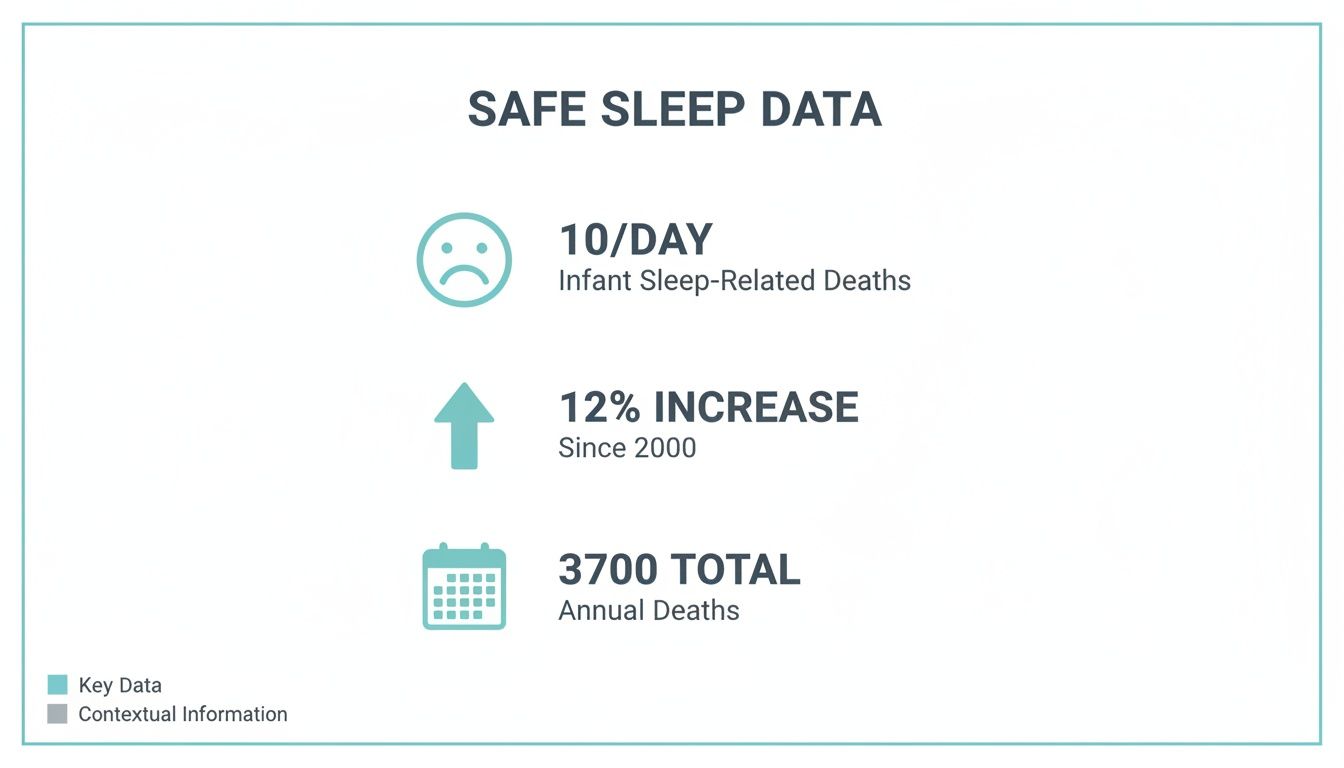
The numbers are sobering, with more than 10 sleep-related infant deaths happening every single day. This is exactly why making informed choices about what your baby wears to sleep is so critical.
Decoding TOG Ratings for Your Nursery
The real magic of the TOG system is how practical it is. It creates a direct link between the temperature in your baby's room and the layers they need to sleep soundly and safely.
Let’s break it down with some real-world examples:
- Warm Room (75-81°F / 24-27°C): On those balmy summer nights, you'll want something super lightweight. A sleep sack with a 0.2 to 0.5 TOG rating is perfect, often paired with just a short-sleeve onesie or even only a diaper underneath.
- Comfortable Room (69-74°F / 21-23°C): This is your typical, ideal nursery temperature. A versatile 1.0 TOG sleep sack is the go-to here. You can layer it over a long-sleeve onesie or a pair of simple cotton pajamas.
- Cool Room (61-68°F / 16-20°C): When the air gets a bit chilly, it’s time to bring out the cozier gear. A 2.5 TOG sleep sack provides significant warmth, especially when worn over a pair of fleece or footed pajamas.
Key Takeaway: TOG-rated wearable blankets are the gold standard for safe sleep. They offer consistent, all-night warmth without the serious suffocation and entanglement risks that come with having loose blankets in the crib.
To make it even easier, here's a comprehensive chart that eliminates any lingering guesswork. Just find your room's temperature and see exactly what combination works best.
Comprehensive TOG Rating and Layering Chart
| Room Temperature (°F / °C) | Recommended TOG Rating | Example Sleepwear Layers |
|---|---|---|
| 78-81°F / 26-27°C | 0.2 TOG | Just a diaper |
| 75-77°F / 24-25°C | 0.5 TOG | Short-sleeve onesie |
| 69-74°F / 21-23°C | 1.0 TOG | Long-sleeve onesie or cotton PJs |
| 65-68°F / 18-20°C | 2.5 TOG | Long-sleeve onesie and cotton PJs |
| 61-64°F / 16-17°C | 2.5 TOG | Long-sleeve onesie and fleece/footed PJs |
| Below 60°F / <16°C | 3.5 TOG | Long-sleeve onesie, footed PJs, and socks (if necessary) |
With this chart, you can confidently dress your baby for any temperature, ensuring they are always just right.
Why Sleep Sacks Are a Safer Choice
At its core, a TOG-rated sleep sack is simply a wearable blanket. It’s designed to keep your little one snug and secure without restricting their arms, which becomes especially important once they start showing signs of rolling over. For a deeper dive into their benefits, check out our guide explaining what is a sleep sack.
The TOG system also makes handling seasonal changes a breeze. As those warm summer nights slowly transition into crisp autumn evenings, you can simply swap out the lightweight 1.0 TOG sack for a cozier 2.5 TOG. This simple adjustment ensures your baby stays comfortable through it all, which means better, safer sleep for them—and more peace of mind for you.
Dressing Your Baby Through Every Milestone
A baby’s sleep needs—and sleepwear—change in the blink of an eye. What keeps a tiny newborn snug and secure won't be safe or comfortable for a baby who's starting to roll and explore. Knowing how to adapt their sleep attire at each stage is one of the most important things we can do as parents to ensure safe, restful nights.
This isn't just about comfort; it's a critical piece of the safe sleep puzzle. The sobering reality, according to the 2022 sleep-related infant death statistics, is that in 57% of crib-related deaths, babies were found on their stomachs—a stark reminder of how dangerous it is for them to roll into a position they can't get out of.
The Snug Swaddle Stage: Newborns (0-3 Months)
For a brand-new baby, the world is a big, startling place compared to the cozy confines of the womb. A swaddle is a fantastic tool for recreating that secure feeling, which helps calm their Moro (or startle) reflex so they don’t jerk themselves awake.
When you're swaddling, the technique matters:
- Snug Up Top: Wrap the swaddle firmly around their chest and arms to provide that comforting, womb-like pressure.
- Loose on the Bottom: Their legs and hips need plenty of room to bend up and out into a natural "frog-like" position. This is essential for healthy hip development.
The Big Transition: Infants (3-6 Months)
This is a huge turning point in your baby’s sleep journey. The moment you see your little one showing signs of trying to roll over—even if it's just lifting their shoulders or rocking their hips—it is time to stop swaddling. Immediately.
A swaddled baby who manages to roll onto their tummy is at a significantly higher risk of suffocation.
This is when you'll want to introduce a sleep sack, also called a wearable blanket. It keeps them warm and cozy without pinning their arms, giving them the freedom to push up and reposition themselves if they happen to roll over.
Crucial Safety Note: The transition from a swaddle to a sleep sack is non-negotiable. It’s based entirely on your baby's developmental readiness, not a specific age. Watch for those first rolling cues and make the switch right away.
Freedom to Move: Mobile Babies (6-12 Months)
Once your baby is sitting up, crawling, or pulling themselves to a stand in the crib, their sleepwear needs to accommodate all that new movement. A sleep sack is still your best and safest bet. It creates a contained sleep environment that prevents their little legs from getting tangled in the crib slats, but it still gives them enough freedom to stand up, cruise around the crib, and eventually settle down to sleep.
Balancing Independence and Safety: Toddlers (12+ Months)
Toddlers are constantly on the go, and their PJs need to keep up. While some toddlers are perfectly content in a traditional sleep sack, many parents find that a wearable blanket with foot holes is a game-changer. This design lets them safely walk around their room before bed and after waking up, which drastically reduces the risk of tripping over a traditional sack.
As they get older, you'll likely move to two-piece pajama sets. No matter what they wear, the most important rule is to keep the crib completely free of loose bedding until they've moved to a toddler bed. You can learn more about how their needs change by reading about what are the major baby milestones.
Common Sleepwear Mistakes to Sidestep
Every new parent has done it: stood over the crib in the dark, hand hovering, trying to figure out if their baby is too hot, too cold, or just right. It’s easy to get caught up in the worry, but a few simple guidelines can help you sidestep common mistakes and ensure your little one is sleeping safely and soundly.
The most frequent pitfall is probably overdressing. We're wired to keep our babies cozy, but too many layers can quickly lead to overheating, which is a significant risk factor for SIDS. If you pick your baby up and find a sweaty neck or damp hair, it’s a clear sign to lose a layer. On the flip side, underdressing can also be an issue. A chilly baby is an awake baby, which isn't good for anyone! This is where getting familiar with TOG ratings and the "one extra layer" rule really pays off.
Beyond Layers: Unsafe Items and Practices
Knowing what to put on your baby is only half the battle; knowing what to leave out of the crib is just as critical. Here’s a hard-and-fast list of what to always avoid in the crib:
- Hats or Hoods: Babies release a lot of heat through their heads to regulate their body temperature. Covering their head indoors can trap that heat and cause them to dangerously overheat.
- Loose Bedding: This one is a non-negotiable for safe sleep. Ditch the blankets, pillows, and bumpers. A sleep sack is a much safer alternative to keep your baby warm.
- Worn-Out Sleepwear: That adorable hand-me-down sleeper might have seen better days. Give it a good look-over for loose snaps, stretched-out necklines, or frayed threads that could become a choking or entanglement hazard.
The Best Way to Check: The Touch Test
So, how can you know for sure if your baby is comfortable? Forget feeling their tiny hands and feet. A baby's circulation is still developing, so their extremities often feel cool to the touch and aren't a reliable gauge of their core temperature.
The Simple Touch Test: The best method is to gently place the back of your hand on your baby's chest or the nape of their neck. If their skin feels warm and dry, they're likely perfect. If it feels clammy or sweaty, they're too hot. And if it feels cool, they might need one more light layer.
This quick check is one of the most reliable tools in your parenting toolkit. It gives you immediate feedback and helps you tune into your baby's needs, empowering you to trust your own judgment night after night.
Adapting Sleepwear for Real-Life Scenarios
Life with a baby is anything but predictable. One minute you're in a perfectly climate-controlled nursery, and the next you're dealing with a sudden fever or packing for a trip. The key is learning how to adapt on the fly. Think of it less as a rigid set of rules and more as a flexible framework. You have the knowledge about layering and TOG ratings; now it's about applying it to whatever life throws at you.
Navigating Fevers and Illness
It's a moment every parent dreads: you see the high number on the thermometer. Your first instinct, especially if your baby has the chills, might be to bundle them up. Resist that urge. It’s actually crucial to avoid adding extra layers, which can trap heat and make the fever worse. Instead, dress them in a single, lightweight, and breathable layer—a simple cotton onesie is usually perfect. This gives their body a chance to cool itself down naturally. If the room is on the cooler side, a very light sleep sack (think 0.2 to 0.5 TOG) is okay, but constantly check the back of their neck to make sure they aren't getting too warm.
Dressing for Travel and New Environments
Whether you're visiting family or staying in a hotel, you lose control over the thermostat. This is where packing smart comes in. Focus on versatile layers that can handle a range of temperatures. A travel kit that includes a few basic onesies, a lightweight 1.0 TOG sleep sack, and a warmer 2.5 TOG sleep sack will prepare you for almost anything. When you put your baby down for the night, do a quick temperature check on their neck. It's the most reliable way to know if you've layered correctly.
The Great Nap Debate
Do babies need a special outfit just for naps? Not really. The best advice is to simply dress them for the temperature of the room at that moment. A nursery can be much warmer during a sunny afternoon than it is in the middle of the night. A baby who sleeps soundly in a onesie and a 1.0 TOG sleep sack overnight might only need a simple onesie for their midday nap. Don't overcomplicate it—just assess the current conditions.
Handling Climate Extremes
Living in a place with very hot summers or bitterly cold winters requires a more specialized approach.
Parenting Pro Tip: In hot, humid climates where the nursery is consistently above 75°F (24°C), less is truly more. A diaper and a very thin, muslin sleep sack (0.2 TOG) is often all a baby needs to feel secure without the risk of overheating.
On the other hand, if you're in an older, drafty house during the winter, you'll need to layer up. Cozy footed fleece pajamas under a warm 2.5 or 3.5 TOG sleep sack will keep them snug. Just remember to keep their crib clear of drafty windows and never leave a space heater running unattended in their room.
Answering Your Top Questions About Dressing Your Baby for Sleep
Even with all the charts and guides in the world, you're still going to have questions. That's just part of being a parent, especially in the middle of the night when you're second-guessing every decision. We've been there. So, we've rounded up the most common questions we hear to give you some clear, confident answers.
Are My Baby's Cold Hands and Feet a Bad Sign?
This is probably the number one worry for new parents, so let's put your mind at ease: it's totally normal. Cold hands and feet are not a reliable sign that your baby is actually cold. A baby’s circulatory system is still a work in progress, so the best way to get a true read on their temperature is to feel the back of their neck or their chest. If it feels warm and dry, they’re dressed just right.
When Can My Baby Safely Sleep with a Blanket?
The American Academy of Pediatrics (AAP) is crystal clear on this: no loose bedding in the crib for babies under 12 months old. That means no blankets, pillows, bumpers, or soft toys. They all pose a serious risk for suffocation and SIDS. The safest way to keep your baby warm is with a wearable blanket, like a sleep sack. You'll want to wait until your child is at least a year old, and many experts even recommend waiting until they're closer to 18-24 months, before introducing a small, lightweight blanket.
What’s the Difference Between a Swaddle and a Sleep Sack?
Think of a swaddle as a special hug for newborns. It’s a thin blanket used to wrap your baby up snugly, keeping their arms tucked in. This mimics the tight, secure feeling of the womb and helps prevent their startle reflex from waking them up. A sleep sack, however, is a wearable blanket that a baby wears over their pajamas. It lets their arms be completely free, which is absolutely essential for safety once they start trying to roll.
Critical Transition: The moment you see your baby showing signs of trying to roll over (usually between two and four months), you must stop swaddling. It’s time to switch immediately to a sleep sack to keep them safe.
How Should I Dress My Baby for Sleep if They Have a Fever?
When your baby has a fever, your instinct might be to bundle them up, but it’s really important to do the opposite. Adding extra layers can actually trap heat and make their fever worse. Stick to a single, light layer made of a breathable fabric like cotton. A simple short-sleeve onesie is often perfect. The goal is to keep them comfortable without causing them to overheat. Of course, always check in with your pediatrician for advice on managing a fever.
At Hiccapop, we get that parenting is a journey filled with a million little questions. Our mission is to create products that give you peace of mind, so you can worry less and focus on the moments that matter most. We hope this guide helps you feel more confident in dressing your little one for safe and sound sleep. Have a sleepwear tip that's a game-changer for you? Share it in the comments below!
Check out our lineup of thoughtfully designed baby essentials at Hiccapop.