


A Parent's Guide to Car Seat Head Holder Safety
You’ve probably seen them online: special bands, pillows, or cushioned supports called a car seat head holder. They're sold as an easy fix to stop a child's head from slumping forward when they fall asleep in the car. The idea behind them seems great—who wouldn't want their little one to be more comfortable?
However, safety experts and leading organizations like the American Academy of Pediatrics (AAP) have a very clear and serious warning: avoid these products. They aren't tested with car seats and can introduce major safety risks that just aren't worth it.
Are Car Seat Head Holders Safe
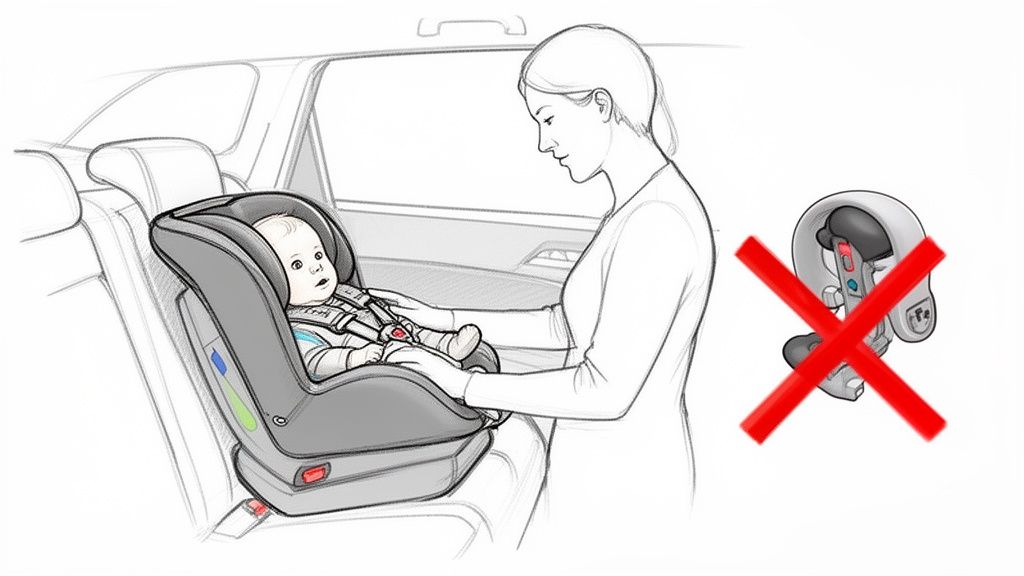
It’s a classic parenting panic moment. You glance in the rearview mirror and see your child’s head flopped forward, chin tucked to their chest. Your gut reaction is to pull over and fix it, and fast. This all-too-common worry is what sends many well-meaning parents searching for a solution, often landing on a car seat head holder.
These gadgets look innocent enough, but they can fundamentally compromise the safety of a car seat, which is one of the most highly engineered pieces of baby gear you'll ever own.
The Expert Consensus On Aftermarket Products
Think about it: car seat manufacturers invest millions into research, engineering, and crash testing to make sure every single part of the seat works together in a collision. When you add an aftermarket product—which is anything that didn't come in the box from the manufacturer—you’re tossing an untested, unregulated variable into that carefully designed safety system.
Child Passenger Safety Technicians (CPSTs) and safety advocates are unanimous on this point: do not add anything to your car seat that wasn't made by the manufacturer for that specific seat. Here's why:
- They Mess With the Harness Fit: A snug harness is non-negotiable. Head holders and other inserts can create dangerous slack in the straps or push the chest clip out of its proper position at armpit level.
- They Can Become Projectiles: In a crash, that soft little pillow can become a projectile, or worse, apply force to your child's head and neck in ways the seat was never designed to handle.
- They Pose a Suffocation Risk: This is the most frightening risk. Strap-style holders can easily slip down over a child's mouth and nose while you're focused on the road, creating a very real danger of positional asphyxiation.
According to the National Highway Traffic Safety Administration (NHTSA), properly used car seats reduce the risk of fatal injury by a staggering 71% for infants and 54% for toddlers. Altering that safety system with unapproved accessories can undo that protection.
To give you a clearer picture, here’s a quick breakdown of the safety concerns.
Car Seat Head Holder Safety Snapshot
| Concern | Expert Consensus | Recommended Action |
|---|---|---|
| Interference with Harness | Aftermarket products can prevent a snug and proper harness fit, which is critical for restraining a child in a crash. | Only use inserts that came with your car seat or are officially approved by the manufacturer for your specific model. |
| Positional Asphyxiation | Head holders, especially strap-based ones, can slip and cover a child's airway, restricting their ability to breathe. | Ensure the car seat is installed at the correct recline angle. This is the only safe way to keep a child's airway open. |
| Compromised Crash Performance | Untested accessories can alter how a car seat performs in a crash, potentially leading to severe injury. | Never add any product to your car seat that has not been crash-tested and approved by the car seat manufacturer. |
The consensus from the people who dedicate their lives to child passenger safety is crystal clear: the risks far outweigh any perceived benefit.
Why Head Slump Usually Isn't A Medical Emergency
Here’s the good news that might give you some peace of mind. For a healthy child who is buckled in correctly, that head slump is almost always just a comfort issue, not a breathing one.
As long as their chin isn't being forced down onto their chest, their airway is typically open and clear. The single most important factor for keeping a baby’s airway protected is the recline angle of the car seat itself, not an add-on pillow. Before you buy anything, let's look at the safe, approved ways to solve this problem.
Why Aftermarket Car Seat Accessories Are Risky
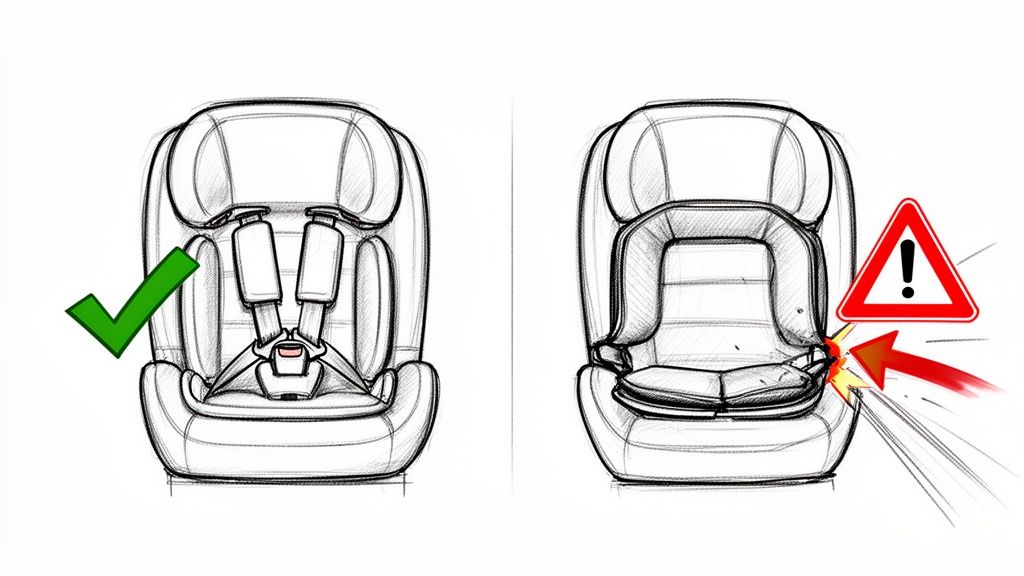
It’s easy to get lost in the sea of baby products out there. When you come across something like a car seat head holder that promises to keep your little one more comfortable, it’s tempting to grab it. But before you do, it's crucial to understand the line between what came with your car seat and what's sold separately.
Anything that wasn't in the box or isn't specifically approved by the car seat manufacturer for your exact model is called an aftermarket product. Here’s the problem: these add-ons have not been crash-tested with your car seat. They introduce a dangerous unknown into a meticulously engineered safety system.
The Untested Variable in a Crash
Think of your car seat as a finely tuned system where every single component is designed to work together perfectly during the violent forces of a crash. Now, imagine bolting an unapproved, third-party part onto it. That’s exactly what you’re doing when you add an aftermarket head holder.
You simply have no way of knowing how it will behave under pressure. It could break, shift, or worse, cause the entire car seat to fail. Safety experts are clear on this—these add-ons can completely change how your car seat is supposed to protect your child.
A car seat is a complete safety system. Adding any product not designed and tested by the manufacturer for your specific seat is a gamble you should never take with your child's life.
This isn’t about being overly cautious; it’s about physics. The materials, the stitching, the shape—every element is there for a reason.
How Accessories Interfere with Safety
Aftermarket products, especially things like head holders, can create some very specific and dangerous problems. The most common issues we see are:
- Creating Harness Slack: Any extra padding between your child and the harness straps can compress during a crash. This creates slack, and a loose harness is one of the biggest dangers, potentially leading to ejection from the seat.
- Interfering with Flammability Standards: All car seats must meet strict federal flammability standards. Untested fabrics from an aftermarket accessory might not, introducing a serious fire and burn risk.
- Altering Crash Dynamics: The extra bulk can push your child's head and body into an unnatural, unsafe position. This alters the way their head, neck, and spine are supported during an impact, which can have devastating consequences.
Of course, keeping your child safe goes beyond just the car. It’s part of a bigger picture that includes learning how to childproof your home.
The Push for Integrated Safety
Car seat manufacturers get it. They know parents are looking for better head support, which is why they are pouring resources into developing integrated solutions. The market for automotive active seat headrests hit an incredible $18.247 billion in 2024 and is projected to more than double to $42.461 billion by 2033.
This massive investment shows a clear industry shift: building advanced safety features directly into the seats themselves, instead of leaving parents to rely on risky add-ons.
The bottom line is simple. Stick to what came in the box or what the car seat manufacturer has officially approved for your seat. Nothing else is worth the risk.
The Hidden Danger of Positional Asphyxiation
Beyond the chaos of a car crash, some car seat head holders introduce a quieter, more immediate danger: positional asphyxiation. It sounds intimidating, but the concept is simple and one that every parent, especially those with newborns, needs to grasp.
Picture an infant’s airway as a soft, flexible straw—it doesn't have the rigid structure of an adult's. Now, what happens when you kink that straw? The flow stops. That's exactly what can happen when a baby’s heavy head slumps forward, tucking their chin down to their chest.
The "Chin-to-Chest" Red Flag
This “chin-to-chest” position is a major red flag. It can pinch a baby’s tiny airway, making it difficult or even impossible to breathe. And because infants don’t have the neck muscle control to lift their head back up, this slump can become life-threatening in minutes, even if the car is just sitting in the driveway.
This is precisely why your car seat's recline angle is its most critical safety feature for infants. The proper recline uses gravity to gently cradle the baby’s head back, keeping their airway wide open. Adding a bulky, unapproved head holder can completely undermine this, pushing their head forward into the very danger zone you're trying to avoid.
The only way to guarantee an open airway for an infant is to install the car seat at the manufacturer's specified recline angle. Aftermarket products are not the solution.
Keeping a baby's airway clear is the golden rule of infant safety, whether they are in a car or at home. This principle extends to all sleep environments, a point covered well in this guide on bunk beds with crib on bottom for safer sleep.
How Aftermarket Products Make Things Worse
Many of those plush-looking head holders you see online have thick padding right behind the baby’s head. It looks cozy, but it often has a disastrous effect.
- Pushes the Head Forward: That extra bulk shoves the baby's head forward, completely defeating the car seat's built-in recline and creating an unsafe, upright angle.
- Lacks Real Support: These accessories aren't designed or tested to support a baby’s head and torso in a way that keeps the airway clear. They're just pillows.
- Can Slip and Suffocate: Straps and pillows can easily shift as the car moves, potentially ending up covering the baby's mouth and nose.
In the end, these products can create the very problem they claim to solve. Real car seat safety isn't about adding more stuff; it’s about using the seat exactly as the people who engineered it intended.
Safe and Expert-Approved Head Support Solutions
After learning about the serious risks of aftermarket products, it’s natural to wonder, "So what can I do to keep my baby’s head from slumping?" Fortunately, the safest solutions are often the simplest ones. It's time to forget the gadgets and gizmos; real peace of mind comes from using your car seat exactly as its safety engineers designed it.
The single most powerful tool you have is your car seat's recline angle. For infants with little to no head control, getting the recline right is the number one defense against their head falling into that dangerous chin-to-chest position. A proper recline uses gravity to your advantage, keeping their head safely back and their airway wide open.
Check Your Recline First
Before you do anything else, get to know your seat's recline indicator. Most car seats have a built-in guide—it might be a bubble level, a colored line, or a dial—that shows you the precise angle range for a rear-facing infant. If you notice your baby's head is slumping forward, your very first step should be to check this indicator. Adjust the seat's installation until you're perfectly within that safe zone.
Honestly, this one step solves the vast majority of head slump issues without ever needing to add a single accessory to the seat.
This is why it's so critical. When a baby's head falls forward, their airway can get kinked, just like a garden hose. This can restrict or even block airflow.
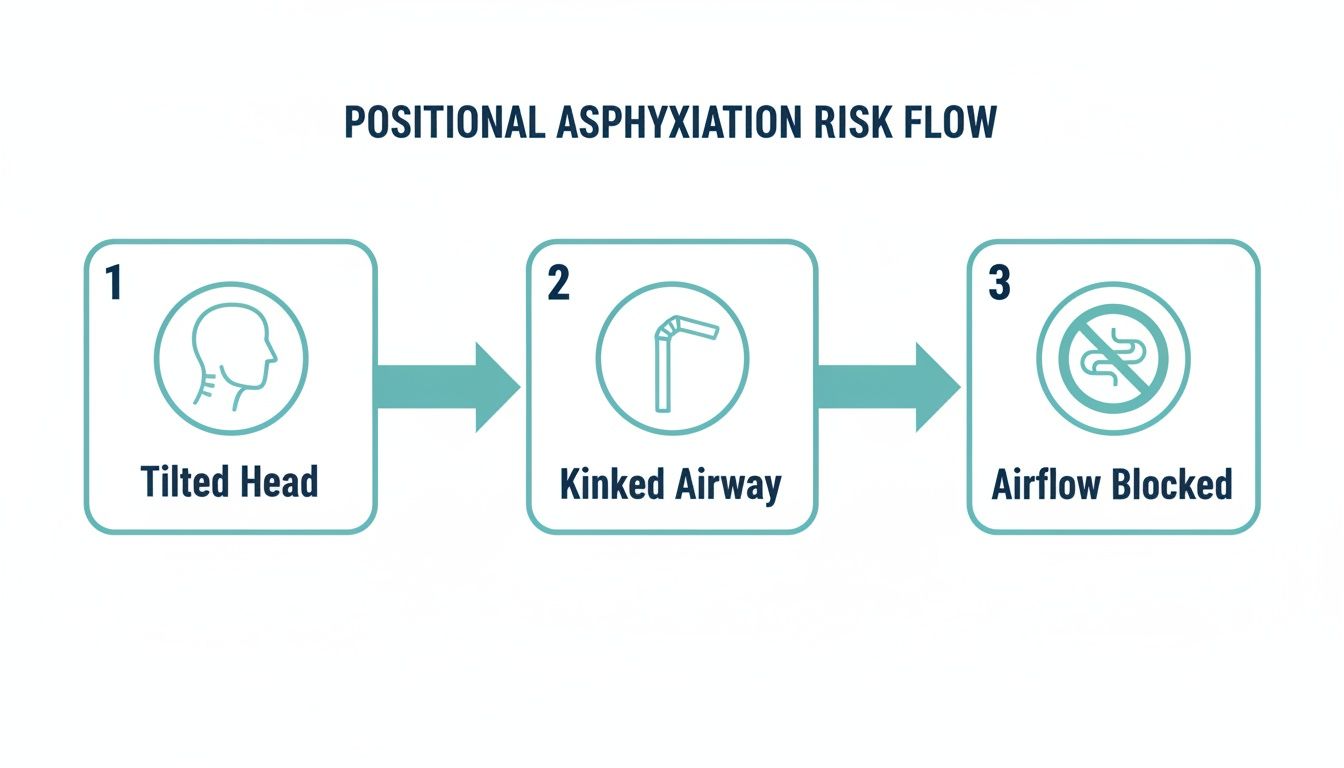
Keeping that airway open by preventing the "kink" is the entire goal of proper head support.
Use Only Manufacturer-Provided Inserts
Many infant car seats come with special inserts designed specifically for newborns. These are a parent’s best friend. They’ve been rigorously crash-tested with that exact seat and are perfectly safe to use as long as you follow the manual's height and weight guidelines.
The rule of thumb is simple: If it didn't come in the box with your car seat or isn't an official accessory sold by the manufacturer for your specific model, do not use it.
These approved inserts are engineered to provide just the right amount of support without getting in the way of the harness fit or compromising the seat's safety performance. As your baby grows, you'll simply remove them according to the instructions.
If you're just starting your search, you can learn more about finding a car seat with head support built-in from the get-go.
The Rolled Blanket Trick: A CPST-Approved Tip
So, what happens if your recline is perfect and you're using the infant insert correctly, but your tiny newborn still seems to be leaning to the side? There is one, and only one, non-manufacturer item that Child Passenger Safety Technicians (CPSTs) approve: rolled receiving blankets.
Here’s how to do it safely:
- Buckle your baby in first. Make sure the harness is snug (you can't pinch any horizontal webbing at the collarbone) with the chest clip at armpit level.
- Roll two receiving blankets tightly into firm logs.
- Place one rolled blanket on each side of your baby, tucking them between their torso and the side of the car seat.
This technique provides gentle, firm support from the outside, preventing them from slumping sideways. Crucially, nothing ever goes between the baby and the harness straps. This method adds stability without compromising the harness fit in any way.
For older kids in forward-facing seats or boosters, the solution is even simpler. Just use the seat’s built-in, adjustable headrest. It’s designed to provide both side-impact protection and a comfortable place for them to rest their head.
Safe Head Support vs Unsafe Accessories
To make it crystal clear, let's compare the expert-approved methods against the risky aftermarket products you might see online. This table breaks down what’s safe and what’s not.
| Solution | Safety Status | When to Use | Key Considerations |
|---|---|---|---|
| Proper Recline Angle | ✅ SAFE | Always, for rear-facing infants | Use the seat's built-in indicator. This is your first and most important tool. |
| Manufacturer Inserts | ✅ SAFE | For newborns & small infants | Must have come with your specific car seat. Follow weight/height limits in the manual. |
| Rolled Receiving Blankets | ✅ SAFE (When done correctly) | For newborns needing side support | Blankets go on the outside of the baby, never under them or between them and the harness. |
| Aftermarket Head Straps/Bands | ❌ UNSAFE | Never | Poses a major strangulation and positional asphyxiation risk. Not crash-tested. |
| Thick Head/Body Inserts | ❌ UNSAFE | Never | Interferes with proper harness fit and seat performance in a crash. |
| Car Seat "Pillows" | ❌ UNSAFE | Never | Can push the head forward, creating a chin-to-chest risk. Not crash-tested. |
The takeaway is straightforward: sticking to the solutions that have been tested and approved by safety experts is the only way to ensure your child is both comfortable and secure. The accessories might look helpful, but they introduce dangers that just aren't worth the risk.
When to Be Concerned About Head Slump
For most parents of healthy, full-term babies, a little head slump is more of a "that looks uncomfortable" problem than a real danger, especially if the car seat is installed correctly. But that's not the whole story.
There are definitely times when head slump is a serious concern. Knowing the difference helps you move from worrying about every little head nod to taking action when it truly matters. It all comes down to whether your child has specific medical factors that change the game.
Premature Infants and Medical Conditions
The little ones we need to be most careful with are premature infants. Preemies have a tougher start—their muscle tone and respiratory systems are still developing, which makes them much more vulnerable if their chin slumps to their chest. That position can easily obstruct their fragile airways simply because they don't have the strength to reposition themselves.
The same concern applies to children with certain medical conditions, like hypotonia (low muscle tone) or other breathing challenges. For these kids, head slump isn't just about comfort; it's a potential medical risk that needs to be managed carefully.
If your child was born prematurely or has a diagnosed medical condition affecting their muscle tone or breathing, it's crucial to discuss car seat safety with your pediatrician before you even leave the hospital.
They'll give you specific advice tailored to your child's unique needs.
The Infant Car Seat Challenge
To get ahead of these risks, many hospitals will do an "Infant Car Seat Challenge" before sending a preemie home. It’s a simple but vital test. A nurse will watch over the baby while they sit in their own car seat for about 90 to 120 minutes, monitoring their heart rate, breathing, and oxygen levels the whole time.
This is a fantastic safety check to make sure the baby can handle the semi-reclined car seat position without any vital signs dipping. If the baby doesn't "pass," the medical team will work with you to figure out a safer way to travel.
And if you ever feel unsure about your installation, it’s always a good idea to get a second opinion. We have a guide filled with useful car seat installation tips that can help.
This focus on head and neck safety isn’t just for babies. The entire automotive headrest market, valued at $9.57 billion in 2021 and projected to hit $15.95 billion by 2029, shows just how seriously car manufacturers take passenger safety. You can dive deeper into these automotive headrest market insights on fortunebusinessinsights.com.
For any parent of a medically fragile infant, I can't recommend this enough: find a certified Child Passenger Safety Technician (CPST). They are trained experts who can help you get the perfect fit and positioning for your child, giving you true peace of mind for every drive.
Frequently Asked Questions About Head Support
We get it—navigating the world of baby gear can feel like you're learning a new language. When it's about something as critical as your child's safety in the car, you're going to have a lot of questions. Let's clear up some of the most common things parents ask about head support.
The demand for products like a car seat head holder has definitely grown. We've seen a huge spike in parental awareness, with the global market for these accessories expanding from $1,213.1 million in 2021 to a projected $1,520 million by 2025. This is largely driven by evolving safety regulations and parents simply wanting the best for their kids. You can actually see more details on this market trend on cognitivemarketresearch.com.
Are Those Strap-On Forehead Bands Safe to Use?
Let me be crystal clear: absolutely not. Every single child passenger safety expert agrees that these strap-like devices are incredibly dangerous.
Think about it—that band can easily slip down over your child's mouth and nose, which is a serious suffocation hazard. Even worse, during a crash, it could put immense, unnatural force on their head and neck, completely defeating the purpose of the car seat's safety design. Please, never use any product that wraps around your child's forehead and attaches to the car seat.
What if My Baby's Head Still Slumps with the Infant Insert?
This is a really common concern. The first thing you should always do is double-check the car seat's recline angle. Getting that angle right is your best defense against head slump.
If the recline is correct but you're still worried, you can try the rolled blanket trick—it's a method approved by certified technicians. Tightly roll up a couple of receiving blankets and tuck them alongside your baby’s head and torso after they've been buckled in securely. Just be sure never to put any padding under or behind your baby, as that can interfere with the harness. If you've tried this and are still unsure, your best bet is to find a certified Child Passenger Safety Technician (CPST) for a one-on-one consultation.
Remember, the only safe padding is the padding that came with your car seat. Anything else is an untested variable that can compromise your child's safety in a collision.
When Is It Okay for a Child's Head to Slump Forward?
It might surprise you to learn that for most healthy babies, a bit of head slump isn't the emergency it appears to be, as long as the car seat is installed correctly and the harness is snug. When the seat is reclined properly, a baby’s airway is naturally protected.
The real concern is for premature infants or babies with specific medical conditions that might affect their breathing or muscle tone. As kids get older and develop that solid head and neck control, the risk becomes practically zero. The takeaway here is to focus on using the car seat correctly, not on trying to prevent every little head bob.
Can I Use a Head Support from a Different Car Seat Brand?
Nope, you should never mix and match parts between car seat brands. A head support insert isn't just a comfort accessory; it's a piece of safety equipment that was designed and crash-tested specifically for that one seat model.
Using an insert from another brand is essentially the same as using an unregulated, third-party product. It could negatively affect how the seat performs in an accident and will almost certainly void your warranty. Always stick with the parts that came in the box.
At Hiccapop, our mission is to provide parents with safe, reliable, and innovative solutions that make life a little easier. Explore our range of thoughtfully designed baby and toddler products at https://hiccapop.com.