


The Best Baby Room Temperature For Safe And Sound Sleep
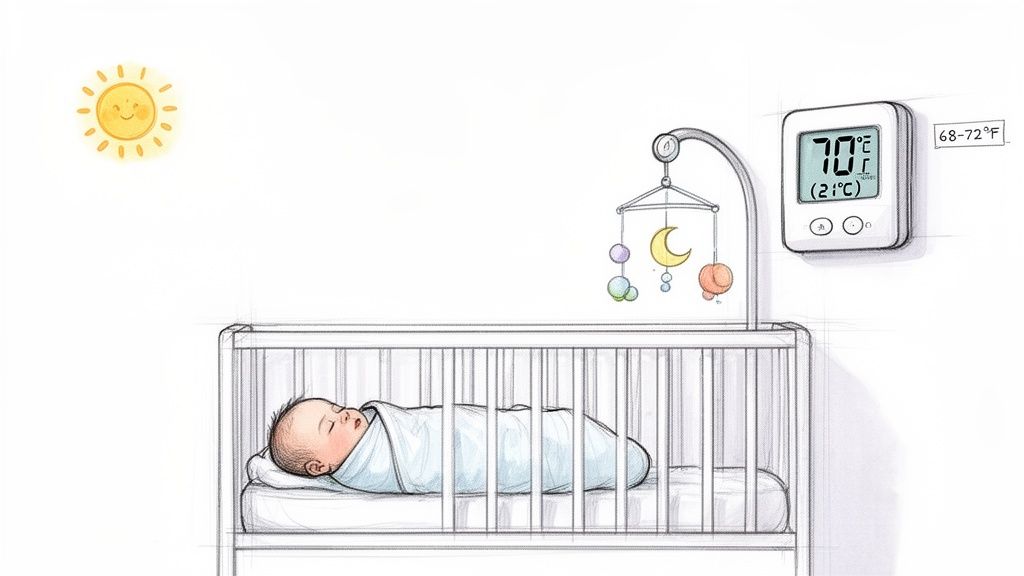
As a new parent, you’re drowning in advice. So let’s cut through the noise and get straight to the point. The single most important number to remember for your baby’s nursery is this: the ideal room temperature is between 68 and 72 degrees Fahrenheit (20-22°C).
This isn't just a friendly suggestion—it's the scientifically backed sweet spot that helps your baby sleep safely and soundly. Think of it as the ultimate "just right" Goldilocks zone for your little one.
The Goldilocks Zone For Your Baby's Nursery
When you're a new parent, life is a beautiful, chaotic whirlwind. The last thing you need is to feel like you have to become a climate scientist overnight just to get the nursery right. The good news? You don't. Focusing on the best baby room temperature is one of the most practical and impactful things you can do for your baby.
This specific range is about so much more than keeping your baby cozy. It's a critical safety guideline backed by pediatric experts, including the American Academy of Pediatrics (AAP). Keeping the room between 68 and 72°F (20-22°C) helps prevent overheating, which is a known risk factor for Sudden Infant Death Syndrome (SIDS).
Why Consistency Matters So Much
Here's something important to remember: babies are terrible at regulating their own body temperature. Their internal thermostats are still under construction, which makes them incredibly sensitive to rooms that are too warm or too chilly.
A stuffy, hot room can make them restless and fussy, while a cold room forces them to burn precious calories just trying to stay warm. A stable, comfortable environment lets them save that energy for what really matters—growing, developing, and being adorable.
Keeping a room cool can feel like a challenge, especially in the summer if you don't have central AC. Simple tricks like using blackout curtains to block the hot afternoon sun or getting the air moving with a fan can make a world of difference. For a deeper dive, check out these practical tips on how to cool a room without AC.
Why A Few Degrees Makes A Big Difference
Ever wondered why pediatricians always harp on that specific 68 to 72°F (20 to 22°C) range? It might seem overly precise, but for a newborn, those few degrees are a world of difference. It all boils down to a simple truth: your baby’s internal thermostat is still a work in progress.
Think of their ability to regulate body temperature—a skill called thermoregulation—like a brand-new engine that hasn't been broken in yet. It runs, but it's not very efficient. Adults shiver to generate heat and sweat to cool down without a second thought. Babies, on the other hand, just aren't very good at it yet.
This makes them incredibly sensitive to even small changes in room temperature. A room that feels perfectly comfortable to you can quickly become too warm for them. A slight chill can force their little bodies to burn through precious calories just to stay warm—energy that really ought to be fueling their growth and development.
The Critical Link Between Temperature and SIDS
Let's get straight to the most important reason for getting the temperature right: safety. Overheating has been identified as a major risk factor for Sudden Infant Death Syndrome (SIDS). While the exact causes of SIDS are complex and not fully understood, we know that a baby’s ability to rouse themselves from a deep sleep is a key protective reflex.
When a baby gets too hot, they tend to fall into a deeper sleep, which can dampen this natural arousal instinct. If their breathing were to become obstructed by bedding, for example, a warm, stuffy room could make it harder for them to startle awake and move their head.
Keeping your baby's room cool and comfortable is one of the simplest, most powerful steps you can take to lower the risk of SIDS. It's an easy action with a huge impact.
This isn't just a theory; it's backed by years of research. The Sleep Foundation highlights studies that consistently show that rooms kept above 72°F are associated with a higher risk of SIDS. One influential study even found that using a fan in rooms warmer than 70°F significantly reduced the odds of SIDS, which really drives home how much of a difference good air circulation and a cool environment can make.
Better Sleep For Baby (Which Means Better Sleep For You)
Beyond the crucial safety element, finding the best baby room temperature is also your secret weapon for a more peaceful night. When the room is in that sweet spot, your baby's body doesn't have to struggle to stay warm or cool down. This frees them up to settle into longer, more restorative sleep cycles.
Just think about your own sleep. It's tough to get comfortable when you're constantly kicking off the covers or shivering under a pile of blankets. Babies feel the same way, but their only way to tell you they're uncomfortable is to cry.
A comfortable baby is a baby who sleeps better and wakes up less often. That means more uninterrupted sleep for them and for you. By creating that "just right" Goldilocks zone, you’re not just following a safety guideline—you're setting everyone up for a better night's rest. And that makes those 3 a.m. feedings just a little bit more manageable.
How To Read Your Baby's Comfort Cues
A good room thermometer is a fantastic starting point, but your baby is the ultimate expert on their own comfort. They can't exactly ask you to turn up the thermostat, but their little bodies give off plenty of signals. You just have to know what to look for.
The classic rookie mistake is grabbing their tiny hands or feet to gauge their temperature. A baby's circulatory system is still a work in progress, so it's perfectly normal for their hands and feet to feel cool. It's usually a false alarm and not a true sign that they're chilly.
For a much more accurate reading, gently touch the nape of their neck or their chest. This area gives you a true sense of their core body temperature. If it feels warm and dry (not sweaty), you've hit the comfort jackpot.
Signs Your Baby Is Too Hot
Being too warm is a bigger risk than being a bit cool, so you’ll want to spot the signs of overheating right away. A hot baby is almost always a fussy baby, and that discomfort can easily derail a good night's sleep.
Keep an eye out for these classic signs:
- Damp Hair or a Sweaty Neck: A little moisture around their hairline or on the back of their neck is a dead giveaway that their body is trying to cool off.
- Flushed Cheeks: Rosy cheeks are adorable, but if their face looks red and feels unusually warm, they might be getting overheated.
- Rapid Breathing: Listen to their breathing. If it seems faster or more shallow than usual, it can be a sign of heat stress.
- Heat Rash: Check for little clusters of tiny red bumps, which often pop up in warm, moist areas like the neck folds, armpits, or around the diaper line.
- Extra Fussy or Restless: If your baby just can't seem to get comfortable and is squirming more than usual, being too warm is a likely culprit.
If you spot any of these signals, act quickly. The easiest fix is to remove a layer of clothing—maybe unzip their sleep sack or take off an undershirt. If the room feels a bit stuffy, a fan can help circulate the air. Just make sure it’s not blowing directly on them.
Signs Your Baby Is Too Cold
While it’s less of a worry in most modern homes, a baby who’s too cold will have just as much trouble sleeping. Their body has to burn precious calories just to stay warm, which can make them tired and lead to fragmented sleep. A chilly baby might also have a tough time staying content during their wake windows, which can throw off their entire sleep schedule. You can learn more about nailing that routine with our guide to wake windows by age.
Here’s what to look for if you think your little one is feeling a chill:
- A Cool Chest or Neck: That trusty neck-check works both ways! If their chest or the back of their neck feels cool to the touch, it’s time to add a layer.
- Lethargy or Sluggishness: A cold baby might seem unusually still, groggy, or less responsive. They might not even be that interested in eating.
- Bluish Tint to Skin: In more serious cases, you might see a faint bluish color on their skin, lips, hands, or feet. This is a clear signal to warm them up immediately.
If you think your baby is cold, the solution is straightforward: add another light layer. A long-sleeved onesie underneath their pajamas or a sleep sack with a slightly higher TOG rating usually does the trick. Just remember, never use loose blankets in the crib.
By learning to trust your touch and read these simple cues, you’ll become a pro at making those small adjustments that keep your baby safe, comfortable, and sleeping soundly.
Dressing Your Baby For Sleep Without The Guesswork
Figuring out what your baby should wear to bed can feel like solving a new puzzle every single night. Is a long-sleeve onesie too much? Are footie pajamas enough? This is where a simple little rating called TOG comes to the rescue.
TOG, which stands for Thermal Overall Grade, is just a straightforward way of measuring how warm a piece of fabric is. You’ll find it on most sleep sacks and wearable blankets. Think of it like the warmth rating on your own duvet—a higher TOG means more insulation, and a lower TOG means less. It completely removes the guesswork from layering.
This system is your key to dressing your baby perfectly for the nursery's actual temperature, not just the season outside. After all, a 70°F room feels the same to your baby in July as it does in January.
Matching TOG Ratings To Your Nursery's Temperature
The real beauty of the TOG system is its simplicity. Once you know the temperature of your baby's room, you can confidently choose the right sleepwear to keep them comfortable all night long. No more middle-of-the-night anxiety wondering if they're too hot or too cold.
To make it even easier, here’s a quick-reference table that matches room temperatures with the right TOG rating and clothing.
TOG Rating And Clothing Guide By Room Temperature
| Room Temperature (Fahrenheit) | Room Temperature (Celsius) | Recommended TOG Rating | Example Clothing Combination |
|---|---|---|---|
| > 75°F | > 24°C | 0.5 TOG | A short-sleeve onesie or just a diaper |
| 72-75°F | 22-24°C | 0.5 TOG | A short-sleeve or long-sleeve onesie |
| 68-72°F | 20-22°C | 1.0 TOG | A long-sleeve onesie or light footed pajamas |
| 64-68°F | 18-20°C | 2.5 TOG | A long-sleeve onesie and footed pajamas |
| < 64°F | < 18°C | 2.5 TOG or 3.5 TOG | A long-sleeve onesie, footed pajamas, and potentially socks |
This guide gives you a solid starting point for creating a safe and comfortable sleep environment every time.
This flowchart also offers a quick way to check if your baby is comfortable by simply feeling the back of their neck.
Remember, your baby’s core temperature, felt at the neck or torso, is a far more reliable indicator of comfort than their hands or feet, which often feel cool to the touch.
The Safest Way To Keep Your Baby Warm
The American Academy of Pediatrics (AAP) is crystal clear on one thing: a baby’s crib should be completely empty. This “bare is best” policy means no loose blankets, no pillows, no bumpers, and no stuffed animals. While they may seem cozy, these items pose a serious suffocation and entrapment risk, which can increase the danger of SIDS.
Wearable blankets, like sleep sacks and swaddles, are the modern, parent-approved solution. They provide all the warmth of a traditional blanket without any of the risks, keeping your baby snug and secure while allowing for safe movement.
This is why TOG-rated sleep sacks are more than just a convenience; they are a critical safety tool. They eliminate the temptation to add a loose blanket on a chilly night and ensure the sleep environment stays safe.
Plus, they prevent your baby from kicking off their covers and waking up cold, leading to more consistent and restful sleep for everyone. When you pair your knowledge of the best baby room temperature with the simple logic of TOG ratings, you can finally put the nightly "what to wear" debate to rest.
Creating The Perfect Sleep Environment
Getting the room temperature just right is more than just glancing at your home’s main thermostat and hoping for the best. That thermostat down the hall might read a perfect 70°F, but a nursery that gets blasted by the afternoon sun can easily be several degrees hotter. This is why you have to focus on the nursery's specific "microclimate" for your baby’s comfort and safety.
For a truly accurate picture of the best baby room temperature, you'll need a dedicated digital thermometer placed right in the nursery. Set it up near the crib—but not in a direct sunbeam or right next to a heating vent—to get a real sense of the air your baby is breathing.
This simple gadget is your best friend, giving you the real-time info you need to make those small but critical adjustments that create the ideal sleep space.
Mastering The Nursery Microclimate
Every home has its own quirks, but with a few smart tools and techniques, you can keep the nursery in that ideal 68-72°F (20-22°C) sweet spot all year round.
-
Embrace the Darkness: Blackout curtains are a game-changer for new parents. Not only do they tell your baby it’s sleep time, but they’re also fantastic at blocking out solar heat and keeping the room from turning into a greenhouse on sunny days.
-
Become a Fan of Fans: A simple oscillating fan does wonders. It keeps the air moving, preventing hot, stuffy pockets from settling around the crib. Even better, studies have shown that using a fan can help reduce the risk of SIDS. Just make sure it isn't aimed directly at your little one.
-
Monitor the Moisture: Don't forget about humidity! The comfort zone for a nursery is between 30% and 50% humidity. Air that’s too dry can irritate a baby’s delicate nose and throat, while overly damp air just feels clammy and uncomfortable. A humidifier or dehumidifier can help you strike the perfect balance.
These little tweaks can transform the nursery from just another room into a perfectly controlled environment, fine-tuned for your baby's well-being.
Keeping Things Consistent On The Go
Babies love routine, and that absolutely includes their sleep environment. When you're traveling, trying to replicate their familiar room temperature and setup can be the difference between a happy trip and a sleepless one.
It might sound like a lot to manage, but a little prep goes a long way. Consistency reinforces all the great sleep habits you’ve worked so hard to establish at home. For a deeper dive, our guide on creating a safe sleep environment for infants has more advice you can use anywhere.
Before you head out, pack a few key items from your nursery toolkit.
A portable thermometer is non-negotiable for travel. You simply can't trust a hotel thermostat or guess what the temperature is in an unfamiliar room. You need an accurate reading right where your baby is sleeping.
Here are a few other pro tips for maintaining that perfect sleep setup on the road:
- Pack a Travel Fan: A small, portable fan is a lifesaver in a stuffy hotel or guest room. It provides that crucial air circulation your baby is used to.
- Bring Your Own Curtains: Travel blackout curtains that stick on with suction cups are an inexpensive and brilliant way to manage light and temperature in any room.
- Stick to the Script: Replicate your home setup as closely as you can. Bring the same sleep sack, the same white noise machine, and the same bedtime routine. This sensory familiarity, combined with the right temperature, signals to your baby that it’s time for safe, restful sleep—no matter where you are.
Still Have Questions? Let's Talk Nursery Temperature
Even when you've done all the research, those middle-of-the-night moments can still bring a wave of self-doubt. It's just part of being a parent! Let's clear up some of the most common questions about the best baby room temperature so you can rest a little easier.
Is It Okay If My Baby's Hands Feel Cold?
Yes, absolutely. This is probably one of the top things new parents worry about, but it’s completely normal. A baby’s circulatory system is still a work in progress, and their body is smart—it sends blood to their core and vital organs first.
That means their little hands and feet often get the short end of the stick and can feel chilly, even when they're perfectly comfortable. Instead of worrying about cold fingers, always check the back of their neck or their chest. That’s your best indicator of their actual core temperature.
What Should My Baby Wear If They Have a Fever?
When your baby has a fever, their body is already hot and fighting hard. The last thing you want to do is trap more heat. Your goal is simple: keep them comfortable without making them too hot or letting them get a chill.
Stick to a single, breathable layer of clothing, like a basic cotton onesie. Skip the heavy sleep sacks and extra blankets for now, as they can make the fever worse. Keep the room temperature in that sweet spot of 68–72°F (20–22°C) and, of course, always follow your pediatrician's advice.
How Can I Cool the Nursery Without Air Conditioning?
No AC? No problem. This is a common challenge, especially in older homes or during unexpected heat waves, but you have options.
- Block Out the Sun: Think of your windows as mini-heaters. Use blackout curtains to block direct sunlight during the day, which makes a huge difference.
- Create a Cross-Breeze: If you can, open windows on opposite sides of the house. This creates a natural wind tunnel that pulls fresh air through.
- Hack Your Fan: This is an old but effective trick. Place a bowl of ice or a frozen water bottle in front of a fan. It will blow cooled air across the room, creating a surprisingly effective makeshift AC.
Should a Baby Wear a Hat to Sleep Inside?
This is a firm and universal no. Those tiny hospital hats are cute for the first day or two, but they have no place in a crib.
Babies regulate their temperature by releasing heat through their heads. Covering their head with a hat during sleep is a major no-go because it can quickly cause them to overheat, which is a significant risk factor for SIDS. Save the hats for chilly walks outside and always keep their head uncovered for sleep.
At Hiccapop, we're parents too. We get it. That's why we're obsessed with creating smart, practical products that solve real-world parenting problems. From travel gear to nursery essentials, everything we make is designed to keep your family safe and make your life just a little bit easier. We hope this guide helps you feel more confident about creating the perfect sleep space for your little one.
What are your go-to tricks for keeping the nursery temperature just right? Share your best tips in the comments below! And for more parent-approved solutions, explore our full range of parent-approved solutions.