


Banana Constipation Baby: A Parent's Guide to Ripe vs Unripe
The popular advice that bananas either cause constipation or cure it is too simple. For a baby, the first questions are whether solids are developmentally appropriate yet and whether the stool is hard or painful to pass. A green banana, a ripe banana, and a newborn who isn't ready for food are very different situations.
Before changing the menu, check your baby's age, readiness for solids, and stool texture. Frequency alone doesn't tell you whether a baby is constipated. Ripeness and an individual child's response matter too, so there isn't one answer that fits every baby searching for “banana constipation baby.”
Why Parents Ask About Banana Constipation in Babies
Banana often gets blamed because it's the most memorable change on the menu. Parents may have started formula, introduced solids, or noticed that a previously soft stool looks firmer. When those changes happen close together, pinning the change on one food is difficult. The timing offers a clue, not a verdict.
A feeding history works like a timeline: it helps separate what changed from what was already happening.
- Age and readiness: For a newborn still relying on breast milk or formula, a changed stool pattern calls for attention to milk feeding and symptoms. Banana isn't an appropriate food experiment. For a baby showing readiness for complementary foods, the feeding context is different.
- Stool texture and comfort: Note what the stool looks like and whether passing it seems painful. Those observations give a clinician more useful information than saying your baby missed a bowel movement.
- Recent changes: If formula has begun, that belongs on the timeline. If solids are new, consider the foods introduced together. If banana is already familiar, note whether its ripeness or the amount offered has changed.
Green and ripe bananas shouldn't be treated as interchangeable, and banana's effect may also depend on the rest of the diet.
The Harvard Health guidance on constipation in infants advises contacting a clinician if dietary changes don't help or your baby worsens. Keeping a clear account of feeding changes, stool appearance, and discomfort helps you describe the concern without turning banana into either the culprit or the cure.
What Constipation Actually Looks Like in Babies
A red face and a missed bowel movement can look alarming, but neither establishes constipation on its own. Constipation is about hard stools or painful difficulty passing them, not how often a baby poops. Dry, firm, pellet-like stools deserve attention. Straining while passing a soft stool can happen without constipation.
Texture and comfort belong together.
Feeding helps explain what you see. Breastfed newborns may pass frequent, loose stools. Formula-fed babies may poop less often and have firmer stools, though firmer doesn't automatically mean hard or painful. During weaning, new foods can change stool consistency as digestion adjusts. A change after starting solids needs to be judged by what comes out and how comfortably your baby passes it.
The calendar works like a log, not a diagnosis: it records the gaps but leaves out texture and pain. When asking your clinician for advice, describe whether stools are soft, dry, or pellet-like, alongside feeding and discomfort.
For a newborn, experimenting with banana isn't appropriate. For a baby already eating solids, stool appearance helps determine whether constipation is present before you blame a food.
Seek advice rather than continuing food experiments if symptoms concern you. The linked MedlinePlus guidance, included in this infant constipation resource, leads to Harvard Health's infant constipation decision guide.
Ripe vs Unripe Bananas and Infant Digestion
A green banana and a soft, ripe yellow banana don't have the same digestive profile. Unripe bananas contain approximately 100–250 mg of tannins per 100 g, as well as relatively high levels of amylase-resistant starch. Tannins can reduce intestinal secretions, while resistant starch can add stool bulk without necessarily making it softer. A pediatric review recommends avoiding green banana during active constipation when other fiber-containing fruits are available. (Pediatric review of childhood constipation)
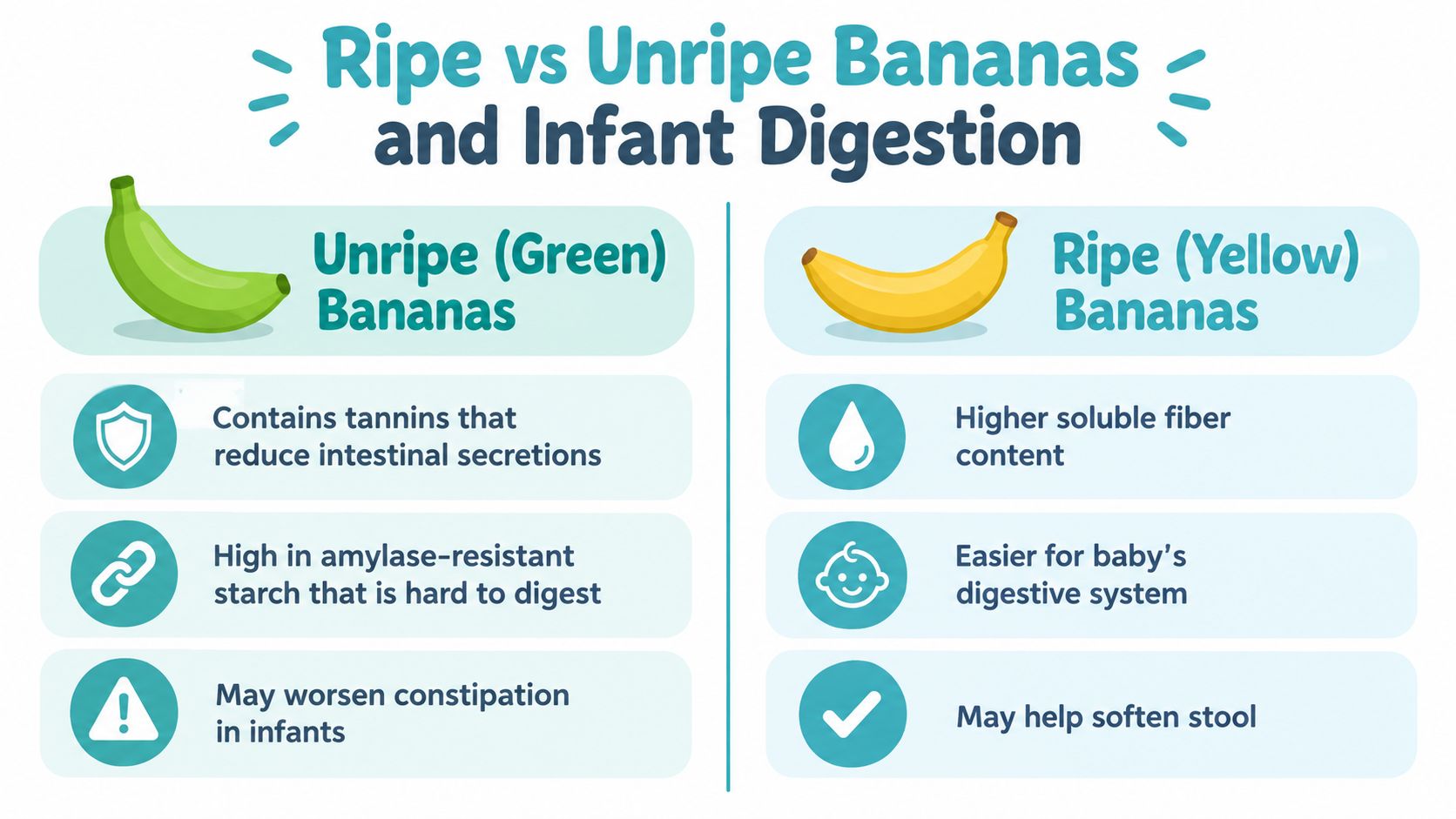
Ripe banana is different, but it isn't a constipation treatment. It provides soluble fiber, and a small infant study described in a pediatric gastroenterology review found that daily yellow-banana consumption didn't worsen stool composition. In that small sample, hard stools fell from 11% at baseline to 0% after three weeks. That finding doesn't prove ripe banana will help every baby, or that it should replace other foods when constipation is active.
The practical takeaway is to consider ripeness, the rest of the diet, hydration, portion, and your child's response. If hard stools appear after banana, pause it and observe rather than assuming every banana affects every baby the same way.
For a visual overview of the distinction, see the comparison above, then keep in mind that it's your baby's stool and comfort that guide what to do.
When and How to Offer Banana to a Baby
Developmental readiness is the first question to ask before offering banana. For a newborn or a younger formula-fed infant, a change in stool frequency isn't a reason to start solids. Keep breast milk or correctly prepared infant formula as the usual milk feed.
The CDC's guidance on introducing foods places the start of complementary foods at about 6 months and recommends introducing one new food at a time, waiting 3 to 5 days before adding another. Look for readiness signs together: sitting with support, controlling the head and neck, opening the mouth for food, swallowing rather than pushing food out, and bringing objects to the mouth.
Once your baby is ready, match banana's texture to their feeding skills. Texture progresses like steps on a staircase: smooth purée may suit an early eater, followed by mashed banana as thicker textures become manageable. For babies developing the skills to pick up food, choose an appropriate soft shape and follow safe-feeding guidance. See what baby-led weaning is and how it works for more on that approach.
Start with a small taste of ripe banana rather than making it a main meal.
Keeping other foods unchanged makes your baby's response easier to interpret. Watch what the stool looks like and whether passing it seems uncomfortable, rather than judging by frequency alone. Banana is a food to introduce when ready, not a reason to rush development.
Better Fruit Swaps When a Baby Is Constipated
Banana can be part of a varied diet, but it's relatively modest in fiber compared with fruits commonly suggested for babies eating solids. Raw banana provides approximately 2.6 grams of fiber per 100 grams, according to USDA-derived banana nutrition data. When hard stools are present, options such as pear, prune, peach, or plum may be more useful to discuss with your clinician.
| Food | Approx. fiber per serving | Best for babies eating solids | Notes |
|---|---|---|---|
| Banana | 2.6 g per 100 g | Babies ready for complementary foods | Modest fiber; response varies |
| Pear | Not specified here | Weaned babies | An option to rotate in |
| Prune | Not specified here | Weaned babies | Commonly suggested for constipation |
| Peach | Not specified here | Weaned babies | A fruit alternative to consider |
| Plum | Not specified here | Weaned babies | Another option for variety |
Pediatric guidance also names peas, beans, apricots, and spinach among higher-fiber choices for babies who are eating solids. Choose textures appropriate to your baby's skills, and don't pile several new foods into one meal. A single, manageable change makes it easier to see what your child tolerates.
Fiber isn't the only consideration. Continue usual milk feeds, and offer water with meals when developmentally appropriate. A broader mix of foods and steady feeding habits matter more than searching for one “miracle” fruit.
Safe Home Remedies and Gentle Feeding Habits
For a baby already eating solids, build changes into the routine gradually. NHS guidance recommends increasing fiber with adequate fluid, continuing usual milk feeds, and using gentle bicycle-leg movements or abdominal massage. (NHS advice on constipation and bottle-feeding)
Try one adjustment at a time. Cambridge University Hospitals advises making only one dietary change every two to three days, while increasing fiber and fluid gradually. This can help you notice whether a particular food seems to affect your baby, rather than changing several things at once. A simple food-and-stool note can help, and this guide to how to track a child's food reactions offers a way to organize observations.
Keep the rest of the routine steady:
- Offer water with meals once your baby is eating solids and water is appropriate for their age and development.
- Continue regular breast milk or formula feeds. Don't dilute formula or alter its concentration.
- Use gentle movement. Move your baby's legs in a bicycle motion, or try a soft abdominal massage.
If you're adjusting meals across different ages, these age-by-age feeding tips can help keep textures and choices developmentally appropriate. Don't add juice, fiber supplements, or laxatives on your own. A clinician can advise whether they're suitable for your baby.
When to Call the Pediatrician
Your baby's symptoms should guide the call. Contact a clinician promptly for blood in the stool, vomiting, marked irritability, a swollen or distended abdomen, fever, poor feeding, reduced urine output, or unusual tiredness. These are warning lights that need medical attention, regardless of whether a banana was green or ripe.
For babies younger than 2 months, constipation warrants professional advice. For a non-breastfed infant, including a formula-fed baby, 3 days without a bowel movement is a reason to seek advice, especially with vomiting or irritability, according to Harvard Health's infant constipation guidance.
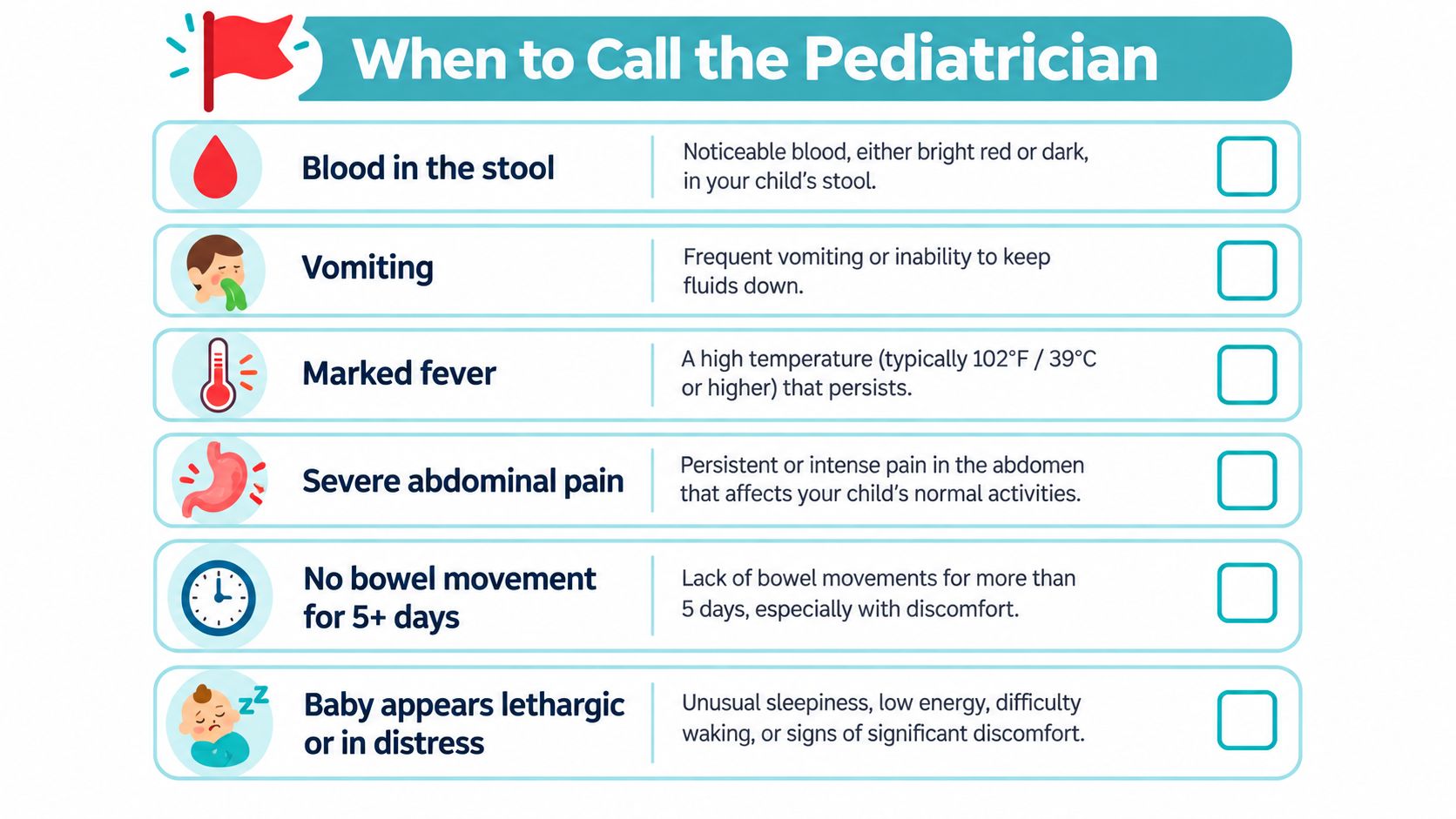
For a baby eating solids, describe the stool and discomfort when you call, rather than reporting only that they ate banana.
Call if hard stools persist for several days or discomfort continues despite dietary changes. Feeding changes also deserve attention; what to do when a baby isn't eating can help you recognize concerns. While awaiting advice, don't give laxatives or enemas or dilute formula. Ask a healthcare professional whether juice is appropriate and what amount to use for your baby.
Feeding With Confidence and Without Panic
Keep three ideas in view: hardness and pain matter more than frequency; readiness, ripeness, and individual response matter more than a yes-or-no banana rule; and home care works best as a gentle routine, not a pile of sudden changes.
If hard stools return, keep a simple food-and-stool log for a week. Note what your baby ate, whether the banana was ripe, and whether passing stool seemed uncomfortable. Bring those observations to your pediatrician if symptoms persist or you're concerned.
Have you found a food or routine that suits your baby? Share your experience with other parents, and remember that what helps one child may not suit another.
Hiccapop creates practical baby and toddler products, from booster seats and travel beds to nursery essentials, to make everyday parenting more comfortable and convenient. If you're building a calmer routine around feeding and family life, explore what's available at Hiccapop.