


What is Baby Led Weaning? A Complete Guide for Modern Parents
So, what is this "baby-led weaning" everyone's talking about? Simply put, it's an approach to introducing solid foods that lets your baby take the driver's seat. Instead of you spoon-feeding purées, you offer soft, graspable finger foods and let your little one feed themselves right from the get-go. No airplanes, no coaxing, just pure, messy exploration.
This method is all about trusting your baby's natural instincts. They get to explore different tastes and textures, decide what they want to eat from the options you provide, and learn to stop when they feel full. It's less about getting a certain amount of food in them and more about creating a positive, curious relationship with food from their very first bite.
A Philosophy Built on Trust and Exploration
The core of baby-led weaning (BLW) is trusting your baby's innate wisdom. Babies are born with the ability to know when they're hungry and when they're full. By letting them self-feed, you empower them to honor those signals, which can build the foundation for a healthy relationship with food for life.
With BLW, your baby joins you at the dinner table, eating modified versions of the same meal the rest of the family enjoys. This turns feeding into a shared social event rather than a separate, stressful task. They watch you, they learn from you, and they become active participants in family life right from their first bites.
The Rise of a More Natural Approach
While it might seem like a trendy new concept, the idea behind BLW is pretty intuitive, and it's skyrocketed in popularity since being formally named around 2008. The interest isn't just among parents; the medical community has taken notice, too. A 2022 study showed that awareness of the method among health professionals was high internationally—82.1% in Brazil, 81.8% in Canada, and 79.4% in Spain. This growing recognition highlights a major shift in thinking about how we introduce solids. You can read more about the global acceptance of BLW and its place in modern infant feeding.
To really understand the difference, let's compare the two main approaches side-by-side.
Baby Led Weaning vs. Traditional Purée Feeding
This table breaks down the fundamental differences between the baby-led approach and the more traditional spoon-feeding method.
| Aspect | Baby Led Weaning (BLW) | Traditional Spoon-Feeding |
|---|---|---|
| Baby's Role | Active participant; controls intake. | Passive recipient; parent controls pace and amount. |
| Food Texture | Soft, whole finger foods from the start. | Starts with smooth purées, gradually thickens. |
| Motor Skills | Develops pincer grasp, hand-eye coordination. | Focuses on mouth and swallowing skills first. |
| Mealtime Dynamic | Baby eats with the family, sharing family meals. | Often separate mealtime and separate foods. |
| Appetite Regulation | Encourages self-regulation of hunger cues. | Parent may influence how much is eaten. |
As you can see, the key distinction lies in who is leading the process.
This visual helps illustrate how BLW puts the baby in control, encouraging independence from day one.
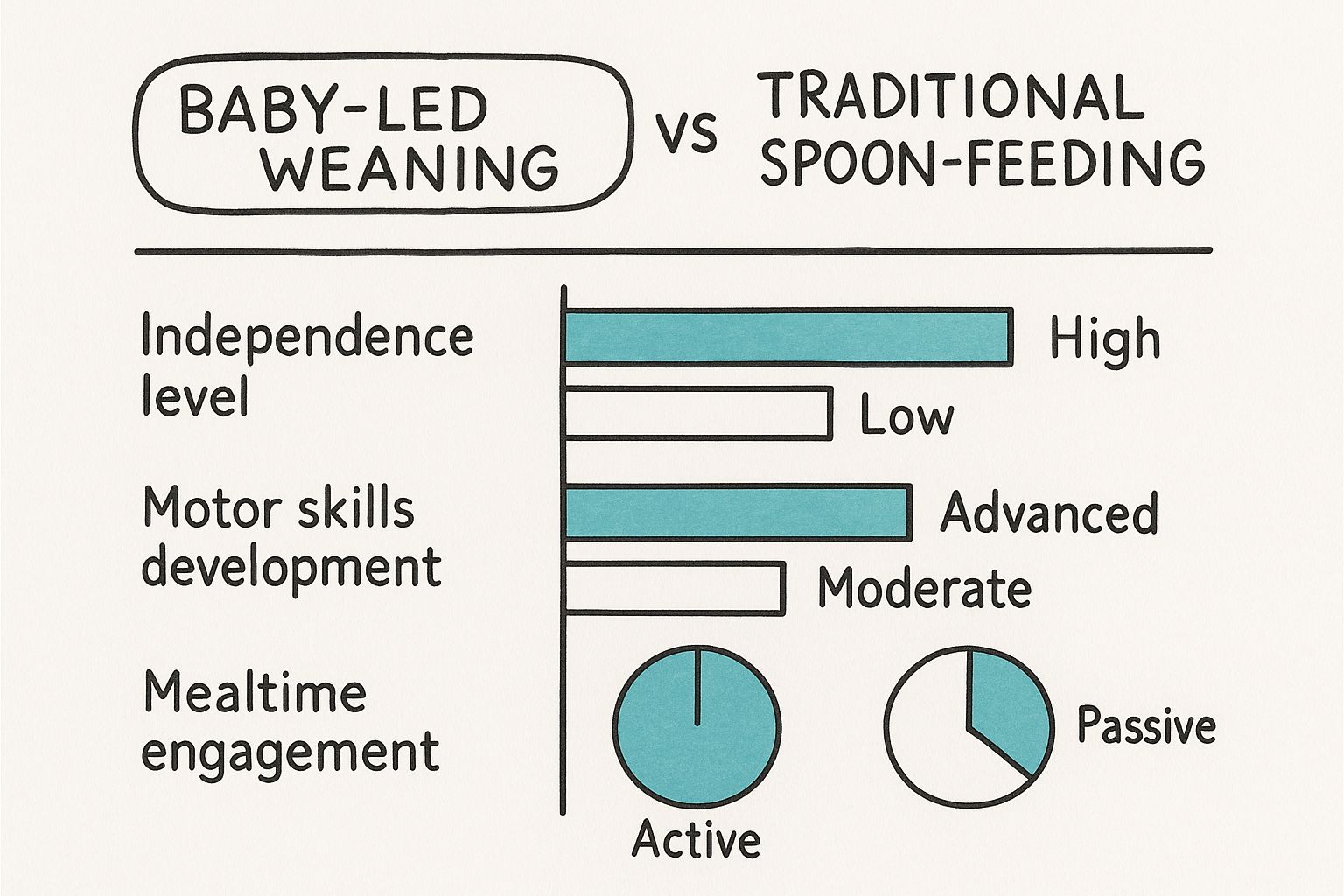
Ultimately, BLW is about fostering independence and letting your baby discover food at their own pace. It’s a journey of exploration—and yes, a bit of a mess—that helps set the stage for a lifetime of confident, happy eating.
The Guiding Principles of a Baby-Led Journey
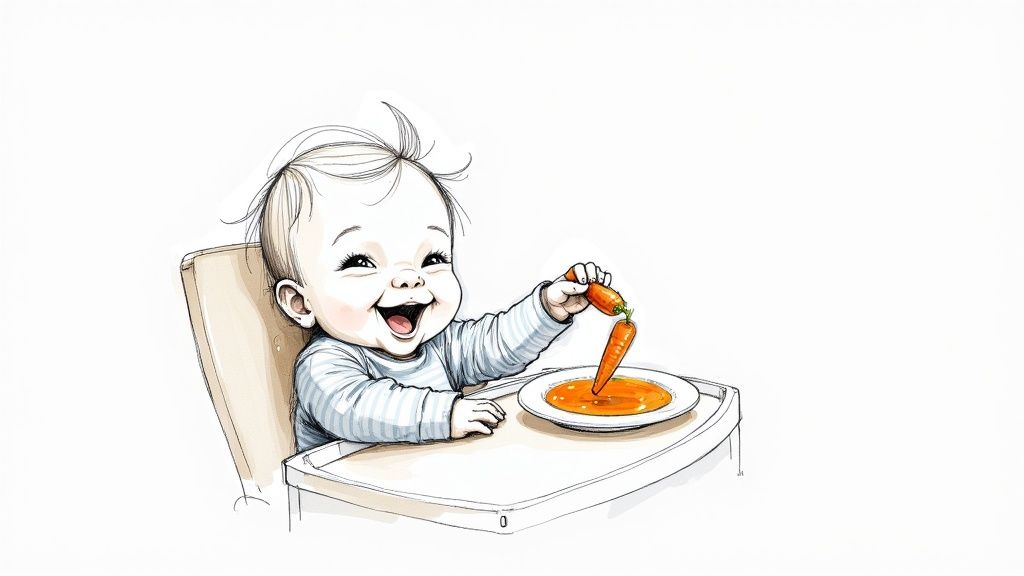
So we know what baby-led weaning is, but what's the philosophy behind it? This approach is so much more than just skipping the spoon. It's really about building a respectful partnership with your child, one founded on trust, autonomy, and the pure joy of discovery.
At its core, BLW is built on three simple but powerful pillars. These ideas work together to shape how your baby sees food, mealtimes, and their place at the family table. Once you grasp these, you’ll see why handing your baby a spear of steamed carrot is about so much more than just getting calories in.
The Power of Self-Feeding
The first and most obvious principle is right in the name: self-feeding. From day one, your baby is the one in the driver's seat. They decide what to pick up from the tray, how to get it to their mouth, and—this is the big one—how much they actually eat.
Think about it this way: you wouldn't learn to ride a bike very well if someone else was always controlling the pedals and handlebars for you. The same goes for eating. By letting your baby take the lead, you're empowering them to listen to their own internal hunger and fullness cues.
This builds a crucial skill called self-regulation, which is the bedrock of a healthy, lifelong relationship with food. Your baby isn't just a passive little bird waiting for a spoon; they are an active, engaged participant in their own nourishment.
"Baby-led weaning is just that — led by your baby! As a parent, it’s your job to provide baby-led weaning foods and opportunities to practice self-feeding. It is your baby’s job to decide if they will eat and what they will eat."
This hands-off approach (for you) is wonderfully hands-on (for them), respecting your baby's innate abilities and setting them up for a future of confident eating.
Embracing Family Meals Together
Another beautiful cornerstone of BLW is simply sharing meals as a family. Instead of you being on "baby duty" with a separate bowl of purée while your own dinner gets cold, everyone comes to the table at the same time.
Your baby simply gets a deconstructed, baby-safe version of whatever you're having. The benefits here go way beyond convenience.
- Social Development: Babies are master mimics. Watching you and their siblings eat teaches them invaluable lessons about social interaction, table manners, and the simple joy of sharing a meal.
- Reduced Mealtime Stress: Let's be honest, making one meal for the whole family is a game-changer. It turns feeding time from a separate, often stressful, task into a connecting family ritual.
- Positive Food Associations: When mealtimes are relaxed and social, your baby learns to associate food with happiness and connection, not with pressure or performance.
This simple shift invites your baby to be a part of the family unit from their very first bites, making meals a time for bonding.
A Journey of Food Exploration
Finally, baby-led weaning treats food as a grand adventure. It’s all about exploring new tastes, textures, and sensations. While purées offer a single, uniform consistency, whole foods present a rich sensory landscape.
Just imagine the difference between a spoonful of bland orange mush versus a juicy wedge of a ripe mango. The mango has a distinct shape to hold, a slippery-yet-firm texture to feel, and a burst of sweet flavor to discover. Every new food is a brand-new learning experience.
This early exposure can have a huge impact down the road:
- Cultivating an Adventurous Palate: Introducing a variety of authentic flavors and textures right from the start can encourage a more open-minded and adventurous eater later on.
- Developing Motor Skills: Grasping a slippery piece of avocado or pinching a soft piece of pasta is a fantastic workout for their fine motor skills and hand-eye coordination.
- Potentially Reducing Pickiness: While there's no magic bullet for picky eating, exposing babies to a wide world of food helps build a broad foundation of accepted tastes and textures from the get-go.
Ultimately, this principle shifts the focus from simply consuming food to experiencing it. It’s about discovery and play—and that’s exactly how babies learn best.
How to Know When Your Baby Is Ready to Start
While the number "6" gets thrown around a lot when we talk about starting solids, it’s really more of a guideline than a hard-and-fast rule. Every single baby develops on their own unique schedule. The real secret isn't watching the calendar; it's watching your baby.
Your little one will give you some very clear signals when their body is physically prepared for the grand adventure of food. Think of these developmental signs as their personal readiness checklist. Making sure these boxes are ticked is the best way to ensure they’re safe and set up for a successful, happy start to their baby-led weaning journey.
The Non-Negotiable Core Signs of Readiness
Before you even think about slicing that first avocado spear, you need to be sure your baby has mastered a few key physical skills. These aren't just helpful suggestions—they're absolutely crucial for keeping them safe as they learn to self-feed.
Here’s exactly what you need to look for:
- Strong Head and Neck Control: Your baby must be able to hold their head steady and upright without any bobbing or wobbling. This control is essential for them to safely manage food in their mouth and gives them the ability to turn their head away when they've had enough.
- Ability to Sit Up Unassisted: This one is arguably the most important. Your baby needs to be able to sit upright in a high chair with very minimal support. Why? Because a stable, upright posture is vital for proper swallowing and dramatically reduces the risk of choking.
- Losing the Tongue-Thrust Reflex: You know that cute little reflex where your baby’s tongue automatically pushes everything out of their mouth? For solids, that has to be gone, or at least mostly gone. This reflex is a protective mechanism for young, milk-fed infants, but now they need to be able to use their tongue to move food back for swallowing.
These three signs work together to create a safe foundation. Without them, your baby's body simply isn't equipped to handle solid pieces of food, no matter how soft they are.
The Final Green Light: Curiosity and Coordination
Once you've ticked off those critical safety checks, there are a couple more clues that tell you your baby is mentally and developmentally ready to join you at the dinner table.
First up is their reach and grasp. You’ll probably notice them bringing toys, their hands, and just about anything they can get ahold of straight to their mouth. This is them practicing the exact hand-eye coordination they'll need to pick up a piece of sweet potato and guide it to its destination. For a deeper dive into these skills, you can check out our guide on major baby milestones.
The final piece of the puzzle is pure, unadulterated curiosity. Does your baby watch you eat with laser focus? Do they lean in, open their mouth, or even try to swipe food right off your plate? This is their way of saying, "Hey, what you've got looks amazing! I want in!"
A 2022 survey highlighted just how much parents rely on these physical cues. It showed that 84.4% of mothers saw the ability to sit stably as a decisive factor for starting solids. Interestingly, the study also found that many parents practicing BLW started before the six-month mark, which reinforces why knowing all the readiness signs is so important.
When you see all these signs align—the strong sitting, good head control, a diminished tongue-thrust, and a genuine interest in your food—you have your ultimate green light. Your baby is officially ready to begin their baby-led weaning adventure.
Exploring the Benefits of Baby-Led Weaning
There's a special kind of magic in watching your baby discover their first strawberry. But beyond those adorable, messy moments, baby-led weaning (BLW) brings a surprising number of developmental and practical perks. This approach is about so much more than just food—it's about building skills, fostering trust, and honestly, making your own life a bit simpler.
From strengthening tiny hand muscles to encouraging a healthy relationship with eating, the benefits are far-reaching, impacting your baby's growth and your entire family's daily rhythm.
Enhances Fine Motor Skills and Coordination
Every time your baby fumbles with a piece of avocado, manages to get it to their mouth, and explores its squishy texture, they're getting a fantastic developmental workout. What looks like simple play is actually a complex exercise in hand-eye coordination.
Learning to grasp different shapes and sizes—from a slippery spear of mango to a soft broccoli floret—helps them master the all-important pincer grasp. These are the very same skills they’ll need down the road for holding a crayon, zipping up a jacket, or buttoning a shirt.
Fosters a Healthy Relationship with Food
One of the most profound benefits of BLW is how it teaches self-regulation from day one. By letting your baby decide what to eat from the options you provide and how much, you're teaching them to listen to their own body's hunger and fullness signals.
This trust-based approach helps you sidestep the classic mealtime power struggles many parents know all too well. Instead of you deciding when the bowl is empty, your baby learns to stop when they feel satisfied. This can be a huge advantage in preventing picky eating later on; you can explore further strategies for improving nutrition for kids, especially picky eaters.
By trusting your baby to lead, you empower them to become confident, intuitive eaters who see food as a source of nourishment and enjoyment, not conflict.
Simplifies Family Mealtimes
Now, let's get real about the practical side of things. For many parents, the sheer convenience is a game-changer. With BLW, there's no need for a separate "baby menu," no blending special purées, and no spending your own dinner coaxing spoonfuls into a reluctant mouth.
Your baby simply eats a safe, modified version of whatever the rest of the family is having. This means:
- One Meal for Everyone: You just set aside a portion for your baby before you add salt or other things they can’t have.
- Less Prep Time: Cooking one meal instead of two saves a ton of time and effort in the kitchen.
- More Social Connection: You actually get to sit down and eat your own food while it's still hot, turning mealtimes into a shared family experience.
This approach brings your baby right into the family’s daily rituals, making meals a time for connection instead of a chore.
Your Guide to Starting with First Foods
Okay, so you've spotted the signs that your little one is ready for solids, and you're excited to dive into this new food adventure. But what do you actually do on day one? Let's walk through the first few messy, magical, and memorable weeks together.
The key is to keep it simple. Think soft, safe, and easy for those tiny hands to manage. You don’t need any fancy recipes or special "baby-only" products, which is one of the best parts of this approach. Your baby gets to start with real, whole foods right from the get-go.
Ideal First Foods for Tiny Hands
When you're figuring out what to serve, your main goal is to pick foods that are soft enough to be easily mashed between your fingers. If you can squish it, their strong little gums can handle it.
Next, think about the shape. At this stage, your baby will be using their whole hand to grab things in what's called a palmar grasp. This is why cutting food into long, finger-sized sticks or spears works so well. It allows them to clutch the food in their fist and still have a piece sticking out to gnaw on.
Some fantastic starter foods that tick all the boxes include:
- Ripe Avocado: Sliced into thick spears, this creamy fruit is packed with healthy fats and is naturally soft.
- Steamed Broccoli Florets: The little "tree" top makes a perfect, built-in handle for your baby to hold.
- Roasted Sweet Potato Wedges: Roasting brings out their natural sweetness and makes them perfectly soft and easy to grip.
- Banana Spears: Just peel a banana, cut it in half, and then slice it lengthwise. It's a sweet, easy win for a first food.
- Thick Cucumber Sticks (Peeled): These are wonderful for soothing teething gums, even if your baby just mouths them at first.
Remember to introduce just one new food at a time, especially when it comes to common allergens. For more great advice as you continue this journey, check out these helpful age-by-age tips for feeding babies and toddlers.
To help you feel prepared, here’s a simple shopping list you can take to the store. It breaks down some great first-food options by category.
Your Baby's First Foods Shopping List
A guide to safe, nutritious, and easy-to-handle first foods categorized by food group to simplify your planning.
| Food Group | Examples | Preparation Tips |
|---|---|---|
| Vegetables | Sweet potato, broccoli, carrots, avocado, zucchini | Steam or roast until very soft, then cut into finger-sized sticks or spears. Avocado can be served raw in thick slices. |
| Fruits | Banana, mango, pear (very ripe), melon | Serve raw, cut into long spears. Ensure they are ripe and soft enough to mash easily. Remove any tough skins or large seeds. |
| Grains | Whole-wheat toast, unsalted rice cakes, oatmeal | Lightly toast bread and cut into strips. For oatmeal, make it thick enough for your baby to scoop with their hands. |
| Proteins | Scrambled eggs, soft-cooked chicken, salmon, tofu | Cook eggs thoroughly and serve in large, graspable clumps. Cook meat until tender and shred or cut into strips. |
This isn't an exhaustive list, but it's a fantastic starting point for offering a variety of textures and flavors right from the beginning.
Gearing Up for the Glorious Mess
Let's be real: baby-led weaning is messy. Incredibly, wonderfully messy. But having the right gear can make cleanup a whole lot less stressful, which lets you focus on the fun part.
Embracing the mess is part of the process. It's not just food on the floor; it's a sign of your baby actively learning, exploring, and developing crucial skills.
As you get ready to start, a few essentials can make the experience much smoother. For starters, investing in a soft waterproof silicone bib with a food catcher can save you countless outfit changes. Other must-haves include a supportive high chair that lets your baby sit fully upright and a splat mat for the floor. With these items in your arsenal, you'll be ready for anything.
Navigating Safety and Common Concerns
Let's talk about the elephant in the room, the one thing that keeps parents up at night when they first hear about what is baby led weaning: choking. It’s a completely valid fear, but with the right information and preparation, you can approach this journey with confidence, not anxiety.
The whole game is about understanding the difference between a normal, protective reflex and a true emergency.
Think of it like this: your baby’s body has its own built-in security guard—the gag reflex. It's an incredibly sensitive mechanism that sits much further forward on their tongue than ours. Its job is to push food forward if a piece gets a little too far back before they're ready to swallow. Gagging is actually a good thing! It's their body doing its job perfectly.
Gagging vs. Choking: Knowing the Difference
Gagging is noisy and often dramatic. Your baby might cough, sputter, and make some pretty startling retching sounds. Their face might flush red, and their eyes could water. It looks alarming, but the key is that they are actively handling it. Their airway is clear, and they are working to either spit the food out or move it back into position to chew. The hardest part for you? Staying calm and letting them work through it.
Choking, on the other hand, is silent. That’s what makes it so scary. A choking baby can't cry, cough, or make noise because their airway is blocked. They might look panicked, and you might notice their skin or lips starting to turn a bluish color. This is a true emergency that requires you to act immediately.
The single most powerful tool in your parenting toolbox is knowledge. We strongly encourage every parent and caregiver to take an infant CPR and first-aid course. Knowing exactly what to do in an emergency will empower you to act quickly and effectively, giving you peace of mind that extends far beyond the dinner table.
Just understanding this distinction is the first, most important step toward feeling secure as you start this food adventure.
High-Risk Foods to Avoid or Modify
Now, let's be clear: studies show that baby-led weaning, when done correctly, doesn't carry a higher risk of choking than spoon-feeding. But "done correctly" is the key phrase. Safe food preparation is absolutely non-negotiable. Some foods are well-known choking hazards and must always be modified or avoided altogether.
Here are the main culprits to keep on your radar:
- Small, Round Foods: Things like whole grapes, cherry tomatoes, and large blueberries should always be quartered lengthwise to remove the round shape.
- Hard, Raw Produce: Raw carrots, apples, and celery are too firm. You’ll want to steam or roast them until they're soft enough to be easily squished between your fingers.
- Whole Nuts and Seeds: These are too hard and small for a baby to manage safely. Nut butters are a fantastic alternative, but make sure to spread them very thinly on toast or stir them into yogurt. You want to avoid a thick, sticky glob.
- Tough or Stringy Meats: Skip the large chunks of tough steak. Instead, offer soft, shredded meat or ground meat that’s been cooked in a way that it clumps together, like in a meatball or loaf.
What About Iron?
Another common worry I hear from parents is about iron. It's a critical nutrient for brain development, and since the iron stores a baby is born with start to dwindle around the six-month mark, it's vital to offer iron-rich foods right from day one of solids.
The good news is that so many iron-packed foods are perfect for BLW.
You can easily boost their intake by serving soft, tender strips of beef, dark meat from a chicken thigh, or even scrambled eggs. There are great plant-based options, too—think lentils mashed into a thick paste they can scoop with their hands, or firm tofu cut into finger-sized strips. By making these foods a regular part of their meals, you can feel confident you’re meeting their nutritional needs.
Your Baby-Led Weaning Questions Answered
Starting solids with your little one can bring up a ton of questions. It's totally normal to second-guess everything from the epic messes to whether your baby is actually getting any food in their belly. Let's tackle some of the most common worries that pop up on the baby-led weaning journey.
What If My Baby Doesn't Seem to Eat Anything at First?
Don't panic! This is completely expected. In the beginning, it's all about exploration. Think of these first few weeks or even months as "food school," not a three-course meal. Your baby is learning about different textures, discovering new tastes, and mastering the tricky hand-eye coordination needed to get food into their mouth.
There's a saying you'll hear a lot: "food before one is just for fun." It's a great reminder that breast milk or formula is still their primary source of nutrition. So, take a deep breath, relax, and let your baby lead the way. It's all part of the process.
How Can I Possibly Handle the Mess?
Okay, let's be real: the mess is going to happen. But it's a good mess—a sign that your baby is learning and engaging their senses. Luckily, a little preparation goes a long way in keeping the food explosion contained.
- Gear Up: A simple, wipeable high chair will be your best friend. A splat mat or an old shower curtain under the chair will save your floors.
- Dress the Part: Long-sleeved bibs are a game-changer. You might also want to designate some "mealtime-only" outfits you don't mind getting stained.
- Shift Your Mindset: Try to embrace the mess as part of the adventure. Seeing it as a learning experience can make mealtimes a lot less stressful and way more fun.
By preparing for the inevitable mess, you can stop worrying about the cleanup and focus on the joy of watching your baby discover new foods.
Can I Combine BLW with Spoon-Feeding?
Of course. There are no hard and fast rules here. Many parents find that a mixed approach works best for their family. The key is to maintain the "baby-led" philosophy, even when you're offering purées.
Instead of spoon-feeding your baby directly, try pre-loading a spoon with yogurt or oatmeal and handing it to them. This way, they're still in charge of putting the food in their own mouth, controlling the pace, and deciding when they're finished. This simple swap honors the core principle of what is baby led weaning: your baby is in the driver's seat.
Conclusion: Trust Your Baby, Trust the Process
Embarking on the baby-led weaning journey is about so much more than introducing solids; it's about fostering independence, building a positive relationship with food, and creating joyful family memories—even amidst the mess. By trusting your baby's innate abilities and providing a safe, supportive environment, you're setting them up for a lifetime of confident and adventurous eating. Remember to watch for those readiness signs, prepare foods safely, and most importantly, have fun with it!
What are you most excited or nervous about when it comes to starting solids? Share your thoughts and questions in the comments below—we'd love to be part of your family's food adventure!
At Hiccapop, we believe in making parenting simpler with products designed for safety and convenience. Our easy-to-clean booster seats and high chair accessories are perfect for your baby-led weaning adventure. Discover solutions that grow with your family at hiccapop.com.