


Your Guide to Picking the Best Baby Bath Products
Welcome to the wonderful, splashy world of baby bathtime! It’s one of the sweetest rituals of early parenthood, but walking down the baby aisle can feel like a pop quiz you didn't study for. So many bottles, so many promises. Don't worry, it's simpler than it looks. The goal is to find gentle, purpose-made products that protect your little one's incredibly delicate skin.
This guide will help you turn bath sessions from a simple chore into a safe, soothing, and seriously fun routine for both of you.
Why Bathtime is More Than Just a Scrub-a-Dub-Dub
For new parents, that first bath is a huge, slippery milestone. But it's so much more than just a way to wash away spit-up and other mysterious messes. It's a powerful bonding experience and a sensory playground for your baby.
Think about it: the warm water, your gentle touch, and those calming scents all weave together to create a cozy, secure feeling that can last a lifetime. It's a mini-spa day for your mini-me.
Here's the thing, though—a baby's skin is much thinner and way more sensitive than ours. This makes it super prone to irritation and dryness, which is why specialized baby bath products are non-negotiable. They're specifically formulated to be mild and nourishing, without all the harsh chemicals often lurking in grown-up soaps.
The Growing Focus on Safe Ingredients
Parents today are more informed than ever, and there’s a huge focus on finding safe, natural ingredients for their infants. This isn't just a trend; it's a movement that's reshaping the entire baby care industry.
The numbers back this up. The global market for baby bath and shower products, valued at around USD 3.4 billion in 2025, is projected to more than double to roughly USD 6.9 billion by 2035.
This massive growth sends a clear message from parents everywhere: when it comes to our kids, safety and quality come first. At Hiccapop, we couldn't agree more, and we build our products around that same commitment.
Of course, a safe bath goes beyond just the products you use. It's about creating a secure environment from start to finish—from getting the water temperature just right to never, ever leaving your baby unattended. Even the quality of your tap water plays a role. For those in certain regions, like the UAE, understanding tap water safety is another important piece of the puzzle.
Your Essential Bathtime Checklist
Ready to stock up for baby's bathtime? When you walk down the baby aisle, it's easy to get overwhelmed by all the colorful bottles and gadgets. But here's a little secret from experienced parents: you really only need a handful of core items to create a safe and soothing bath routine.
Sticking to the essentials not only saves you money and counter space but also ensures you have exactly what your baby needs. Think of this as more than just a shopping list—it's a guide to understanding why each item matters and what to look for when you're buying.
Core Cleansing and Care Products
First, let's talk about the non-negotiables. These are the products that do the actual work of getting your little one squeaky clean and comfortable.
- Gentle Baby Wash or Soap: This is your go-to cleanser. The most important thing to look for is a tear-free, pH-balanced formula. A baby's skin has a natural acidic barrier, and a pH-balanced wash helps keep that protective layer intact. Make sure it's also free from harsh stuff like sulfates, parabens, and synthetic fragrances.
- Mild Baby Shampoo: While many baby washes double as shampoo, a separate one can be a real help if your baby has a full head of hair or is dealing with a bit of cradle cap. Just like with the wash, tear-free is the golden rule. No one wants a soapy, tear-filled bath.
- Hooded Baby Towels: Sure, any towel will work, but a hooded one is a game-changer. The hood keeps your baby’s head warm the second they're out of the water, preventing a post-bath chill and keeping them cozy. Look for super-soft and absorbent materials like organic cotton or bamboo.
- Soft Washcloths: A good stack of soft washcloths is a must-have. They’re perfect for gently cleaning your baby’s delicate skin, especially around their face, behind their ears, and in all those adorable little rolls.
Post-Bath Moisture and Comfort
Getting clean is only half the job. A baby's skin loses moisture way faster than ours does, which makes the post-bath routine just as critical as the bath itself.
The moments right after a bath are prime time for hydration. Applying moisturizer to damp skin helps lock in that precious moisture, keeping your baby’s skin soft, supple, and protected from dryness.
Try to apply lotion within a few minutes of patting your baby dry to really seal in the benefits. To see how these items fit into the bigger picture, take a look at our complete essential baby items list.
- Nourishing Baby Lotion or Cream: A high-quality, hypoallergenic lotion is non-negotiable. I always recommend looking for products with gentle, calming ingredients like calendula, shea butter, or colloidal oatmeal. If your baby has extra dry skin or a touch of eczema, a thicker cream might be the better choice.
- Baby Oil (Optional): This isn't essential for everyone, but a good, gentle baby oil can be wonderful for a soothing post-bath massage. It's a fantastic way to calm a fussy baby and a sweet bonding moment before tucking them into bed.
Essential Bathtime Accessories and Toys
With the core products covered, a few well-chosen accessories can make bathtime safer, smoother, and a whole lot more fun.
To help you get started, here's a quick-reference table breaking down the essentials.
Essential Baby Bath Product Breakdown
| Product Type | Primary Purpose | Key Feature to Look For |
|---|---|---|
| Baby Wash/Soap | Gently cleanses baby's skin | Tear-free, pH-balanced, hypoallergenic |
| Baby Shampoo | Cleans hair and scalp | Tear-free, mild formula, good for cradle cap |
| Hooded Towel | Dries baby and keeps them warm | Soft, absorbent material (cotton, bamboo) |
| Washcloths | Gently cleanses delicate areas | Ultra-soft, non-abrasive fabric |
| Baby Lotion/Cream | Moisturizes and protects skin | Hypoallergenic, free of harsh chemicals |
| Baby Oil | Soothes skin, ideal for massage | Natural, fragrance-free |
This table gives you a simple snapshot of what you need and why, helping you focus on quality over quantity as you prepare for your baby's first baths.
When it comes to toys, safety is everything.
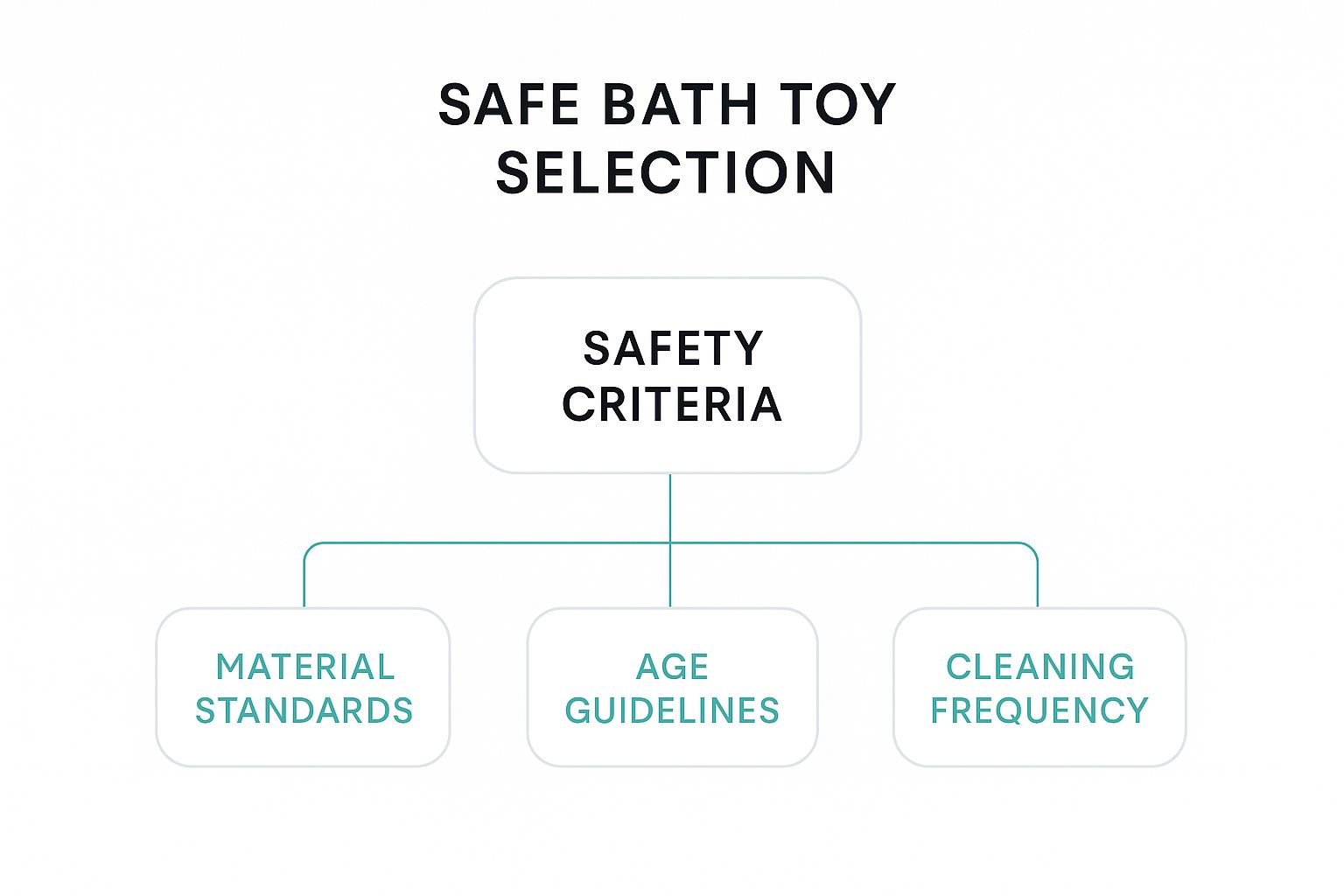
This image really drives home the point that picking safe toys is a multi-step process. You have to think about what the toy is made of, whether it's right for your baby's age and developmental stage, and how you’re going to keep it clean and hygienic over time. A rubber ducky with a hole in the bottom can become a mold party—yuck!
How to Read Baby Product Labels Like a Pro
Ever flip over a bottle of baby wash and feel like you need a chemistry degree to understand the label? The ingredient lists are a mile long, the words are impossible to pronounce, and it’s hard to tell what’s good, what’s bad, and what’s just clever marketing. Let’s cut through the confusion and turn you into a label-reading pro.
This is a skill worth having. Parents are more focused than ever on finding safe, gentle options for their little ones. In fact, the market for baby bath soaps was valued at USD 3.246 billion in 2024 and is expected to jump to nearly USD 4.5 billion by 2035. What’s driving that growth? A massive shift towards organic and natural baby bath products, which you can read about in industry market analysis reports.
The Good Stuff to Look For
When you scan an ingredients list, the best stuff often sounds like it came from a garden, not a lab. These botanicals are fantastic for nourishing a baby’s incredibly delicate skin.
Here are a few of my favorite all-stars:
- Calendula: A wonderfully gentle flower extract that’s famous for its calming properties. It's a go-to for soothing any little patch of skin irritation.
- Chamomile: Just like the tea helps us unwind, chamomile in skincare has a relaxing, anti-inflammatory effect that can really help dial down redness.
- Shea Butter: This is a super-hydrator. It’s packed with vitamins and fatty acids that are perfect for locking in moisture after bathtime.
- Oatmeal (Colloidal): A classic for a reason! Finely ground colloidal oatmeal is a lifesaver for relieving itchiness and comforting dry, eczema-prone skin.
Ingredients to Gently Avoid
Now, let’s talk about what not to look for. Some common ingredients are just too harsh for a baby’s brand-new, sensitive skin barrier. Spotting these on a label is your best defense against dryness and irritation.
Think of your baby’s skin like a tiny, brand-new sponge. It absorbs everything much more easily than our adult skin does, which is why steering clear of harsh chemicals is so important.
Keep an eye out for these main culprits:
- Sulfates (SLS/SLES): These are the detergents that create that big, foamy lather we’ve been taught to associate with being clean. The problem is, they can also strip away the skin's natural, protective oils, leaving it dry and vulnerable.
- Parabens: These are used as preservatives to give products a longer shelf life. While the jury is still out on their long-term effects, they can be absorbed through the skin, and many parents simply choose to avoid them as a precaution.
- Artificial Fragrances: This is a sneaky one. If you see "fragrance" or "parfum" on the label, it can represent a hidden cocktail of dozens of undisclosed chemicals. These synthetic scents are one of the most common triggers for skin allergies and irritation.
Decoding Common Certifications
Labels are often covered in official-looking seals and buzzwords. Some are genuinely helpful, but others can be a bit misleading. Knowing what they actually mean helps you see past the marketing hype.
- Hypoallergenic: This sounds great, right? It suggests a product is less likely to cause an allergic reaction. But here's the catch: it’s not a regulated term. There’s no official standard a company has to meet to slap this on their bottle.
- Dermatologist-Tested: This just means a dermatologist has reviewed the product, usually on adults, to see how their skin tolerates it. It doesn't guarantee your baby won't have a reaction, but it's a generally positive sign.
- Tear-Free: This is a useful one. It means the product has been formulated with a pH that’s balanced with your baby’s eyes, so it shouldn’t sting or cause irritation if it accidentally gets in them.
By focusing on simple, recognizable ingredients and knowing the common red flags, you can confidently choose baby bath products that are truly gentle, safe, and perfect for your little one.
Creating a Soothing Bath Environment
A good bath is about so much more than just getting your baby clean. It’s an opportunity to create a calm, safe experience that can easily become one of the most cherished parts of your day. With a little thought, you can transform bathtime from a potential source of stress into a peaceful bonding ritual, which is a lifesaver with a fussy baby.
Consistency is really the secret sauce here. When you create a predictable and soothing routine, you’re sending gentle signals to your little one that it's time to relax and wind down. This turns the whole experience into a positive cue for sleep, making that transition to the crib a whole lot smoother.
Choosing the Right Baby Bathtub
The very first step in setting up a secure bath space is picking the right tub. You absolutely don't need anything fancy, but you do need something that’s safe and practical for your home and your baby. Your comfort and your peace of mind are what matter most.
Here are a few popular styles you’ll come across:
- Sink Inserts: These are fantastic for newborns. They’re often soft, foldable, and designed to fit right into your bathroom or kitchen sink. The Puj Tub is a classic example—parents love it for the way it cradles tiny infants, making those first few baths feel much less nerve-wracking.
- Countertop Tubs: Think of these as standalone basins you can set on a counter or even place inside your regular tub. They provide a bit more structure than an insert and work wonderfully for babies who aren't quite ready for the big bath.
- Convertible Tubs: This is the "grow-with-me" option. These tubs usually start with a newborn sling or insert that you can remove once your baby can sit up confidently. They're a smart, cost-effective choice because they last so much longer.
Essential Safety Gear for Peace of Mind
Once you've got the tub situation sorted, a few simple safety accessories can make a world of difference in preventing slips, bumps, and burns. Honestly, I consider these non-negotiables for any baby bath setup.
A non-slip bath mat is a must-have, whether you're using a small baby tub or the main family bathtub. It gives a much more secure surface and helps stop those heart-stopping slips, especially once your little one starts wiggling and trying to move around.
Always, always test the water temperature before your baby gets in. A baby’s skin is incredibly sensitive to heat, and what feels perfectly fine to you could be dangerously hot for them.
A spout cover is another essential piece of gear. You’ve probably seen the cute ones shaped like whales or elephants. They cushion that hard metal faucet, protecting your baby's head from accidental bumps while they splash and play. Lastly, a reliable bath thermometer removes all the guesswork. Just aim for water around 100°F (38°C) to keep the bath safe and comfortably warm.
Managing Common Baby Skin Concerns
For a lot of parents, bathtime is more than just fun and games—it's often the first line of defense against common baby skin issues. A baby’s skin is remarkably delicate, which means conditions like eczema, cradle cap, and diaper rash can pop up easily. The good news is that the right baby bath products and a gentle routine can make all the difference in keeping your little one happy and comfortable.
This growing focus on sensitive skin care is a big deal. The baby toiletries market was valued at a huge USD 113.33 billion in 2024 and is on track to hit USD 161.74 billion by 2030. That tells you a lot about what parents are looking for: specialized products that protect and soothe. You can discover more insights about baby toiletries market trends and see how safety is really driving the industry forward.
Soothing Eczema-Prone Skin
Eczema, also known as atopic dermatitis, typically shows up as dry, red, and very itchy patches. When it comes to bathtime, the goal is to clean your baby’s skin without stripping away its natural, protective oils.
Here’s how to handle it:
- Keep it short and sweet: A bath of 5–10 minutes in lukewarm water is perfect. Hot water can make dryness worse.
- Go fragrance-free: Stick with mild, unscented cleansers. Artificial fragrances are one of the biggest culprits behind eczema flare-ups.
- Pat, don't rub: After the bath, gently pat your baby's skin with a soft towel. Leave it just a little damp.
- Moisturize immediately: This is the most important step! Slather on a thick, hypoallergenic, and fragrance-free cream or ointment within three minutes of taking them out of the tub. This seals in that precious moisture.
Gently Handling Cradle Cap
Cradle cap looks like yellowish, scaly, or crusty patches on your baby's scalp. It might look a little strange, but rest assured, it’s completely harmless and almost always goes away on its own. A gentle bath routine can help move the process along.
The goal with cradle cap is gentle persuasion, not aggressive scrubbing. You want to soften and loosen the scales over time, never pick or force them off, which could irritate the scalp.
About 15 minutes before bathtime, try massaging a small amount of baby oil or even coconut oil onto your baby’s scalp. This helps soften up the scales. Then, in the bath, use a mild shampoo and a soft-bristled baby brush to gently massage the scalp in small circles. This helps lift the flakes without causing any irritation. For more great advice, take a look at our guide on 5 essential baby skin care tips.
While these tips are great for managing mild skin concerns at home, always trust your gut. If a rash looks infected, doesn't get better, or seems to be really bothering your baby, it's time to call the pediatrician. They can give you a proper diagnosis and a solid treatment plan.
Your Bathtime FAQs Answered
https://www.youtube.com/embed/y9XtwBiCcgk
Even with the perfect tub and the softest towels, you're going to have questions. That's just part of being a new parent! Bathtime can feel like a huge responsibility, and it’s completely normal to second-guess yourself, wondering if you're doing it all "right."
Let's walk through some of the most common questions that pop up. Getting clear answers can help turn a source of stress into a happy, confident routine you and your little one can enjoy together.
How Often Should I Bathe My Newborn?
This is the big one, and the answer usually comes as a surprise: a lot less than you probably think. Newborns aren't running marathons or digging in the garden, so daily baths aren't just unnecessary—they can actually do more harm than good.
The American Academy of Pediatrics recommends just two to three baths per week during the first year. Bathing too often can strip away the natural oils that protect your baby’s incredibly delicate skin, leading to dryness and irritation. On the days in between, a quick "top and tail" wash using a warm, damp cloth for their face, neck, hands, and diaper area is perfect.
Is Baby Powder Safe to Use?
The advice on this has definitely changed over the years. Today, most pediatricians strongly advise against using traditional talc-based baby powders. The issue is that the tiny, fine particles can easily become airborne and get into your baby's little lungs, which can cause respiratory problems.
If you’re looking for a way to manage moisture in those chubby neck folds or the diaper area, a cornstarch-based powder is a much safer alternative. Honestly, though, most parents find that just patting the skin completely dry and using a good diaper cream works perfectly well without any risk.
The bottom line is simple: avoid any powder that can create dust your baby might breathe in. When in doubt, stick with creams and ointments to protect their skin.
When Can I Start Using Bubble Bath?
Who doesn't love a good bubble bath? While they're a ton of fun, it's best to hold off on the bubbles until your child is a bit older, usually around three years old.
The problem is that the very ingredients that make those fun, frothy bubbles (along with added fragrances and dyes) can be really irritating to a baby's sensitive skin. They can also increase the risk of urinary tract infections (UTIs), especially for little girls.
When you do decide to introduce bubbles, look for a formula made specifically for sensitive skin, free from harsh soaps and synthetic perfumes. Even then, it’s probably best to think of bubble baths as a special treat rather than an everyday thing.
Do I Need a Special Bath Thermometer?
You don't have to have one, but it's an amazing little tool for taking the worry out of getting the water temperature right. A baby's skin is far more sensitive than an adult's, so water that feels just fine to you might be uncomfortably hot for them. A bath thermometer removes all the guesswork.
The sweet spot for bathwater is right around 100°F (or 38°C). No thermometer? No problem. Just use the inside of your wrist or your elbow to test the water. It should feel comfortably warm, never hot. This simple check is one of the easiest ways to keep every bath safe and cozy.
Choosing the right baby bath products doesn't have to be a chore. By focusing on gentle ingredients, prioritizing safety, and creating a soothing routine, you can make bathtime a highlight of your day. It’s a chance to connect, play, and care for your little one, all at the same time.
What are your can't-live-without baby bath products? Share your favorites in the comments below—we’d love to hear what works for your family!
At Hiccapop, we believe parenting should be simpler and safer. Our innovative products are designed to give you peace of mind, from bathtime to bedtime. Explore our collection of thoughtfully crafted baby essentials and see how we’re making life easier for parents everywhere.