


A Parent's Guide to ABC Foam Mats
As a new parent, you're constantly looking for ways to create a safe, stimulating world where your child can flourish. That's where ABC foam mats really shine. They're so much more than just a colorful floor covering; they’re a foundational tool for early childhood development, transforming any room into a vibrant learning hub.
These interlocking puzzle mats create a soft, inviting surface that cushions little ones from inevitable tumbles and provides a dedicated space for play. Think of it as their very first office, classroom, and gym, all rolled into one comfortable, colorful package.
This guide will cover everything you need to know about these incredibly versatile surfaces. We’ll dive into the developmental benefits, demystify safety standards, and give you practical tips for picking the perfect one for your family. By the end, you'll see why abc foam mats are a smart investment in your child's safety and early learning journey.
Creating a Safe and Engaging Play Space
A good play mat is the foundation of your child's first world of exploration. It does more than just provide a soft spot to land; it carves out a dedicated area just for play, which subtly helps toddlers understand boundaries and focus their boundless energy.
You’re essentially creating their own little corner of the world, a place where they feel secure enough to take those first developmental leaps.
More Than Just a Soft Surface
Let's be honest, the number one job of a foam mat is to protect your baby from hard floors. As they master rolling, sitting up, crawling, and eventually taking those wobbly first steps, tumbles are just part of the process.
A high-quality foam mat absorbs the impact from these little spills, turning a potential cry-fest into just another small bump on the road to discovery. This cushioning gives you peace of mind and gives your little one the confidence to keep trying without fear.
But the real magic goes beyond physical safety. A thoughtfully designed play area encourages independence and sparks creativity. It’s a space where your child is the boss, free to explore different textures, colors, and shapes at their own pace.
This designated zone is crucial for development, as it provides a predictable and secure environment where children feel empowered to experiment and learn without constant intervention.
For more ideas on setting up the perfect environment, take a look at our guide on what makes a great play space. Creating a well-designed area can truly support your child’s developmental journey from the very beginning.
How Play Mats Nurture Early Development
Don't let the bright colors fool you—ABC foam mats are much more than just a cheerful floor covering. Think of them as a powerful engine for early childhood development, disguised as a fun place to play. They create a multi-sensory environment where your little one can hit critical growth milestones, often without even realizing they're learning.
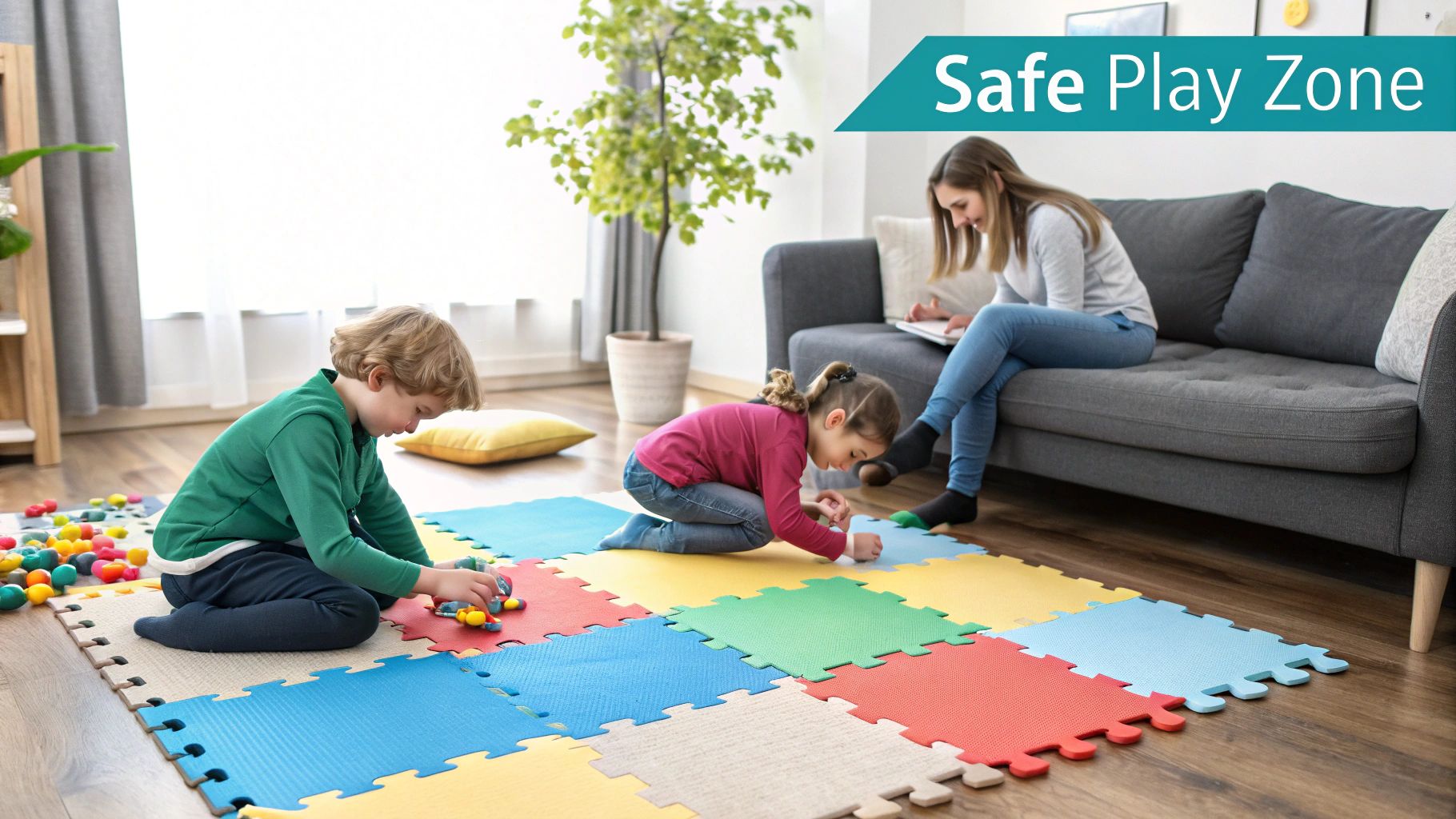
From their first cognitive leaps to newfound physical confidence, every part of an alphabet mat is designed to support your child's journey. The vibrant colors and bold shapes immediately grab their attention, which is the first step in building crucial visual tracking and recognition skills.
Fostering Cognitive Growth
The most obvious benefit here is the early introduction to literacy and numbers. Long before a child can read a book or count their toys, they're absorbing the shapes of letters and numbers in a playful, no-pressure setting.
This constant exposure is fantastic for building familiarity. As they get older, you can start simple games like "Can you find the letter B?" or "Where's the number 2?" The mat transforms into a giant, interactive flashcard, making learning feel completely natural.
Plus, the puzzle-like nature of the tiles is brilliant for problem-solving. Kids learn to spot patterns, match shapes, and figure out how the pieces fit together, all of which are foundational for understanding spatial relationships.
Building Strong Motor Skills
A play mat is essentially a baby's first gym. It offers the perfect surface for them to develop both gross and fine motor skills—the building blocks for physical coordination and independence.
Gross Motor Skills
That soft, cushioned surface gives little crawlers the confidence to push up, roll over, and start exploring. It’s way more forgiving than hardwood or tile, so they're more willing to take those little developmental risks. For toddlers, it’s a safe zone for practicing wobbly first steps, which takes the sting out of tumbles and encourages them to get right back up.
Fine Motor Skills
When those tiny hands grasp, twist, and connect the interlocking tiles, they're getting a fantastic workout. This constant manipulation strengthens the small muscles in their hands and sharpens hand-eye coordination. These are the very same skills they'll need later for holding a crayon, zipping a coat, and tying their shoes.
An ABC foam mat acts as a complete developmental tool. It simultaneously stimulates the mind with letters and colors while strengthening the body through tactile interaction and physical movement.
For those searching for gifts that truly support a child's growth, play mats are a fantastic choice. They fit right in with other thoughtful ideas, like these cherished first birthday presents, because they offer years of developmental value.
Creating a Rich Sensory Experience
A foam mat is a feast for the senses, providing the essential input a child's brain craves. The different textures of the tiles, the bright visuals, and even the unique feel of the foam create a rich sensory playground. This type of engagement is vital for building neural connections and helping your child make sense of the world around them.
When you put it all together, an abc foam mat is far more than just a piece of flooring. It's a smart investment in your child's early education and physical development, giving them a safe and stimulating space to learn, play, and grow.
Understanding Safety Standards for Your Peace of Mind
As a parent, your kid’s safety radar is always on. When it comes to something like an ABC foam mat that they'll be crawling and playing on for hours, you need to know it’s truly safe. Let’s cut through the noise and talk about what really matters, so you can shop with total confidence.
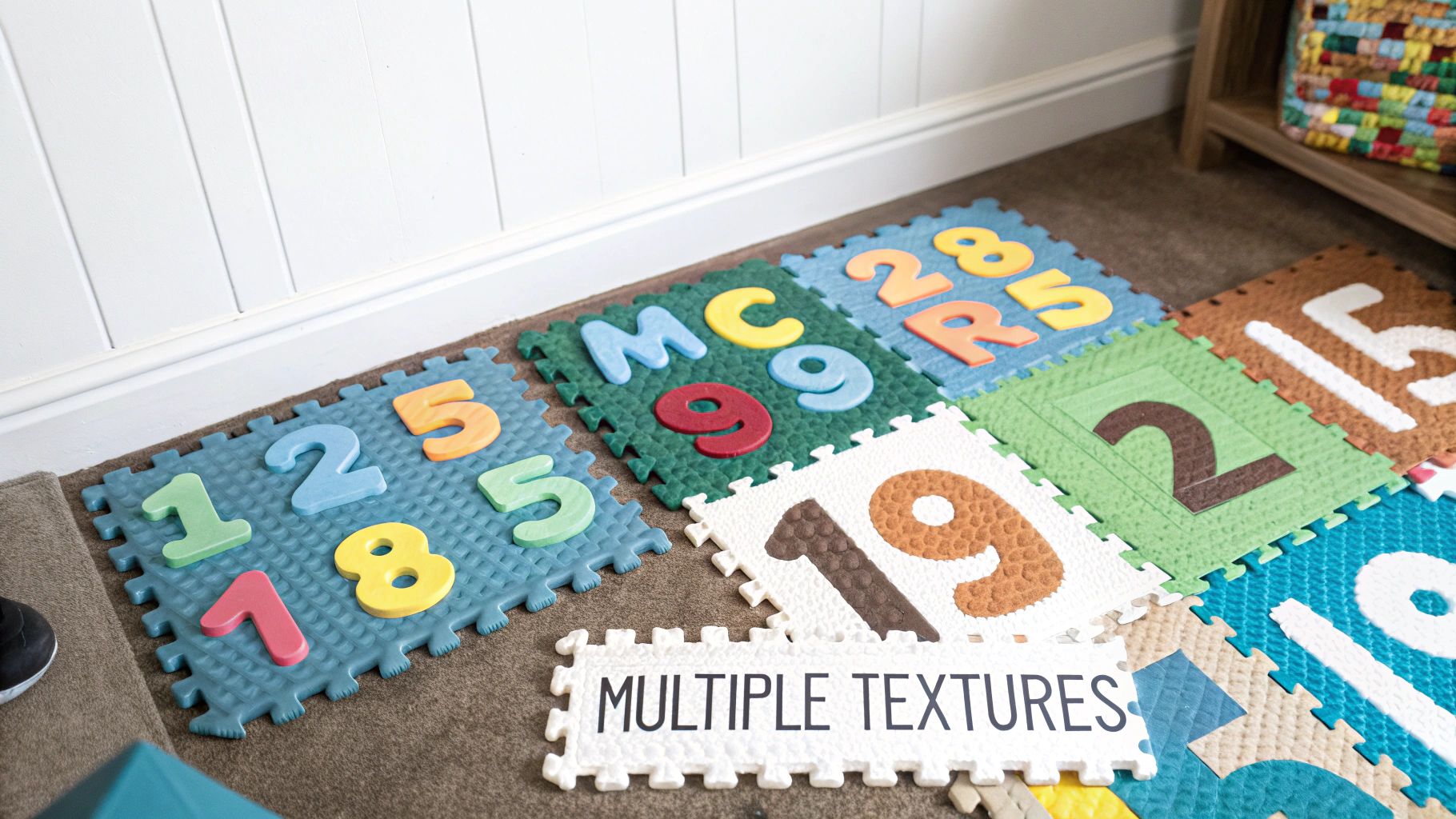
The first thing to look at is the material itself. High-quality mats are made from non-toxic foam that's been thoroughly tested to be free from a whole list of nasty chemicals.
This is absolutely non-negotiable for any product that’s going to be so up-close-and-personal with your little one.
Decoding Safety Certifications
So, how can you be sure a mat is actually safe? You have to look for specific certifications on the product’s label or in its online description. These aren't just a jumble of letters; they’re your proof that the mat has passed some pretty tough safety tests.
Here are the big ones to keep an eye out for:
- ASTM F963 Compliant: This is the gold standard for toy safety in the United States. It means the mat is physically safe (no sharp bits) and chemically safe (no harmful stuff).
- CPSC Accepted: This shows the product meets the safety rules set by the U.S. Consumer Product Safety Commission, which is another great layer of reassurance.
- BPA, Phthalate, and Lead-Free: Any good brand will shout this from the rooftops. If you don't see it mentioned anywhere, that’s a major red flag.
Finding these certifications means the mat you bring home is a genuinely safe foundation for fun. Of course, safety goes beyond just the products we choose. For a broader look at this, check out these great tips on how to prioritize child safety in play environments.
Why Mat Thickness Matters
Beyond the chemical makeup, the physical design of the mat plays a huge part in keeping your child safe. The thickness of the foam is directly tied to how well it can absorb the shock from all those inevitable tumbles.
A thicker mat provides better cushioning, which is incredibly important as your baby learns to sit up, crawl, and eventually take those first wobbly steps. A good rule of thumb is to look for mats that are at least 0.4 inches (or 1 cm) thick. That’s enough padding to soften most falls on hard surfaces like tile or wood floors.
It's clear that parents are more focused on safety than ever. The baby mats and gyms market, which includes ABC foam mats, was valued at a whopping $1.2 billion in 2024 and is expected to more than double to $2.5 billion by 2033. This surge is really driven by parents like you who are actively looking for high-quality, non-toxic gear for their kids.
How to Choose the Perfect ABC Foam Mat
https://www.youtube.com/embed/4uz1rVe4FCg
Picking out the right ABC foam mat can feel a bit like searching for the perfect pair of jeans. With so many styles, sizes, and materials out there, how do you find the one that’s a perfect fit for your family and your home? Let's walk through the key things to look for.
It's a big decision for a lot of parents, and the market shows it. The global baby play mat industry, where abc foam mats are a huge player, was valued at $1.4 billion back in 2025 and is expected to hit $2.3 billion by 2035. This isn't just about fun colors; it's about a growing demand for safe, educational, and eco-conscious products for our kids.
What’s It Made Of? Materials Matter
Not all foam is the same, and when it comes to a surface your baby will be crawling, playing, and probably drooling on, the material is everything. You'll mainly run into two types: EVA and XPE foam.
- EVA Foam (Ethylene Vinyl Acetate): This is the classic, go-to material for those interlocking puzzle mats we all know and love. It’s a solid choice because it’s durable, lightweight, and provides excellent cushioning. Just make sure you're getting high-quality, non-toxic EVA.
- XPE Foam (Cross-linked Polyethylene): You'll often find XPE foam in those single-piece mats that roll up. It’s known for being incredibly soft, completely waterproof, and a bit more resistant to daily wear and tear. It's generally considered a more premium, eco-friendly option.
So, which one is for you? It really boils down to your needs. If you love the idea of building and reconfiguring the play space, the interlocking EVA tiles are fantastic. If you value quick setup and storage, a one-piece XPE mat is a lifesaver.
Getting the Size and Thickness Just Right
Before you even think about adding a mat to your cart, go grab a tape measure. Seriously. Where is this mat going to live? Is it meant to take over a large part of the living room floor, or will it create a cozy little play nook in the nursery?
Measure your space first to make sure you get enough tiles or a single mat that's big enough. A good rule of thumb is to aim for at least a 4x6 foot area—that gives a new crawler or wobbly walker plenty of safe territory to explore. As you map out your baby's space, our essential baby items list can be a great resource for planning.
Thickness is all about safety. You want something that can soften the blow of the inevitable tumbles. Look for mats that are at least 0.4 to 0.5 inches (or 1 to 1.2 cm) thick. Anything less just won't provide enough padding on hard floors like tile or wood.
Comparing Key Features at a Glance
To help you sort through the options, here's a quick breakdown of what to look for when you're comparing different ABC foam mats.
Feature Comparison for ABC Foam Mats
| Feature | What to Look For | Why It Matters |
|---|---|---|
| Material Type | Non-toxic EVA or XPE foam. | Safety first! Ensures your baby isn't exposed to harmful chemicals like BPA, phthalates, or lead. |
| Thickness | At least 0.4 inches (1 cm). | Provides essential cushioning to protect against bumps and falls on hard surfaces. |
| Size & Coverage | A mat large enough for your space. | Gives your child ample room to move, roll, and play without constantly ending up on the hard floor. |
| Cleaning | A waterproof, wipe-clean surface. | Life with kids is messy. Easy-to-clean surfaces save you time and keep the play area hygienic. |
| Design | Reversible patterns, pop-out shapes. | A stylish design can blend with home decor, while interactive elements add extra sensory engagement. |
Ultimately, the "best" mat is the one that ticks the right boxes for your family’s specific needs—balancing safety, function, and of course, a bit of fun.
Don't Forget the Design and Extras
Now for the fun part! While a classic, colorful alphabet mat is always a winner, today's designs have so much more to offer.
Keep an eye out for these brilliant features:
- Reversible Designs: These are a game-changer. You can have the bright, educational letters and numbers facing up during playtime, then flip it over to a stylish, neutral pattern that looks great in your living room when guests come over.
- Interactive Elements: Little details make a big difference. Some mats have pop-out shapes or different textures on the surface, which are fantastic for sensory development and keeping curious hands busy.
- Easy-to-Clean Surfaces: This is non-negotiable. A surface that's waterproof and can be wiped clean in seconds is an absolute must-have for spit-up, spilled snacks, and everything in between.
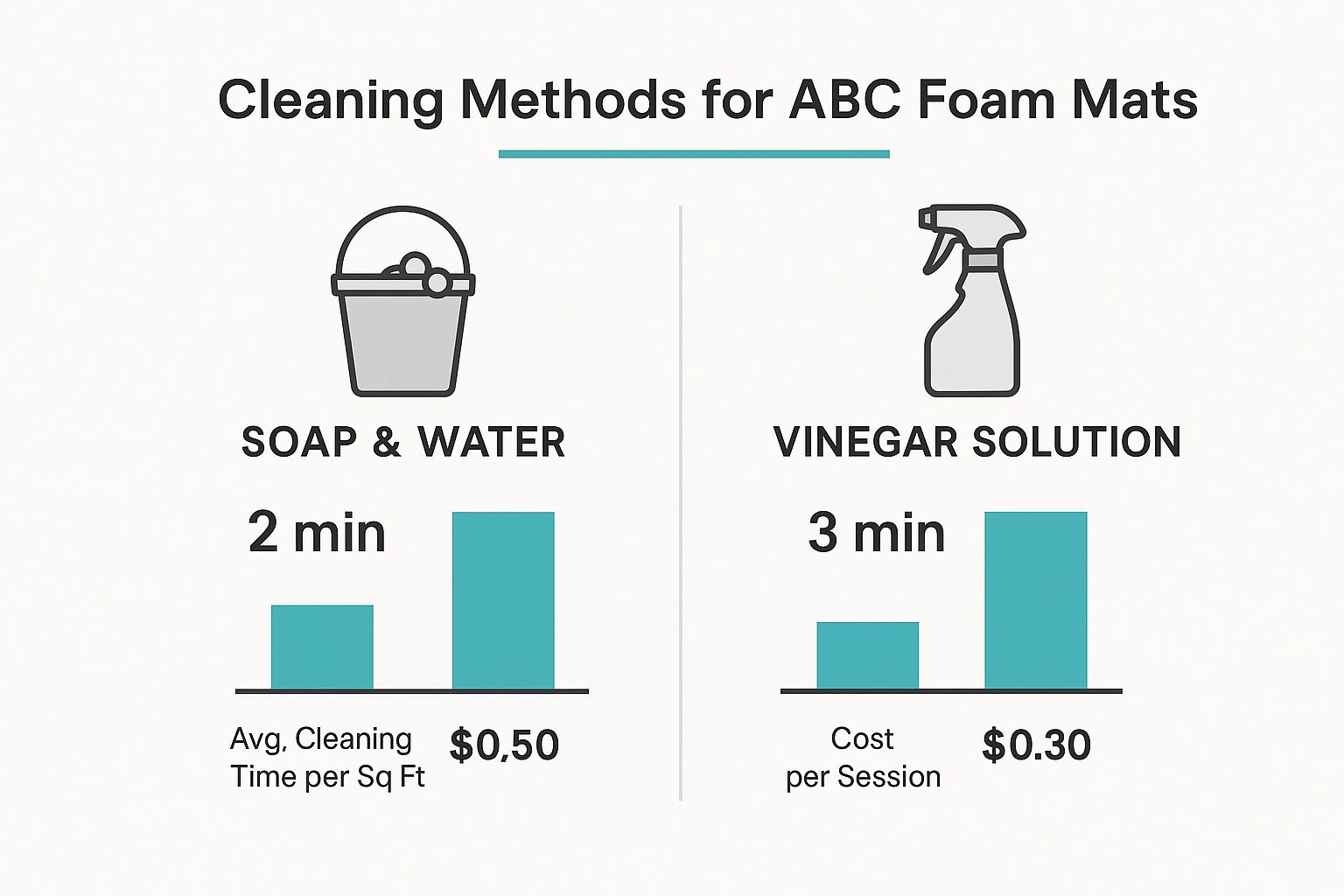
When it comes to cleaning, you have options. As you can see, a simple mix of soap and water is a bit quicker, but a gentle vinegar and water solution is a super effective and budget-friendly way to keep the mat fresh over the long haul.
Keeping Your Play Mat Clean and Hygenic
Let's be real—your baby's play mat is the epicenter of daily life. It sees everything from drool and spit-up to the inevitable cracker crumbs and juice spills. Keeping that surface clean goes beyond just tidiness; it’s about creating a healthy space for your little one to explore safely.
A solid cleaning routine for your abc foam mats is your best defense. The good news? You don't need harsh chemicals or a complicated regimen to keep things fresh. A simple daily habit can make a world of difference in managing the mess and keeping germs from crashing the party.
Simple Steps for Daily Upkeep
For the day-to-day messes, a quick wipe-down is usually all it takes. I find it helpful to keep a spray bottle with a gentle, baby-safe cleaner nearby for those on-the-spot clean-ups. This stops stains from settling in and prevents sticky spots from becoming dirt magnets.
A simple solution of mild dish soap and warm water applied with a soft cloth works wonders. Just give it a quick wipe, then go over it again with a clean, damp cloth to rinse. This little bit of effort ensures the mat is always ready for the next round of playtime.
Deep Cleaning Your Foam Mat
Every now and then, your mat will need a more thorough cleaning. This is especially true after a sick day or a particularly messy playdate with friends. It's the perfect opportunity to take the interlocking tiles apart and give each piece some focused attention.
Here’s a simple, effective method for a deep clean:
- Disassemble the Mat: Pull all the interlocking tiles apart. This is the only way to get into the edges and grooves where grime loves to hide.
- Wash Each Piece: Use a solution of warm water and a tiny bit of baby-safe soap. For a natural disinfectant, you can also use a mixture of one part white vinegar to three parts water.
- Rinse Thoroughly: Go over each tile with a clean, damp cloth to wipe away any soap or vinegar residue. This step is super important to make sure no cleaning agents are left behind.
- Air Dry Completely: Lay the tiles out and let them dry completely on all sides before putting them back together. Never reassemble them while they're still damp—that’s a recipe for trapping moisture and inviting mildew.
Pro-Tip: Steer clear of bleach, ammonia-based cleaners, or any abrasive scrubbing pads. These can easily damage the foam's surface, cause the bright colors to fade, and leave behind harsh chemical residues that are not safe for your baby.
For more detailed care instructions, especially if you have different types of play pads, feel free to check out our handy playpad care and inflation guide. A little proper maintenance goes a long way in keeping your mat in great shape for years to come.
Creative Ways to Use Your Foam Mat
Think your ABC foam mat is just for the baby phase? Think again. Once your little one is up and running, that colorful floor covering can become one of the most versatile toys you own, sticking around long after the crawling days are over. It's a true chameleon of the playroom.
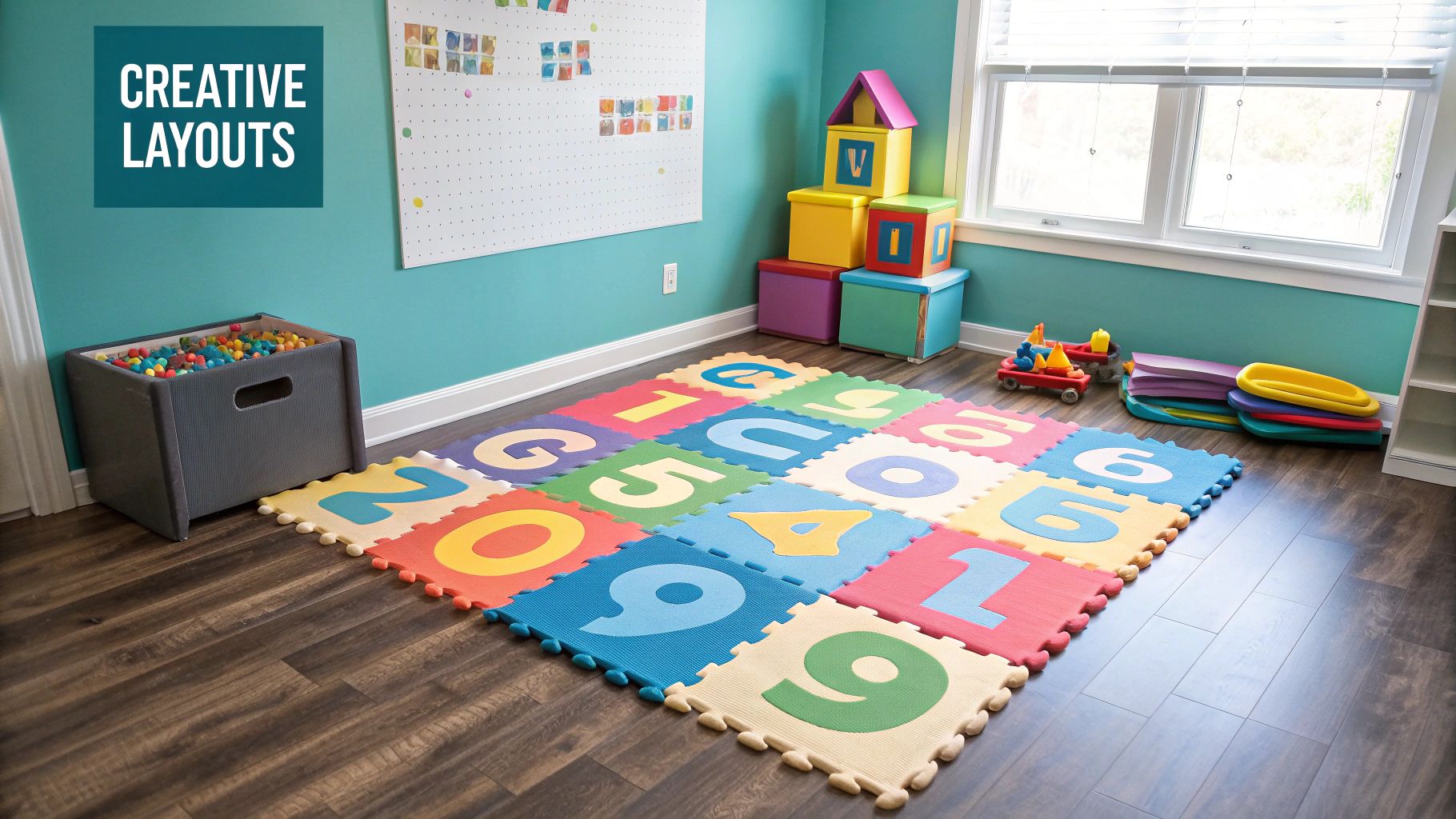
Those tiles are basically giant, soft building blocks. As your child grows, the mat stops being just a surface and turns into a launchpad for all kinds of imaginative play, adapting right alongside their developing skills.
Games for Growing Minds
For toddlers, the mat is a fantastic, hands-on tool for making learning feel like pure fun. The bright letters and colors are perfect for creating simple games that sneak in a little education without them even noticing.
Here are a few ideas we've seen work wonders:
- Letter and Color Hunts: Yell out a letter or a color and watch your toddler gleefully stomp on the right tile. It’s a great way to burn off that endless energy while they practice recognition skills.
- Simple Spelling Challenges: Start with their name. Pop the letters out and see if they can put them back in order. Before you know it, you can move on to easy words like "dog" or "sun."
- Number Hopscotch: Lay the number tiles out in a row to create an indoor hopscotch court. It's a simple, active way to practice counting and sequencing.
Building Beyond the Floor
Here's where the real magic happens. The interlocking design of ABC foam mats means they have 3D potential. The tiles are light enough for little hands to manage but sturdy enough to build with.
With a bit of imagination, that flat play mat can become an amazing world of forts, tunnels, and secret hideouts. This kind of play is brilliant for encouraging early spatial reasoning and engineering skills.
This push for better materials isn't just a playroom thing. The global industrial floor mats market, valued at USD 1.7 billion in 2024, is expected to hit USD 2.9 billion by 2035. Innovations in durable, non-toxic foam for factories often find their way into consumer goods, giving us safer and better play mats for our kids. You can read more about this growing industrial-to-consumer trend and how it impacts the products we buy.
A Cozy Corner for Older Kids
Even when your kids have long since mastered their ABCs, the mat still has a place. You can reassemble it to create a designated soft spot for quiet time. It’s perfect as a comfy base for a tricky jigsaw puzzle, a dedicated space for morning stretches, or a cozy reading nook tucked away in a corner. It just goes to show what a smart, long-term investment in play it really is.
The Perfect Play Mat for Every Stage
Choosing the right abc foam mat is about so much more than just picking a colorful floor covering. It’s about investing in a safe, versatile, and educational tool that will support your child through every milestone, from their first tummy time wiggles to building imaginative forts as a toddler.
By focusing on non-toxic materials, the right thickness for safety, and a design that sparks joy and learning, you can create a play space that gives both you and your little one complete peace of mind. These mats provide the perfect foundation for countless hours of growth, discovery, and most importantly, fun.
So go ahead, lay down those letters and numbers, and watch your child’s world expand one colorful tile at a time. What are your favorite games to play on your foam mat? Share your creative ideas in the comments below!
At hiccapop, our mission is to make the journey of parenting a little bit easier and a whole lot safer. We design thoughtful gear that gives you peace of mind so you can soak up all the joyful moments. Check out our full collection of innovative baby and toddler essentials at https://hiccapop.com.