


When to Start Tummy Time: A Complete Guide for New Parents
So, you've brought your newborn home. Congratulations! Amidst the beautiful chaos of feedings and diaper changes, you might be hearing about something called "tummy time." You’re probably wondering, when exactly is the right moment to start?
The answer might surprise you: you can begin on the very day you bring your baby home from the hospital. Seriously. This isn't about pushing your little one into some intense, baby-sized workout. It’s about introducing tiny, gentle moments on their belly to start building crucial foundational strength right from day one.
What New Parents Need to Know About Tummy Time
Starting early is the secret sauce. The sooner you introduce your baby to the idea of being on their tummy, the more they’ll see it as just another normal part of their day—like feeding or getting a fresh diaper.
Think of it less like a formal exercise routine and more like a brand-new, interesting way to play and see the world. Getting them comfortable with the position from the start helps you avoid a battle of wills (and a whole lot of tears) later on.
Start Small and Build Momentum
Don't feel pressured to go for long sessions right out of the gate. For newborns, short and sweet is the name of the game. The best approach is to start with sessions lasting just 2–5 minutes, a few times a day. As your baby gets stronger and more comfortable, you can gradually increase the duration.
By the time your baby is around two months old, the goal is to have them accumulating 15–30 minutes of total tummy time throughout the day. You can find more details on the importance of tummy time for infants from the pros.
This simple, daily practice is incredibly important for their development. It helps:
- Prevent flat spots (plagiocephaly) from forming on the back of their head.
- Build the neck, shoulder, and back strength they'll need for bigger milestones.
- Lay the groundwork for rolling over, sitting up, and eventually, crawling.
Tummy Time Milestones At A Glance
To give you a clearer picture, here’s a quick reference guide for how tummy time might look as your baby grows.
| Baby's Age | Session Length | Daily Goal |
|---|---|---|
| Newborn | 2-3 minutes | 10-15 minutes total |
| 2 Months | 3-5 minutes | 15-30 minutes total |
| 4 Months | 5-10 minutes | 45-60 minutes total |
| 6 Months | 10-15 minutes | 60-90 minutes total |
Remember, this chart is just a guideline. The most important thing is to watch your baby’s cues and build up the time at a pace that feels right for both of you.
Think of Tummy Time as Your Baby's First Workout
It might just look like they're lying on the floor, but tummy time is your baby's very first gym session. Every single moment they spend on their belly is a powerful workout, laying the groundwork for every major movement milestone to come.
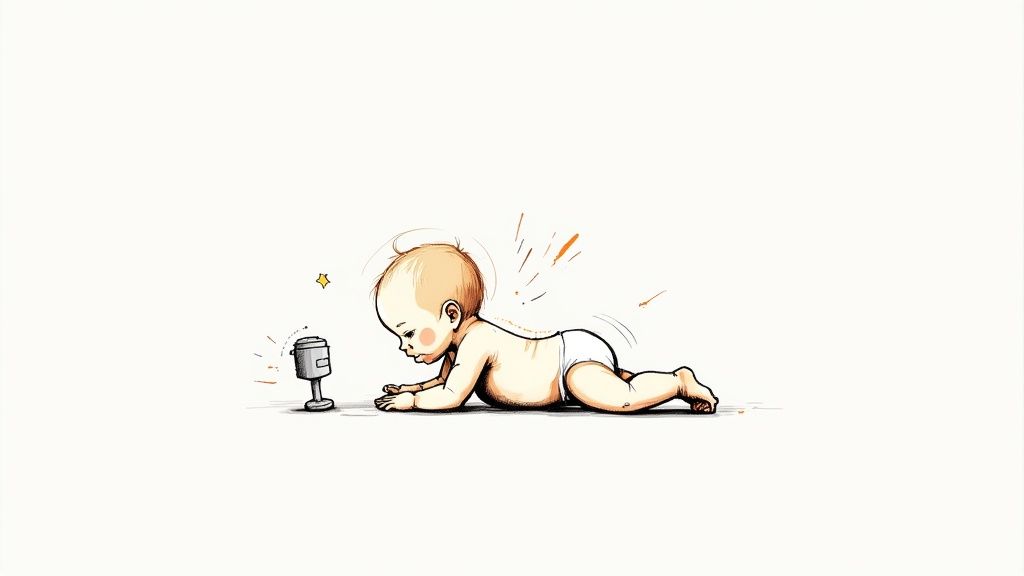
When your baby lifts their head, even for a split second, they're firing up crucial muscles in their neck, shoulders, and upper back. This isn't just about gaining head control; it's the launchpad for so much more.
That tiny head lift today builds the exact strength they'll need to roll over next month. The pushing-up motion that comes next is what paves the way for sitting up and, eventually, crawling across the room.
Building Strength and Preventing Flat Spots
Beyond the muscle-building benefits, tummy time is absolutely essential for healthy skull development. While the "Back to Sleep" campaign is vital for preventing SIDS, it does mean that babies spend a whole lot of time on their backs.
All that time on one spot can sometimes lead to positional plagiocephaly—what most of us just call flat spots. A baby's skull is still soft and malleable, so it can easily change shape if there's constant pressure on one area.
Tummy time is the perfect solution. By having your baby spend supervised, awake time on their stomach, you give the back of their head a much-needed break from all that pressure, which helps their head develop a nice, round shape.
This isn't just about aesthetics, either. It helps ensure the skull grows properly without any uneven pressure points.
Laying the Foundation for Future Milestones
The ripple effect from this simple "workout" is huge. The strength and coordination your baby builds during these sessions are directly tied to their ability to hit all those exciting future milestones.
Regular tummy time helps your baby develop:
- Gross Motor Skills: The core strength they build is the foundation for rolling, sitting, crawling, and eventually pulling up to stand.
- Sensory Awareness: Being on their tummy lets them feel different textures—like a soft blanket or a cool floor—on their hands, arms, and cheeks, giving them brand-new sensory experiences.
- Visual Skills: Lifting their head encourages them to see the world from a whole new angle. It strengthens their eye muscles as they look around and track what's happening in the room.
In short, these brief daily sessions are one of the best investments you can make in your baby's physical development.
A Practical Tummy Time Timeline From Newborn to Six Months
Every baby hits milestones at their own pace, but it's always helpful to have a roadmap. This timeline will give you a sense of what to expect from tummy time as your little one grows, showing you how those tiny, wobbly efforts build into serious skills.
Think of these as guideposts, not deadlines. The most important thing is to tune into your baby's signals and follow their lead.
Newborns: 0 to 1 Month
Right at the beginning, tummy time is less about a workout and more about connection. For now, you can skip the playmat—your chest or lap is the perfect starting point.
Simply lay your baby on your chest while you're reclined. In those first few weeks, they might just snuggle their cheek against you, and that’s perfectly fine! Soon enough, you'll start to see them attempt tiny head lifts, even if just for a second. That's a huge effort for them, so celebrate every wobble!
Younger Infants: 2 to 3 Months
By two months, your baby is getting stronger and a lot more curious about the world. Now is a great time to introduce sessions on a firm, flat surface like a play mat on the floor.
You’ll likely see them lift their head to about a 45-degree angle, propping themselves up on their forearms. They'll also start turning their head from side to side to track your voice or look at a toy. A baby-safe mirror placed in front of them can be a game-changer here; babies are captivated by faces, especially their own!
This is when you'll really start to see progress. The strength they're building right now is the foundation for one of their first big moves: rolling over.
Older Infants: 4 to 6 Months
Get ready for the main event! Between four and six months, your little one starts to look like a tummy time pro. They'll begin pushing up on straight arms, lifting their chest right off the floor like a tiny cobra.
This new strength unlocks a whole new world of movement. They’ll start pivoting in circles to grab toys and might even do the "swimming" motion—lifting both arms and legs off the floor at once. These are all critical steps on the path to crawling.
By six months, they’re really building the core and upper body strength needed to start exploring. Curious about what comes next? You can learn all about it in our guide to the major baby milestones.
How to Make Tummy Time Fun and Fuss-Free
Does your baby act like tummy time is the worst thing that has ever happened to them? Don't worry, you’re in good company. Many babies protest at first, but with a few creative tricks, you can turn those daily tears into triumphant, playful sessions.
The real key is to make it an engaging experience, not a chore. The best first step? Get right down on the floor with them. Making eye contact, smiling, and singing silly songs shows them they're safe and that this is a special time for bonding. Your presence truly makes all the difference.
Creative Ways to Beat the Fuss
If the floor is an absolute no-go zone for your little one, it's time to switch things up. There are plenty of alternative positions that still build those crucial muscles without triggering a full-blown meltdown.
- Tummy-Down-Across-Your-Lap: Sit comfortably in a chair and lay your baby across your thighs. A gentle back pat can be soothing, and this slight elevation often feels more secure to them.
- The Football Hold: This one's a classic for a reason. Carry your baby face-down, with their tummy resting securely along your forearm. Walking around while you do it gives them a whole new view of the world!
- Use a Pillow Prop: A small, rolled-up towel or a nursing pillow placed under your baby's chest and armpits can be a game-changer. This little lift makes it much easier for them to raise their head and look around.
Tummy time doesn't have to be a daily struggle; finding ways of making activities fun for the family helps build positive associations from the very start.
This visual timeline shows how tummy time activities can evolve as your baby gets stronger and more curious.
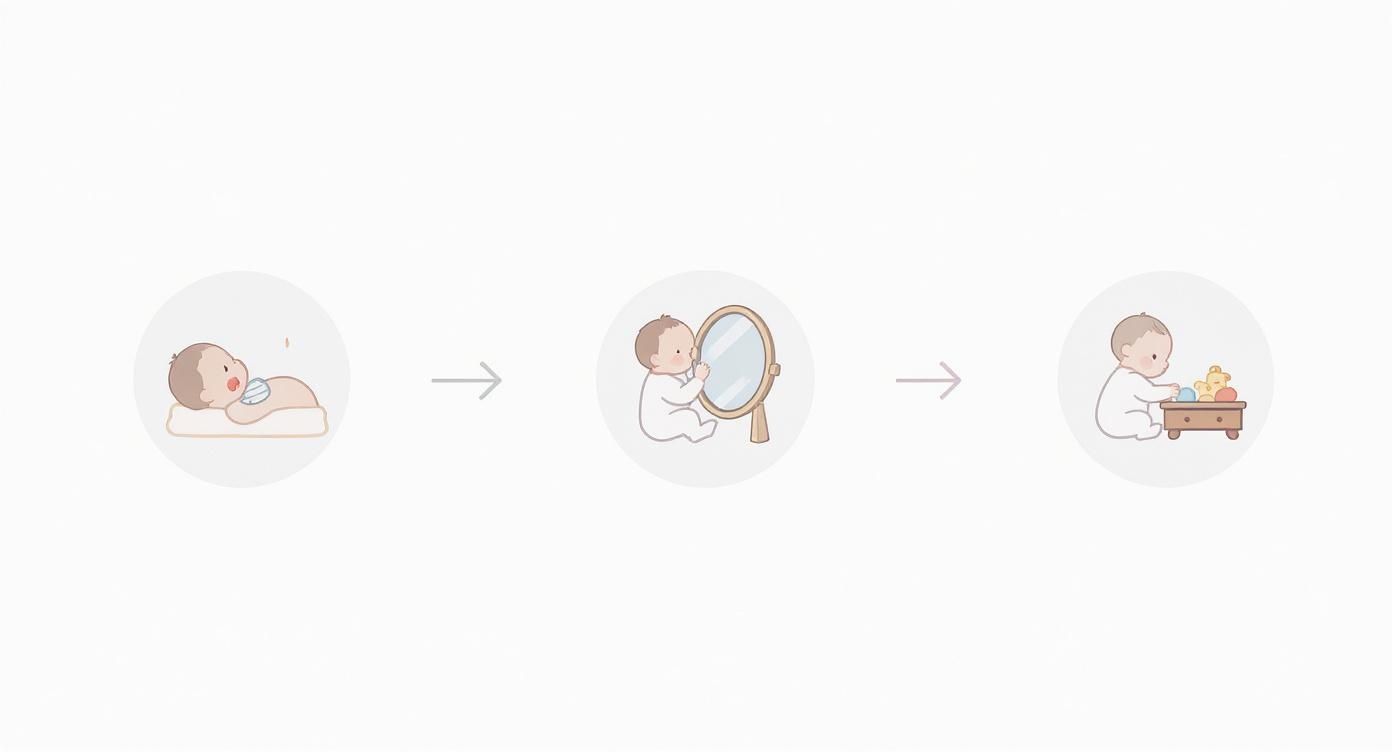
As you can see, the focus naturally shifts from simple bonding with a newborn to more interactive and engaging play with older infants.
Engage Their Senses
A bored baby is almost always a fussy baby. Spark their natural curiosity by making their environment interesting. A fantastic trick is to place a baby-safe, unbreakable mirror in front of them—babies are absolutely fascinated by faces, especially their own!
You can also use high-contrast toys or colorful board books to capture their attention. A well-designed play area can make a huge difference in their tolerance (and even enjoyment!) of tummy time. You can find more ideas in our guide to creating the perfect play environment for your baby or toddler.
Ultimately, the goal is empathy and patience. Before you know it, you'll find exactly what works.
Essential Tummy Time Safety Rules
Think of tummy time as your baby's first workout—and you're the head coach. Just like any good coach, your top priority is safety. A few simple, non-negotiable rules will make sure every session is productive and perfectly safe.
The golden rule is this: tummy time is for babies who are awake and alert. It demands your undivided attention from the moment it starts until it ends. Never, ever leave your baby alone, not even for a second.
If you notice your little one getting drowsy or they happen to drift off, gently roll them onto their back in a safe sleep spot, like their crib. This reinforces the "Back to Sleep" message that's so critical for SIDS prevention. It's vital to keep supervised, awake tummy time and safe sleep practices completely separate.
Create a Safe Environment
The surface you choose for tummy time can make all the difference. Always place your baby on a firm, flat surface. A simple blanket or a play mat on the floor works perfectly.
Steer clear of soft spots like beds, sofas, or pillows. Not only do these surfaces make it harder for your baby to push up, but they also pose a serious suffocation risk. For some great ideas on creating a safe and comfy play zone, check out our guide on choosing the right ABC foam mats.
Remember: Tummy time is a supervised, awake activity. Safe sleep is always on the back.
Timing is everything, too. It's a good idea to wait at least 20-30 minutes after a feeding before starting a session. Putting a baby on their belly right after a meal can be uncomfortable and often leads to spit-up, which is no fun for anyone involved!
The sweet spot for tummy time is when your baby is rested, has been fed (but isn't super full), and is in a happy, playful mood. This little bit of planning sets you both up for a much more successful experience.
Got Questions About Tummy Time? We’ve Got Answers.
Every parent has questions, and when it comes to a new routine like tummy time, it's natural to wonder if you're doing it right. Let's tackle some of the most common things parents ask so you can feel confident and prepared.
What if My Baby Falls Asleep During Tummy Time?
It's bound to happen! Newborns are sleepy little creatures, and the effort of tummy time can easily lull them to sleep. If your baby dozes off, the single most important thing to do is gently roll them onto their back in a safe sleep spot, like their crib or bassinet.
Remember the golden rule of infant safety: "Back to Sleep." Tummy time is for waking hours only, under your watchful eye. Moving them to a safe sleep position is always the right call.
Is It Okay to Do Tummy Time on a Bed or Sofa?
While it might seem convenient, it's best to skip soft surfaces like beds and sofas. For tummy time to be safe and effective, your baby needs a firm, flat surface—think a play mat on the floor.
Soft bedding not only presents a suffocation hazard but also prevents your baby from getting the firm resistance they need to push up and build those crucial muscles. A clean floor with a thin blanket or a dedicated mat makes the perfect little gym.
How Should We Handle Tummy Time if My Baby Has Reflux?
Reflux can certainly complicate things, but you can absolutely still make tummy time work. It's all about smart timing and finding positions that keep your little one comfortable.
The trick is to wait at least 20-30 minutes after a feeding before you begin. This gives their meal a chance to settle. You can also try modified positions, like placing a rolled-up towel under their chest for support or laying them across your lap to create a slight incline. And of course, your pediatrician is your best resource for personalized advice.
Are Certain Toys Better for Tummy Time?
Yes, the right toy can turn a tricky session into a fun one! The best toys are often the ones that capture their attention based on their developing senses.
- Newborns: Their vision is still blurry, so high-contrast, black-and-white cards are perfect. The bold patterns really stand out to them.
- Younger Infants: A baby-safe, unbreakable mirror is pure magic. Babies are fascinated by faces, and seeing their own reflection is endlessly entertaining.
- Older Infants: Once they're getting stronger, you can introduce textured mats, crinkly books, or small toys placed just beyond their grasp to encourage reaching, pivoting, and lifting their head even higher.
At Hiccapop, we believe great design can make the tough parts of parenting just a little bit easier. From safe, comfy play surfaces to gear that makes life on the go simpler, we’re here for every milestone. See our full collection of thoughtfully created baby products at hiccapop.com.