


The Ultimate Guide to Finding the Perfect Toddler Sleep Cot
That heart-stopping moment your sweet baby transforms into a pint-sized acrobat and tries to vault out of their crib is a true parenting rite of passage. It's terrifying, sure, but it’s also a flashing neon sign that it's time to think about a toddler sleep cot—the perfect middle step between the high bars of a crib and the wide-open freedom of a big-kid bed.
This guide will walk you through everything from knowing when it's time to make the switch to picking the safest, most durable cot for your little dreamer.
Navigating the Great Crib Escape
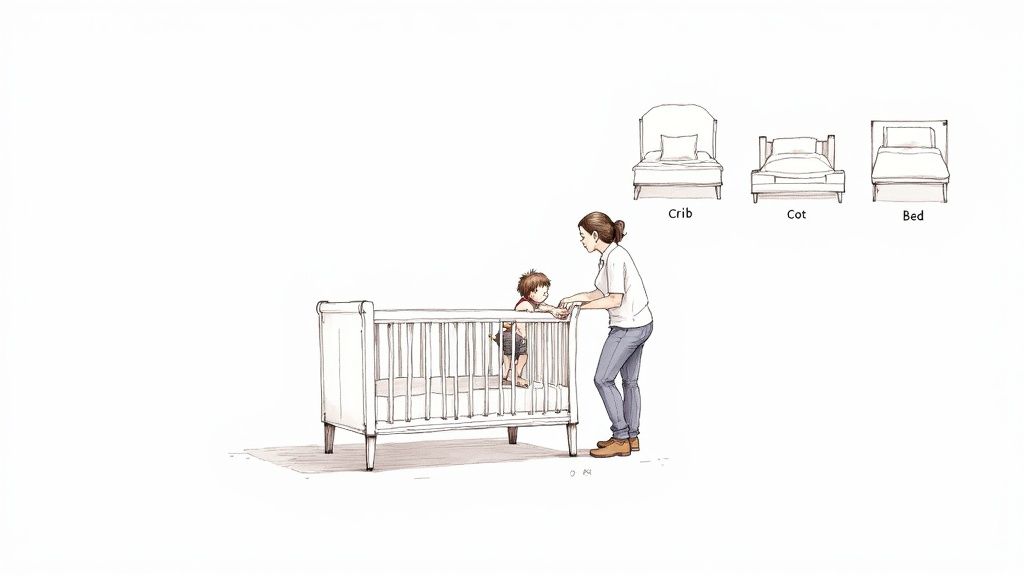
Is your toddler treating their crib like a personal American Ninja Warrior course? If so, congratulations! You’ve officially entered the "great escape" phase. This thrilling (and, let's be honest, slightly terrifying) milestone means their motor skills and sheer willpower have finally outgrown the walls of their baby bed. It’s nature’s not-so-subtle hint that it's time for an upgrade.
This is exactly where a toddler sleep cot shines. It’s built for this in-between stage, sitting low to the ground with built-in guardrails to prevent tumbles. It offers a safe middle ground that helps build their independence without costing you your peace of mind.
This growing focus on safe, age-appropriate sleep solutions isn't just in our heads. The global market for baby cribs and cots was valued at around USD 1.72 billion in 2024 and is projected to climb to an estimated USD 2.97 billion by 2034. This trend shows just how much parents everywhere are prioritizing safe and comfortable sleep for their kids. You can dive deeper into the data by checking out the full baby cribs and cots market report.
Key Signs Your Toddler Is Ready for a Cot
Knowing when to make the switch is more art than science, but some developmental signs are pretty hard to miss. It really comes down to your child's unique readiness, not a magic number on a birthday cake.
Keep an eye out for these classic clues:
- The Escape Artist: If your child is trying (or worse, succeeding) to climb out of their crib, it's an immediate safety hazard. This is the number one, non-negotiable sign that a lower-to-the-ground toddler sleep cot is needed, and fast.
- Hitting Height Milestones: Most crib manufacturers suggest it's time to transition once your child is taller than 35 inches. At that height, their chest is often above the rail, giving them enough leverage to tip themselves over.
- Asking for a "Big Kid" Bed: Sometimes, they’ll just come right out and tell you! If your toddler starts talking about a new bed or seems fascinated by an older sibling's, they’re probably emotionally ready for the move.
Toddler Sleep Options at a Glance
Getting a handle on the small but crucial differences between a crib, a toddler cot, and a toddler bed can make this big decision feel a lot simpler. Here’s a quick breakdown to help you see how they stack up.
| Feature | Infant Crib | Toddler Sleep Cot | Toddler Bed |
|---|---|---|---|
| Safety Rails | High, fixed rails on all four sides | Low-profile with partial guardrails | Optional or no guardrails |
| Height | Raised high off the floor | Very low to the ground for easy access | Low, but typically higher than a cot |
| Portability | Stationary and heavy | Often lightweight and portable | Stationary and requires assembly |
| Best For | Infants (0-18+ months) | Toddlers transitioning from a crib | Older toddlers ready for more freedom |
Each option serves a distinct purpose in your child’s sleep journey. The crib is a secure fortress for infants, the cot is the ideal bridge for adventurous toddlers, and the toddler bed is the final step toward true big-kid independence.
Putting Safety First in Your Toddler’s Sleep Space
As a parent, your peace of mind is everything, especially when your toddler is tucked in for the night. Making their sleep space a bonafide safety zone is job number one, and it all starts with picking the right toddler sleep cot. Let's break down the non-negotiables that make a cot truly safe.
First up: certifications. You'll often see labels like JPMA Certified or Greenguard Gold Certified on product descriptions. These aren't just fancy stickers; they're proof that the cot has passed rigorous, independent tests for everything from structural integrity to chemical emissions.
A Greenguard Gold seal, for example, means the cot is made with materials that have low chemical emissions. This contributes to cleaner indoor air for your little one to breathe all night long—a huge reason why so many parents are choosing to invest in quality cots.
Key Design Features for a Safe Cot
Beyond certifications, the actual physical design of a toddler sleep cot is critical. A safe cot is much more than a mini-bed; it’s a thoughtfully engineered piece of equipment designed specifically for this unique stage.
Here are the core features you should always look for:
- A Low-Profile Frame: A great toddler cot is designed to prevent falls. Look for a frame that sits just inches off the floor. This lets your child climb in and out on their own, dramatically reducing the risk of a painful tumble.
- Sturdy Guardrails: Good cots have built-in guardrails along the sides. They don't need to be as high as a crib's railings, but they should be high enough to keep your toddler from rolling out while they're sleeping.
- A Snug-Fitting Mattress: This one is an absolute must. There should be no gaps between the mattress and the cot frame. A gap is a serious entrapment hazard, so always use the mattress that comes with the cot or one that fits the frame perfectly.
Creating a Secure Sleep Environment
Of course, the cot is just one piece of the puzzle. The entire room needs to be a safe haven, especially now that your toddler has the freedom to get up and explore. Thinking about the bigger picture of decorating a nursery for safety can be really helpful here.
Remember to anchor all heavy furniture—like dressers and bookshelves—to the wall. Cover every electrical outlet and make sure blind cords are tied up well out of reach. It helps to think of their room as a giant, cozy playpen where they can be safe even if they wake up before you do. For more detailed guidance, check out our complete guide on safe sleeping tips for toddlers.
Choosing Your Toddler’s Next Sleep Solution
Navigating the world of toddler sleep options can feel like a pop quiz you didn't study for. Once you’ve decided it’s time to move on from the crib, you’re suddenly faced with a handful of popular contenders, each with its own fan club. Let's break down the real-world pros and cons of three of the most common choices: the dedicated toddler sleep cot, a portable travel bed, and a Montessori-style floor mattress.
The right answer isn't just about features; it’s about finding the perfect fit for your family’s unique rhythm and lifestyle. What works wonders for a family in a sprawling house might be a total headache for another in a cozy apartment.
The Dedicated Toddler Sleep Cot
Think of a toddler sleep cot as the specialist in the room. It’s engineered for one specific job: providing a safe, comfortable, and low-to-the-ground sleep space for toddlers making that big leap out of a crib. Its biggest strengths are its sturdy frame, built for the rigors of nightly use, and its integrated safety features like guardrails.
- Best For: Everyday use at home, creating a consistent and secure sleep environment night after night.
- Pros: Highly durable frame, often includes built-in safety rails, and typically uses a standard crib mattress you already own.
- Cons: Not as easy to pack up as a travel bed and takes up more space than a simple floor mattress.
The Portable Travel Bed
The portable travel bed is the globetrotter of the group. These are designed to be lightweight, foldable, and ready for adventure. It’s the go-to for families who are always on the move, whether that means visiting grandparents, heading out on vacation, or just needing a flexible nap-time spot that isn't the living room floor. While incredibly convenient for travel, its lightweight design might not hold up as well to nightly use over several years.
This visual guide breaks down the essential safety checks you should perform on any toddler cot, whether it’s your main bed at home or a temporary travel solution.
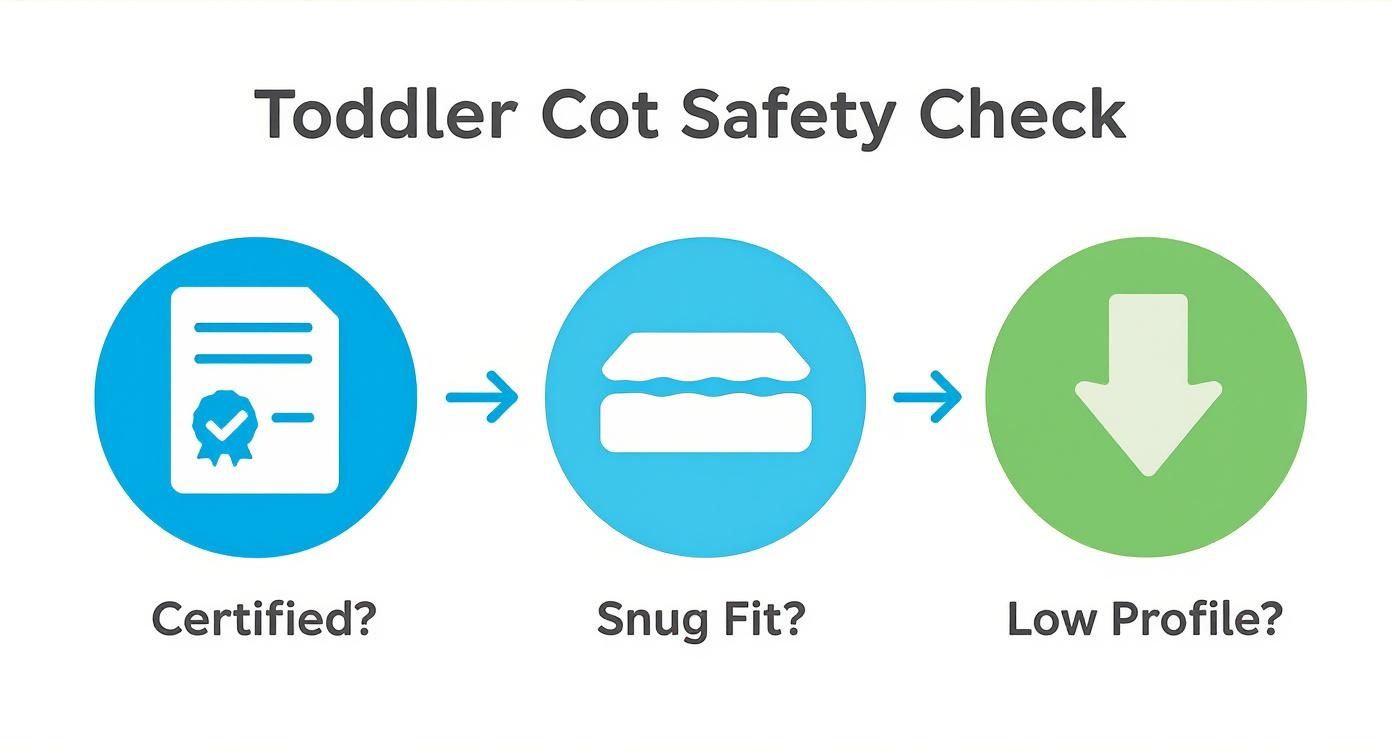
As you can see, true safety really boils down to three core ideas: making sure it’s officially certified, ensuring the mattress fits snugly with no gaps, and choosing a low-profile design that minimizes the distance to the floor.
The Montessori Floor Mattress
Inspired by the Montessori philosophy of fostering independence, the floor mattress is as simple as it gets. It’s literally a mattress on the floor, giving your child complete freedom to get in and out of bed on their own. This approach is fantastic for building autonomy, but it comes with a big prerequisite: the entire room must be thoroughly childproofed, since your little one will have unrestricted access to everything.
A floor bed can be an amazing tool for independence, but it's important to consider your environment. In smaller or draftier rooms, a raised cot might offer better protection from cold floors and a more defined, cozy sleep area.
Sleep Solution Showdown: Cot vs. Travel Bed vs. Floor Mattress
To make the decision a little easier, we’ve put together a head-to-head comparison. Think about your daily routine, your travel habits, and your child’s personality as you weigh the options.
| Consideration | Toddler Sleep Cot | Portable Travel Bed | Floor Mattress |
|---|---|---|---|
| Best Use Case | Everyday, consistent home use | Travel, sleepovers, occasional naps | Fostering independence at home |
| Portability | Low; designed to stay in one room | High; lightweight and foldable | Moderate; mattress can be moved |
| Safety Features | High; built-in guardrails, low profile | Varies; look for sturdy locks and materials | Low; relies entirely on room-proofing |
| Durability | High; built for nightly use | Moderate; built for occasional use | High; it's a mattress |
| Comfort | High; uses standard crib mattress | Good; often has a thinner, padded base | High; uses a full-size mattress |
| Independence | Moderate; easy for toddlers to access | Moderate; depends on the design | High; total freedom of movement |
Ultimately, there’s no single "best" choice—only the best choice for your family. For those seeking a durable, safe, and semi-permanent solution that perfectly bridges the gap between the contained world of a crib and the freedom of a big-kid bed, the toddler sleep cot often hits that sweet spot.
For a deeper dive into making your selection, explore our comprehensive guide to the best toddler beds.
A Parent’s Guide to Buying the Right Cot
Ready to pick the perfect cot? I know, it can feel like a massive decision with so many options out there. But if you focus on just a few key things, finding the right fit becomes a whole lot easier. Think of this as your personal checklist to cut through the noise.
You’re not alone in searching for a safe, high-quality sleep solution. The market for baby cots is booming—it was valued at around USD 1.54 billion in 2023 and is expected to hit USD 2.22 billion by 2030. That growth tells us one thing: parents are demanding better, safer, and more ergonomic designs, and brands are stepping up. You can read more about these market trends if you're curious about how the industry is changing.
Materials and Durability
Let's start with the bones of the cot. The frame is everything. My advice? Look for a sturdy, all-steel frame. It gives you the best of both worlds: serious strength for nightly use without being impossibly heavy. While some lightweight cots use plastic, a solid steel construction means it won’t wobble or weaken, even with an energetic toddler on board.
The fabric is just as crucial. You want the sleeping surface to be made from a tough, reinforced material that’s built to last. A flimsy fabric will sag over time, but a durable one provides the firm, supportive base your child needs for restful sleep.
Design and Ease of Use
A great design is where safety and convenience meet. One of the first specs to check is the weight capacity. You'll want a cot that can hold at least 75 pounds, which ensures it will grow with your child straight through their toddler years.
And then there's the setup. Honestly, no parent has time for a complicated assembly that requires a full toolbox and a degree in engineering. The best cots have a simple, fold-and-lock system that lets you set it up or pack it away in seconds. This is a game-changer, especially when you’re traveling or just need to reclaim your floor space during the day.
Bonus Features That Matter
Beyond the basics, a few thoughtful features can make your life so much easier.
-
A machine-washable fitted sheet or cover is, in my book, non-negotiable. Spills and accidents are just a part of toddler life, and being able to toss the sheet in the wash keeps things hygienic with zero fuss.
-
An included carrying case is another must-have. It makes storing the cot or taking it on the go clean and simple, whether you’re off to Grandma’s house or just sliding it into a closet.
Finally, check that the cot is designed to fit a standard-sized crib mattress. This gives you the flexibility to add extra comfort. If you're thinking about an upgrade, you might want to check out our guide on finding the perfect pack 'n play mattress, as they often fit these cots like a glove.
Making the Transition to a Big Kid Bed Fun

Moving from the familiar, high-walled crib to a toddler sleep cot is a massive milestone. It’s a whole new world of freedom for them, which is exciting but can also feel a little intimidating. Your goal is to frame this big step as a thrilling adventure, not just a new rule they have to follow.
The secret? Make it a positive experience by letting your toddler be part of the process. When they feel like they have some control, they're much more likely to hop into their new bed with a smile instead of a tantrum.
Involve Your Little Helper
Giving your toddler a sense of ownership over their new sleeping space is a total game-changer. It makes them feel empowered, turning a potential bedtime battle into a moment of teamwork.
Here are a few simple ways to build up the excitement:
- Let Them Choose: Make a special trip to the store (or browse online together) and let them pick out their own bedding. Whether it's covered in dinosaurs, princesses, or bright polka dots, having sheets they genuinely love makes the new cot feel like their special spot.
- Decorate Together: Let them help place a new night light or stick a favorite decal on the wall nearby. Small touches like this help personalize the space and make it feel warm and welcoming.
- Pick a "First Night" Buddy: Let them choose one special stuffed animal that gets the honor of spending the very first night in the new toddler sleep cot with them.
Stick to the Routine
With all this change, your bedtime routine is your most powerful tool. It’s the predictable, comforting rhythm that reassures your child that even though their bed is different, everything else is the same.
Keep up with the usual bath time, story time, and goodnight cuddles. That consistency is the anchor that helps them feel secure. It sends a clear signal that it’s time to wind down for sleep, no matter where they're sleeping.
The biggest challenge you'll face is their newfound ability to get out of bed. It's not defiance; it's pure curiosity. Toddlers are natural explorers, and they're simply testing the boundaries of their new world.
When they pop out of bed for the tenth time—and they will—the best approach is calm and consistent. Gently and quietly lead them back to their cot every single time. Try to avoid turning it into a game. This boring, no-fuss response quickly teaches them that getting out of bed doesn't lead to any fun or extra attention.
Keeping Your Toddler Sleep Cot Clean and Safe
Alright, you’ve picked out the perfect toddler sleep cot. Now comes the part that keeps it a cozy and safe haven: keeping it clean. We all know toddlers are tiny agents of chaos and masters of mess, so a simple maintenance routine is your best friend.
A quick daily wipe-down of the frame can work wonders. Just use a damp cloth and a gentle, non-toxic cleaner to tackle those sticky fingerprints and everyday dust.
Simple Cleaning and Laundering
For the bigger messes—and trust us, there will be bigger messes—a deeper clean is in order. This is where a cot with a removable, machine-washable sheet or cover becomes an absolute lifesaver.
- Laundering Linens: When it's time to wash, stick with a gentle, baby-safe detergent. It’s usually best to follow the care label’s temperature advice, as hot water can sometimes cause shrinking. For more tips, check out the dos and don'ts of washing baby clothes, which apply just as well to cot linens.
- Sanitizing the Frame: The frame and other non-fabric parts can be easily cleaned with a solution of equal parts white vinegar and water. It's a fantastic natural disinfectant that’s tough on germs but perfectly safe around your child.
Regular Safety Checks
Beyond just keeping it clean, doing a quick safety inspection every so often will give you incredible peace of mind. Toddlers aren't exactly gentle on their belongings, so a monthly check can spot a small issue before it becomes a real problem.
A safe sleep environment is an ongoing commitment. Think of it like maintaining a car—a few quick checks can prevent major issues down the road and ensure every journey (or nap) is a safe one.
Just run through this simple checklist every now and then:
- Check All Fittings: Make sure every screw, bolt, and locking mechanism is tight.
- Inspect for Wear: Keep an eye out for any fraying fabric, cracks in the frame, or any other signs of damage.
- Confirm Stability: Give the cot a gentle shake. It should feel solid and stable, with no wobbling.
Your Toddler Cot Questions, Answered
Got a few questions still bouncing around in your head? You're not the only one. Moving your little one to a toddler sleep cot is a big milestone, and it’s natural to want all the details sorted out. Let’s tackle some of the most common questions we hear from parents.
What’s the right age for a toddler sleep cot?
Most toddlers are ready for this move somewhere between 18 months and 3 years old. But honestly, age is just a number here. It's really about their development and safety. The big giveaway is when you spot your little acrobat trying to climb out of their crib. Once that starts, it's officially time to switch to a safer, lower-to-the-ground bed.
Can I just use our crib mattress on the cot?
Yes, you almost certainly can! Any well-designed toddler cot is made to fit a standard crib mattress. This is a huge advantage for parents. It means you get a perfectly snug, gap-free fit, which is crucial for safety. Just be sure to glance at the cot's specific dimensions before you buy to be 100% sure.
How do I keep my toddler from constantly getting out of bed?
Ah, the great escape! Welcome to the club. This newfound freedom is a novelty, and you can bet they’re going to test the boundaries. The secret weapon here is being calm, consistent, and frankly, a little bit boring. Every time they pop out of bed, gently guide them back with as little fuss and interaction as possible. A solid, predictable bedtime routine and a toddler-proofed room will be your best friends during this phase.
Are portable cots sturdy enough for everyday use?
They absolutely are. Don't let the word "portable" throw you off. A top-quality portable cot is built to handle real life, with a tough steel frame, reinforced fabric, and high safety ratings. While they’re a lifesaver for travel, that same robust construction makes them a fantastic option for a primary bed, especially if you need to save on space but don't want to compromise on durability.
Choosing the right toddler sleep cot is a big step, but it doesn't have to be a stressful one. By focusing on safety, durability, and your family's lifestyle, you can find the perfect fit to carry your little one into their next big adventure: sleeping like a big kid.
What was the funniest sign that your toddler was ready to leave their crib? Share your "great escape" stories in the comments below—we'd love to hear them!
Ready to find a sleep solution that checks all the boxes? The team at Hiccapop obsessed over every detail when designing our toddler cots to give you peace of mind and your little one a restful night. See what a difference thoughtful engineering makes at Hiccapop.