


Your Guide to a Portable Crib for Camping
There's nothing quite like sharing the magic of camping with your baby, but let's be honest—figuring out where they'll sleep can feel a little overwhelming. That's where a good portable crib for camping comes in. It's more than just a piece of gear; it’s your ticket to a safe, familiar, and comfy sleep space for your little one, turning nighttime worries into restful nights under the stars.
Why a Dedicated Crib Is Your Best Friend in the Wild
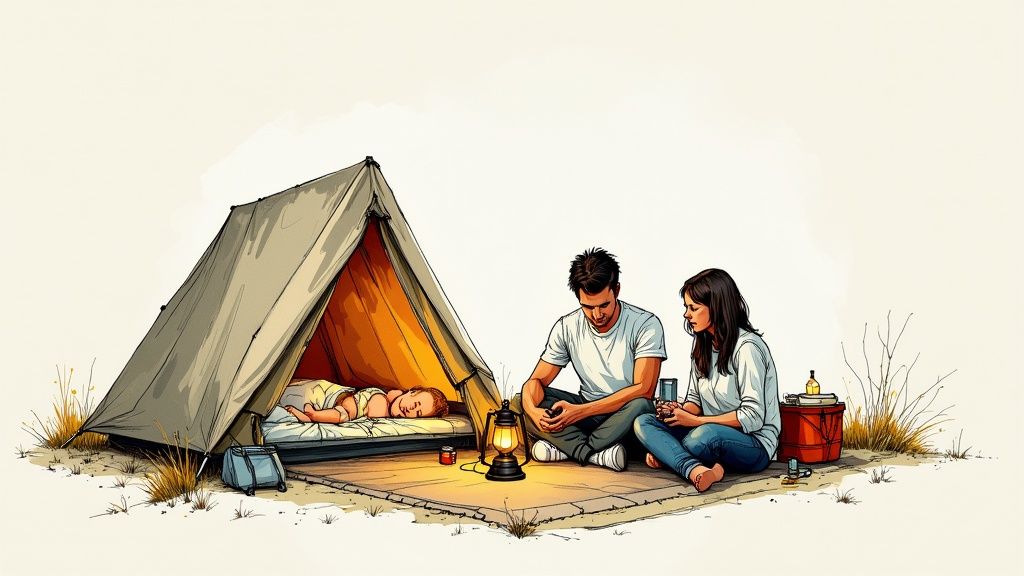
Planning a camping trip with a baby is a whole different ballgame, and sleep is priority number one. While you might be tempted to improvise, a purpose-built portable crib designed for camping is a true game-changer. Think of it as your baby’s own personal, cozy basecamp right inside your tent.
A familiar sleep spot is huge for babies. They love routine, and giving them a consistent space helps them settle down and sleep better, even somewhere as new and exciting as a campsite. A dedicated crib also keeps them safely contained, so you don't have to worry about them rolling onto a lumpy tent floor or against a damp tent wall.
The Core Benefits of a Camping Crib
The upsides go way beyond just having a place for them to nap. A well-designed camping crib is built to handle the unique challenges of the outdoors.
- Safety First: It provides a firm, flat surface that meets the safe sleep guidelines from the American Academy of Pediatrics. A pile of blankets or a squishy adult air mattress just can't offer that same level of safety.
- Containment and Peace of Mind: Knowing your baby is secure lets you actually relax by the fire or get gear organized without having to hover. It creates a protected little haven, away from campsite hazards.
- Comfort in the Outdoors: A good crib protects your baby from chilly drafts, damp ground, and even creepy crawlies. Many come with awesome features like built-in bug nets and sun shades, which are absolute must-haves for camping.
A portable crib isn't just gear; it's a strategy. It brings the security of their home nursery into the tent, making the whole experience less jarring for your baby and way less stressful for you.
At the end of the day, getting the right portable crib for camping sets the whole family up for a successful trip. When your baby is safe and comfortable, you can get the rest you need to actually enjoy the adventure. It’s all about focusing on making memories, not losing sleep over bedtime.
Why Not All Travel Cribs Are Built for the Outdoors
It’s an easy mistake to make—assuming any old travel crib will do the trick for your family camping trip. But a true portable crib for camping is a completely different animal, built from the ground up to handle the rough-and-tumble reality of the great outdoors.
Think of it like this: you wouldn't wear your everyday sneakers to hike a rocky trail, right? You'd grab a pair of sturdy, waterproof hiking boots. It's the same principle here. Both are for feet, but only one is actually equipped for the job at hand.
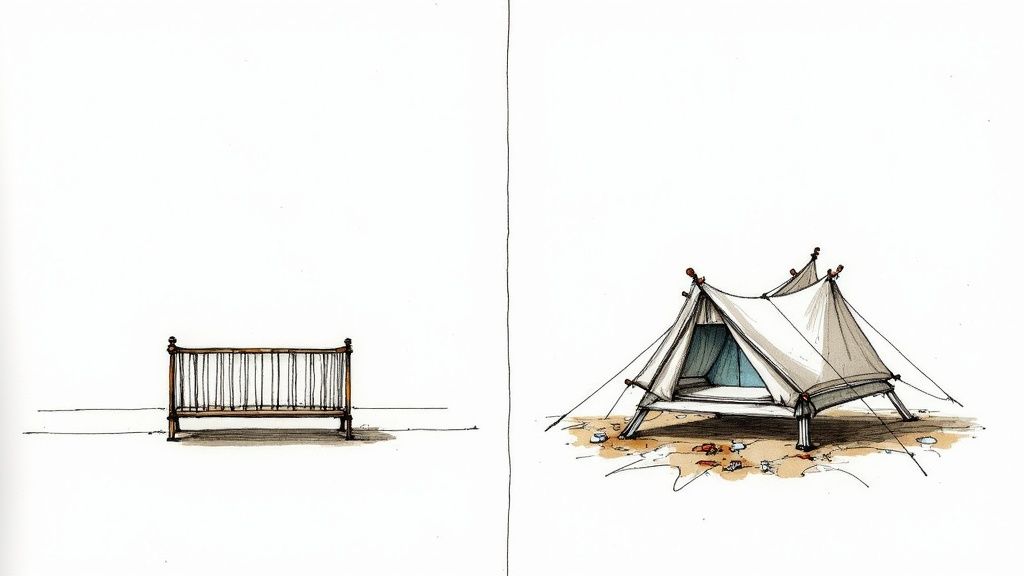
Standard travel cribs, which you might know as pack and plays, are fantastic for a weekend at grandma’s or a stay in a hotel. They’re designed for flat, predictable, indoor surfaces. Camping cribs, on the other hand, are made with the wilderness in mind. If you want to get into the nitty-gritty of standard models, our guide on what a pack and play is used for is a great resource.
This distinction is so important because the wild throws curveballs that your living room never will.
The Great Outdoors Requires Specialized Gear
When you head into nature, you need gear that can roll with the punches. A dedicated camping crib is engineered with features that solve the specific problems you'll face, ensuring your baby stays safe, dry, and cozy, no matter what the weather decides to do.
These aren't just minor tweaks. We're talking about fundamental design differences that turn a simple travel bed into a reliable piece of outdoor equipment. And it's clear that parents are catching on.
The global market for camping cots was valued at USD 1.52 billion in 2024 and is expected to climb to USD 2.57 billion by 2033. This boom shows just how many families are getting out there and looking for gear that can keep up. This market growth highlights the need for products designed for the outdoors, not just adapted for it.
Key Features That Set Camping Cribs Apart
So, what are these game-changing features? A purpose-built portable crib for camping anticipates the challenges of a campsite, from bumpy ground to buzzing insects. These thoughtful details are what give you real peace of mind.
Here are the critical differences to look for:
- Rugged, Weather-Resistant Materials: Camping cribs use tough, water-resistant fabrics that can handle morning dew and damp ground. Your typical travel crib, with its soft, indoor-friendly fabrics, would just soak it all up.
- Enhanced Stability for Uneven Ground: The frame of a camping crib is built to be solid. Look for wide, sturdy feet and a low center of gravity to prevent tipping on grass or a slight slope—a safety feature you just won't find on most indoor models.
- Integrated Bug and Sun Protection: Many camping-specific cribs come with zippered canopies made of fine mesh. This built-in shield is a lifesaver, protecting your baby from mosquitoes, ticks, and harsh sun. It creates a safe little cocoon for naps and nighttime.
- Elevated and Insulated Base: Some of the best designs lift the mattress right off the cold, hard ground. This not only keeps your baby warmer but also creates a barrier against moisture and creepy crawlies.
A standard travel crib is designed for convenience in a controlled environment. A camping crib is designed for resilience and protection against the uncontrolled elements of nature. Choosing the right one is about matching the tool to the task.
At the end of the day, a specialized portable crib for camping isn’t a luxury—it’s a fundamental piece of safety gear. It gives your little one a secure, comfortable, and element-proof place to sleep, so both you and your baby can rest easy and actually enjoy the adventure.
Understanding Essential Safety Certifications
When you're picking out a portable crib for camping, nothing matters more than your baby's safety. Let's be honest, staring at a box covered in acronyms and seals can feel like trying to read a foreign language. But knowing what they mean is what lets you truly relax and enjoy your trip, knowing your little one is secure.
These certifications aren't just fancy stickers. They're rigorous standards developed by experts to prevent injuries. Think of them as a final exam that a product has to pass before it’s considered safe enough for your child.
Decoding the Key Safety Acronyms
In the United States, there are two big names you’ll see when it comes to baby product safety. When you see their approval, you know the crib has been put through its paces.
-
CPSC (Consumer Product Safety Commission): This is the big one—a U.S. government agency. Their job is to protect all of us from products that could cause harm. For a portable crib, this means it must meet federal safety laws covering everything from how it’s built to the materials it's made from. CPSC compliance is the mandatory baseline.
-
JPMA (Juvenile Products Manufacturers Association): This is an industry group that provides an extra seal of approval. The JPMA Certification Program actually goes above and beyond the basic government rules. To get this seal, a product has to be tested every year at an independent lab to prove it meets top-tier standards for safety and performance.
So, think of it this way: CPSC compliance is the passing grade, while a JPMA seal is like getting an A+. Finding a crib with both gives you double the confidence that it's been thoroughly vetted.
Core Safety Features You Can See and Touch
Beyond the official seals, you can—and should—do your own hands-on safety check. These are the practical things you can physically inspect on a portable crib for camping that directly affect your baby’s well-being out in the wild.
The American Academy of Pediatrics is very clear on this: the safest place for a baby to sleep is on a firm, flat surface with no soft bedding, pillows, or toys. This rule is even more important when you're camping and the environment is less predictable.
A well-designed camping crib puts these guidelines into action. Here’s what that actually looks like.
The Anatomy of a Safe Camping Crib
When you're looking at a crib, either in a store or just after unboxing it, focus on these three things. They are the absolute foundation of a safe sleep space, especially in the great outdoors.
1. Secure Locking Joints and a Sturdy Frame
The frame is the crib’s skeleton, and it has to be rock-solid. You’re looking for joints that give a satisfying, audible click when they lock into place. Once it's set up, give it a good shake. It shouldn't wobble, creak, or feel like it might give way. A sturdy frame means you don't have to worry about it collapsing if you accidentally bump into it in a dark tent.
2. Breathable Mesh Walls
Good airflow is non-negotiable. It helps prevent your baby from overheating and, most importantly, reduces the risk of suffocation. A great portable crib for camping will have mesh on all four sides. This way, even if your baby wiggles and presses their face right up against the side, they can still breathe easily. Plus, it’s a nice little window for you to peek in on them without making a sound.
3. A Snug and Firm Mattress
This is a big one. The mattress needs to be firm and fit perfectly inside the crib, leaving absolutely no gaps around the edges. A good rule of thumb is that you shouldn't be able to fit more than two fingers between the mattress and the crib wall. A mattress that's too small or adding any extra blankets or padding creates a serious risk for entrapment and suffocation. Always, always use the mattress that came with the crib—it was designed and tested specifically for that product.
Must-Have Features for a Great Camping Crib
Once you’ve confirmed a crib has the right safety certifications, you can get to the fun part: picking one that fits your family’s adventure style. The right portable crib for camping isn't just a safe place for your baby to sleep. It’s a piece of gear that can make your entire trip smoother and way more enjoyable.
Think of these features like ingredients for your perfect camping trip. If you're a minimalist backpacker, you'll care more about weight. If you're a car-camping pro, maybe a quick setup is your top priority. Knowing what matters most to you is the secret to finding the perfect match.
We're not the only ones thinking about this. The demand for better, more convenient sleep gear for families is exploding. The global market for portable beds is expected to hit a massive USD 8.79 billion by 2032, which just goes to show how many of us are searching for solutions that keep up with our active lives.
Featherlight Portability
When you're packing the car to the gills or hiking to a walk-in campsite, every single pound matters. A portable crib for camping has to be truly portable, not just something that folds in half. Look for something that weighs under 15 pounds, and that includes the carry bag.
Pay attention to how it packs down. Does it fold into a sleek duffel or a backpack-style bag? This makes a world of difference when you’re already juggling a baby, a cooler, and a tent. A well-designed carry bag with a comfy strap is one of those small details you’ll be so grateful for after a long day.
Speedy and Simple Setup
Picture this: you pull into your campsite after dark. It’s getting cold, and you have a very tired, very fussy baby. The absolute last thing you want is to fight with a confusing set of poles and instructions. The best camping cribs are intuitive and pop open in under a minute. Seriously.
Look for a one-piece frame that unfolds easily or legs that snap into place with a satisfying "click." A simple, tool-free setup means you can get your baby’s sleep space ready in a flash, even if you’re doing it one-handed with a flashlight in your teeth. For a closer look at different travel options, check out our guide to finding the best portable baby bed for travel.
Durable and Camp-Ready Materials
The great outdoors is not gentle on gear. Your crib needs to be built to handle morning dew, a bit of dirt, and the inevitable spilled bottle. Look for rugged, water-resistant fabrics that are easy to wipe clean on the spot.
The frame should be made from something both lightweight and strong, like aluminum, which won’t rust and can handle being tossed in the car over and over again. High-quality zippers and reinforced seams are other dead giveaways of a crib that's built to last for many adventures to come.
Pro Tip: Keep an eye out for fabrics that are GREENGUARD Gold Certified. This means the crib has been tested for thousands of chemical emissions, ensuring the air inside your baby's sleep space is cleaner and healthier.
This decision tree shows a quick way to vet products for key safety certifications from the CPSC and JPMA.
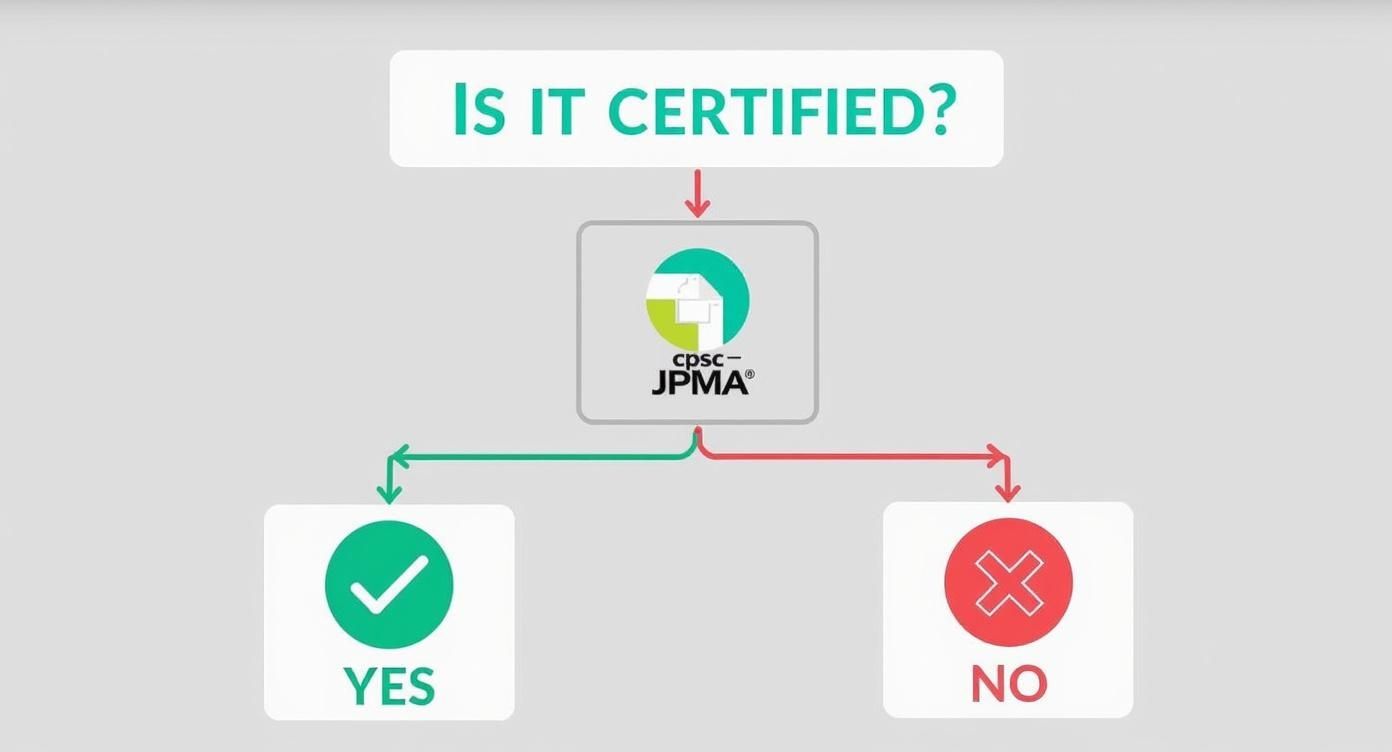
As you can see, starting your search with certified products is the simplest and most effective way to ensure a safe sleep environment.
Superior Ventilation and Breathability
Airflow is everything, especially on a warm night in a stuffy tent. A great portable crib for camping will have large mesh panels on all sides.
This 360-degree ventilation is non-negotiable. It helps keep your baby from overheating and ensures they can always breathe easily, even if they wiggle and press their face right up against the side. Plus, it gives you a clear line of sight for those late-night check-ins without having to unzip the tent.
Camping Crib Feature Comparison Checklist
Feeling a bit overwhelmed by the options? This checklist can help you compare different models and zero in on the features that will make the biggest difference for your family's camping style.
| Feature | Why It Matters for Camping | Good | Better | Best (Ideal Scenario) |
|---|---|---|---|---|
| Weight & Packability | Every ounce counts when you're hauling gear. A compact size saves precious car space. | Under 20 lbs, folds flat. | Under 15 lbs, fits in a duffel bag. | Under 12 lbs, backpack-style carry bag. |
| Setup & Teardown Speed | You need to get your baby settled quickly, especially after a long day or in bad weather. | 5-minute setup, no tools required. | 2-minute setup, intuitive one-piece frame. | Under 60 seconds, pop-open design with locking legs. |
| Materials & Durability | Gear needs to withstand dirt, dew, and repeated use. Easy-to-clean is a must. | Water-resistant fabric, steel frame. | Ripstop fabric, aluminum frame. | GREENGUARD Gold fabric, reinforced seams, rustproof frame. |
| Ventilation | Crucial for temperature regulation and safe breathing in a tent. | Mesh on two sides. | Mesh on four sides. | 360-degree mesh from floor to top rail. |
| Bug/Sun Protection | Essential for naps and nighttime, protecting from insects and harsh sun. | Separate net required. | Included attachable bug net. | Fully integrated zip-on canopy with UPF 50+ sun protection. |
| Mattress | The foundation for safe, comfortable sleep. | Firm mattress pad. | Firm, insulated pad with snug fit. | Waterproof, wipeable, and firm pad with zero gaps. |
Use this as your guide, but remember that the "best" option is the one that best handles the challenges of your specific adventures.
Integrated Bug and Sun Protection
Bugs are just part of the camping experience, but they don’t have to bother your baby. Many cribs designed for the outdoors come with a built-in zippered canopy or an attachable cover made from fine, insect-proof mesh.
This feature is an absolute game-changer. It creates a protected little bubble for daytime naps and peaceful, bite-free sleep all night long. Some canopies even offer UPF sun protection, which is perfect for creating a shady, safe spot for your baby to hang out while you're relaxing at the campsite.
The Perfect Mattress: Firm and Comfortable
The mattress is where safe sleep starts. As we've covered, it absolutely must be firm and fit perfectly inside the crib frame with no gaps around the edges.
But firm doesn't have to mean rock-hard. A good camping crib mattress will have just enough insulated cushioning to be comfortable while still meeting all safety guidelines. A waterproof, wipeable cover is another non-negotiable for handling those inevitable nighttime leaks and spills. And just a reminder: never add extra padding, soft blankets, or pillows to the crib.
Mastering Campsite Setup and Teardown
There’s nothing worse than arriving at your campsite, exhausted from the drive, only to find yourself wrestling with a piece of gear that just won’t cooperate. A frustrating setup can throw a wet blanket on the whole trip before it even really starts. But with a little prep, getting your portable crib for camping up and down can be a quick, painless part of your routine.
Think of it as your first campsite challenge, and you're about to ace it. The key isn't brute force; it's all about having a smart, simple plan.
The Pre-Trip Practice Run
Your backyard or living room is the perfect training ground. I can't stress this enough: doing a full practice run at home is the single best thing you can do to guarantee a stress-free setup in the wild. This isn't just about glancing at the instructions; it's about building real muscle memory.
Set it up and take it down a couple of times. You'll quickly get a feel for the little quirks of your specific model, like which joint needs to click into place first or the right way to fold the mattress. This trial run turns what could be frantic fumbling at the campsite into confident, swift action, which is a lifesaver if you arrive after dark.
A five-minute practice session at home can save you thirty minutes of frustration at the campsite. It's your secret weapon against that dreaded "I can't get this thing to work!" moment.
This is also a fantastic time to let your baby see and even play in the crib for a few minutes. A little bit of familiarity goes a long, long way in helping them feel secure when it’s time to sleep in a totally new environment.
Finding the Perfect Spot in Your Tent
Once you’re at the campsite, deciding where to put the crib inside your tent is a crucial step for both safety and comfort. Don't just plop it down anywhere.
First, find the flattest, most level patch of ground inside your tent. If the ground is a bit uneven, you can use a folded towel or a piece of foam padding underneath the crib's legs to stabilize it. Never put anything extra inside the crib to level the mattress.
Here are a few key placement tips I've learned over the years:
- Keep it Away from Walls: Try to position the crib away from the tent walls. Condensation can build up on the inside of the tent overnight, and you don’t want that moisture dripping onto your baby or their bedding.
- Clear the Area: Make sure the space around the crib is completely clear. No gear, no charging cords, no stray items that could become a hazard.
- Consider Foot Traffic: Tuck it into a low-traffic corner of the tent. This way, you're not constantly tripping over it during those late-night bathroom runs.
Your Essential Campsite Sleep System Checklist
A great night's sleep in the great outdoors involves more than just the crib itself. You need to think of it as a complete sleep system. Packing these key items will help replicate the comfort and routine of home, signaling to your little one that it’s time to rest.
- Temperature-Appropriate Sleep Sack: This is your best friend for keeping your baby warm safely. Ditch the loose blankets, which are a safety risk, and opt for a wearable blanket that’s rated for the overnight temperatures you expect.
- Familiar Smells: Bring the fitted sheet from their crib at home. The familiar scent is incredibly comforting in a new, strange place.
- Portable Sound Machine: The sounds of the woods can be unsettling for some babies (and adults!). A white noise machine helps drown out strange snaps and rustles, providing a consistent, soothing soundscape.
- Blackout Cover (Optional): If your baby is sensitive to that super-early summer sunrise, a breathable blackout cover like a Daydreamer can be an absolute lifesaver, helping everyone get just a little more sleep.
By planning your setup and packing a complete sleep system, you’re creating a cozy, secure little haven for your baby. This preparation lets you master the campsite logistics quickly, so you can get back to what matters most: relaxing and making memories.
Keeping Your Camping Crib Clean and Ready
Let's be honest—camping is a gloriously messy affair. Between the dirt, sunscreen, bug spray, and the inevitable leaky bottle, your portable crib for camping is going to see some action. Keeping it clean isn't just about appearances; it’s about good hygiene for your little one and making sure your gear is ready for the next trip.
A little maintenance at the campsite goes a long way. For minor spills or muddy footprints, a quick spot-clean with a damp cloth or a baby-safe wipe can do the trick. This simple habit keeps messes from setting in and makes the real deep clean back home so much easier. To get it right, it's helpful to understand the fundamental difference between sanitizers and disinfectants so you know exactly what you’re using and why.
Your Post-Trip Deep Cleaning Routine
Once you’ve unpacked, it’s time to give the crib a proper cleaning. This is your chance to get it ready for the next adventure and prevent any grime or potential mold from taking hold.
Here’s a straightforward process that works every time:
- Disassemble and Vacuum: First, take the crib apart. Grab a vacuum with a brush attachment and go to town on all the loose dirt, sand, and cracker crumbs that have found their way into every corner.
- Wash the Fabrics: Always check the care label first. Many modern camping cribs come with machine-washable fabrics, which is a total game-changer for parents. For detailed steps, manufacturers often have great guides, like these playard care instructions from Hiccapop. If the fabric isn't machine-washable, a good scrub with mild soap and warm water will do the job.
- Wipe Down the Frame: Don't forget the structure! Use a cloth and a gentle cleaner to wipe down the entire frame. Pay special attention to the joints and feet—that's where dirt loves to hide.
Proper Drying and Storage
This last part is absolutely critical for preventing that dreaded mildew smell. Always air dry the crib completely before you even think about packing it away.
Set it up in a well-ventilated room or a shady spot outside and leave it until every last piece is bone dry.
Once it's clean and dry, storing it properly in its carry bag protects it from dust and pests. That way, your portable crib for camping will be fresh and ready to go the moment your next family outing calls. It’s no surprise that smart design and easy-to-clean materials are a huge focus for manufacturers these days. The market for smart cribs, a cousin to the portable crib, was valued at a whopping USD 368.1 million in 2023, with portable models making up a huge piece of that pie. Millennial parents, especially, are looking for these kinds of features that make outdoor adventures just a little bit easier.
Your Top Camping Crib Questions Answered
Even the most seasoned campers have questions when a baby joins the crew. It's completely normal to want every detail ironed out when it comes to your little one's safety and comfort. We get it.
To put your mind at ease, we've pulled together the most common questions we hear from parents. Here are some straightforward answers to help you feel confident and ready for your trip.
How do I keep my baby warm on a cold night?
This is a big one. Keeping your baby snug without sacrificing safety is a balancing act, but it's simpler than you might think. The golden rule of safe sleep still holds true in the great outdoors: no loose blankets.
Your best friend here is a good layering system. Start with a warm onesie, then add a temperature-appropriate sleep sack. Think of it as a wearable blanket—all the warmth with none of the risk. For a serious cold snap, you can place a closed-cell foam sleeping pad under the crib itself. This creates a thermal barrier, stopping the cold ground from chilling the air inside the crib, without ever putting anything unsafe in with your baby.
Can I use the crib outside of the tent?
Absolutely! One of the best things about a portable crib for camping is its versatility. It can be a fantastic, safe play space for your baby during the day while you’re making lunch or just soaking up the scenery.
But there’s one crucial rule: constant adult supervision is non-negotiable.
When you set up the crib outside, always make sure it’s:
- Tucked into a fully shaded spot to protect delicate skin from the sun.
- Covered with its bug net or canopy to keep curious critters out.
- Sitting on flat, stable ground so there’s zero chance of it tipping over.
Never, ever leave your baby unattended in the crib outdoors, not even for a second.
Is it okay to add an extra mattress for comfort?
This is a hard no. I know it's tempting to want to make things extra cushy for your baby, but you should never add an extra mattress, pillow, or any soft padding to a portable crib. The firm mattress that comes with the crib is the only surface your baby should sleep on.
Why? Adding anything else can create dangerous gaps between the mattress and the mesh sides, which is a serious entrapment and suffocation risk. It also gets rid of the firm, flat surface that’s critical for safe sleep. The original mattress was designed and tested to fit that specific crib perfectly, leaving no unsafe spaces. Trust the design—it was engineered with your baby’s safety as the top priority.
What’s the right age for a portable camping crib?
Generally, most portable cribs are built for newborns all the way up to about 3 years old. But that's just an estimate. You always need to follow the specific weight and height limits set by the manufacturer for the model you own.
The real game-changer is when your child starts climbing. The moment your little one can pull themselves up and has a shot at climbing (or falling) out, the crib is no longer a safe sleep space. That's your cue to switch to a different setup.
Ready to find the perfect sleep solution for your next family adventure? The gear from Hiccapop is designed with the safety, durability, and convenience that camping parents need. Explore our travel-ready products and make your next trip the best one yet. What are your must-have features for camping gear? Share your thoughts in the comments below