


Nursery Organizer Ideas: Space-Saving Storage That Works
It's 2 a.m., your baby needs a clean diaper, and the wipes are in the living room. There's a fresh outfit somewhere, probably beneath the stack of burp cloths. You don't need a prettier basket right now. You need supplies you can reach without leaving your baby.
The best nursery organizer ideas solve that exact problem. They put everyday essentials where you use them, separate adult-only supplies from child-accessible toys, and leave the crib completely out of the storage business.
Start with how you use the room, not a shopping cart full of matching containers.
Disclosure: Hiccapop makes the product mentioned here.
Placement comes first: A useful organizer makes a task easier without creating something your baby can pull down, climb, or bring into the crib.
These options work in apartments, shared bedrooms, and guest-room nurseries. Each includes a clear placement verdict and a renter-friendly reality check, because saving floor space shouldn't mean gambling on an adhesive hook.
1. Over-the-Door Hanging Organizers
The back of a closet door is useful real estate when your nursery barely has room for the dresser. A hanging organizer turns that unused surface into pockets for diapers, burp cloths, bibs, and the socks that apparently travel independently.
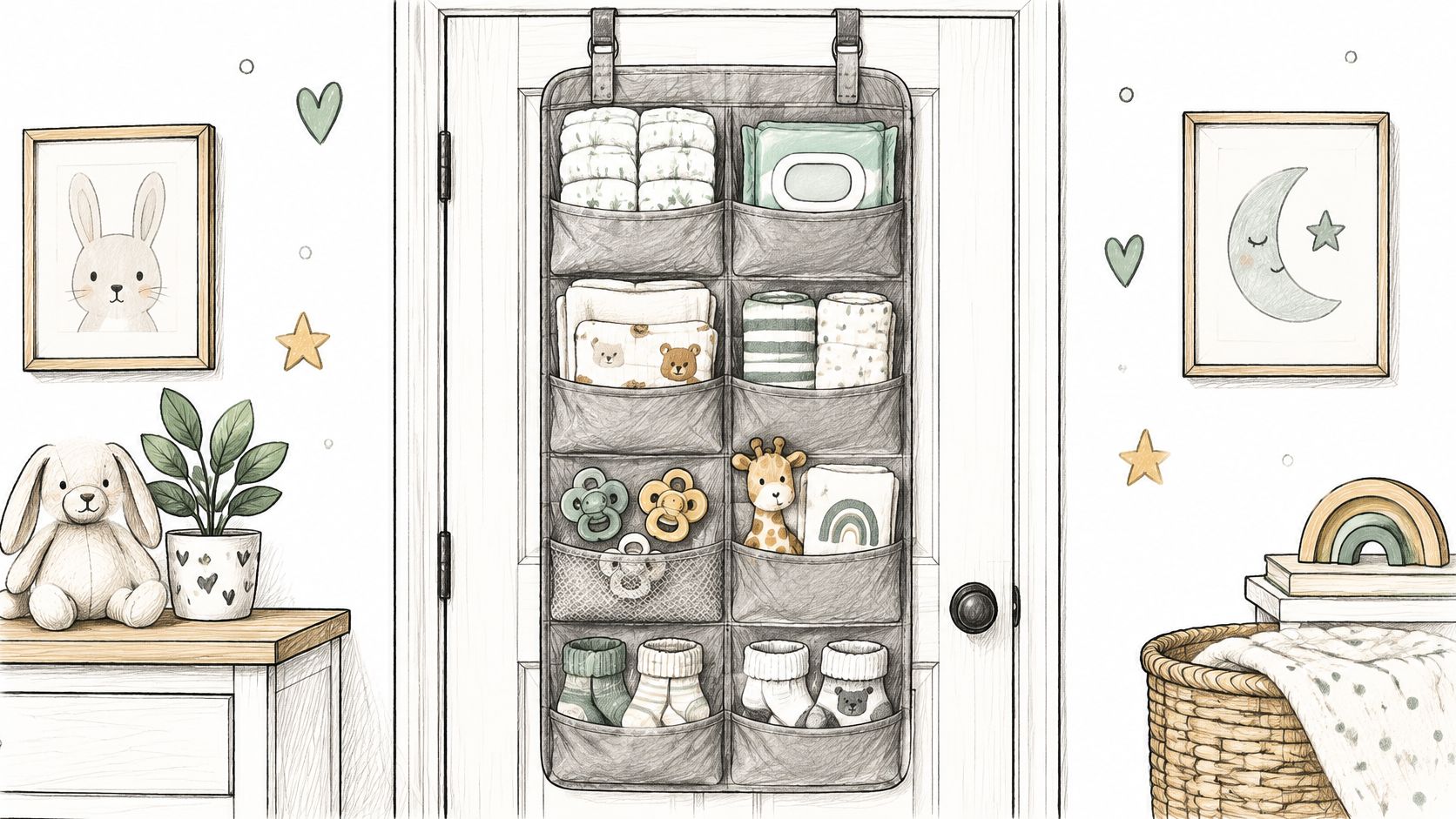
For an apartment nursery, arrange everyday supplies in adult-height pockets and keep refills elsewhere. At grandparents' houses, dedicate pockets to visiting essentials so nobody has to search through the guest-room wardrobe during a change.
Make the Door Work Properly
Over-door hooks can be renter-friendly, provided they fit both the organizer and the door. Close the door slowly after installation, checking that the hooks don't prevent it from latching or damage the frame.
- Check the load: Follow the organizer's weight rating. Heavy bottles and formula tins belong elsewhere.
- Contain the straps: Secure loose ends as the manufacturer directs, beyond your child's reach.
- Separate hazards: Don't put medicine, sharp grooming tools, or small accessories in reachable pockets.
Choose a door that usually stays closed, away from the crib. A closet-rod installation can also work if the product supports it and the loaded organizer doesn't obstruct access.
Where it goes: On a compatible closet door or approved closet rod, outside your baby's reach.
Where it never goes: On a crib rail, above the crib, or anywhere swinging pockets and hanging straps could enter the sleep space. Convenient isn't convenient enough to justify that placement.
2. Changing Table Caddies and Diaper Baskets
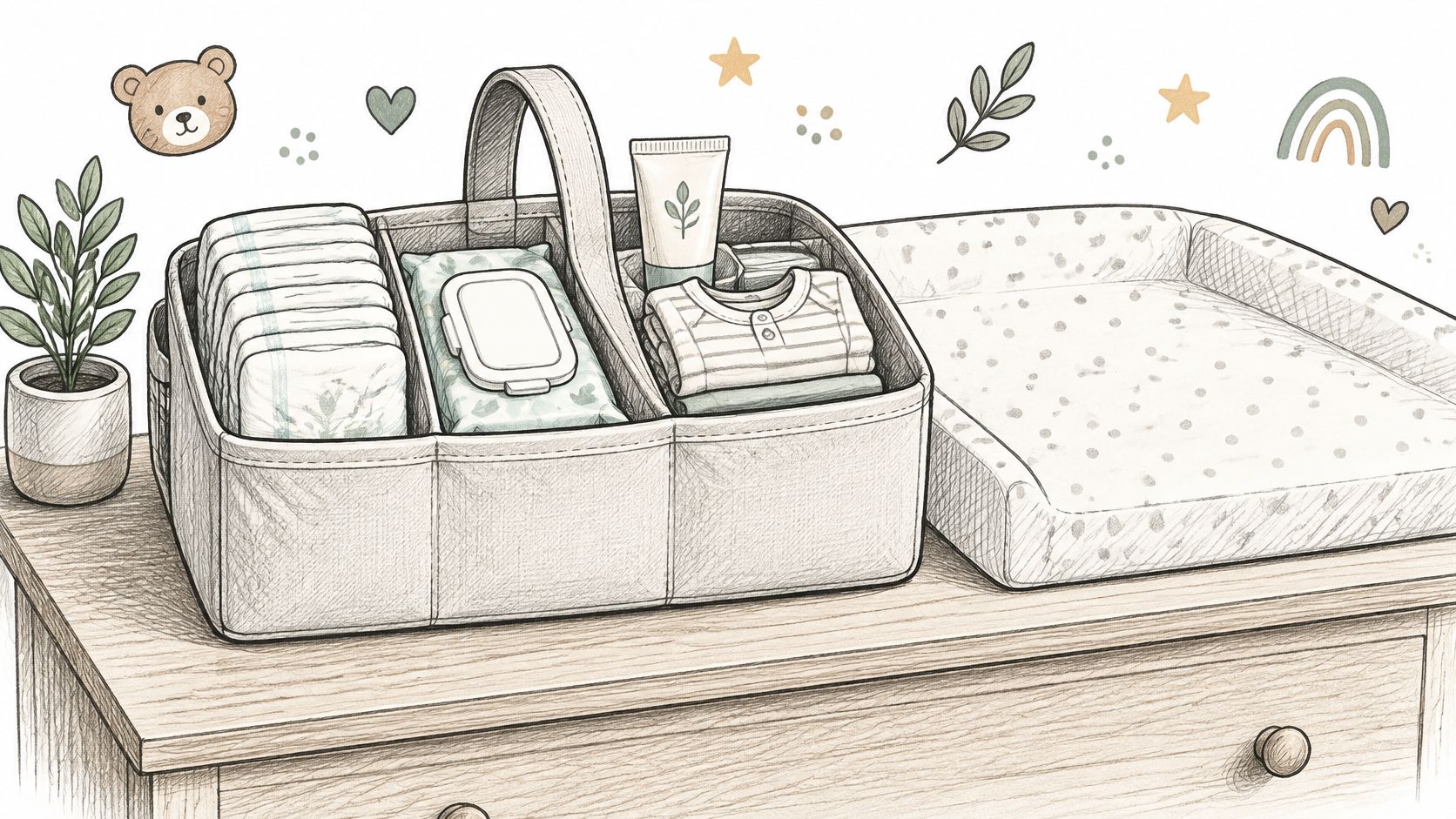
A diaper caddy earns its place by preventing the mid-change scramble. Diapers, wipes, a clean outfit, and a burp cloth should be ready before your baby reaches the changing surface.
The AAP's Make Baby's Room Safe checklist on HealthyChildren.org says, “Keep diapering supplies within your reach—but out of your child's reach—so you don't have to leave your baby's side to get them.”
Pack for the Change, Not the Apocalypse
Keep a manageable supply in the caddy and backup stock in a drawer. Overfilling makes pockets harder to search and turns a portable basket into an awkward load.
For a shared bedroom, a handled basket can move between a secure storage spot and your floor-changing setup. Traveling families can pack it alongside a portable changing pad, then return creams and plastic bags to child-inaccessible storage after use.
Hiccapop's nursery storage caddy guide offers more ways to arrange these everyday supplies.
If wipes are the item you reach for most at the changing station, a dispenser that stays in one spot can anchor the setup. Hiccapop's Wipe Warmer & Dispenser keeps wipes in a single place, so no one has to hunt for them at 2 a.m. See the product page for setup and care instructions.
- Measure first: A hanging caddy must fit securely without crowding the changing pad.
- Protect the strap: Don't cover or obstruct the changing surface's safety restraint.
- Secure extras: Keep creams, hygiene tools, and bags inaccessible to children between changes.
Where it goes: Within your reach beside the changing area, with no drilling needed for a freestanding basket.
Where it never goes: On the changing pad, attached to the crib, or somewhere that requires stepping away from your baby. A restraint doesn't replace your supervision.
3. Clear Labeled Storage Bins
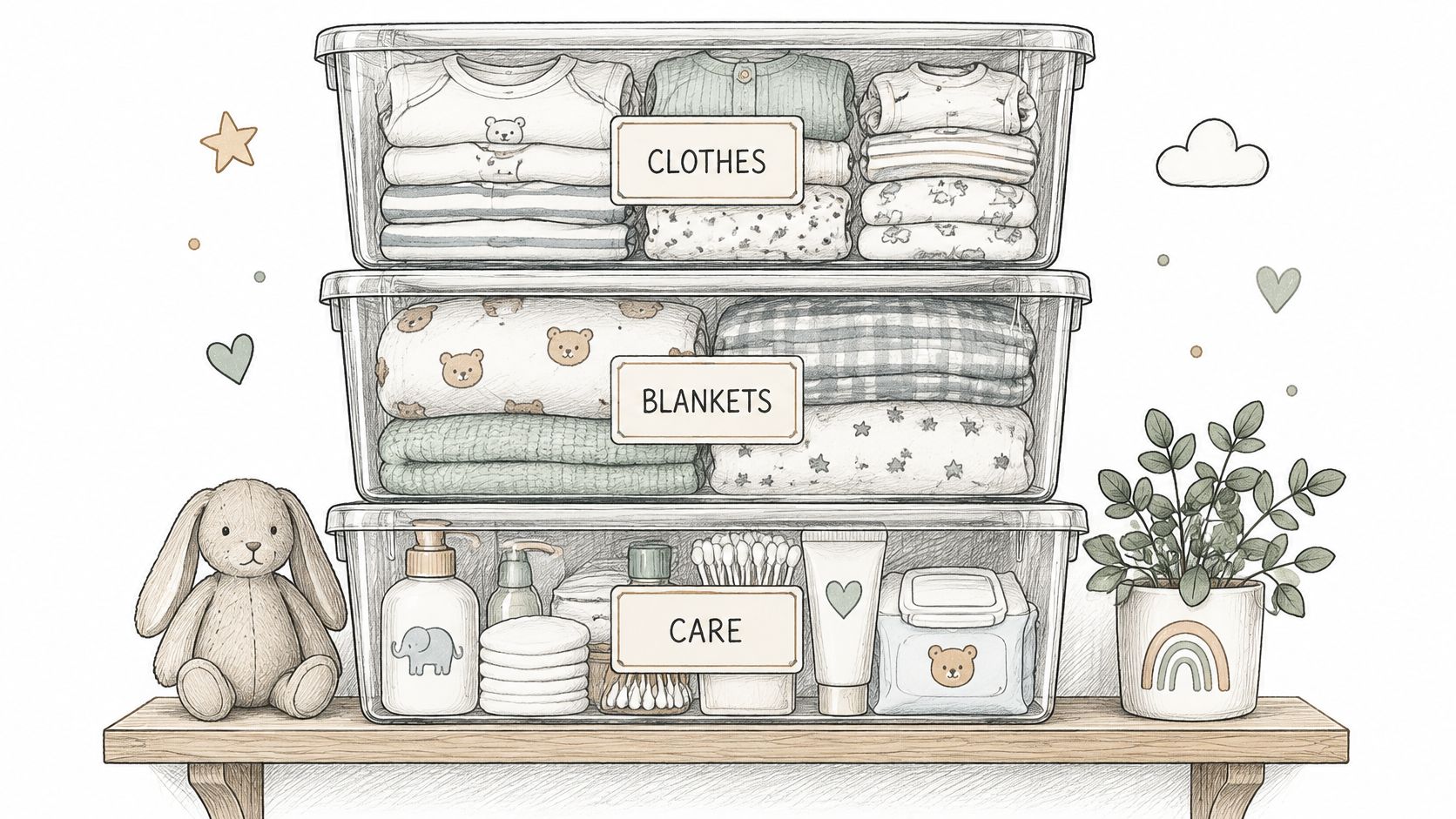
Clear bins are useful. Clear bins with accurate labels are useful to the babysitter, too.
Use them for spare sheets, clothing awaiting its turn, bath textiles, and backup diaper supplies. Transparent sides let you check contents before pulling a container down, while labels keep everyone from treating the closet as a mystery cupboard.
Label for the Person Who Didn't Pack It
Write spare fitted sheets, not miscellaneous. Group clothing by the size printed on the garments, then separate what fits now from what comes next.
A low frame with removable bins can serve this purpose, but don't assume a low-looking unit is impossible to tip. Follow the specific furniture's anchoring instructions and keep dense contents low.
The CPSC's tip-over report estimated an annual average of 17,800 emergency-department-treated injuries associated with furniture, TV, and appliance tip-overs during 2020–2022. That household-wide finding is a reason to take storage furniture seriously, not a risk estimate for any particular bin.
For renters, containers inside existing drawers are an easy starting point. Adding a freestanding shelving unit isn't a no-install shortcut if that unit requires anchoring.
Where it goes: In secured furniture or on suitable closet shelving, with heavy bins low and lightweight reserves above.
Where it never goes: In a tall freestanding stack, on a shelf above the crib, or within child access when it contains medicines or small parts. A snap-on lid isn't a child-resistant lock.
4. Under-Crib Rolling Storage Drawers
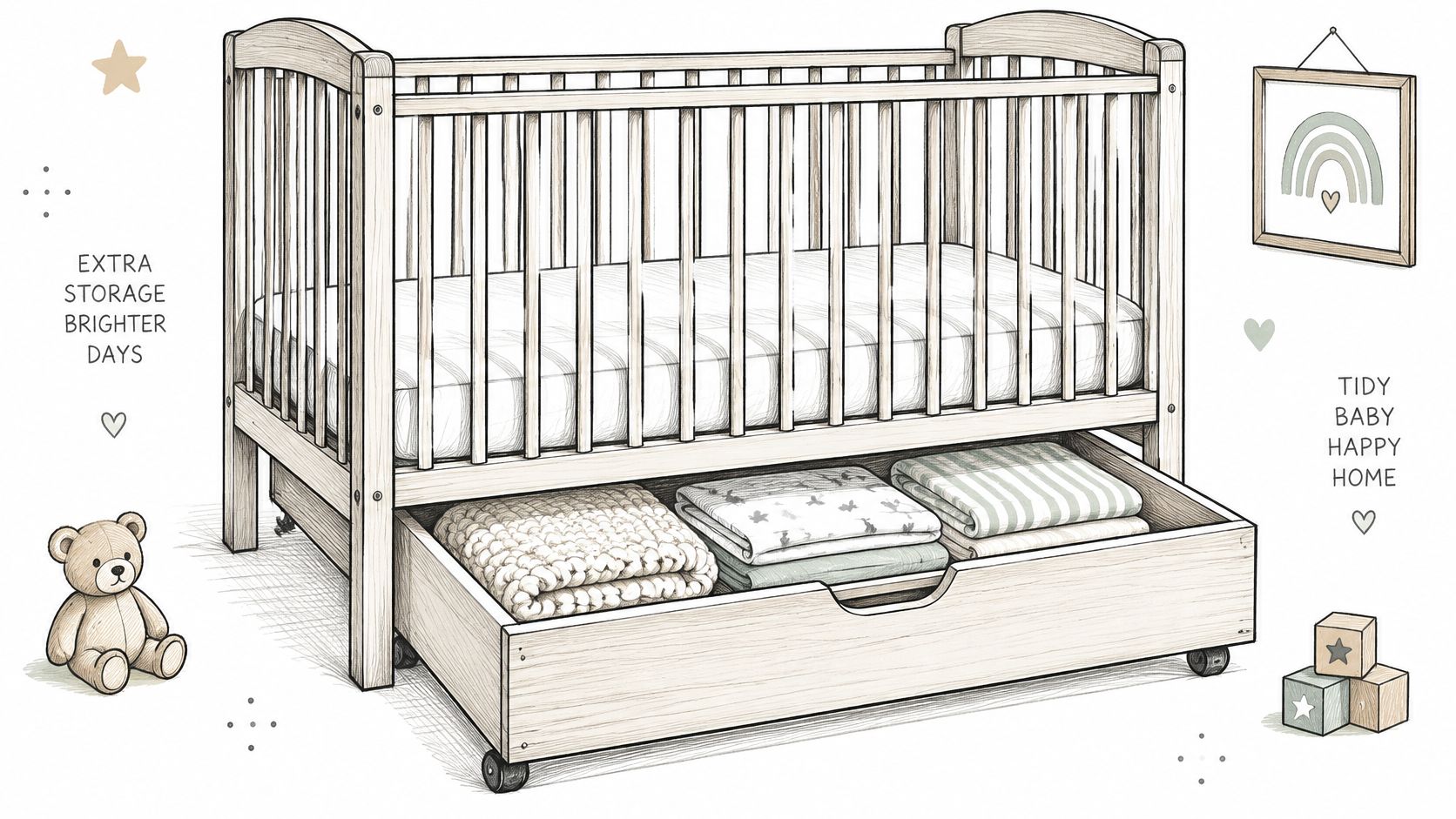
Under-crib storage can solve a small-room problem, but it's an optional space, not space you must fill. Some cribs aren't suitable for added drawers or bins.
Start with the crib manufacturer's instructions. Check clearance with the mattress support in its lowest permitted position, and don't add anything that contacts moving parts, supports, or hardware.
Keep Storage Separate From Sleep
The AAP's safe sleep guidance on HealthyChildren.org says to keep pillows, bumpers, toys, and loose bedding out of the crib. Spare textiles belong in storage until needed, not draped over a rail for convenience.
In a city apartment, a low-profile fabric drawer might hold clean fitted sheets and out-of-season clothing. Choose a design you can remove easily for cleaning without lifting or shifting the crib.
Under the crib isn't an extension of the crib. Nothing stored there should become reachable sleep clutter or a step for climbing.
- Keep it lightweight: Spare clothing is a better candidate than heavy equipment.
- Check movement: Drawers shouldn't roll into a walkway or expose loose handles and small parts.
- Reassess mobility: Remove the setup if your child starts pulling it out or using it as a platform.
Where it goes: Fully beneath a compatible crib, only when the manufacturer's instructions and your child's access allow it.
Where it never goes: Against crib hardware, protruding into the room, or beneath a crib whose instructions don't permit the arrangement. Renters gain drill-free storage here only if the setup stays secure and the sleep space stays clear.
5. Wall-Mounted Pegboards and Slatwall Systems
Pegboards suit parents who want bibs, hats, and small baskets visible rather than buried. Slatwall systems offer a similar arrangement using horizontal channels for compatible hooks and shelves.
Both are flexible, but neither gets a free pass because it looks lightweight. The panel, mounting hardware, accessories, and wall must work together.
Rent-Friendly Doesn't Always Mean Hole-Free
Use a stud finder to locate framing, then follow the system's mounting instructions. Where studs aren't available at the required locations, use an attachment method explicitly suitable for the wall construction and intended load.
Get landlord approval before drilling if your tenancy requires it. If you can't install the panel correctly, choose a door organizer instead of improvising with removable adhesive strips.
Hiccapop's wall-mounted organizer guide provides additional layout ideas. For a shared nursery, assign separate hooks for each sibling's hats and bags, with straps kept inaccessible to the younger child.
Keep baskets lightly loaded and check that hooks can't detach easily. Skip hanging plants, corded lamps, and heavy decorative objects in the baby's reach.
Where it goes: On an appropriately secured wall outside the crib and changing-surface fall zones.
Where it never goes: Above the crib, where your baby can grab accessories, or on a wall using hardware chosen only because it won't leave marks. Wall repair is inconvenient; falling storage is worse.
6. Closet Size Dividers
Baby clothes can fill a closet while somehow leaving you without a sleeper that fits. Closet size dividers solve the sorting problem without adding another piece of furniture.
Hang current clothes together, put upcoming sizes behind a clearly marked divider, and keep an outgrown container nearby. When something no longer fits, move it out of circulation rather than returning it to the same overcrowded drawer.
Organize Around Fit and Season
Follow garment labels, but check actual fit before assuming everything in a section is ready to wear. A warm-weather outfit in an upcoming size won't help during a cold snap.
Measure usable rod space and shelf depth before buying hanging accessories.
Hiccapop's guide to the best way to organize baby clothes offers more clothing-storage options.
- Choose secure dividers: Avoid dangling tags with long cords or easily detached decorations.
- Keep reserves light: Store out-of-season clothing in manageable bins, not overloaded containers overhead.
- Plan the exit: Separate items to keep, pass along, or donate, checking recipients' needs first.
Hiccapop's Operation hiccaCare supports women's shelters and foster care programs. For your own donations, contact local organizations before dropping off clothes.
Where it goes: On an existing, securely installed closet rod, away from the crib.
Where it never goes: On crib rails or a freestanding clothing rack used without the stabilizing hardware its instructions require. Clip-on dividers are renter-friendly; adding a new rod still requires suitable installation.
7. Toy Rotation Baskets and Montessori-Style Open Shelving
A room full of toys doesn't need a room full of toy storage. Start by displaying a manageable selection and putting the rest in adult-access storage.
Montessori-style open shelving can make the available choices easy to see. Use low baskets for age-appropriate toys and board books, then swap selections when your child loses interest or their abilities change.
UNICEF's home-environment guidance connects early learning with caregiver interaction and access to play materials. The useful takeaway isn't to buy more toys, but to make suitable materials easy to use together.
Make Cleanup Obvious
A basket for blocks and a separate spot for books is easier to understand than an overflowing container of unrelated pieces. Picture labels can help a toddler return things without needing to read.
For a shared living room, you can keep toys out of sight between play sessions while leaving a small, deliberate selection accessible during the day.
Recommendation: Rotate according to your child's interest and your available time, not a schedule that becomes another chore.
Open bins also avoid lid hazards. HealthyChildren.org's Make Baby's Room Safe: Parent Checklist says, "The best toy chest is a box or basket without a lid." Choose lightweight containers without sharp edges, and keep heavy contents low.
Where it goes: In a supervised play area, using properly anchored shelving away from the crib.
Where it never goes: Beside the crib as a climbing route or in tall stacks. If renters can't secure a shelf correctly, floor-level baskets are the simpler choice.
8. Storage Ottomans and Benches
A storage bench can hold spare bedding in a guest-room nursery and provide somewhere to sit while sorting laundry. An ottoman can support your feet beside a feeding chair, with lightweight textiles tucked inside.
The trade-off is the lid. Soft-close hardware isn't permission to treat storage furniture as an unrestricted toy box. Hinges, gaps, detachable tops, and enclosed spaces all deserve attention.
Buy Seating First, Storage Second
Choose furniture designed for its intended use and check the manufacturer's instructions. If it's a footrest rather than a seat, don't assume it can hold an adult.
For a guest-room setup, a bench at the foot of the bed might work if it leaves a clear walkway and stays well away from the crib. In a feeding corner, make sure the ottoman doesn't slide as you stand while holding your baby.
- Inspect the lid: Look for purpose-designed safety hardware, then check it regularly for damage or loosening.
- Limit the contents: Store lightweight linens rather than heavy objects or hazardous supplies.
- Control access: Prefer an open-front bench or separate open baskets when your toddler will use the storage independently.
An ottoman or bench is never an infant sleep surface. If you're getting drowsy while feeding, transfer your baby to their designated sleep space rather than resting them on the upholstered furniture.
Where it goes: In an adult seating area with clear circulation and any required anchoring completed.
Where it never goes: Beside the crib as a step, under reachable window cords, or where a child could become trapped inside. No-drill doesn't automatically mean no-risk.
How the Eight Nursery Organizer Ideas Compare
Over-the-Door Hanging Organizers
- Best for: Diapers and small essentials in vertical storage
- Drilling needed: No
- Placement: On a usually closed door or closet rod, away from the crib
Changing Table Caddies and Diaper Baskets
- Best for: Keeping diaper-changing supplies within reach
- Drilling needed: No
- Placement: Beside the changing area without obstructing the safety strap
Clear Labeled Storage Bins
- Best for: Visible, categorized storage for clothes and supplies
- Drilling needed: No (anchor any shelving)
- Placement: On low shelves; anchor tall shelving and keep heavy bins low
Under-Crib Rolling Storage Drawers
- Best for: Storing lightweight, seldom-used items in compact rooms
- Drilling needed: No
- Placement: Under the crib, per the crib manufacturer's clearance instructions
Wall-Mounted Pegboards and Slatwall Systems
- Best for: Visible storage for bibs, hats, and small baskets
- Drilling needed: Yes
- Placement: Mounted per instructions, into studs where possible, with baskets lightly loaded
Closet Size Dividers
- Best for: Sorting baby clothes by size or age
- Drilling needed: No
- Placement: On the closet rod, with outgrown items removed regularly
Toy Rotation Baskets and Montessori-Style Open Shelving
- Best for: Reducing toy clutter and supporting independent play
- Drilling needed: No (anchor any shelving)
- Placement: Low, anchored shelves with heavy items on the lowest level
Storage Ottomans and Benches
- Best for: Combining seating with concealed storage
- Drilling needed: No (anchor if required)
- Placement: Away from the crib to prevent climbing access
Pick One Fix to Try This Weekend and Build From There
The best nursery is the one you can keep functional at midnight, not the one that wins a magazine cover. Matching baskets are optional. Knowing where the clean sheets live is considerably more useful.
Choose the zone that causes the most daily frustration. If changes are chaotic, arrange the diaper caddy before reorganizing the closet. If toys cover the floor, reduce the accessible selection before buying more shelving.
Test the Routine Before Buying More
Empty the problem area and sort what you really use there. Borrow a basket or repurpose a drawer divider to test the arrangement, then measure before purchasing something permanent.
Try the setup with the other people who care for your baby. A grandparent or babysitter should be able to find wipes and spare clothing without a guided tour or instructions involving the phrase behind the other basket.
Before any wall installation or crib-adjacent change, check the manufacturer's instructions, mounting requirements, door clearance, straps, cords, and possible climbing routes. A rental restriction changes the storage choice, not the safety standard. If you can't anchor or mount something properly, choose a different solution.
A good system still works when you're tired. If putting something away requires rearranging everything else, simplify it.
Revisit placement as your baby becomes mobile. A basket that was inaccessible during the newborn stage may become fascinating once your child crawls, pulls up, or starts opening doors.
Aim for storage that can change jobs, too. A diaper basket can later hold clothing; a clear clothing bin can become a hand-me-down container. Reusing a workable organizer beats replacing everything whenever the nursery enters a new stage.
Before you buy anything, measure the spot where it'll go and check the manufacturer's weight rating and mounting instructions.
This weekend, fix the missing-wipes problem, clear the crib surroundings, or give the spare sheets a permanent home. Then share your space-saving win in the comments, especially if you've made a shared bedroom or guest-room nursery easier to manage.