


How to Help Separation Anxiety in Infants: Gentle Strategies That Actually Work
The key to helping your infant with separation anxiety is actually shifting your own mindset. Instead of seeing it as a problem, try to view it as a sign of the healthy, secure attachment you've built. By creating predictable goodbye rituals, practicing short separations, and staying calm yourself, you send a powerful message to your baby: you are safe, and I will always come back.
What Infant Separation Anxiety Really Means
Those heart-wrenching wails when you so much as step into the next room can feel absolutely awful. But let’s reframe this. Infant separation anxiety isn't a sign that you're doing something wrong—it's actually proof of the incredible bond you've built together. It’s a completely normal, healthy, and even celebratory part of your baby’s development.
This phase is tied directly to some major cognitive leaps your baby is making. The big one is understanding object permanence—the concept that you still exist even when they can't see you. Before this mental milestone, it was truly "out of sight, out of mind." Now, your baby knows you're somewhere else, and they want you back!
A Sign of Secure Attachment
When your baby protests your departure, they are communicating their deep connection to you. They see you as their home base, their safe space, and their primary source of comfort and security. This behavior is a powerful indicator that you’ve successfully nurtured their social and emotional well-being. For a deeper dive into this foundational stage, you can explore more in this blog post.
This clinginess shows your little one trusts and depends on you, which is exactly where you want them to be at this age. So, instead of seeing it as a problem to solve, think of it as a milestone to be understood and gently supported.
This stage is a beautiful, albeit noisy, testament to your strong connection. Your baby's anxiety is rooted in their love for you and their growing awareness of the world.
The Typical Timeline
Separation anxiety usually makes its first appearance somewhere between 9 and 18 months. During this window, it's very common for babies to show real distress when separated from their main caregivers. It’s an expected and healthy sign that a strong attachment has been formed.
For a broader look at how to approach this and other childhood worries, these strategies for managing anxiety in children can be incredibly helpful. While most infants naturally move past this phase by the time they reach preschool, understanding its origins helps you navigate it with empathy and confidence.
Here's a quick-glance table with actionable strategies you can start using today to help your infant feel more secure during separations.
Quick Guide to Soothing Separation Anxiety
| Strategy | Why It Works |
|---|---|
| Create a Goodbye Ritual | A consistent, simple routine (e.g., a kiss and a wave) creates predictability and signals that the separation is temporary and safe. |
| Practice Short Separations | Start small by leaving the room for a minute, then gradually increase the time. This teaches your baby that you always return. |
| Keep It Calm and Confident | Your baby mirrors your emotions. A calm, loving, and quick goodbye reassures them that everything is okay. |
| Stay Present Before Leaving | Dedicate a few minutes of focused, one-on-one time before you go. This fills their "connection cup" and makes the separation easier. |
Using these small, consistent approaches can make a world of difference for both you and your little one as you move through this developmental stage.
Creating Security Through Predictable Routines
If there’s one thing babies truly love, it’s knowing what’s coming next. Predictability is their best friend. It makes their big, confusing world feel safe, secure, and manageable. When you create consistent and comforting routines, you’re giving them a powerful anchor to hold onto, especially during the emotional storms of separation anxiety.
This isn't about running a bootcamp with a strict, minute-by-minute schedule. It’s much simpler than that. Think of it as creating a familiar and comforting flow to your day. When your baby learns that a nap is followed by playtime, and playtime is followed by a snack, their internal world starts to feel a lot less chaotic.
Crafting a Comforting Goodbye Ritual
One of the most powerful tools in your toolkit is a solid goodbye ritual. This is your special, repeatable sequence of actions that signals you’re about to leave, but in a loving way that doesn't trigger a meltdown. The whole point is to make your departure feel normal, brief, and completely non-threatening.
Think of it as your family's secret handshake. The best rituals are:
- Short and Sweet: It’s tempting to linger, but long, drawn-out goodbyes almost always make the anxiety worse. Aim for something you can wrap up in less than a minute.
- Always the Same: Consistency is everything. Do the exact same thing, in the same order, every single time. Repetition is what tells your baby, "This is normal, you're safe."
- Upbeat and Confident: Your baby will take their cues from you. Keep your tone light, loving, and reassuring, even if you’re feeling a little sad yourself.
For example, your ritual could be as simple as giving two quick kisses on the cheek, a big hug, and saying, “I love you! I’ll be back right after your nap.” Then, give a final wave from the doorway and go. That last part is key—once you say goodbye, you have to leave without hesitating. This consistency teaches your baby that goodbyes aren't forever and that a happy reunion is just around the corner.
The Power of a Reliable Daily Rhythm
Beyond that specific goodbye moment, having a predictable daily rhythm provides a foundation of security that lasts all day long. When naps, meals, and playtime happen in a generally reliable order, your baby feels more grounded.
This kind of structure helps regulate their internal clock, which plays a huge role in managing their big emotions. Nailing down their sleep patterns is a massive part of this; our guide on wake windows by age can be a real game-changer for tuning up their daily flow.
A predictable routine isn't just about managing behavior—it’s about building trust. Every time you follow through on a familiar pattern, from a silly morning song to the same bedtime story, you’re sending a clear message: "Your world is safe, and I am reliable."
This deep-seated sense of security is what helps infants learn to manage the stress of being apart from you. Research has shown that structured strategies, like consistent routines around departures and reunions, are incredibly effective. They support a secure attachment while also gently fostering independence. Over time, these predictable patterns help infants cope with a caregiver's absence because they build a powerful foundation of trust.
Mastering the Art of a Gentle Goodbye
This is it—the moment of truth. You’ve spent time connecting, the caregiver is ready, and it’s time for you to actually leave. How you handle this single moment can set the tone for the entire separation, and there’s one golden rule that stands above all others: Never, ever sneak away.
The temptation is huge. Your baby is happily distracted, and slipping out the back door feels like the path of least resistance. It seems like a way to avoid the inevitable tears, but this strategy almost always backfires.
When you vanish without a word, it can erode the very trust you’ve worked so hard to build. Your baby’s world is centered around you, their safe person. If you can disappear without warning, their sense of security is shaken, which can actually increase their general anxiety. Instead of preventing tears, it often creates a situation where they feel they can never let their guard down.
The Anatomy of a Confident Goodbye
The goal here is to be loving, clear, and confident. Your baby is an expert at reading your emotional cues. If you’re hesitating and anxious, they will be too. Your calm confidence is contagious; it sends a powerful message that they are safe, this situation is normal, and you will be back.
So, what does this look like in the real world? Whether you're dropping them off at daycare or leaving them with a grandparent, the core steps are the same.
- Model Trust: When you arrive, have a brief, warm chat with the caregiver while you're still holding your baby. This simple act shows your infant, "See? I like and trust this person, so you can too."
- Acknowledge and Reassure: Get down on their level, make eye contact, and use a simple, reassuring phrase. Something like, "Mommy has to go now, but Grandma is here to play! I love you so much, and I'll be back after your nap."
- Use Your Ritual: This is where that special goodbye routine we talked about comes in. Do your quick, loving ritual—a high-five, two kisses on the cheek, a big hug, whatever it is.
- Leave Promptly: Once you’ve said your goodbye, turn and walk out the door. Don't linger. Don't hesitate. This is often the hardest part, but it’s absolutely crucial for a smoother transition. A quick, clean break helps the tears stop much faster than a drawn-out, emotional departure.
Managing Your Own Anxiety
Let’s be honest for a second: these goodbyes can be just as tough on us as they are on our little ones. Hearing your baby cry as you walk away can be gut-wrenching. It’s completely okay to feel sad or guilty, but it’s vital to project confidence during the actual separation.
Parenting Pro-Tip: It is 100% fine to have your emotional moment after you’ve left. Cry in the car. Call your partner or a friend to vent. Do whatever you need to do once you're out of sight. But for those 30 seconds of goodbye, your baby needs to borrow your calm.
Remember, your departure isn’t an act of abandonment. It’s a healthy, normal part of their development and your life. By mastering a gentle, predictable, and confident goodbye, you’re doing more than just getting through a difficult moment—you’re teaching your child a foundational lesson in trust and resilience that will benefit them for years to come.
How To Practice Separations The Right Way
Teaching your baby to cope with being apart is much like introducing them to rolling over or grasping a toy: it takes time, patience, and plenty of encouragement. You wouldn’t expect your little one to run a marathon on day one, so don’t jump straight into a full day away. Instead, let’s break separations down into tiny, confidence-building moments.
Starting With Small Steps
Begin so subtly that your baby barely notices the change. These micro-practices build a foundation of trust:
-
30-Second Separation
Place your baby in a safe spot—like a playpen or high chair—and then step into the next room. Keep your voice drifting back: “I’m just grabbing a sip of water!” After 30 seconds, reappear with a cheerful smile. -
Mailbox Mission
Once the short break goes smoothly, extend your outing to a quick two-minute errand—perhaps checking the mail. Kneel at eye level, offer a warm “I’ll be right back,” and return with genuine excitement in your tone.
These brief departures prove a simple promise: you always come back. Over time, your baby’s growing sense of security replaces that first flutter of worry.
“Every short separation and joyful reunion teaches your child that goodbyes aren’t forever.”
Turning Practice Into A Game
Play brings learning to life. Familiar peek-a-boo and hide-and-seek variations turn separation into fun:
-
Peek-A-Boo With A Twist
Hide your face behind a soft scarf or your hands, then reappear beaming. Each reveal is a mini lesson in object permanence—your absence is temporary, and you always return. -
Corner Hide-And-Seek
Stand just around a doorframe or behind a piece of furniture. Call your baby’s name with playful enthusiasm. When they spot you, celebrate the “find” with lots of claps and kisses.
By weaving these games into daily routines—during diaper changes, mealtime, or quiet play—you’re turning separation practice into moments of shared laughter. And each giggle helps your infant learn that goodbyes lead to happy hellos.
Putting It All Together
Over weeks, gradually increase the length and variety of these practice sessions. Mix spontaneous mini-breaks into your day—stepping outside for a breath of fresh air or popping into another room for a quick chore. Observe how your baby reacts, and adjust the pace accordingly. With consistent micro-exposures and playful routines, you’ll nurture a confident, secure little one who feels safe—even when you’re briefly out of sight.
Knowing When to Seek Professional Guidance
We've talked a lot about how a case of the "clingies" is a totally normal and expected part of your baby growing up. But at the end of the day, you have to trust your gut. You know your baby better than anyone, and if something just doesn't feel right, it’s always okay to look into it.
Most of the time, this phase will smooth out with a little patience and a lot of consistency. Every now and then, though, the anxiety can be more intense than what's typical for this developmental stage. This isn't about creating worry—it's about empowering you to know what to look for so you can be the best advocate for your little one.
Distinguishing Normal Anxiety from Deeper Concerns
So, what does "more intense" actually look like in a baby? It's a fair question. While every infant is unique, a few behaviors might suggest it's time for a chat with your pediatrician. Think of these as gentle nudges, not red flags.
Pay attention to anxiety that truly disrupts your family’s daily life. For instance, is your baby inconsolable for very long stretches after you leave? Or is their distress so great that it keeps them from eating or sleeping properly, even with a loving caregiver? That’s something worth noting.
Physical symptoms can also be a clue. If you notice a pattern where your baby vomits or has diarrhea right before a separation, it could be their body's way of showing severe distress, which goes beyond typical fussiness.
This infographic gives a great visual for how to practice separations in a gentle, gradual way.
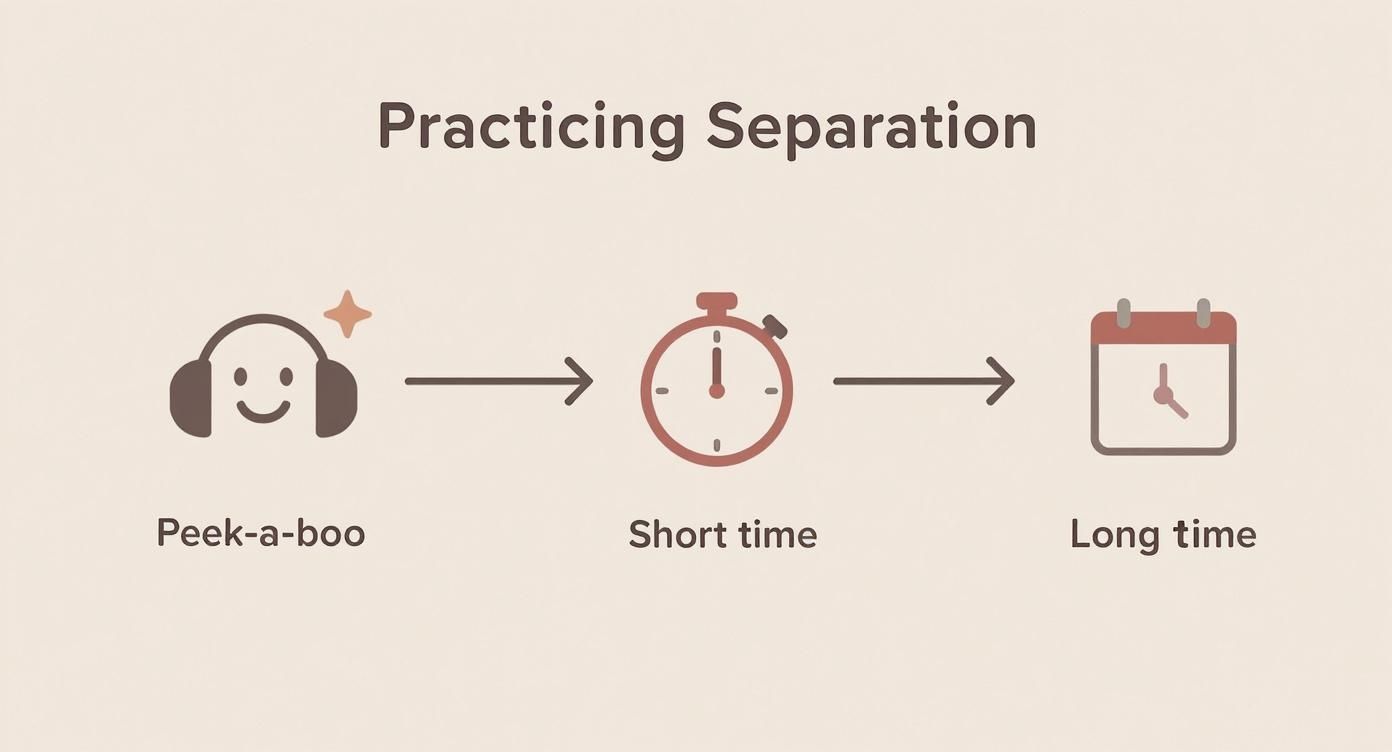
Starting small with games like peek-a-boo and then moving toward short, planned separations is a fantastic way to build your baby's confidence and show them that you always come back.
Understanding Separation Anxiety Disorder
For a small number of children, this anxiety can stick around and become more severe, sometimes leading to what's known as Separation Anxiety Disorder (SAD). It’s important to know that SAD is usually diagnosed in older children, not infants, but understanding it can provide helpful context. It's the most common anxiety disorder among kids, affecting roughly 1% to 4% of children and teens worldwide.
Big life changes or family stressors can sometimes be contributing factors. In older kids, symptoms might look like a persistent refusal to go to school or frequent complaints of headaches and stomachaches.
Your well-being plays a huge role in this, too. Supporting an anxious child is incredibly draining. Our guide with tips for coping with postpartum depression has some valuable support that can help you navigate these tough moments.
If you feel you need specialized support for emotional or behavioral challenges, reaching out to a CDA licensed psychologist at an early intervention center can be a wonderful next step. Remember, asking for guidance is a sign of strength and a powerful act of love for your child.
Common Questions About Infant Separation Anxiety
Even after you've armed yourself with the best strategies, a few questions are bound to pop up. When you're in the thick of it, navigating separation anxiety can feel like you're just guessing. Let's clear up some of the most common worries that cross every parent's mind during this tricky phase.
Does Letting My Baby Cry It Out Make Anxiety Worse?
This is a big one, and it's so important to separate the idea of sleep training from responding to genuine fear. The short answer? Yes, letting a baby "cry it out" when they're truly panicked about you leaving can absolutely make their anxiety worse. Those cries aren't for manipulation; they're a primal signal that they need their safe person—you.
Ignoring those calls for help can unintentionally teach them that you aren't there for them when they're truly scared, which can deepen their insecurity. It might feel counterintuitive, but consistently responding with comfort and reassurance is what builds the secure attachment they need to eventually feel brave on their own.
Can a Comfort Object Like a Blanket Really Help?
They really can! A special comfort object, often called a "lovey," can be a total game-changer. Whether it's a small, soft blanket or a well-loved stuffed animal, these items become a tangible piece of home, a physical link to you and all the security that represents. Studies have shown these transitional objects offer a real sense of comfort during stressful moments.
Want to make it even more powerful? Sleep with the lovey for a night or two before giving it to your baby. Your familiar scent can work wonders.
Safety First: Remember, the American Academy of Pediatrics advises that nothing should be in the crib with a baby under 12 months old. You can introduce a lovey for comfort during playtime and cuddles, but it must be kept out of the crib during sleep until your child is at least one.
Why Did My Baby Suddenly Develop Separation Anxiety?
It can feel like it happened overnight, can't it? One day your baby is waving happily from their play mat, and the next they dissolve into tears if you so much as walk into the kitchen. This sudden shift is completely normal and almost always tied to other big things happening in their little world.
Separation anxiety often spikes right when a baby is:
- Teething or just feeling a bit under the weather.
- Working hard on a new skill, like crawling or pulling themselves up to stand.
- Going through a change in routine, like a parent returning to work or starting a new daycare.
Think of it this way: their world is expanding and changing at a dizzying pace. When everything else feels a little wobbly, they cling even tighter to you, their constant source of security. It's not a step backward—it's just a temporary reaction to all that amazing growth.
How Should Other Caregivers Handle My Baby’s Anxiety?
Consistency is your secret weapon here. When everyone who cares for your baby is on the same page, your little one learns that the rules of love and security don't change, no matter who's in charge.
Make sure to loop in grandparents, babysitters, and daycare teachers. Share your quick and positive goodbye ritual and ask them to stick to it. A great pro tip is to have the caregiver start a really engaging activity right as you're about to leave—shaking a favorite rattle or starting a game of peek-a-boo can be the perfect distraction to ease the handover.
When all the loving adults in your baby's life use a similar, reassuring approach, it helps them build trust with others, which is a massive step toward feeling secure and confident.
Navigating separation anxiety is a journey of trust—both for your baby learning you'll return and for you trusting that this phase will pass. With patience, consistency, and lots of love, you’ll guide your little one through these big feelings.
What's your go-to goodbye ritual, or do you have a tip that worked wonders for your family? Share your wisdom in the comments below!
At Hiccapop, we get that these developmental stages are a mix of pure joy and real challenges. Our thoughtfully designed baby and toddler products are here to support you through it all, making the journey of parenthood a little simpler and a lot more secure. Explore our solutions and see how we can help.