


How Long Is Warmed Breast Milk Good For? An Easy Guide
When you've got a fussy, hungry baby on your hands, you need clear, quick answers. So let's get right to it. The most important rule to remember is this: once you've warmed a bottle of breast milk, it's good for two hours. After that 2-hour window, it's safest to discard it.
The 2-Hour Rule for Warmed Breast Milk
Learning all the ins and outs of pumping and feeding can feel overwhelming, but some guidelines are absolutely essential for your baby's health. The two-hour rule for warmed milk is one of those non-negotiables, designed to protect your little one's delicate, still-developing immune system from harmful bacteria.
This isn't just a casual suggestion; it's a critical safety standard. The CDC guidelines are crystal clear: once breast milk is brought to feeding temperature, it should be used within 2 hours. Why so strict? Because bacteria love warm, nutrient-rich environments, and they can multiply surprisingly fast in that liquid gold.
Research has shown that at body temperature (around 98.6°F), significant bacterial growth can occur in just a few hours. The two-hour rule provides a crucial buffer to keep your baby safe. Think of it as your first line of defense, ensuring every feeding is as safe as it is nutritious.
It really boils down to this: start the two-hour countdown the moment the milk is warm, and always, always toss out any leftovers from that bottle. No exceptions!
Quick Guide to Warmed Breast Milk Safety Windows
To help you feel confident with every bottle, here is a quick cheat sheet covering different scenarios for warmed breast milk. Keep this handy for quick checks—no frantic Googling required.
| Milk Status | Safe Time After Warming | Key Takeaway |
|---|---|---|
| Freshly Warmed | Use within 2 hours | The clock starts ticking as soon as it reaches feeding temperature. |
| Partially Finished Bottle | Use within 2 hours from the start of the feeding | Discard any remaining milk after the feeding is complete or 2 hours have passed. |
| Warmed and Untouched | Use within 2 hours | Even if your baby doesn't drink from it, the time limit still applies. |
This table covers the most common situations you'll run into. The main takeaway is that once milk is warmed, its shelf life shortens dramatically, regardless of whether your baby has started drinking it or not.
Why Warmed Breast Milk Has a Ticking Clock
Ever wonder why that two-hour window for warmed breast milk is so important? It’s not just a random number someone pulled out of thin air. It's all about keeping your baby safe, and the science behind it is actually pretty straightforward: it’s a race against bacteria.
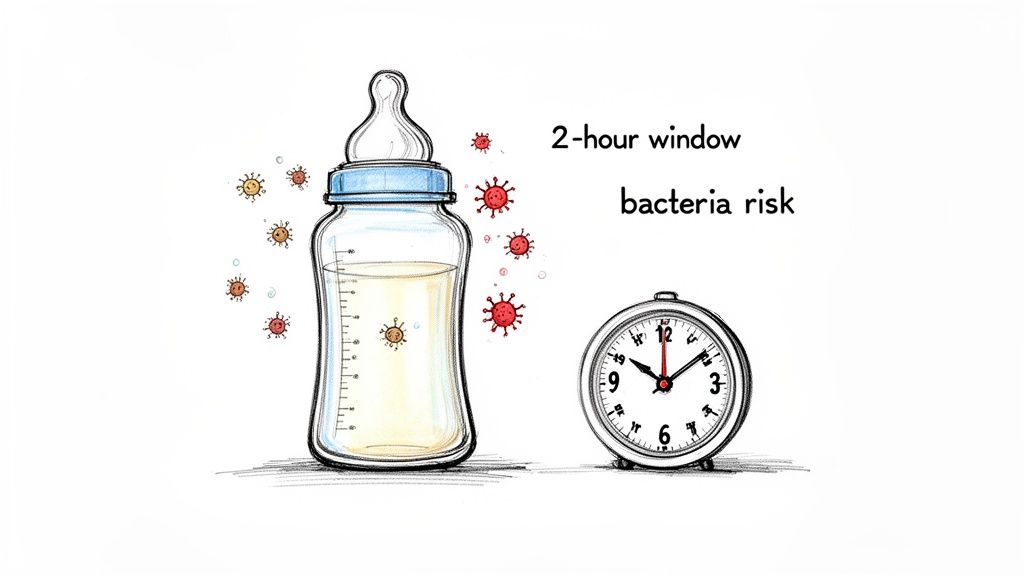
Think of breast milk as the perfect superfood. It's an incredible mix of fats, proteins, lactose, and other nutrients that are tailor-made for your baby. But here's the catch: the very things that make it so nourishing for your little one also make it an ideal meal for bacteria.
When milk is chilled in the fridge, its amazing natural antimicrobial properties do a great job of keeping bacterial growth in check. The moment you start warming it up, however, the game completely changes.
The Science of a Warm Environment
Heating up breast milk essentially rolls out the welcome mat for any bacteria that might be present. That cozy warmth, combined with a buffet of nutrients, is the perfect recipe for them to multiply. And they do it fast. This isn't meant to scare you—it's just biology at work.
Here’s a quick look at what’s happening behind the scenes:
- Temperature Rise: Heating brings the milk into what food safety experts call the "danger zone"—a temperature range where bacteria flourish.
- Nutrient Breakdown: The warming process can cause some of the milk's protective enzymes to degrade a bit, weakening its natural defense system.
- Rapid Growth: With a food source and an ideal temperature, bacteria can double in number in a surprisingly short amount of time.
This is precisely why the clock starts ticking as soon as the milk is warm. The two-hour rule provides a safe window to feed your baby before potential bacterial growth could become a problem for their tiny, still-developing immune system.
The key takeaway is that warming breast milk doesn't introduce bacteria; it simply creates an environment where any existing bacteria can flourish. Following established timelines is the best way to ensure every bottle is safe.
Saliva and Bacterial Introduction
There’s one more piece to this puzzle, and it comes into play the second your baby’s lips touch the bottle. Their saliva introduces bacteria from their mouth directly into the milk. Once inside, these new bacteria find themselves in a warm, nutrient-rich liquid and can start multiplying right away.
This is why that two-hour countdown starts from the beginning of the feeding, not the end. Even if your baby only takes a few sips, the rest of the milk in that bottle has been exposed. It’s also why you should never top up a partially finished bottle with fresh milk. Understanding these invisible risks is key to making sure every single feeding is a safe and healthy one.
Your Complete Guide to Storing and Reheating Milk
Let's get this down to a science. Knowing how to properly handle breast milk—from the moment you pump it to when your baby drinks it—is one of the most important things you’ll master as a new parent. Think of these guidelines as your simple, stress-free playbook for making sure every drop of that liquid gold is safe and packed with nutrition.
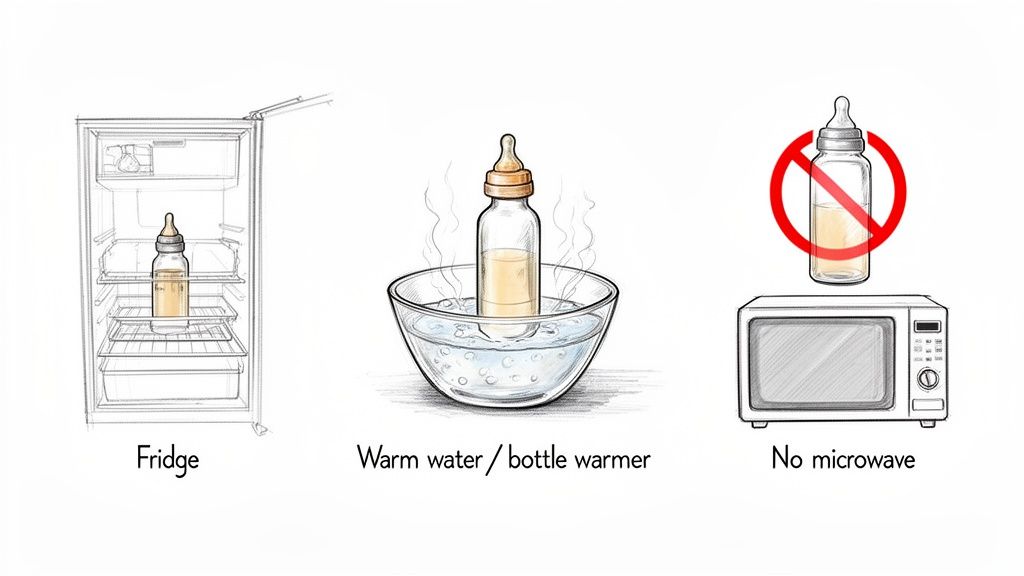
It doesn't matter if you're working with freshly expressed milk, a bottle from the fridge, or a bag from the freezer—the core principles of safe handling are what count. It all starts with proper storage, but knowing the right way to gently warm it up is just as crucial.
Best Practices for Warming Breast Milk
When it’s time for a feeding, remember that gentle heat is your best friend. The goal is to warm the milk just enough without destroying all the incredible nutrients and antibodies your body worked so hard to create.
Here are the safest, most effective ways to warm up a bottle:
- A Good Bottle Warmer: This is the easiest, most consistent method. These gadgets are built to heat milk evenly to the perfect temperature, and many even have an auto-shutoff feature—a lifesaver for multitasking parents.
- A Warm Water Bath: It’s simple and effective. Just place the sealed bottle or storage bag in a bowl of warm (never hot!) water for a few minutes. A gentle swirl now and then helps distribute the heat.
- Running Warm Water: You can also just hold the sealed bottle under a warm tap, rotating it until it feels right.
Before you give the bottle to your baby, always do the wrist test. A few drops on the inside of your wrist should feel comfortably warm, not hot.
Seriously, Don't Use the Microwave. Never, ever warm breast milk in the microwave. It's notorious for creating dangerous "hot spots" that can severely burn a baby's mouth and throat. On top of that, the intense heat can destroy some of the milk's most valuable components.
From the Fridge to the Bottle
For most parents, using refrigerated milk is part of the daily routine. Once you've warmed a bottle that was in the fridge, the standard 2-hour rule kicks in. Your baby should finish it within two hours of the feeding starting, and any leftovers have to be tossed.
But what if you warm a bottle and your little one decides it's not mealtime yet? This is where an important distinction comes into play. If the milk has been warmed but your baby hasn't drunk from it yet, it can be used for the next feed as long as it's within that original 2-hour window. Once their saliva makes contact with the nipple, however, the clock starts ticking and leftovers can't be saved.
Preparing for the Next Feed
A little planning can make your life infinitely easier, especially during those blurry newborn days. If you're pumping, try storing your milk in smaller, more manageable amounts, like 2 to 4 ounces at a time. This way, you only warm what you need and minimize that heart-breaking waste.
Establishing these simple, safe feeding routines is a huge part of caring for a newborn. For more tips on this and more, check out our complete guide on how to care for a newborn baby. It’s amazing how a few small habits can make such a big difference.
Handling Frozen Breast Milk Without the Guesswork
Dipping into your freezer stash can feel a little nerve-wracking, but it doesn't have to be. Once you master a few simple, crucial rules for thawing and using frozen breast milk, you'll feel completely confident using every precious ounce you've stored.
The number one, most important rule? Never, ever refreeze thawed breast milk. This is an ironclad guideline. The freeze-thaw cycle breaks down the milk’s cellular structure, which can degrade its nutritional quality and create an environment where bacteria can more easily grow.
Best Methods for Thawing Frozen Milk
When it comes to thawing your liquid gold, patience is your best friend. Rushing the process with high heat can destroy the very nutrients and antibodies you worked so hard to produce, and it can also create dangerous hot spots.
Instead, stick with these gentle, baby-safe techniques:
- Thaw Overnight in the Fridge: This is the gold standard for a reason. Just pop a bag or bottle from the freezer into the fridge and let it do its thing overnight. This slow-and-steady method is the absolute best for preserving all the good stuff in your milk.
- Use a Warm Water Bath: Need it a bit sooner? Place the sealed bag or bottle in a bowl of warm (not hot!) water. Holding it under a warm running tap works well, too. As it thaws, you can give it a gentle swirl to help mix the fats back in.
Once your milk is completely thawed, it's good for up to 24 hours in the refrigerator. A key point here: that 24-hour clock starts ticking the moment the milk is fully liquid, not when you first pulled it from the freezer. And remember, this is for milk that has been thawed but not yet warmed for a feeding.
The Thawed Milk Timeline
It’s easy to get confused, so it helps to remember that the rules for thawed milk are stricter than those for freshly expressed milk. After thawing, it must be used within 24 hours if it stays in the fridge.
But as soon as you warm it up for a feeding, the clock resets and the standard 2-hour rule kicks in.
Experts at the CDC agree: for the best quality, try to use frozen milk within six months, though it remains safe for up to 12. Once it’s thawed and in the fridge, you have 24 hours. Once it's warmed, you have just 2 hours to use it. You can find more details in the official breast milk storage guidelines.
Following these straightforward steps will help you sidestep the common mistakes that could risk the safety or quality of your milk. This careful approach gives you total peace of mind, ensuring your baby gets all the amazing benefits from every single feeding.
Practical Tips for Parents On the Go
Life with a baby rarely stands still, and your feeding routine needs to be just as mobile as you are. Whether you're just running a few errands or heading out for a longer visit with family, handling breast milk away from home can feel a bit daunting. But with a little bit of prep, it's actually pretty simple.
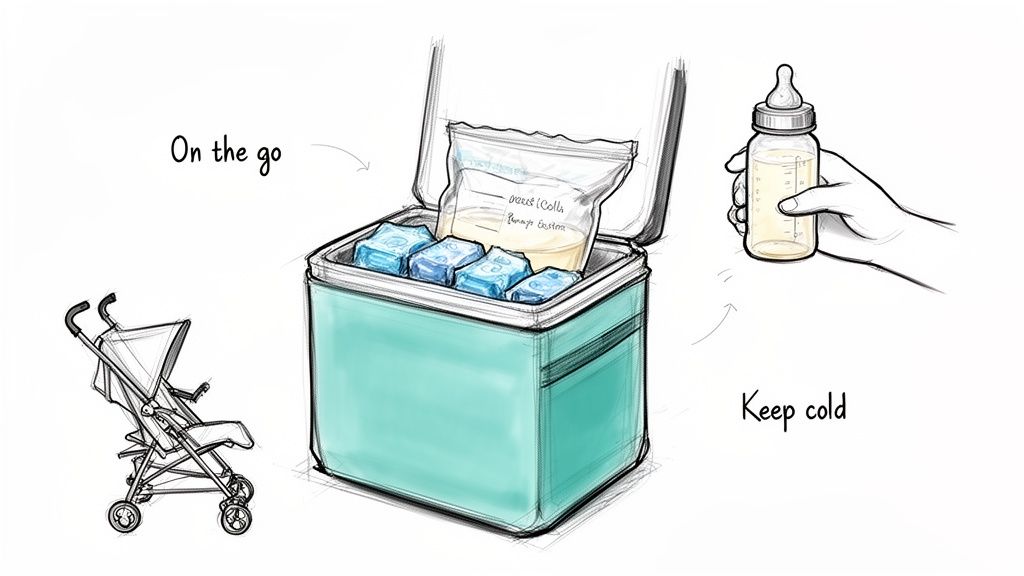
Think of it as creating a mini-fridge you can take anywhere. An insulated cooler bag with a couple of solid ice packs is your best friend here. This setup keeps your precious milk safely chilled for up to 24 hours, giving you the freedom to go about your day without worrying about spoilage before you even get a chance to warm a bottle.
Having the right gear packed and ready to go makes all the difference. For a little help making sure you haven't forgotten anything, check out our complete diaper bag checklist for newborns.
Instructions for Caregivers and Grandparents
Leaving your baby with someone else—even a loving grandparent—can be a source of major anxiety. You can head off a lot of that worry by leaving behind crystal-clear, easy-to-follow instructions. It’s best not to assume everyone is up-to-date on the latest guidelines; recommendations have definitely changed over the years!
To eliminate any guesswork, here's a simple list you can print out and leave on the counter:
- Warm Gently: Please use the bottle warmer or a bowl of warm water to heat the milk. Never, ever use the microwave.
- Check the Temp: Before feeding, squirt a few drops on the inside of your wrist. It should feel comfortably warm, not hot.
- The 2-Hour Rule: Once a bottle is warmed, it’s only good for 2 hours. It helps to set a timer!
- No Saving Leftovers: Any milk left in the bottle after a feeding needs to be discarded. Please don't put it back in the fridge.
- When in Doubt, Toss It Out: If you're unsure about a bottle for any reason, it's always safest to just grab a fresh one.
A quick tip for your own peace of mind: Label every single bottle or bag with the date and time it was pumped. This tiny step is a great safety net and helps your caregiver easily grab the oldest milk first, sticking to that all-important "first in, first out" rule.
Providing these straightforward rules ensures your baby is cared for with the exact same safety standards you use. That consistency is key—it protects your little one and helps you relax, knowing they’re in great hands. A little preparation goes a long way.
Frequently Asked Questions About Breast Milk Safety
Even when you know the main rules, real life always throws a curveball, especially during those 3 a.m. feedings. Think of this as your go-to guide for all those little "wait, is this okay?" moments that pop up.
We'll clear up the tricky situations that cause the most stress, giving you straightforward answers backed by official safety guidelines.
What If My Baby Only Drinks Half the Bottle?
It’s tough to pour out that liquid gold, but this is one rule you can't bend. The moment your baby’s mouth touches the bottle, their saliva introduces bacteria into the milk, which can then start to multiply.
According to the CDC, you have a two-hour window to use the rest of that bottle, starting from when the feeding began. After that, anything left over needs to be tossed. It’s all about keeping your little one safe.
Can I Add Freshly Pumped Milk to a Chilled Bottle?
Yes, you can absolutely combine milk from different pumping sessions, but there's a key step you can't skip. You have to cool the freshly expressed milk in the fridge first before you add it to an older, already chilled batch.
Think of it like this: adding warm milk to cold milk is like creating a cozy little incubator for bacteria. It raises the overall temperature and gives germs a chance to thrive. So, always cool it down before you combine.
A common question we get is whether these safety rules change if you're combo feeding with formula. The answer is no—while feeding methods can vary, the guidelines for safely handling breast milk are always the same. You can dive deeper into feeding choices like breastfeeding and combo feeding in our comprehensive guide.
How Can I Tell If My Breast Milk Has Gone Bad?
Your senses are your best tool here, especially your nose. Spoiled breast milk will often have a distinctly sour or soapy smell, which is a big red flag. Before warming a bottle, give the milk a gentle swirl and a quick sniff.
If it smells off, or if you see clumpy bits that don't blend back in when you swirl it, it's past its prime. When it comes to your baby’s health, the motto is simple: when in doubt, throw it out.
Can I Re-Warm Milk That Has Already Been Warmed Once?
Unfortunately, no. Once you’ve warmed a bottle of breast milk, it’s a one-and-done deal. Each time milk goes through a heat-cool cycle, it loses some of its precious nutrients, and more importantly, the risk of bacterial growth shoots up.
To avoid waste, a good habit is to warm smaller amounts at a time. You can always warm a little more if your baby is still hungry.
At Hiccapop, our mission is to make parenting just a little bit easier with smart, safe, and simple solutions. From feeding time to nap time, every product is designed with your family’s well-being at its heart. Explore our collection of innovative baby gear at Hiccapop.