


Childrens Sleepover Beds: Ultimate Safety Guide 2026
The living room is ready for guests, the snacks are lined up, and two excited children are already turning blankets into a fort. Then comes the practical question: where will everyone sleep? A sofa, a pile of cushions, or an air mattress may work for an older child, but children's sleepover beds need more careful consideration when toddlers are involved. Convenience matters, but the sleeping surface, frame, age guidance, and surrounding floor area matter more.
A well-chosen portable bed can make visits to grandparents, family gatherings, and overnight guests far easier. The right setup also removes much of the adult anxiety from sleepovers. You're not trying to eliminate every bedtime wobble. You're creating a stable, age-appropriate place where a child can settle safely.
The Sleepover Survival Guide for Kids
The classic sleepover starts with excellent intentions. Children build a blanket fort, distribute pillows, whisper about snacks, and promise they'll go to sleep early. By midnight, one child is sideways on the rug, another has lost a blanket, and an adult is stepping over a trail of stuffed animals.
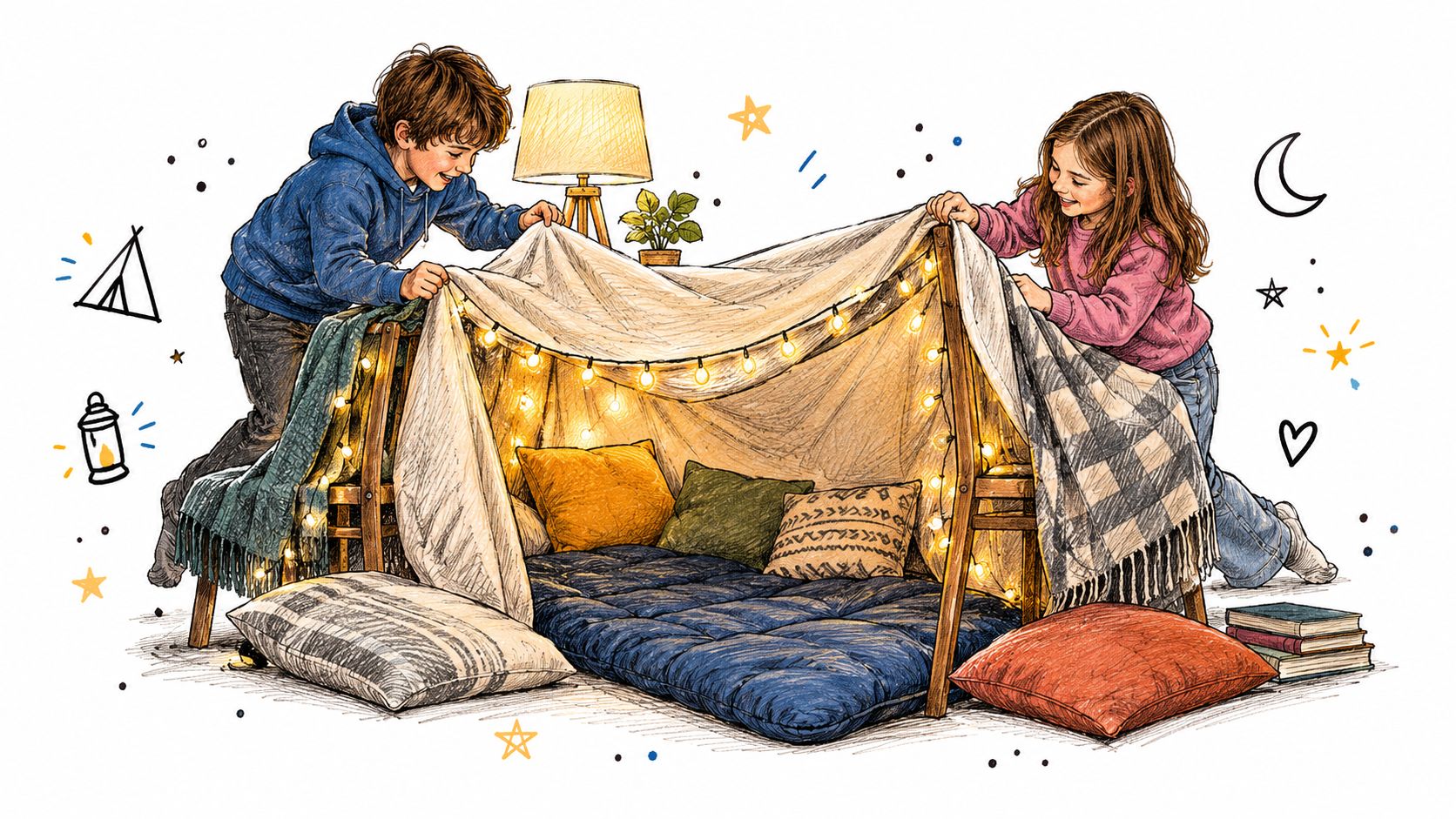
A proper portable toddler bed doesn't remove the fun. It gives the fun a reliable landing place. Children can still bring their favorite pillow, choose a cozy blanket, and turn bedtime into a campsite, but they're sleeping on a surface designed for the child's age and size rather than on whatever happens to be available.
That distinction becomes especially important when the guest is very young. A sleepover bed marketed for convenience may be perfectly suitable for an older child and entirely wrong for a toddler. Parents often focus on whether a bed folds quickly or fits in a car. Those are useful questions, but they should come after checking the product's age range, mattress fit, guardrails, stability, and setup instructions.
Practical rule: Treat a sleepover bed as sleep equipment, not party décor.
A portable bed can serve several roles. It may stay at Grandma's house, travel on family holidays, or come out when a cousin visits. It can also give a child who's nervous about sleeping away from home a familiar, contained space. That emotional comfort counts. A recognizable bed and bedtime routine can make an unfamiliar room feel much less enormous.
Sleepover readiness itself varies. New South Wales public health guidance says there's no set age when every child is ready, although some children may feel ready around 8 to 10 years old, while others are comfortable earlier, as explained by NSW guidance on sleeping away from home. For toddlers, the question isn't whether they're ready for a traditional sleepover. It's whether the sleeping arrangement is appropriate for their developmental stage.
Choosing the Right Sleepover Bed Type
The best children's sleepover bed depends on the child, the setting, and how often you'll use it. Four broad categories cover most families' needs.
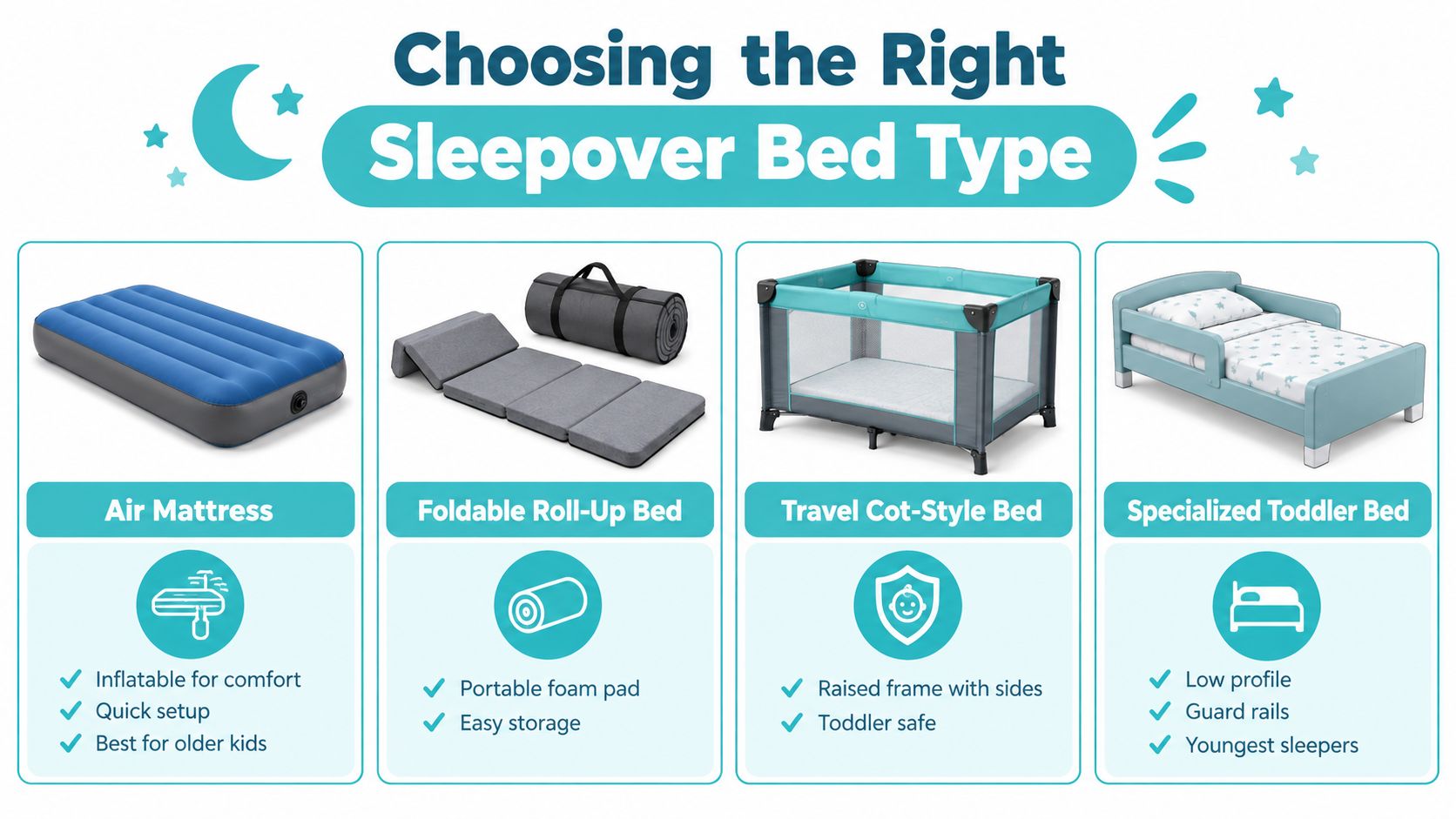
| Bed type | What works | Main limitation |
|---|---|---|
| Air mattress | Packs down small and inflates quickly | Offers little boundary security and may be unsuitable for young children |
| Foldable roll-up bed | Lightweight foam surface with simple storage | Usually better for occasional use than demanding nightly use |
| Travel cot-style bed | Raised frame and enclosed or raised sides | Takes more setup and storage space |
| Specialized toddler travel bed | Low profile, child-focused design, often with raised sides | Must still be checked for mattress fit, age guidance, and safe use |
Air mattresses
Air beds appeal because they're compact, familiar, and easy to store. They can work for older children who can climb on and off safely and don't need protective sides. They're a poor default for toddlers because the surface can shift, the edges can be unstable, and the design may not provide the containment a younger sleeper needs.
Air mattress safety
CPSC warns that air mattresses are too soft for infants and should not be used as infant sleep surfaces (CPSC Publication 5222). ASTM F2755-22, Standard Safety Specification for Safety Labeling of Inflatable Air Mattresses, establishes safety-labeling requirements intended to reduce infant and child deaths and injuries associated with inflatable air mattresses. Generic inflatable air mattresses should not be treated as substitutes for a sleep product designed for the child's age.
A purpose-built inflatable toddler bed isn't the same as a generic air mattress, but it comes with its own age limits and warnings. Hiccapop's Inflatable Toddler Bed, for example, has raised inflatable sides and is designed for toddlers rather than infants. Whatever bed you use, check that product's minimum age, warnings, and setup instructions before the first night.
For products classified as toddler beds under U.S. federal rules, CPSC defines a toddler bed as intended for a child who is at least 15 months old and weighs no more than 50 pounds under 16 C.F.R. part 1217. Not every inflatable or travel bed is necessarily a regulated toddler bed under that rule, so check the product's own instructions and applicable standard rather than assuming that classification.
Foldable roll-up beds
A foam roll-up bed is often the simplest option for an older child. It stores neatly, unfolds quickly, and feels more like a real mattress than a thin sleeping bag. Look for a surface that lies flat without curling at the edges and avoid treating it as a long-term replacement for a properly supported toddler bed.
Travel cot-style beds
A travel cot-style bed takes longer to assemble, but the raised frame and side structure can offer a more suitable boundary for a younger child. These beds are particularly useful when the same product will travel between homes. Check that the frame locks completely and that the supplied mattress is used as directed.
Specialized toddler travel beds
A toddler travel bed is designed around a lower sleeping height and child-sized proportions. Some models prioritize portability, while others add side rails, an inflatable outer section, or a more substantial frame. Choose based on the child's age and the intended frequency of use, not just on the number of cheerful features.
Safety First for Toddler Sleepovers
Safety starts with the mattress, not the cute fabric cover. A toddler sleepover bed should have a firm, flat sleep surface. For a cot or framed sleep product, use the mattress or pad specified by the manufacturer and make sure it fits correctly, without dangerous gaps.
A gap may look harmless when the bed is empty. Under a child's weight, a compressible or undersized mattress can allow the body to settle into that opening. That creates a risk of head, neck, or limb entrapment, which is why portable folding cot guidance from Product Safety Australia emphasizes a firm mattress that fits without gaps.
Match the bed to the child
Use the manufacturer's age, size, and weight guidance as a starting point. Don't move an infant or young toddler onto an air bed just because an older sibling sleeps comfortably on one. For babies and very young children, a portable cot or travel crib may be more appropriate than a product marketed broadly as a sleepover bed.
Keep the sleep surface clear. Soft toys, pillows, loose quilts, and extra padding can change how a young child's face and body rest against the mattress. A familiar comfort item may be appropriate for an older child, but it shouldn't be used to compensate for an unsuitable bed.
Inspect the setup before bedtime
Set the bed on a stable, flat floor area. Check that the frame is fully opened, every lock is engaged, and the mattress is the correct one for that model. Keep the bed away from cords, heaters, heavy furniture, stairs, and places where another child might trip over it during nighttime wandering.
A low bed isn't automatically a safe bed. Stability, mattress fit, and the absence of dangerous gaps still determine whether the setup is suitable.
For more toddler-specific guidance, use these safe sleeping tips for toddlers. It's also sensible to clean the surrounding floor and remove small objects before setting up a guest bed. A clean sleep area is helpful, but cleaning never replaces a safe bed design.
Understanding Regulatory Standards and Risks
Parents don't need to become product engineers, but they should know what safety language means. In the United States, toddler beds fall under 16 C.F.R. part 1217, which incorporates ASTM F1821 with CPSC modifications, as outlined in the CPSC toddler bed business guidance. The framework addresses entrapment at bed ends, between guardrails and side rails, and around the mattress support system.
In plain English, examine the points where a child could roll, slide, or become caught. Guardrails should connect properly, openings should be appropriately sized, and the mattress thickness should match the product's specification so the rail remains high enough above the mattress.
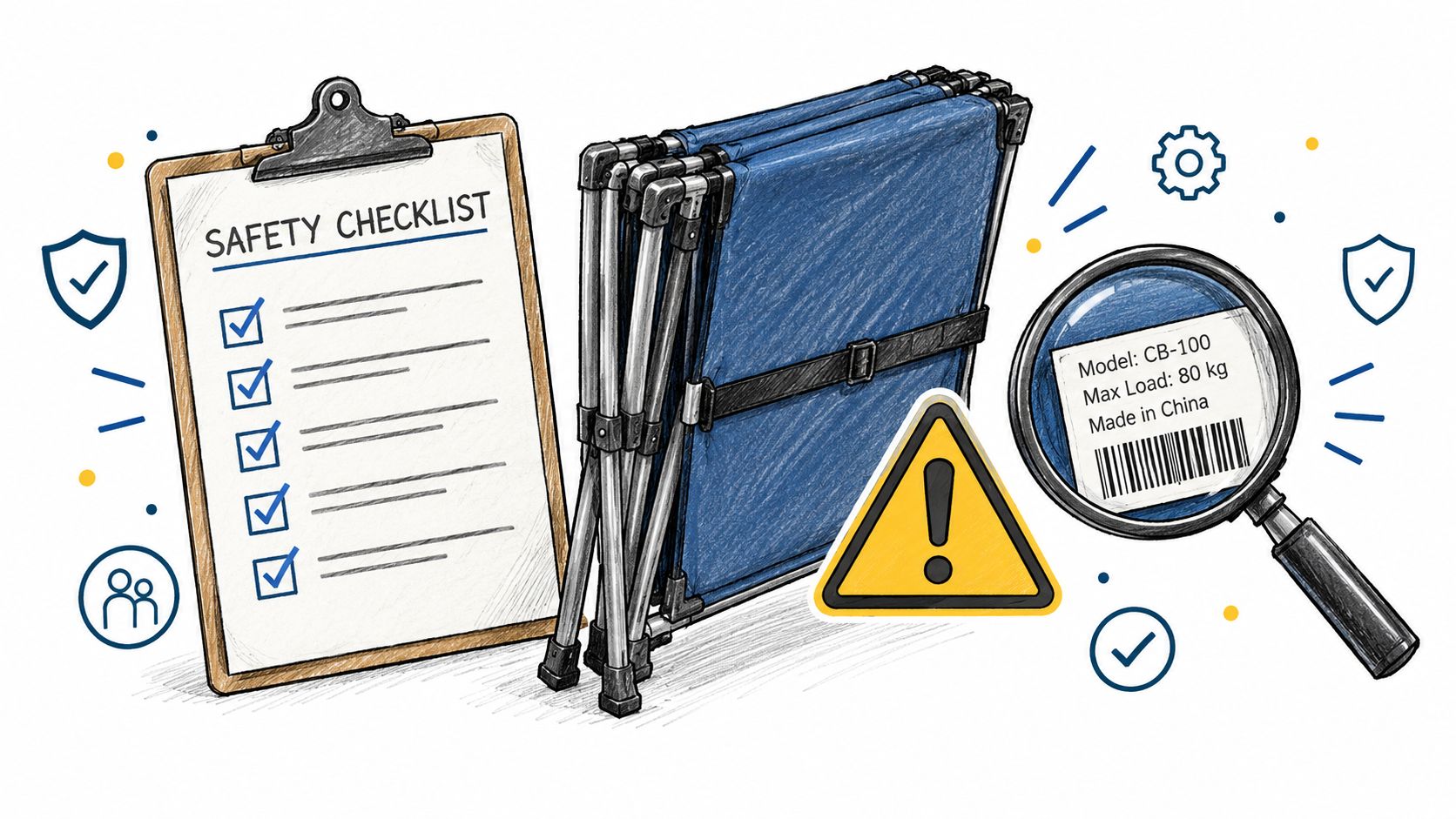
What to look for in a portable bed rail
Children's portable bed rails sold in the United States must meet a mandatory federal safety standard. CPSC published the final rule on February 29, 2012, at 77 FR 12182, codifying the requirements at 16 C.F.R. part 1224. The rule became effective August 29, 2012, and incorporates ASTM F2085 (CPSC children's portable bed rail guidance).
Before a sleepover, check that:
- if it's a portable rail for an adult bed, it's made to meet the current federal standard for children's portable bed rails;
- it's compatible with the bed and mattress you're using, with no gap between the rail and the mattress where a child could slip or become caught;
- the child is within the rail's stated age range;
- it's installed exactly as the instructions describe, with any straps or anchors secured.
Today's rails are built to a standard that directly addresses the hazards found in earlier products. When CPSC reviewed rail incidents from 1990 to 2000, it found 14 child deaths, 10 of which involved a child trapped in a gap between the rail and the mattress (CPSC advance notice of proposed rulemaking, 65 FR 58968). The federal standard targets that gap, which is why fit and installation matter as much as the rail itself.
Canada's Health Canada advises that children under two years old should never use a bed fitted with portable bed rails. It also says rails should be used only with a bed that has both a box spring and mattress, unless the manufacturer says otherwise, and recommends choosing rails that meet the latest ASTM International standard, as explained in Health Canada's sleep-time safety guidance.
Important distinction for toddler beds and bed rails
Not every product called a bed rail is a portable bed rail under the federal rule. CPSC's rule covers rails intended to be installed on adult beds. It excludes guardrails covered by the toddler-bed standard and conversion rails intended to convert a crib to a full-size bed (CPSC final rule scope). For any rail, use it only with the bed it was designed for, and follow its age, fit, and installation instructions.
For mattress-specific checks, see crib mattress safety standards.
Comfort Tips and Setup Advice
A safe bed can still produce a miserable night if it's placed badly or dressed with the wrong bedding. Start with a fitted sheet designed for the exact mattress or cot. Loose fabric can bunch beneath a child, while an oversized sheet may pull free at the corners.
Set the bed on the quietest practical part of the room, but keep it accessible to the supervising adult. A flat section of floor away from cords, curtain loops, radiators, and heavy furniture is preferable to a crowded corner beside the sofa. Leave enough space for an adult to reach the child without climbing over another sleeper.
Make unfamiliar rooms feel familiar
Children settle faster when the room has a few recognizable cues. Pack a favorite sleep sack where appropriate, a familiar bedtime book, or a small comfort item suitable for the child's age. A dim night-light can make the route to the bathroom less intimidating without turning the room into a brightly lit play area.
Avoid decorating the bed with hanging garlands, cords, or anything that could catch around a child. The blanket fort belongs beside the sleep space, not over it. That small distinction lets children keep the magic without turning the bed into a structure it wasn't designed to be.
Older children may prefer a roll-up foam bed with a familiar sleeping bag. Younger children generally need the more controlled arrangement described above. Comfort isn't one universal feature. It's the result of matching the bed, bedding, room, and child.
Maintenance and Storage for Travel Families
Portable beds last longer when you treat storage as part of safe use. After a visit, remove the sheet, clean the surface according to the manufacturer's directions, and let damp fabric dry fully before folding. Packing a wet or dirty bed can encourage odor, staining, and material deterioration.
Before each use, inspect the mattress cover, seams, frame joints, fasteners, zippers, and side panels. Look for a tear, a warped support, a lock that doesn't engage, or fabric that has pulled away from its stitching. Don't solve a structural problem with tape, extra padding, or a homemade repair.
Store it where you can inspect it
Keep the folded bed in a dry location where heavy boxes won't crush it. Store small accessories with the bed so you're not tempted to substitute a different mattress or leave a required component behind during travel.
A product designed for travel or occasional guest use may not be suitable as a nightly bed for years. Our guide to baby gear product lifespan is useful when deciding whether your purchase is a travel sleep system, a guest bed, or a temporary solution during a transition.
Disclosure
Hiccapop® makes travel beds, crib mattresses, booster seats, and other baby and toddler products discussed on this website. This article is provided for general informational purposes and is not a substitute for applicable safety standards, manufacturer instructions, or professional advice.
If you're comparing portable sleep options, Hiccapop® offers travel beds and other baby and toddler products designed for different sleep and travel setups.
Related Products
-
![]()

- Regular price
- $36.99 - $38.99
- Sale price
- $36.99
- Regular price
-
$44.99 - Unit price
- per
Sold out -
![Inflatable toddler travel bed featuring a white four-bumper frame, navy blue inflatable mattress, electric air pump, and blue carry bag.]()

- Regular price
- $99.99
- Sale price
- $99.99
- Regular price
-
$99.99 - Unit price
- per
Sold out


Related Products
-
![]()
- Regular price
- $36.99 - $38.99
- Sale price
- $36.99
- Regular price
-
$44.99 - Unit price
- per
Sold out -
![Inflatable toddler travel bed featuring a white four-bumper frame, navy blue inflatable mattress, electric air pump, and blue carry bag.]()
- Regular price
- $99.99
- Sale price
- $99.99
- Regular price
-
$99.99 - Unit price
- per
Sold out