


Finding the Best Pack and Play for Sleeping
When you’re on the hunt for the best pack and play for sleeping, the models that truly stand out are the ones focused on the fundamentals: a firm and breathable mattress, strict safety standards, and easy portability for life on the go. The best options almost always have a JPMA certification, all-mesh sides for great airflow, and a folding mechanism that’s both simple and secure.
This guide will walk you through exactly what to look for to find a safe, sound sleep solution for your little one, so you can rest as easily as they do.
Finding a Safe and Sound Sleep Solution
Let’s be honest, wading through baby gear can feel like trying to assemble a rocket ship with instructions written in ancient hieroglyphics. The pressure really mounts when it comes to something as crucial as sleep. You're not just looking for a portable container; you need a genuinely safe, comfortable, and reliable sleep space, whether you're at Grandma's for the weekend or just need a safe nap spot in the living room.
It’s no surprise that parents are willing to invest in quality and safety. The global market for baby care products is on track to hit a staggering USD 60.63 billion by 2030. This isn't just a number; it shows a powerful trend of parents prioritizing gear that gives them total peace of mind.
My goal here is to cut through the marketing noise and zero in on the features that actually matter for safe and comfortable sleep. We’ll cover everything from safety certifications and mattress quality to the practical details that make a pack and play a perfect fit for your family.
What Really Matters for Sleep
It's so easy to get distracted by all the bells and whistles when you're comparing different models. But when you’re choosing a pack and play specifically for sleep, only a handful of core features are truly non-negotiable.
A truly great pack and play for sleeping isn't about how many accessories it can hold. It's about how well it masters the basics: a firm, flat surface, excellent ventilation, and a rock-solid, stable frame.
Think of it as creating a mini-nursery that can go anywhere. This means you have to consider the entire sleep environment. For parents who want to create a consistently restful space, understanding things like the right window treatments for nurseries can be just as important for managing light and promoting good sleep habits.
Quick Guide to Sleep-Ready Pack and Play Features
To make your search a little easier, I've put together this quick-reference table. Think of it as your cheat sheet for the absolute make-or-break features when choosing a pack and play for sleep.
| Feature | Why It Matters for Sleep | What to Look For |
|---|---|---|
| Firm Mattress | A firm, flat surface is crucial for reducing the risk of SIDS and ensuring safe sleep for your infant. | A mattress no more than one inch thick that fits snugly against the walls, leaving no gaps. |
| Breathable Mesh Sides | All-mesh sides provide optimal airflow and help regulate temperature, reducing suffocation risks. | Look for designs with mesh on all four sides, running from the base of the mattress to the top rail. |
| Safety Certifications | Seals from JPMA or ASTM International confirm the product has passed rigorous safety testing. | Check the product description or packaging for a JPMA or ASTM certification logo. |
| Sturdy Frame & Locks | A stable frame with secure locks prevents accidental collapses, keeping your baby safely contained. | Test the locks to make sure they click firmly into place and that the assembled unit doesn't wobble. |
Ultimately, focusing on these core safety and comfort features will help you confidently choose a pack and play that serves as a dependable and secure sleep space for your baby, no matter where you are.
Decoding Essential Sleep Safety Standards
When you're searching for a pack and play, it's easy to get sidetracked by colors and accessories. But before anything else, let's talk about what really matters: safety. For your baby, a safe sleep space is non-negotiable, and understanding the standards isn't about getting bogged down in rules—it's about gaining peace of mind.
Look for logos from JPMA (Juvenile Products Manufacturers Association) or ASTM International on the packaging. These certifications are your assurance that the product has been through the wringer—tested for stability, durability, and common hazards. Think of them as the gold standard, confirming the playard is up to snuff with federal safety requirements.
The Non-Negotiable Firm Mattress
The single most critical safety feature is the mattress, and it often surprises new parents. We associate comfort with softness, but for an infant, a firm, flat surface is the only safe option to help reduce the risk of SIDS.
The mattress that comes with a pack and play is intentionally thin, usually no more than one inch thick. It's also designed to fit perfectly, leaving no gaps between the mattress edge and the playard walls where a baby could get stuck.
A word of caution: It's tempting to add a softer, third-party mattress to make it seem cozier. Don't do it. This creates a dangerous gap between the mattress and the mesh sides, introducing a serious suffocation risk. Stick with the original mattress provided by the manufacturer.
Getting mattress safety right is a huge part of parenting. We cover this in-depth in our guide to crib mattress safety standards. And as your little one grows and transitions to a bed, finding the best mattress for kids will become the next important step.
Breathability is Everything
Good airflow is another absolute must-have. That's why you'll see mesh sides on every modern pack and play. This design is brilliant for a couple of reasons:
- It lowers suffocation risk. If your baby turns and presses their face against the side, the open weave of the mesh allows them to continue breathing freely.
- It prevents overheating. Ventilation is key to keeping your baby's temperature regulated for a comfortable and safer sleep.
Ideally, you want a model with mesh on all four sides, running from the mattress clear up to the top rail. This maximizes airflow and gives you a clear line of sight to your sleeping baby from any angle.
Sturdy Construction and Secure Locks
Last but not least, check the overall build. A quality pack and play should feel solid, not wobbly or rickety. Pay close attention to the locking mechanisms on the top rails; they need to click securely into place and stay put, no questions asked.
I always recommend giving it a quick "shake test" before putting your baby inside. Just push down firmly on the rails and give the frame a little jiggle to make sure it's completely locked and stable. That robust construction is what gives you confidence that your baby is in a secure, collapse-proof space, whether they're sleeping soundly or starting to explore.
A Detailed Look on Pack and Plays
Alright, let’s get into the nitty-gritty. Choosing the best pack and play for sleeping is all about finding that sweet spot where safety, comfort, and your family's lifestyle meet. It's not about which one has the most bells and whistles, but which one truly nails the fundamentals for a great night's sleep.
It's clear that parents are prioritizing quality gear more than ever. The global market for infant and toddler gear was valued at an impressive USD 831 million in 2024 and is projected to soar to USD 1,811 million by 2032. This boom shows a clear trend: parents are investing in products that promise safety and developmental benefits for their little ones. You can dig deeper into this trend in this in-depth market analysis.
The Smart Solution for Modern Parents: Hiccapop TravelPod
If you’re looking for a lightweight and portable sleep solution, the Hiccapop TravelPod is designed to offer a simple, travel-friendly space for rest and play, whether you’re visiting family or spending time away from home.
Best For:
Families who want a compact, easy-to-transport sleep and play area for travel, short stays, or supervised use at home.
Sleep Surface:
The TravelPod includes a firm, flat mattress pad designed to fit securely within the playard. The mattress surface is intended to support safe sleep practices when used according to the manufacturer’s guidelines.
Portability:
Designed with travel in mind, the TravelPod is lightweight and folds down compactly into its included carry bag, making it convenient for car trips, hotel stays, and visits with relatives. Setup is straightforward and does not require tools.
Materials & Design:
The TravelPod features mesh sides to promote airflow and visibility, along with durable, washable fabrics suited for regular use. Its streamlined design focuses on portability and ease of use rather than multi-feature attachments.
The Hiccapop TravelPod offers a practical option for parents who prioritize portability, airflow, and simplicity when choosing a temporary sleep or play space for their child.
Making Your Pack and Play the Perfect Sleep Spot
A great pack and play is a solid start, but a few simple tricks can transform it into a sleep sanctuary for your little one. The goal is to create a familiar, comforting space that encourages sound sleep, whether you’re at home or visiting family. It really just comes down to nailing the setup, keeping it clean, and understanding the safety rules.
The Secret to a Frustration-Free Setup
The first time you try to set up a pack and play can feel like you're trying to solve a puzzle. The secret is almost always in the rails. You have to lock the top rails into place before you push the center of the floor down. Once you hear each side give a solid "click," you're golden.
After it's up, give it a little shake to make sure it’s stable and not wobbling. This quick check confirms it’s on a flat surface and provides a secure foundation for your baby.
Keeping It Clean and Ready for Bed
Let's be real—babies are messy. Spit-up, drool, and diaper blowouts are just part of the deal. That’s why regular cleaning is non-negotiable for keeping your baby’s sleep space fresh and hygienic.
For most minor messes, you can spot-clean the fabric with a cloth, mild soap, and warm water. If you’re dealing with something more serious, check the user manual. Many modern pack and plays have zip-off fabrics you can toss right into the washing machine.
Making It Feel Like Their Own Bed
Consistency is everything for baby sleep. When you’re away from home, recreating those familiar bedtime cues can make all the difference in helping your baby settle down in a new environment. Try a mini version of your normal routine, like singing their favorite lullaby or reading a quick story.
A portable white noise machine is a game-changer for travel. The familiar hum can mask strange new sounds, creating a comforting audio bubble that helps your baby drift off to sleep, no matter where you are.
Bringing their usual sleep sack is another easy win. The familiar smell and feel provide a powerful sense of security that helps them relax and feel at home.
When to Move from the Bassinet to the Playard
The bassinet insert that comes with most pack and plays is a lifesaver for the newborn stage. It keeps your baby up high, making it easy to lift them in and out for those middle-of-the-night feedings.
But this feature has a firm expiration date. As soon as your baby starts trying to roll over or push up on their hands and knees, it's time to move them down to the lower playard level. You also need to stop using the bassinet when they hit the manufacturer's weight limit, which is typically around 15 pounds. This isn't just a suggestion—it's a critical safety measure to prevent falls.
The #1 Mistake Parents Make: Aftermarket Mattresses
I see this all the time. Parents worry that the mattress included with their pack and play feels too firm, so they buy a softer, thicker one from another brand to add on top. Please, do not do this. It creates a massive safety risk.
The mattress that comes with your pack and play is specifically designed to fit snugly against the mesh sides, leaving zero gaps. When you add a second mattress, it can create a dangerous space between the mattress edge and the side of the playard. A baby can easily get trapped in this gap, leading to a risk of suffocation.
A firm, flat surface is the only safe sleep environment for a baby. If you want to learn more, we have a complete guide that explains what makes a pack and play mattress safe. Always, always stick with the mattress that came with your unit.
What's the Right Fit for Your Family?
The "best pack and play for sleeping" isn't a single product. It’s the one that effortlessly fits into your life, whether you're making the most of a cozy apartment or constantly packing for the next family adventure. To make a smart choice, you have to think beyond the feature list and picture how you'll actually use it day-to-day.
This careful decision-making is part of a bigger picture. Parents are more informed than ever, driving a global toy and infant care market that reached USD 111.8 billion in 2024. This growth highlights a clear trend: families are investing in quality products that genuinely improve their child's safety and comfort. For a deeper dive into market trends, check out this global sales data report.
So, let's break down how specific features connect to real-life situations.
For the Frequent Traveler
If your family is always on the move, portability isn't just a feature—it's everything. You need a sleep solution that simplifies your journey, not complicates it.
- Weight & Folded Size: Prioritize models under 20 pounds that collapse into a compact, luggage-friendly shape. A lighter unit makes navigating an airport or loading a car trunk so much easier.
- Speedy Setup: After a long day of travel, the last thing you want is a wrestling match with a complicated crib. Look for designs that pop open intuitively, with some ready for a tired baby in less than a minute.
- Built to Last: Travel gear gets tossed around. A robust frame and durable, tear-resistant fabrics are must-haves to survive checked baggage and constant transport.
For this kind of lifestyle, a streamlined travel crib is almost always a better bet than a feature-loaded, bulky playard.
For the Urban Dweller in a Compact Space
When you live in a smaller home, every single square foot is precious. Your baby gear has to earn its keep by being efficient and versatile.
- Footprint: Before you even start browsing, measure the spot where the pack and play will live. A model with a smaller, more rectangular base can be the difference between a perfect fit and a constant obstacle.
- Multi-Purpose Design: A unit with a secure bassinet attachment and a detachable changing station can become your all-in-one nursery command center. This saves you from buying—and finding space for—three separate pieces of furniture.
- Stows Away Easily: Look for a model that folds down quickly and can be tucked into a closet or under a bed. This way, you can reclaim your living space whenever you need it.
A versatile pack and play isn't just a bed; it's a strategic tool for maximizing your home's functionality. It serves as a safe nap spot, a changing area, and a contained play space, all in one compact package.
Finding the Hiccapop Balance
This is the exact problem Hiccapop was designed to solve. Parents often felt forced to choose between a comfortable but heavy unit for home use and a flimsy, bare-bones crib for travel. The goal was to bridge that gap.
Hiccapop offers that ideal balance of premium comfort and real-world portability. Our models include a plush-yet-firm mattress that promotes better sleep, but we engineered them to be lightweight and compact. They set up in a snap and are easy to carry, making them a perfect fit for modern parents who need one reliable sleep solution for both home and away.
Your Pack and Play Sleep Questions Answered
Picking the right pack and play is a great first step, but it’s totally normal for questions to pop up once you start using it. When it comes to your baby’s sleep, you need clear, confident answers. Let's dig into some of the most common questions we hear from parents, making sure we stick to those critical safety rules that guarantee peace of mind.
To get started, this little decision tree can help you filter your choices based on what matters most to your family—whether that's finding something super portable for travel or a space-saver for home.
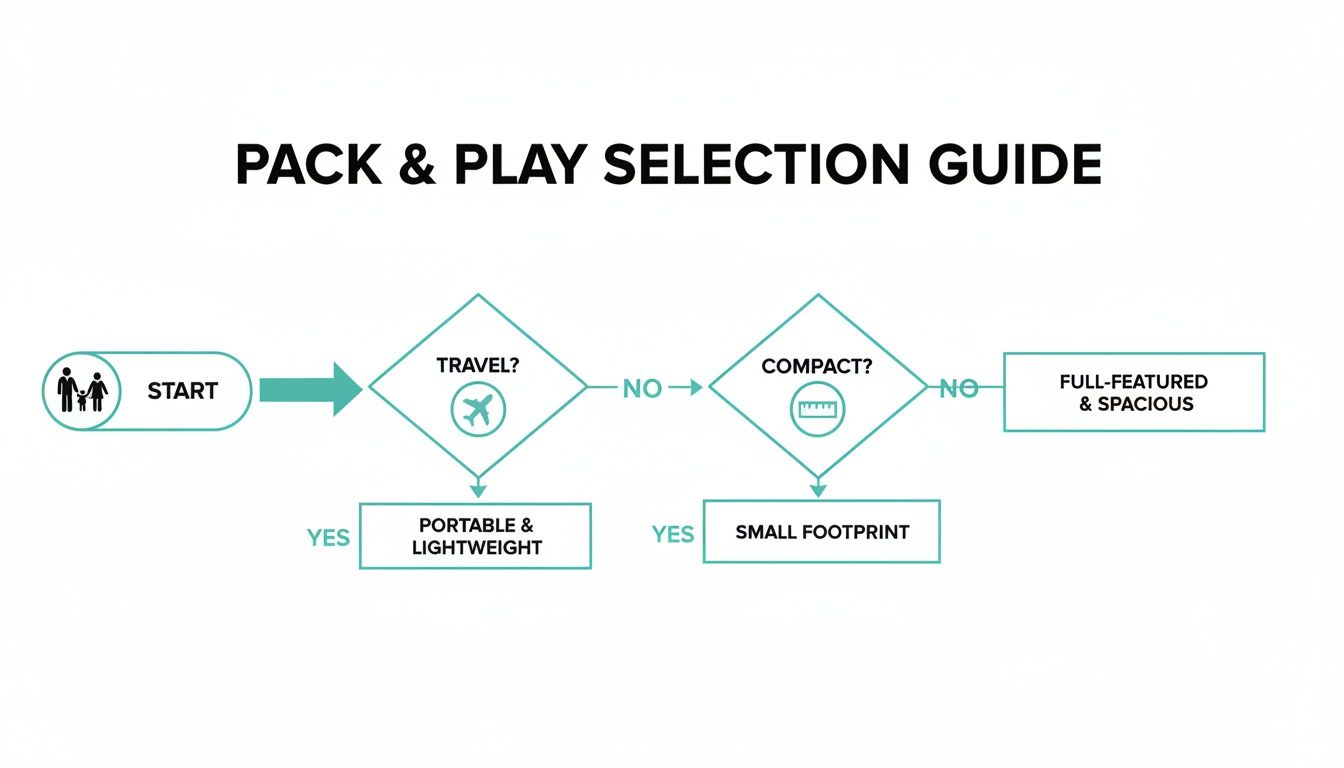
As you can see, if you're constantly on the go, you’ll want to lean toward the more compact and lightweight models. But if your pack and play is staying put, you might get more value out of a multi-functional unit.
Can My Baby Sleep in a Pack and Play Every Night?
Absolutely. It is perfectly safe for a baby to sleep in a pack and play every single night, as long as it meets U.S. safety standards and you're using it correctly. The golden rule is to use only the firm mattress pad that came with the unit. Never add extra padding, pillows, or soft bedding.
Plenty of families use a pack and play as their baby's main crib. It's a fantastic option for smaller spaces or if you want a sleep setup you can easily move from your bedroom to the nursery. As long as it's a modern, certified model, it’s designed from the ground up to be a safe sleep environment.
What Is the Difference Between a Pack and Play Mattress and a Crib Mattress?
The main difference comes down to thickness and fit. A standard crib mattress is a whole different beast—it's much thicker, usually around 5-6 inches deep, and built to fit snugly inside the rigid, slatted frame of a full-size crib.
A pack and play mattress, however, is significantly thinner, often no more than an inch thick. It's essentially a padded board that sits at the base of the playard. This design is completely intentional. Its thin, firm surface and perfect fit are crucial for safety, as they prevent dangerous gaps from forming between the mattress and the playard’s flexible mesh sides.
How Can I Make a Pack and Play More Comfortable Without Compromising Safety?
I know how tempting it is to want to make your baby’s sleep space cozier with a soft blanket or a plusher mattress, but safety has to be the top priority. The safest sleep surface is always a firm, flat one. Here’s how you can add a touch of comfort the right way:
- Use a Fitted Sheet: A tight-fitting sheet made specifically for your pack and play's mattress pad is perfectly fine and can add a little softness.
- Swaddle or Sleep Sack: A wearable blanket is your best friend here. It provides that snug, secure feeling and warmth without the serious risks that come with loose bedding.
- Control the Environment: Think beyond the mattress. A white noise machine can work wonders to soothe a baby, and blackout curtains can signal that it's time for sleep.
Remember, what a baby finds "comfortable" is very different from an adult's preference. For them, a firm, flat surface isn't just comfortable—it's essential for their safety and healthy physical development.
When Is My Child Too Old for a Pack and Play?
It’s time to retire the pack and play when your child hits any of these three milestones, whichever comes first:
- They hit the height limit. This is typically around 35 inches. Once they're taller than that, the risk of them climbing or falling out becomes very real.
- They reach the weight limit. For the main playard, this is usually about 30 pounds. The bassinet attachment has a much lower limit, often around 15 pounds, so be sure to transition them out of that much sooner.
- They become a climber. The moment you have a little escape artist on your hands, the pack and play is no longer a safe space for sleep or play.
Always double-check your model's instruction manual for its specific limits. Once they show you they can climb, it’s time to move them to a toddler bed.
At Hiccapop, we design our products to answer these questions before you even have to ask. Our pack and plays balance premium comfort with uncompromising safety, giving your family a reliable sleep solution for any situation. Discover the difference at https://hiccapop.com.