


Your Guide to 5-Month-Old Sleep Schedules & Patterns
Welcome to the wonderfully chaotic world of parenting a 5-month-old! Just when you think you’ve finally cracked their sleep code, everything seems to shift. Don't worry, you're not going crazy. Five months is a huge transition period where your baby's sleep patterns finally start to mature, leaving the unpredictable newborn phase in the rearview mirror for a more structured rhythm.
What to Expect From Your 5-Month-Old's Sleep
At five months, your baby is hitting some incredible developmental milestones that have a direct impact on their Zs. Think of this as the moment their internal clock, or circadian rhythm, really starts to click into place. It’s also when many of those major baby milestones, like mastering the art of the midnight roll-over, can suddenly appear and throw a temporary wrench in your sleep routine.
This newfound awareness of their surroundings means they're more easily stimulated, but it also means they're becoming more capable of self-soothing. It’s a delicate, beautiful balance. You’ll start to see sleep becoming more organized, with naps and bedtime falling into a much more consistent pattern than before.
How Much Sleep Do They Really Need?
The first step is understanding what's "normal" for this age. According to the American Academy of Sleep Medicine, most 5-month-olds need about 12 to 16 hours of sleep over a 24-hour period. For the average baby, that usually lands right around 14 hours.
This sleep is typically broken down into 10-12 hours at night and another 3-5 hours during the day, spread across three naps. This split really highlights just how critical those daytime naps are for keeping your baby happy and well-rested.
Of course, this isn't about hitting some magic number. Some babies need a little more sleep, while others do just fine with a bit less. The key is to pay attention to your baby's unique cues—like their mood and energy levels—to find their personal sweet spot.
Key Takeaway: Consistency is your new best friend. Sticking to a predictable routine helps signal to your baby that it’s time to wind down, making it much easier for them to settle and drift off to sleep.
To give you a clearer picture, here’s a quick reference guide to what you can generally expect. Think of this as a flexible baseline, not a set of strict rules to live by.
5-Month-Old Sleep At A Glance
| Metric | Typical Range |
|---|---|
| Total Daily Sleep | 12–16 hours |
| Nighttime Sleep | 10–12 hours |
| Daytime Sleep (Naps) | 3–5 hours |
| Number of Naps | 3 naps |
| Wake Windows | 1.5–2.5 hours |
Remember, every single baby is different. This table is a fantastic starting point, but the most important thing you can do is observe your baby's individual patterns and adjust as needed. Your little one is the ultimate expert on their own sleep needs.
Mastering Wake Windows for Better Naps
If there's one concept that can completely change your baby's sleep game, it's wake windows. Think of them as your baby's internal battery timer—the ideal amount of time they can be awake and happy between sleeps. When you nail this timing, your baby goes down for naps easily. But if you miss that window, you're often left with a fussy, overtired little one who fights sleep with everything they've got.
For a 5-month-old, you're typically looking at a wake window between 1.5 to 2.5 hours. It's not a rigid rule, though. The first window of the day is often the shortest, while the one right before bedtime is usually the longest. The real trick is to stop just watching the clock and start watching your baby. You're becoming a sleep detective, and their cues are your clues.
Spotting Your Baby's Unique Sleepy Cues
Every baby has their own little "tells" when they're getting tired. Your mission is to learn their specific sleep language. A schedule is a great guide, but these cues are what tell you it's time to start winding down right now.
Keep an eye out for these classic signs:
- The obvious yawn: This is a big one, but it's often a late-stage signal. If you see it, it's go-time.
- Rubbing eyes or pulling ears: As fatigue sets in, you’ll often see them rubbing their face or tugging at an ear.
- The "thousand-yard stare": Their eyes might glaze over as they zone out and stare into the distance.
- A mood switch: A baby who was just happily playing and suddenly becomes cranky or clingy is practically screaming, "My wake window is closing!"
This infographic breaks down how daytime naps and nighttime sleep work together to create a healthy, well-rested baby.
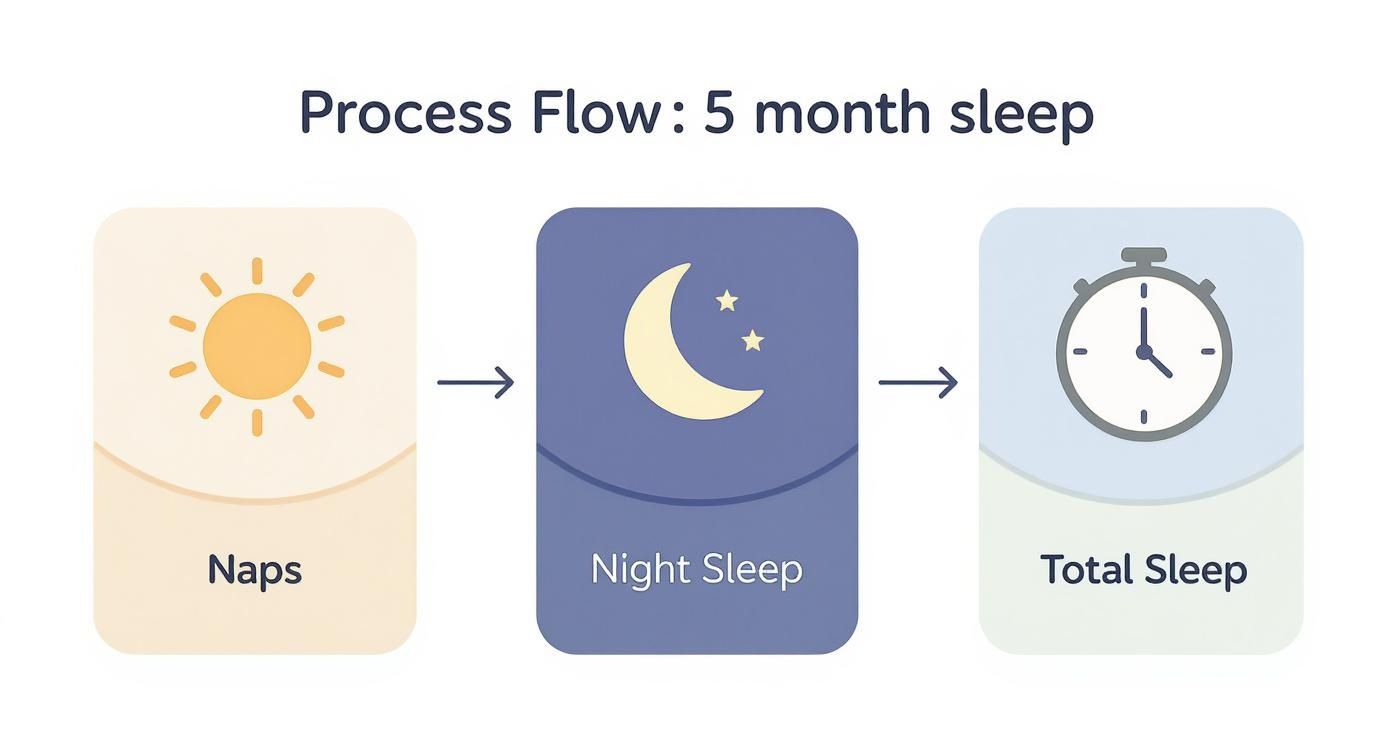
As you can see, organizing the day around these distinct sleep periods helps build a predictable routine and ensures your baby gets the total amount of sleep they need.
The Dreaded Catnap Challenge
Ah, the 30-minute nap. If your baby is a member of this frustratingly common club, you're not alone. This usually happens because they're waking up after a single sleep cycle, which lasts about 30-45 minutes. Our goal is to gently teach them how to connect those cycles for a longer, more restorative nap.
The first place to troubleshoot is the wake window. A consistently short nap might mean your baby was overtired (wake window was too long) or simply not tired enough (wake window was too short) when you put them down. Sometimes, experimenting by stretching a wake window by just 10-15 minutes can work wonders. If you want to dive deeper, you can learn more about wake windows by age right here.
Pro Tip: The best clue is your baby's mood. If they wake up from a short nap happy and babbling, don't sweat it! But if they wake up crying and are still clearly tired, it’s a sign they needed more sleep. Stay consistent with your routine, and they'll eventually learn to lengthen those naps.
Creating a Bedtime Routine That Actually Works
A good bedtime routine is your secret weapon. It’s more than just a sweet way to end the day; it's a powerful signal to your baby's brain that it's time to wind down for a long, restorative sleep. This predictable sequence of events is what helps your little one feel safe, secure, and ready for dreamland.
Let’s get past the basic "bath, book, bed" advice and build a routine that truly fits your family and your baby's unique personality.
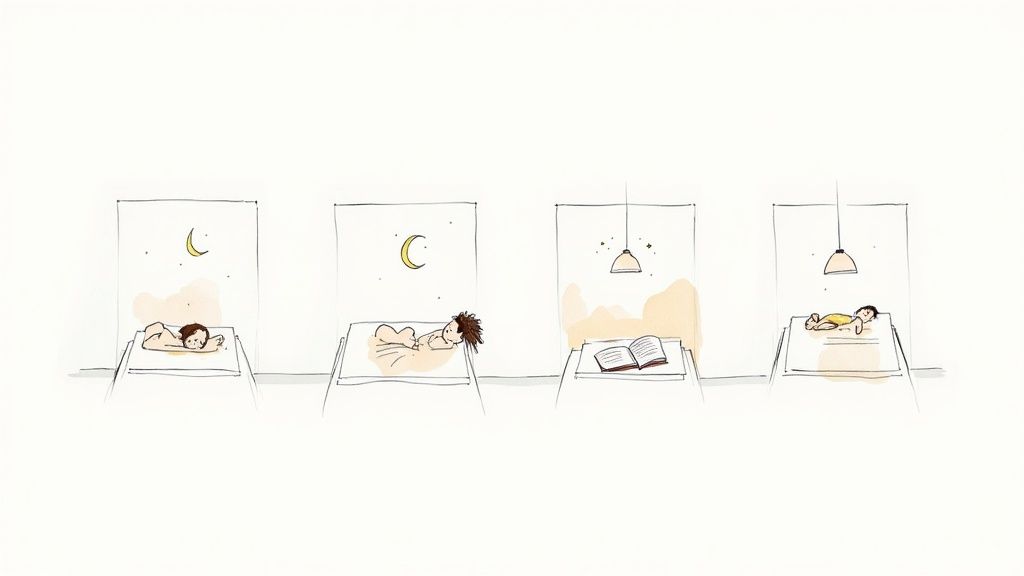
The real magic here is consistency. Every single step, from dimming the lights to humming a specific lullaby, becomes a powerful sleep cue. This predictability is what helps regulate your baby's internal clock, making the transition from a busy, playful day to a calm, sleepy night feel much more natural.
Building Your Perfect Routine
Think of building this routine like creating the ultimate calming playlist. You’re picking a few "tracks" that soothe your baby and playing them in the same order every single night. The goal is to create a peaceful, sleep-inducing atmosphere that lasts about 20-30 minutes.
Here are a few ideas you can mix and match to find your perfect flow:
- A Warm Bath: This one is a classic for a good reason. The slight drop in body temperature after getting out of a warm bath is a natural sleep inducer.
- Gentle Baby Massage: Just a few minutes of calm massage with some baby-safe lotion can be incredibly relaxing and is a fantastic way to bond.
- PJs and a Fresh Diaper: Keep this part of the routine quiet and calm. Use soft lighting and gentle movements.
- Read a Board Book: Pick one or two familiar, quiet stories. The rhythmic sound of your voice is one of the most reassuring things for your baby.
- Sing a Lullaby or Play Soft Music: A consistent song can become one of the strongest cues that it's time to go to sleep.
- A Final Feed: Make sure they have a full tummy for the night by offering a last feed in a dimly lit, quiet room.
Parent Tip: The environment is everything. Use blackout curtains to make the room truly dark and a white noise machine to muffle household sounds. This creates a cozy, womb-like space that helps them drift off and stay asleep.
At five months old, your baby's sleep is making some huge leaps forward. Their circadian rhythm is starting to solidify, and you're beginning to see longer stretches of nighttime sleep. Creating a solid foundation now pays off big time later. Incorporating good sleep hygiene principles is beneficial for everyone in the house. You can find some excellent general sleep hygiene tips that you can adapt for your whole family.
Ultimately, the key is to find what works for your baby and stick to it religiously. Consistency truly is the secret sauce to a routine that actually works.
Navigating Sleep Regressions and Other Hiccups
Just when you think you’ve finally cracked the code to your baby’s sleep, everything can suddenly fall apart. Welcome to the infamous "4-month sleep regression," which, let’s be honest, often hangs around well into the fifth month. It feels like a huge step backward, but it's actually a sign of incredible progress.
So, what's really going on? Your baby's sleep cycles are maturing. They're shifting from that simple newborn sleep pattern to a more complex, adult-like one with distinct light and deep stages. This means they'll naturally have brief wake-ups between cycles. If they haven’t quite figured out how to fall asleep independently, they'll call for you to recreate whatever magic got them to sleep in the first place—be it rocking, feeding, or shushing.
Surviving the Storm
The single most important thing you can do right now is stay consistent. I know it’s tempting to do anything to get more sleep (hello, 3 a.m. car rides), but try your best to stick with your established bedtime routine. This reinforces all those positive sleep cues you've worked so hard to build.
When they do wake up, offer comfort and reassurance. But try to avoid introducing brand-new sleep habits that you’ll just have to break later. A gentle hand on their tummy and a soft, soothing voice might be all they need to settle back down.
Remember This: A sleep regression is a sign of healthy brain development, not a failure on your part. It’s temporary, and your consistency is the anchor that will get you both through it.
Knowing what developmental leaps are coming can be a lifesaver for your sanity. For a closer look at what to expect, our guide to the sleep regression timeline is a fantastic resource.
Other Common Sleep Disruptors
While the big sleep-cycle shift is usually the main culprit, a few other things can throw a wrench in your routine around this age. Keep an eye out for these common issues:
- Teething: It’s no fun. Discomfort from those first little teeth can make any baby fussy, especially at night. Offering a cool teether before laying them down might provide some much-needed relief.
- Growth Spurts: Your baby might just be genuinely hungrier! It’s common for them to need an extra night feeding or two during a growth spurt. Follow their cues and don’t hesitate to feed them if they seem hungry.
- Mastering New Skills: Rolling over is a huge milestone! Unfortunately, your little one might decide 2 a.m. is the perfect time to practice. This excitement can easily interrupt sleep for everyone.
Getting through these phases is tough, and sleep deprivation takes a toll on the whole family. It can be really helpful to understand the connection between rest and well-being by exploring the idea of sleep as an emotional anchor. Staying calm and predictable is truly your best bet.
Thinking About Gentle Sleep Training?
The phrase "sleep training" can sound a little intimidating, can't it? But really, all it means is helping your baby learn the wonderful skill of falling asleep on their own. Around the five-month mark, as their sleep cycles start to mature, you might find yourself wondering if now is the right time to start. The truth is, there's no single right answer, and the best approach is always the one that feels right for your family.
This doesn't have to mean a strict, cry-it-out method, especially if that doesn't sit well with your parenting philosophy. Gentle methods are all about providing comfort and reassurance while slowly, lovingly, giving your baby the space they need to learn how to self-soothe. Think of it as a team effort, where your presence is the most important part of the game plan.
What Gentle Sleep Training Looks Like
Gentle sleep training starts from a simple premise: your baby still needs you. These approaches aren't about leaving your little one to cry alone, but about gradually stepping back your level of intervention. You're their supportive coach, guiding them from the sidelines, not leaving them to figure it all out on their own.
There are several popular philosophies to explore, each with a slightly different take. To help you get a feel for the options, here's a look at some common sleep training approaches.
Common Sleep Training Approaches
This table compares a few different philosophies to help you see what might resonate with your family's style and your baby's temperament.
| Method Type | Parental Involvement | Best For Families Who... |
|---|---|---|
| Pick-Up, Put-Down | Very High. You pick up your baby to soothe them as soon as they get distressed and put them back down once calm but still awake. | Want a hands-on approach and are prepared for a potentially longer, more involved process. |
| The Chair Method | Medium to High. You sit in a chair next to the crib, offering verbal comfort, and gradually move it further away over several nights. | Prefer to stay in the room and provide a reassuring presence without physical contact. |
| Timed Checks (Ferber) | Medium. You leave the room but return at progressively longer, predetermined intervals to offer brief reassurance. | Want a structured plan that allows for some independent settling but doesn't feel like abandonment. |
| Extinction (Cry-It-Out) | Low. After the bedtime routine, you leave the room and don't return until the next morning (barring any real safety/health concerns). | Believe their baby is capable of self-soothing quickly and want a very fast, direct approach. |
Choosing a method is a personal decision. There's no "best" one—only the one that feels sustainable and loving for you and your baby.
My Two Cents: Consistency is the absolute bedrock of any sleep plan. It’s not about perfection, but about predictability. Whichever path you choose, try to stick with it for at least a week. This gives your baby a clear and reliable response they can learn from.
Is Your Baby (and Are You) Ready?
Before you dive in, it’s worth taking a moment to check if the timing is right. Look for signs that your little one is developmentally ready for this next step. Ideally, they should be healthy, not in the middle of a major developmental leap (or sleep regression!), and maybe even showing early signs of self-soothing, like sucking on their hands or rubbing their face.
Just as importantly, you need to be ready, too. Let's be honest, this process requires a deep well of patience and emotional energy. It’s so much easier if you and any partners are on the same page. Having a clear, agreed-upon plan before you start can be a real lifesaver on a tough night.
Remember, the science shows a huge range of what's "normal" for 5-month-old sleep. As you can discover more insights about infant sleep patterns, you'll see just how varied this journey is. This is a transitional phase, so a little extra grace for everyone involved goes a long way.
Ultimately, you are the world's leading expert on your baby. If a particular method just feels wrong, it probably is. Trust your gut and choose a gentle approach that honors your baby's unique personality and your family's values.
Burning Questions About Your 5-Month-Old's Sleep
Even with the best plan, you're bound to have questions. Let's tackle some of the most common ones that pop up for parents around the 5-month mark. Think of this as a little troubleshooting guide for when you're stumped.
Are Night Feedings Still Normal?
Absolutely. It’s completely normal for a 5-month-old to still wake up for a feeding or two during the night. Their little stomachs can only hold so much, and they go through some pretty intense growth spurts around this age that ramp up their hunger.
The real question is whether they're waking out of genuine hunger or just for comfort. If they down a full feeding, they're likely hungry. If they just snack for a minute before dozing off, it might be more of a habit.
One trick I’ve seen work wonders is the "dream feed." You sneak in and feed your baby right before you go to bed, while they're still mostly asleep. This can top off their tank and help you get a longer, uninterrupted stretch of sleep. Just remember to check in with your pediatrician before you decide to drop any night feedings.
How Do I Fix These Super Short Naps?
You’re not alone if you're dealing with the dreaded 30-minute "catnap." This is one of the most frustrating sleep hurdles. It usually happens because your baby is waking up after one sleep cycle and just doesn't know how to link it to the next one yet.
Here are a few things that can make a real difference:
- Nail the Wake Window: An overtired baby will crash and burn, while an undertired baby won't feel enough sleep pressure to stay down. Fine-tuning that wake window is often the biggest key to longer naps.
- Make it a Cave: Seriously, make their room as dark as humanly possible. Blackout curtains are your best friend here. Any little sliver of light can be just enough to signal "time to get up!"
- Try the "Gentle Pause": When they start stirring or fussing at that 30-minute mark, give them a few minutes. Don't rush in. They might surprise you and drift back to sleep on their own.
If they're really struggling to resettle, you can go in and offer some gentle patting or shushing without picking them up. It takes patience and consistency, but helping them learn to connect sleep cycles is a huge win.
Is it Time to Move to a Crib?
If you're wondering, the answer is probably yes. The switch from a bassinet to a crib needs to happen as soon as your baby is getting too big for it, hits the weight limit, or—most importantly—starts to push up on their hands and knees. For safety, you want to move them before they can pull themselves up.
Five months is a great age for this transition. To make it go smoothly, try letting them have some happy playtime in the crib during the day. This helps them see it as a safe, friendly space, not just a place for sleep. You could also start with just naps in the crib for a few days before going for a full night. It breaks the change into smaller, more manageable steps for them.
Figuring out your 5-month-old's sleep can feel like trying to solve a Rubik's Cube in the dark, but you’re doing an amazing job. Every bit of consistency you build now is laying the foundation for healthy sleep habits that will last a lifetime. Remember to be patient with your baby and, just as importantly, with yourself.
What’s the one sleep tip that has been a game-changer for your family? Share your wisdom in the comments below—we’d love to hear it!
At Hiccapop, our goal is to design products that make these moments in parenting a little bit simpler and a whole lot safer.
Explore our collection of baby essentials designed for safety and comfort at hiccapop.com