


A New Mom's Guide to Postpartum Recovery Essentials
Welcome to parenthood. It’s an incredible journey, but let's be honest—it's also messy, overwhelming, and probably not what you pictured. When we talk about postpartum recovery essentials, we’re not talking about filling your house with every baby gadget imaginable. We're talking about giving your body the real support it needs to heal after the monumental task of childbirth.
Navigating Your Fourth Trimester
So, you’ve heard about the fourth trimester. It’s that 12-week whirlwind right after birth when your body is working overtime to heal, your hormones are all over the place, and you’re just starting to figure out this whole new person in your life. It's a period of massive change that often catches new parents completely off guard.
Instead of thinking of it as a race to the finish line, try to see it as a new phase to navigate with plenty of grace and preparation. Stocking up on the right supplies isn’t just a to-do list item; it’s a crucial act of self-care that builds a foundation for your physical and mental health.
Why Preparation Matters
Getting ready for your recovery goes way beyond simple comfort—it’s about your long-term health. Postpartum healing is a serious physical process, and it’s a time when maternal health is, unfortunately, often pushed to the side.
The statistics are sobering. Globally, at least 40 million women face long-term health problems caused by childbirth, impacting more than a third of all mothers. These aren't minor issues; we're talking about chronic pain, pelvic floor dysfunction, and anxiety that can stick around for years. A stunning report from the World Health Organization revealed a massive gap in care, finding no recent high-quality treatment guidelines for 40% of 32 priority postpartum conditions. You can read more about these critical maternal health findings on the WHO website.
This is exactly why you need to take charge of your own recovery. By gathering the right tools ahead of time, you can actively manage pain, support your body as it heals, and make the entire transition into parenthood feel a whole lot smoother.
The goal isn't to "bounce back." It's to heal forward. Your postpartum kit is your personal toolkit for doing just that—giving you what you need to rest, recover, and focus on that beautiful new baby.
In this guide, we'll walk you through everything, from the nitty-gritty healing supplies to setting up your home for a peaceful recovery. We’ll focus on the must-haves that actually make a difference, so you can feel prepared and empowered for this incredible new chapter. Let's build your recovery plan together.
Essentials for Your Physical Healing and Comfort
Your body just did something incredible, and now it's time to give it the care it deserves. Think of this next phase as a dedicated healing project. Gathering the right postpartum recovery essentials isn't about a shopping spree; it’s about arming yourself with the tools to manage pain, stay comfortable, and heal well.
Whether you had a vaginal delivery or a C-section, the first few weeks are all about taking it easy. Your body needs serious rest and some specific gear to recover from the marathon of childbirth.

For Perineal and Vaginal Healing
If you delivered vaginally, the perineal area (the space between your vagina and anus) will be sore, swollen, and in need of some major TLC. Don’t worry, you’ve got this—and these items are about to become your new best friends.
- Peri Bottle: This little squirt bottle is non-negotiable. After birth, wiping with toilet paper is pretty much out of the question. The peri bottle lets you gently cleanse the area with warm water after using the restroom, which is incredibly soothing and keeps everything clean without painful friction.
- Sitz Bath: A sitz bath is just a shallow basin that fits right over your toilet. Soaking in warm water for 15-20 minutes a few times a day can work wonders for reducing swelling, calming hemorrhoids, and promoting blood flow to speed up healing.
- Witch Hazel Pads: These are lifesavers. The medicated pads are perfect for cooling and soothing perineal pain and hemorrhoids. You can even line your maternity pad with them for continuous relief.
- "Padsicles": This DIY trick is a total game-changer. Just smear some aloe vera gel and a few drops of witch hazel onto an overnight pad, fold it up, and pop it in the freezer. The cooling sensation is pure bliss for a sore, swollen perineum.
- Donut Pillow: Let’s be honest: sitting can be really uncomfortable. A donut-shaped pillow takes all the pressure off your perineum, making it much easier to sit down for a meal or feed your baby without wincing.
For C-Section Recovery
Recovering from a C-section means healing from major abdominal surgery. Your focus will be on keeping your incision protected, managing pain, and giving your internal tissues time to mend.
- High-Waisted Underwear: You’ll want nothing touching or rubbing your incision. Soft, high-waisted underwear, preferably made from breathable cotton, sits well above your scar. This prevents irritation and lets air circulate, which is key for healing.
- Belly Binder or Wrap: A gentle compression wrap can feel like a godsend. It gives your weakened abdominal muscles some much-needed support, helps reduce swelling, and stabilizes your core. This simple tool can make moving around—like getting out of bed—feel a lot less intimidating.
- Silicone Scar Strips or Balm: Once your incision is fully closed and your doctor gives you the go-ahead, silicone strips or a gentle scar balm can help. They work to minimize scarring, reduce that maddening itchiness, and keep the skin hydrated as it heals.
As you focus on healing, looking ahead to regaining strength is also important. When you feel ready, an anatomy-first guide to postpartum core strengthening exercises can be an invaluable resource for rebuilding your core safely.
For Breastfeeding and Lactation Support
If you decide to breastfeed, your body requires another layer of support. Getting comfortable and tackling common issues from the get-go can make the entire experience so much smoother.
- Nursing Bras and Tanks: Comfort is everything here. Look for soft, supportive, wire-free nursing bras or tanks that offer easy access for feedings. Your breast size will fluctuate a lot, so choose styles with plenty of stretch.
- Soothing Nipple Cream: Lanolin-based or other natural nipple balms are absolutely essential. They soothe sore, cracked nipples, especially in those early days as you and your baby are still figuring out the perfect latch.
- Nursing Pads: Leaking is a totally normal part of breastfeeding. Whether you go for disposable or reusable, nursing pads will keep you dry and comfortable between feedings, saving your shirts and preventing skin irritation.
- Supportive Pillows: The right positioning is key to a good latch and a happy back. Pillows can make a huge difference. If you still have your pregnancy pillow, you'll find that knowing how a pregnancy pillow can support you during maternity and beyond offers amazing comfort during those long feeding sessions.
Remember, every item on this list is designed to help your body do the important work of healing. Be patient and kind to yourself, and don't think twice about using every tool you can to feel more comfortable.
Creating Your Postpartum Recovery Sanctuary at Home
Your surroundings have a massive impact on how you heal. A calm, organized space can lower stress and help you get the deep rest your body is craving. The goal here isn't to create a perfect, show-home-ready space—it's about setting up a functional, peaceful sanctuary that makes your life easier.
For the next few weeks, your only job is to rest, heal, and bond with your baby. Everything else can wait. Taking the time to thoughtfully arrange your home with postpartum recovery essentials is one of the best things you can do for yourself, saving precious energy for what truly matters.
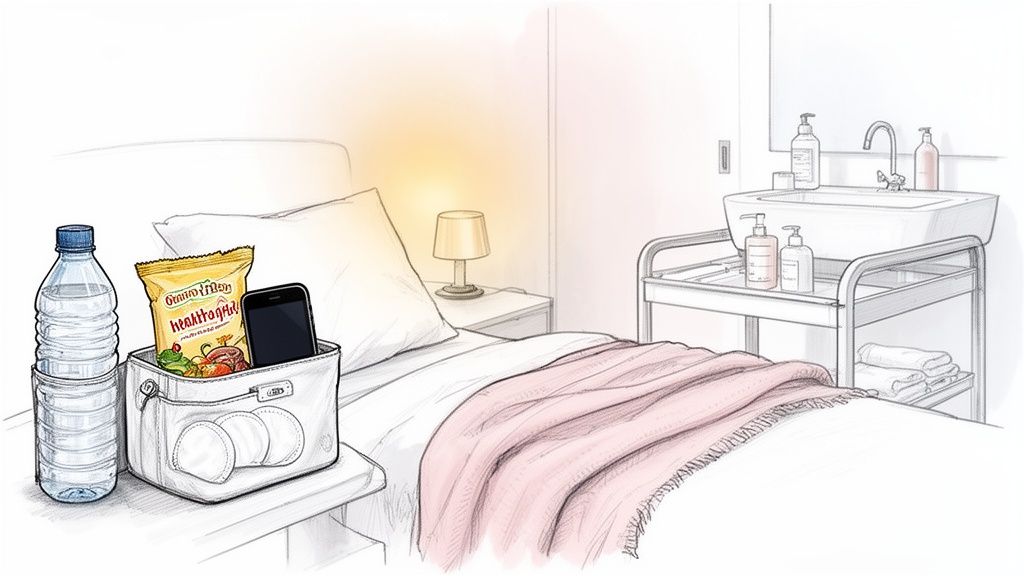
Design Your Recovery Stations
The real secret to a less stressful fourth trimester? Moving as little as possible. You shouldn't have to get up and wander through the house every time you need a snack, your phone charger, or some nipple cream. The solution is simple: recovery stations. Think of these as small, designated areas stocked with everything you need, right where you’ll need it.
Get these set up before the baby arrives. Trust me, your future, sleep-deprived self will be eternally grateful.
The Bedside Command Center
You're going to be spending a lot of time in bed, especially in that first week. Your bedside table (or a little rolling cart parked next to it) needs to become your command center, ready to get you through long nights and restful days.
- Hydration and Fuel: A huge water bottle with a straw is an absolute must, particularly if you're breastfeeding. Keep it next to a stash of easy-to-eat, one-handed snacks like granola bars, nuts, or dried fruit.
- Nursing Supplies: If you plan to breastfeed, have nipple balm, nursing pads, and a burp cloth all within arm's reach. No fumbling around in the dark.
- Comfort and Entertainment: Don't forget your phone charger (an extra-long cord is a game-changer!), lip balm, hand lotion, and a book or headphones for listening to podcasts during those 3 a.m. feedings.
Pro Tip: A simple caddy or basket is perfect for keeping all the smaller items contained. It makes it so much easier to find what you need without turning on a bright light and waking everyone up.
The Bathroom Oasis
Let's be real: trips to the bathroom after giving birth are a frequent and delicate affair. By turning your bathroom into a fully stocked healing station, each visit feels less like a chore and more like a moment of self-care.
Again, a small rolling cart is your best friend here. Park it right next to the toilet so you aren't bending, stretching, or searching for anything when you're feeling sore and vulnerable.
Here’s what to load up on your bathroom cart:
- Perineal Care Must-Haves: Have your peri bottle filled and ready to go. You’ll also want a stack of heavy-duty maternity pads, witch hazel pads, and any perineal spray or foam you're using.
- Pain Management: Keep it stocked with over-the-counter pain relievers (whatever your doctor approved), stool softeners to make things less intimidating, and any other prescribed medications.
- Comfort Extras: A few pairs of soft, high-waisted mesh or cotton underwear and a small towel designated just for patting the area dry can make a world of difference.
Setting up these stations is about more than just organization. It’s about anticipating your own needs and creating a system that supports you, giving you the mental and physical space to focus on healing and settling into your new life.
Nourishing Your Body for Recovery and Energy
The fuel you put in your body after giving birth is hands-down one of the most powerful postpartum recovery essentials you can have. Eating well isn't about "bouncing back" or some crash diet; it's about giving your body the raw materials it needs to heal, make milk (if you're breastfeeding), and somehow function on a sleep schedule that makes no sense.
Let’s be honest—the last thing on your mind is cooking a five-course meal. So, this is all about making good nutrition easy and practical.
Think of your body as a construction site after a massive project. You need a steady supply of high-quality materials—protein, iron, vitamins, and healthy fats—to rebuild and repair everything. The right food can be a game-changer for managing that bone-deep fatigue that comes with new parenthood.

Key Nutrients for Postpartum Healing
You don't need a complicated, color-coded meal plan. Just knowing which nutrients to prioritize can make a huge difference in how you feel day-to-day.
- Protein: This is your best friend for tissue repair. Aim to get a good source of protein with every meal and snack. It helps heal everything from a perineal tear to a C-section incision. Think eggs, Greek yogurt, lentils, chicken, and fish.
- Iron: You lose a lot of blood during delivery, which can tank your iron levels and lead to that classic postpartum exhaustion. You can start replenishing your stores with iron-rich foods like red meat, beans, spinach, and fortified cereals.
- Healthy Fats: Foods packed with omega-3s—like salmon, avocados, nuts, and seeds—are fantastic for fighting inflammation and clearing some of that "mom brain" fog.
Hydration Is Non-Negotiable
It's so easy to get dehydrated when you're caught up in the baby bubble. Suddenly you have a headache, you're exhausted, and you feel foggy—sound familiar? Staying hydrated is crucial for healing, keeping your energy up, and maintaining your milk supply if you're nursing.
Breastfeeding moms need a surprising amount of extra water, often around 30–40 ounces more per day. The simplest trick? Keep a giant water bottle with a straw right next to you, always. Every time you sit down to feed the baby, take a long drink.
Make hydration effortless. Keep a filled water bottle at every single one of your recovery and feeding stations. If it's within arm's reach, you're far more likely to drink it.
Smart Strategies for Easy Eating
Now for the million-dollar question: how do you actually eat well when you’re sleep-deprived and have a baby attached to you? The secret is making good food just as easy to grab as junk food.
One-Handed Snacks Are Your Best Friend
You are going to spend an unbelievable amount of time with a baby in your arms. Stockpile snacks you can eat with one hand so you're not trying to use a fork while juggling a newborn.
- Trail mix or a handful of nuts
- Cheese sticks
- Hard-boiled eggs (peel a few ahead of time)
- Protein or granola bars
- Whole fruits like bananas and apples
- Individual cups of yogurt or applesauce
The Magic of Freezer Meals
This is truly a gift your pregnant self can give to your postpartum self. Before the baby arrives, spend a little time prepping and freezing nutrient-dense meals. Things like soups, stews, chilis, and casseroles work perfectly. When you're so tired you can barely think, pulling a real meal out of the freezer feels like you've won the lottery.
Caring for Your Postpartum Mental and Emotional Health
The fourth trimester is an emotional rollercoaster, and taking care of your mental health is every bit as critical as your physical healing. We spend a lot of time preparing with tangible postpartum recovery essentials like perineal spray and nursing pads, but your emotional well-being is the glue holding it all together.
Feeling overwhelmed, weepy, or anxious is not just okay—it's completely normal. This isn't about being a superhero mom who has it all together. It's about giving yourself grace as you navigate massive hormonal shifts, profound sleep deprivation, and a whole new identity. Putting your mental health first is one of the most important things you can do for yourself and your new baby.
Understanding the Baby Blues vs. Postpartum Depression
It’s so important to know the difference between the common "baby blues" and more serious conditions like postpartum depression (PPD) or anxiety (PPA). Most new moms get a case of the baby blues, which usually show up a few days after birth and stick around for about two weeks.
Think of it as emotional whiplash from the sudden drop in hormones. Symptoms often include:
- Mood swings and crying for what feels like no reason
- Feeling irritable, anxious, or just "off"
- Trouble sleeping, even when the baby is asleep
- A feeling of being totally overwhelmed
These feelings are usually temporary and tend to fade on their own. But if they hang on for longer than two weeks or start to feel more intense, it could be a sign of something more.
Postpartum depression and anxiety are much more persistent and severe. They won’t just go away and can make it difficult to care for yourself and your baby. Keep an eye out for lasting sadness, severe anxiety or panic attacks, feelings of worthlessness, or thoughts of harming yourself or your little one. If any of this sounds familiar, reaching out for help is the strongest, bravest thing you can possibly do.
Actionable Essentials for Your Well-Being
You can be proactive about protecting your mental health with a few simple, intentional practices. These aren't huge, time-consuming tasks; they are small, consistent acts of self-care that make a real difference.
- Build Your Support System: You were never meant to do this alone. Before things get tough, identify a few trusted people—your partner, a best friend, your sister—who you can call without judgment. Let them know you might need to vent or ask for a hand.
- Prioritize Small Bursts of Rest: The classic advice to "sleep when the baby sleeps" can feel like a cruel joke. A more realistic goal is to aim for short, restorative breaks. Even 15-20 minutes of quiet time with your eyes closed or listening to music can reset your nervous system. The quality of your sleep has a huge impact on your emotions, so it's worth learning about how your mattress affects your mood and mental health.
- Get a Little Sunshine and Movement: A short walk around the block can feel like a mini-vacation. The combination of gentle movement, fresh air, and sunlight is a natural mood-booster and helps you feel less isolated.
- Lower Your Expectations: The house is going to be a mess. You might live in sweatpants for a month straight. Dinner could be a bowl of cereal, and that's okay. Let go of perfection and embrace "good enough." Your only job right now is to heal and bond with your baby.
Reaching out for help is a sign of incredible strength, not weakness. You are not alone in this, and support is available and accessible.
The need for mental health support is real and widespread. In 2023, Postpartum Support International's hotline handled over 6,500 calls and texts each month from parents seeking free support. This isn't a niche problem—it's a critical public health issue, especially when you learn that maternal suicide tragically accounts for 20% of postpartum deaths in the U.S.
The crisis is even more stark for women of color, with the maternal mortality rate for non-Hispanic Black women at a devastating 55.3 deaths per 100,000 live births. You can see more of these vital postpartum support statistics from their 2023 Impact Report. For more guidance, our guide on five tips for coping with postpartum depression is a great place to start. Remember, your mental health is a non-negotiable part of your recovery.
Your Practical Postpartum Timeline and Hospital Bag
As your due date gets closer, a little preparation can make a world of difference in managing those last-minute jitters. Instead of a frantic scramble, think of it as a strategic mission. Having a clear, time-based plan means you can walk into the hospital feeling confident and return home ready for the beautiful chaos of a new baby.
This is more than just tossing a few things in a bag. It's about mindfully gathering your postpartum recovery essentials for each distinct phase of your journey. Let's start with a solid hospital bag checklist and then map out a realistic timeline for those first few months at home.
The Ultimate Hospital Bag Checklist
The golden rule? Have your bag packed and ready to go by 36 weeks. This little bit of foresight means you won't be caught off guard if your baby decides to arrive ahead of schedule. Keep it by the door or in the car—one less thing to worry about when the time comes. We've broken it down into three key categories so nothing gets left behind.
For Mom
This is your personal comfort and healing kit. Think of it as everything you'll need to feel human again.
- Comfy Clothes: A cozy robe, a nursing-friendly nightgown or pajamas, and some loose-fitting loungewear for the trip home are absolute musts. Don't forget grippy socks or slippers for those first tentative walks down the hospital hallway.
- Healing Supplies: The hospital will give you the basics, but bringing your own can feel so much better. Pack some high-waisted underwear, your preferred brand of maternity pads, a peri bottle, and nipple cream if you plan on breastfeeding.
- Little Luxuries: Lip balm is a game-changer (hospital air is incredibly dry!). Bringing your own pillow from home, an extra-long phone charger, and your favorite snacks will feel like the height of luxury when you need it most.
For Baby
Your newborn doesn't need a lot, but a few key items will make their first few days extra cozy and safe.
- Going-Home Outfit: Pack one or two soft outfits that are right for the weather. It’s always smart to have a backup on hand for those inevitable spit-ups.
- Swaddle and Hat: While the hospital provides blankets, bringing your own soft swaddle can be a great comfort for both you and the baby. A snug little hat will help keep them warm.
- Car Seat: This is non-negotiable. Make sure it’s properly installed in your car well before you go into labor. You literally can't leave the hospital without it!
For Your Partner
Don't forget your support person! They need a bag, too. Be sure to pack a change of clothes, toiletries, plenty of snacks, a reusable water bottle, and something to keep them occupied during any downtime. For an even more detailed list, check out our complete guide on what to pack in your hospital bag for more pro tips.
Navigating the First 12 Weeks
The fourth trimester is a journey, not a sprint. Knowing what to expect can help you feel more in control as your body and life change.
The postpartum period is a gradual unfolding. Each phase brings new challenges and new joys. Knowing what's coming helps you focus on healing and bonding, not just surviving.
The First Week: This is peak recovery mode. Your body will be sore, you'll experience heavy bleeding (called lochia), and you’ll be bone-deep tired. Your essentials are all about physical healing: think padsicles, your trusty peri bottle, sitz baths, and any pain relievers your doctor recommends.
The First Month (Weeks 2–4): The initial intensity starts to fade, but you are very much still in the healing phase. You’ll be navigating breastfeeding challenges, hormonal shifts, and deep fatigue. Your must-haves now shift toward support: nursing pads, nipple cream, easy one-handed snacks, and a massive water bottle you can keep nearby at all times.
Weeks 5–12: You’re probably starting to feel more like yourself, though your body is still adjusting. Your doctor might clear you for gentle exercise. This phase is all about gentle rebuilding and leaning on your support system. Essentials now might include a comfortable belly binder for core support, a good baby carrier for getting out for walks, and a solid network of friends or family to call on.
Got Questions? We’ve Got Answers on Postpartum Recovery
Stepping into the postpartum period feels like venturing into uncharted territory, and it’s totally normal to have a million questions. Getting some straight, honest answers can make all the difference, helping you feel more in control and ready for what’s ahead. Let’s tackle some of the most common things new parents wonder about.
How Long Does Postpartum Recovery Really Take?
Okay, let's get real. You’ll hear a lot about the "fourth trimester," which is the first 12 weeks after birth. And while that’s a key window, it's not a magic finish line.
The first six weeks are usually the most intense part of the physical healing process. But things like hormonal shifts, emotional adjustments, and the deep healing of internal tissues? That can take six months, a year, or even longer. Every single body is different.
The absolute best thing you can do is give yourself grace and patience. Forget what you see on social media—your journey is your own. Focus on small, steady steps forward instead of racing toward some arbitrary date on the calendar.
It’s a good reminder that recovery happens in stages. What you need in week one is very different from what you'll need at the three-month mark.
What Are the Most Overlooked Essentials?
Everyone will tell you to get the perineal spray and giant pads, but the real game-changers are the things that make your life just a little bit easier. Think about what supports your comfort and your sanity.
A giant water bottle with a straw is non-negotiable—you'll be glued to a chair feeding a baby, and you need to stay hydrated. Setting up little "snack stations" around the house with things you can eat with one hand is another pro move.
And please, don't forget about yourself. A subscription to your favorite streaming service for those 3 AM wake-up calls, or comfy loungewear that doesn't pinch or squeeze, can feel like the ultimate luxury. Even better? Do the work before the baby arrives to find a therapist or a new parent support group. Your mental health is just as important as your physical healing.
The most valuable postpartum essentials are often the ones that save you time, energy, and mental space, allowing you to focus on healing and bonding.
When Should I Pack My Hospital Bag?
Aim to have your hospital bag packed and ready to go by 36 weeks pregnant. Seriously. Babies come on their own schedule, and having this one thing checked off your list will bring you so much peace of mind.
Once it's packed, put it somewhere you can't miss it—by the front door or even in the trunk of your car. Pro tip: give your partner or support person a quick tour of the bag's contents. That way, you won't have to explain where the lip balm is while you're in the middle of a contraction.
At Hiccapop, we believe parenting should be simpler, not more complicated. We put that philosophy into every product we design. You can check out our full line of thoughtfully created baby and toddler essentials on our website.