


How to Transition from Crib to Bed: A Simple Guide
It's one of the biggest milestones in your toddler's young life: moving from the cozy, familiar world of a crib to a "big-kid" bed. For them, it’s a massive step toward independence. For you, it can be a little emotional!
This guide is here to walk you through it, making the whole process feel less like a chaotic leap of faith and more like a confident, even joyful, step forward for your family.
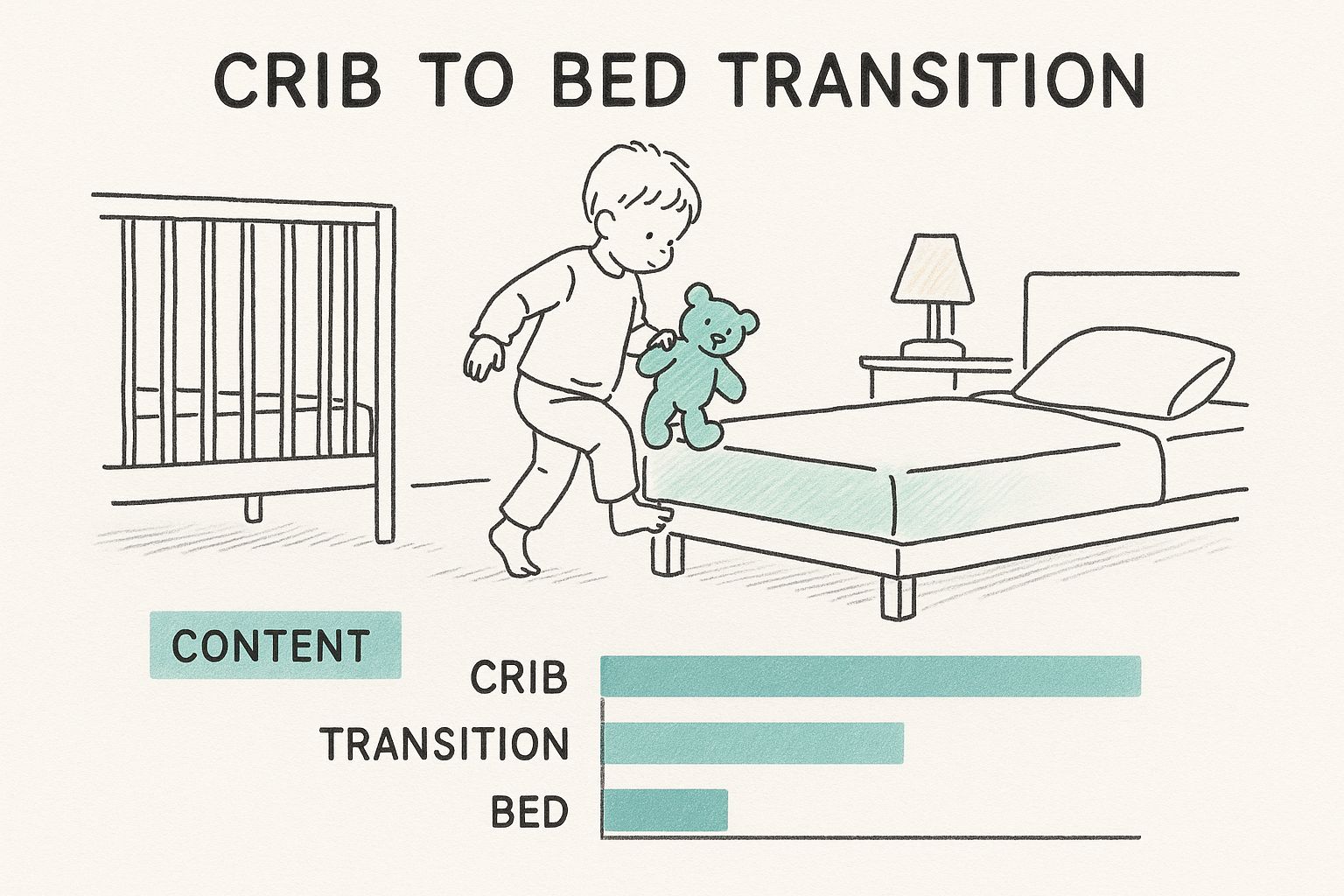
The key to a smooth transition isn't about hitting a magic number on the calendar. While it typically happens between 2 and 3.5 years old, it’s really all about spotting the signs that your child is ready.
When Is the Right Time to Move to a Toddler Bed?
There's a lot of pressure out there to make the switch early, but there's absolutely no need to rush. In fact, research shows that plenty of parents wait.
One revealing study found that 63% of toddlers aged 18 to 24 months are still happily sleeping in their cribs. That number drops to 34% for kids between 24 and 30 months, and by the time they hit three, only 13% are still in a crib. This highlights a natural progression that happens over time, not overnight. You can dive deeper into the full research on toddler sleep transitions to learn more.
Deciding when to make the move means looking at where your child is developmentally. An 18-month-old has very different impulse control than a three-year-old, and that makes a huge difference.
The goal isn't just to get them into a new bed. It's to preserve—and maybe even improve—their sleep. Pushing the transition before they're cognitively ready can easily backfire, leading to nighttime wandering and epic bedtime battles.
To help you get a clearer picture, it helps to weigh the pros and cons based on their age.
When to Transition Pros and Cons by Age
This quick-glance table breaks down the typical advantages and disadvantages of making the switch at different age ranges.
| Age Range | Potential Pros | Potential Cons |
|---|---|---|
| 18–24 Months | Addresses immediate safety concerns if your toddler is already climbing out of the crib. | They have very little impulse control; expect frequent out-of-bed trips, which can disrupt sleep for everyone and pose safety risks. |
| 2–3 Years | They can understand rules and boundaries better; many get genuinely excited about their "big kid" status. | The "terrific twos" can introduce power struggles. That newfound freedom might be too tempting to resist for some personalities. |
| 3+ Years | They have an excellent cognitive understanding of the change, can follow expectations, and can be an active participant in the process. | May have a stronger emotional attachment to their crib, making the change a bigger deal if it isn't handled with extra care and excitement. |
Ultimately, this table is just a guide. You are the expert on your child, and they will give you the real cues. In the next section, we’ll dive into the specific signs that tell you it’s truly time to start planning the move.
Recognizing the Real Signs of Readiness
So, how do you know if your pint-sized roommate is truly ready to leave their cozy crib behind? Timing is a huge piece of this puzzle. Move too soon, and you could turn your peaceful evenings into a nightly game of whack-a-mole—and nobody wants that. It’s about more than just age; it’s about spotting the genuine developmental cues that say, “I’m ready.”
This transition is a major milestone, and it happens across a pretty wide age range. While most toddlers stay in cribs until at least 18 months, many make the move sometime during their second or third year. In fact, psychology data shows that about 37% of toddlers between 18 and 22 months have already switched to a bed. That number jumps to 66% for those aged 24 to 29 months.
This just goes to show how common it is for this change to happen in that second year, but it doesn't mean it's the right time for everyone. You can dive deeper into the psychology behind this major toddler transition to see how the numbers line up with developmental stages.
The Great Escape Artist
Let’s start with the most obvious sign: climbing. If your toddler is treating their crib like a jungle gym and has successfully scaled the rails, it’s a major safety issue. At this point, the crib is actually more dangerous than a bed, and the decision is practically made for you.
But "climbing" can be a bit of a gray area. A single attempt where a leg barely makes it over the rail might not be a red alert just yet. You can often buy yourself a little more time by:
- Lowering the mattress to its absolute lowest position.
- Using a sleep sack, which makes it much harder for them to hoist a leg up high enough.
- Removing any large stuffed animals or bumpers they might be using as a launchpad.
If they're still pulling off Mission Impossible-style escapes even after you've made these adjustments, it's time to transition for safety's sake.
Listening for Verbal and Cognitive Clues
Beyond the acrobatics, your child’s cognitive and emotional readiness are often the most reliable indicators. Can they understand simple instructions and boundaries? A child who can grasp the concept of "we stay in our bed until the morning" is far better equipped for this newfound freedom.
Pay close attention to what they're saying. If your toddler is pointing at their older sibling’s bed and saying, “I want big bed!” or asking about it consistently, that’s a fantastic sign. This shows they are not just physically ready but emotionally invested in the idea, which makes the whole process so much smoother.
Key Takeaway: A child asking for a bed is a green light. A child climbing out of the crib is a blinking red safety warning. Both mean it's time, but the motivation is different.
Common False Alarms
Sometimes, we parents feel pressured to make the switch for reasons that aren't actually about the child's readiness. It’s easy to misinterpret signs or feel rushed by external factors.
Here are a few common "false alarms" where it's often better to wait:
- A New Baby is Coming: This is a classic reason for moving the older child out of the crib, but it can backfire spectacularly. Rushing the transition can make your toddler feel displaced. If you can, try to make the switch at least 2-3 months before the baby arrives or wait until 3-4 months after to avoid piling on too many changes at once.
- They Just Look "Too Big": If your child is still sleeping soundly and hasn't hit the manufacturer's height or weight limit (usually around 35 inches tall), there’s no need to move them just because they look a little cramped. Toddlers often find a lot of comfort in that cozy, enclosed space.
- Potty Training: While it seems logical to move them to a bed so they can get up to use the potty, these are two massive developmental milestones. In my experience, it’s often best to tackle one at a time to avoid completely overwhelming them.
Recognizing these subtle cues and false alarms helps you make a confident choice based on your child's unique pace, setting the stage for a positive transition instead of a stressful one.
Creating a Safe and Inviting Big Kid Room
So, you’ve decided the time is right. Now the real fun begins: turning that nursery into a big-kid haven. But before you get lost in picking out dinosaur sheets, your absolute top priority has to be a full-scale safety audit. A bed without rails gives your toddler a backstage pass to their entire room, and you need to see that room through their curious, climb-happy eyes.
This new freedom is a huge developmental leap, and it changes everything. Your goal is to make their entire room as secure as their old crib used to be.
The Great Toddler-Proofing Mission
First things first, get down on your hands and knees. I’m serious. Seeing the world from their perspective will reveal a universe of potential hazards you’d never notice from five feet up.
Here’s your safety checklist:
- Anchor Heavy Furniture: This is non-negotiable. Dressers, bookshelves, and even changing tables must be securely anchored to the wall. Toddlers are surprisingly strong and see open drawers as a personal staircase.
- Secure Cords: The cords on window blinds are a serious strangulation risk. Your best bet is to switch to cordless blinds, but if you can't, use a cord cleat to wrap them up high and completely out of reach.
- Cover Electrical Outlets: Every single unused outlet needs a childproof cover. Go for the sliding covers or full outlet boxes; those little plug-in caps can become a choking hazard once your little escape artist figures them out.
- Manage Wires: Tuck away all electrical cords from lamps, monitors, and sound machines behind furniture or run them through cord concealers.
Once the room itself is on lockdown, think about the exits. A safety gate at the bedroom door is a fantastic tool, especially in the early days. It keeps them from wandering the house at 2 AM and gives you priceless peace of mind.
A childproofed, locked room simply becomes a big crib. He slept in a crib for 3+ years, and this is a larger, safer space for him to sleep.
Choosing the Right Bed and Mattress
Now for the main event—the bed! You’ve got a few solid options, and there’s no single "right" answer here. You can start with a dedicated toddler bed (which uses their old crib mattress) or jump straight to a twin or even a full-sized bed.
Picking the right mattress is fundamental to their comfort and sleep. For a deep dive, check out this ultimate guide for choosing a mattress that breaks down all the different types and features to look for.
No matter which size bed you choose, safety rails are your best friend. Even the most motionless sleeper can roll out of bed by accident. Bed rails provide a gentle, reassuring barrier that keeps them tucked in safely without making them feel caged.
Making the Big Bed a Big Deal
With all the safety stuff handled, it's time to build the hype. You want this to feel like a fun promotion, not a scary eviction from their cozy crib. Frame it as an exciting milestone they’ve earned by growing so big!
Here are a few ways I’ve seen work wonders:
- Get them involved in the process. Let them "help" you build the bed (even if it's just handing you a single screw) or let them pick out their new bedding. Giving them a choice between two pre-approved options—say, a space theme or a jungle theme—is a classic parenting win. It gives them a sense of ownership.
- Plan a "Big Kid Bed Reveal." Why not make it an event? Wrap the new bedding like a present or put a big bow on the headboard. Celebrate with a special "big kid" breakfast or a fun family activity to mark the day.
- Bridge the old and the new. Don't get rid of everything familiar at once. Bring their favorite stuffed animals, their special lovey, and the blanket they’ve always used into the new bed. This creates a sense of continuity and comfort.
- Read books about the transition. There are tons of great stories about characters moving to a big bed. Reading these together helps normalize the experience and gives them the words to talk about how they're feeling.
By turning the room prep into a celebration, you transform a potentially anxious moment into a powerful rite of passage. You're not just changing where they sleep; you're helping them create a space that feels uniquely theirs.
Your Practical Transition Playbook
Okay, you've toddler-proofed the room and built up the excitement—now it's showtime. This is where the rubber meets the road, and you have a couple of solid strategies to choose from. The method you pick should really come down to your child’s personality and how they usually handle big changes.
There's no single "right way" to do this, only the way that feels right for your family. Some kids are ready to dive in headfirst, while others need a little more time to dip their toes in the water.
Choosing Your Transition Method
So, what kind of kid do you have? A cannonball-off-the-diving-board type, or more of a slow-wader? Your answer will probably point you toward one of these two tried-and-true approaches.
-
The "Cold Turkey" Switch: This is the most common route, and for good reason. You take apart the crib, set up the new bed, and that's it—a one-and-done deal. This works beautifully for kids who are genuinely excited and tend to roll with change. The secret here is to completely remove the crib from the room. Out of sight, out of mind. It prevents confusion or a last-minute plea to go back.
-
The Gradual Introduction: If you have a more hesitant or sensitive child, this can be a much gentler path. You start by just putting the new mattress on the floor in their room for a few days. Let it become a familiar spot for reading books or quiet play. Once they’re comfortable with it, you can try a nap there, then eventually move to overnight sleep before adding the bed frame.
No matter which path you take, consistency is your superpower from day one. Your toddler’s brain is wired to test boundaries; it’s not defiance, it’s developmental science! When all caregivers present a united front, it sends a clear and comforting message that this new setup is here to stay.
Scripting the Conversation
The words you use can make all the difference. Keep your language positive, simple, and confident. Long, drawn-out explanations will go right over a toddler's head. What they need are clear, reassuring statements that tell them everything is okay.
For some kids, especially those who need a bit more help understanding what’s happening, using a social story creator can be a game-changer. These simple, visual stories are fantastic for explaining new routines and expectations in a way they can easily grasp.
Here are a few simple scripts to keep in your back pocket:
- The Night Before: "Tomorrow is your big day! We're going to set up your amazing big-kid bed. You're getting so big, and you've totally earned this!"
- The First Bedtime: "Time for bed. Let’s get you tucked into your cozy new bed. Mommy and Daddy are right down the hall, just like always. We love you, and we’ll see you in the morning when your clock turns green."
- Reinforcing the Rules: "The rule at bedtime is that we stay in our bed so our bodies can rest and grow strong. I know you can do it!"
Notice what’s missing? Any version of "don't get out of bed." Planting that idea can sometimes backfire and turn it into a tempting new game. Instead, focus on the positive expectation: staying in bed is the goal.
Anchoring the Change with a Solid Routine
Your bedtime routine just became the most important part of your day. It’s the predictable, calming anchor in a sea of change. It signals to your child’s brain that sleep is coming, no matter what they’re sleeping in.
A great routine doesn't have to be complicated. The real goal is connection and calm.
Here’s what that might look like:
- Calm-Down Bath: A warm bath is a classic for a reason—it’s perfect for relaxing tired little muscles.
- PJs and Potty: The practical steps of getting ready for the night.
- Two Bedtime Stories: Make sure you read them in the new bed to start building positive feelings about the space.
- Songs and Cuddles: A few minutes of quiet snuggling and a favorite lullaby can work wonders.
- Final Tuck-In: A last kiss, a confident "I love you, see you in the morning," and then you walk out.
It’s also interesting to see what the data says about this transition. Research shows that while the move is inevitable, crib-sleeping is actually linked to better sleep. One study across five countries found that toddlers in cribs went to bed earlier, fell asleep faster, and woke up less.
The findings show that 63.4% of toddlers aged 18-24 months still sleep in cribs, a number that drops to just 12.6% by age three. You can check out the full study on toddler sleep patterns for more details. This just reinforces why a rock-solid routine is so critical—it helps you carry those good sleep habits over to the new bed.
Finally, a quick note on safety: bed rails are a parent's best friend during this time. They provide a physical barrier that prevents accidental tumbles, which are almost guaranteed in the first few weeks. If you're looking for practical ways to keep them secure, our guide on how to stop a sleeping toddler from falling out of bed has some great solutions.
What to Do When Things Go Sideways
Even if you’ve followed every piece of advice to the letter, you’re going to hit a few bumps in the road. That’s just part of the process. One minute you’re high-fiving your partner over a successful first night, and the next you have a tiny visitor standing by your bed at 2 AM.
Don't panic! Setbacks are completely normal. Your toddler just discovered a new superpower: freedom. Their job is to test the limits of that freedom, and your job is to hold the boundaries with calm consistency. You’re teaching them that their room is a safe, cozy place for sleep, even if they can get out of bed.
The Midnight Wanderer
This is the classic transition challenge. You put your child to bed, only to hear the pitter-patter of little feet coming down the hall just minutes later. It’s startling, and frankly, exhausting. But how you react in that moment is everything.
Your best friend for this scenario is the "silent return."
When they appear at your bedside, don’t engage. No long conversations, no negotiations, and definitely no rewards (like a trip to your bed). Simply take their hand, say a calm and neutral phrase like, "It's sleepy time," and lead them right back to their bed. Tuck them in, say goodnight, and leave.
The first few nights, you might do this ten, twenty, or even thirty times. The key is to be as boring and predictable as a robot. They'll quickly learn that getting out of bed doesn't result in any fun or attention.
Your In-the-Moment Plan: The silent return. Be gentle, be firm, and be boring. The less reaction you give, the less appealing it becomes for them to leave their room.
The "Jack-in-the-Box" Bedtime Routine
Some toddlers turn bedtime into a game of popping out of bed a dozen times. They need one more sip of water, they have to use the potty (again), their blanket feels "weird"—the list of creative excuses is endless. This isn't just about testing freedom; it's often a form of separation anxiety or a simple stalling tactic.
The trick here is to get ahead of their requests and clearly state the expectations before you leave the room.
- Run Through a Bedtime Checklist: Do it together. "Did we have our water? Yep. Did we go potty? Yep. Do you have Teddy? Yep. Awesome, we have everything we need to stay in bed all night!"
- Set the Expectation: As you give them a final tuck-in, say confidently, "Mommy and Daddy are all done for the night. We love you, and we'll see you in the morning." This closes the door on any potential negotiations.
By tackling all their needs upfront, you’re not leaving any wiggle room. For more ways to build a secure sleep space, check out these safe sleeping tips for toddlers to help reinforce that their room is a place for rest.
The Sudden Onset of Bedtime Fears
It’s incredibly common for new fears to pop up during this transition. Without the familiar, cozy rails of a crib, the world can suddenly feel a lot bigger and a little scarier. You might hear about monsters under the bed or spooky shadows in the corner for the first time.
Dismissing these fears won’t work. You have to validate their feelings while still holding the boundary that bedtime is for sleeping in their own bed. Acknowledge the fear, but don't feed into it. Try saying something like, "I hear that you feel scared. Let's make sure your room is safe together."
Here are a few practical ways to empower them:
- Monster Spray: A simple spray bottle with water (and maybe a drop of lavender) can become a powerful tool. Let them spray under the bed and in the closet to "chase the monsters away."
- A "Guard" Stuffy: Appoint one of their stuffed animals as the official nighttime protector who will stand watch while they sleep.
- A Comforting Glow: A gentle, warm-colored nightlight can offer a lot of reassurance without disrupting the sleep hormone melatonin.
Your goal is to give them tools to manage their own anxieties. You're showing them you understand while also showing them they're capable—all while reinforcing the main rule: we stay in our bed. These hurdles can be trying, but I promise they are temporary. With patience and a consistent game plan, you’ll get through it.
Got Questions? We’ve Got Answers.
Even with the best-laid plans, a few "what ifs" are bound to creep in. That’s perfectly normal! Moving from a crib to a bed is a huge step, and thinking through all the possibilities will help you feel ready for whatever comes your way.
Let’s dig into some of the most common questions we hear from parents who are right in the middle of this transition.
What if My Toddler Climbs Out of the Crib Before They Seem Ready?
This is the one scenario where safety has to override everything else. The moment your child becomes a little escape artist, the crib is no longer a safe space. It’s officially a hazard.
Your first line of defense is to make climbing as tough as possible.
- Drop the crib mattress to its absolute lowest setting.
- Clear out any potential launchpads—think large stuffed animals, pillows, or bumpers.
- A sleep sack can be a game-changer. It’s much harder for them to hoist a leg over the rail when they’re zipped in.
If they’re still managing to get out, your hand is forced. It’s time to make the switch, no matter their age. Your focus immediately shifts from keeping them in the bed to keeping them safe in their room. This means you need to go all-in on toddler-proofing the entire space and putting a baby gate on the door. Their room now becomes one big, safe crib.
Should I Use a Toddler Bed or Go Straight to a Twin Bed?
Ah, the great debate! Honestly, there’s no single right answer here. It really comes down to your child’s temperament, your budget, and the space you have to work with.
A toddler bed can feel less intimidating. It sits low to the ground and uses the same crib mattress, which provides a sense of familiarity. This is often a great route for a more cautious child who isn't a huge fan of big changes. The main drawback? You’ll be buying another bed in a year or two.
A twin bed (always with safety rails!) is the more practical, long-term solution. For a kid who is jazzed about becoming a "big kid," this can be a huge win and a source of pride.
Our Take: Really tune into your child’s personality. If they feed off excitement and love the idea of being a “big kid,” a twin bed will probably be a hit. If they find comfort in the familiar, a toddler bed offers a much softer landing.
How Do I Handle This With a New Baby on the Way?
This is a tricky one, and timing is everything. You absolutely want to avoid any hint that your toddler is being kicked out of their crib to make room for the new baby. That's a surefire way to stir up resentment toward both the bed and the sibling.
Ideally, you want to make the move at least 2-3 months before the baby arrives. This gives your older child plenty of time to settle in, claim ownership of their new bed, and feel secure in their space long before the family dynamic changes.
If you miss that window, it's often better to wait until 3-4 months after the baby is born. Juggling a bed transition while you’re in the newborn trenches is just asking for chaos. Remember, the new baby can sleep soundly in a bassinet for months, so there’s no need to rush to reclaim the crib.
Moving from a crib to a bed is more than just swapping out furniture—it's a sign that your little one is growing up. It's a journey filled with excitement, a few inevitable bumps, and a whole lot of learning for everyone. By focusing on your child's unique readiness, creating a safe and celebratory environment, and staying consistent, you can navigate this milestone with confidence.
What was your biggest challenge or funniest moment during this transition? Share your stories in the comments below—we can all learn from each other!
At Hiccapop, we know that every milestone brings new questions. Our goal is to create products that provide peace of mind, so you can focus on enjoying these fleeting moments. Explore our full range of safety and comfort solutions designed for families like yours.