


A Parent's Guide to Car Seat Head Holder Safety
Every parent knows the feeling. You take a quick glance in your rearview mirror and see your child’s head slumped forward, chin practically touching their chest. It’s a sight that makes your heart skip a beat and sends you straight to Google, searching for a “head holder for car seat.”
While it seems like a simple problem with an easy fix, the real solution starts with understanding the fundamentals of car seat safety. Let's ditch the quick-fix gadgets and talk about what actually keeps your little one safe and sound.
The Worrying Head Slump All Parents Know
It's a familiar scene: you're driving, maybe even enjoying a rare moment of quiet, and you check on your little one sleeping in the back. Their head has flopped completely to one side, or worse, fallen straight forward. Your mind immediately starts racing. Are they okay? Can they breathe properly? Is this a five-alarm fire or just… sleeping?
This anxiety is completely normal and shared by parents everywhere. A sleeping child's posture in a car seat is a genuine concern, especially for infants who are still developing the neck strength to control their heads. This common "head slump" is precisely what fuels the market for accessories promising to keep a child’s head perfectly upright.
Understanding the Products on the Market
A quick search for a head holder for a car seat will turn up all sorts of gadgets, each claiming to solve the head-flop issue once and for all. They usually fall into a few main types:
- Strap-style holders: These look like soft headbands that wrap around your child's forehead and somehow attach to the car seat itself. (Spoiler alert: these are a big no-no.)
- Plush support pillows: Think U-shaped travel pillows or even full-body cushions designed to cradle your child’s head and neck.
- Inserts and positioners: These are padded pieces that go inside the car seat to add extra support around your baby’s body and head.
The urge to click "buy now" is powerful. Of course, you want your child to be comfortable and safe. Keeping a watchful eye is always a top priority, which is why so many parents rely on a great baby car mirror to stay connected.
But before you add anything to your cart, it’s critical to hit pause and think about the safety side of things. Not all products are safe, and when it comes to your child's car seat, the experts' advice is the only thing that matters. Let’s dive into what the safety professionals have to say before we add anything to that seat.
The Real Risks of Aftermarket Car Seat Products
When you’re a parent staring at your child's head slumping over in their car seat, your first instinct is to find a solution, and fast. The internet is flooded with products that promise a quick fix, but this is where we need to talk about a critical concept in car seat safety: aftermarket products.
What does that mean, exactly? An aftermarket product is anything that didn't come in the box with your car seat or isn't specifically approved for use with your exact model by the manufacturer. This covers nearly every "head holder for car seat" you'll find sold separately.
Child Passenger Safety Technicians (CPSTs) and car seat manufacturers are united on this: avoid them. The reason is simple and serious. They haven't been crash-tested with your seat. A car seat is a meticulously engineered safety system, and adding an untested component is like throwing a random part into a race car's engine—it compromises the integrity of the whole system, potentially causing catastrophic failure when it matters most.
Why Unapproved Additions Are So Dangerous
The problem with these add-ons goes way beyond a poor fit. They introduce real, life-threatening dangers in a crash or even just on a quick trip to the store. It’s crucial to understand what’s at stake because the "what's the harm?" mindset just doesn't apply here.
There are two massive risks:
- It Messes with the Harness System: A fluffy head pillow or a thick insert might seem harmless, but it can create slack in the harness straps. In a crash, even a tiny bit of slack can be enough for a child to be ejected from their seat. These products fundamentally alter the physics of how the safety system is designed to absorb impact.
- It Can Cause Positional Asphyxiation: This is a silent but deadly risk, especially for infants. An aftermarket head support can push a baby's head forward, causing their chin to fall to their chest. This seemingly innocent position can block their tiny, fragile airway and lead to suffocation.
The baby car seat market is massive, projected to be worth USD 1.25 billion between 2024 and 2029. With over 140 million babies born worldwide each year, strict regulations like the U.S. Federal Motor Vehicle Safety Standard 213 (FMVSS 213) are in place for a reason. These standards ensure seats can reduce the risk of injury by up to 70% when used correctly. Adding an unapproved product throws those life-saving protections right out the window.
Voiding Warranties and Certifications
On top of the immediate safety risks, there's another major issue. Using an unapproved, aftermarket product almost always voids your car seat manufacturer’s warranty. If the seat fails in an accident and that unapproved item was being used, the manufacturer is no longer liable.
Think of your car seat's safety certification as a promise. That promise is only valid if the product is used exactly as it was tested. Adding a foreign object breaks that promise, leaving the outcome entirely to chance.
This isn't about fear-mongering. It’s about giving parents the clear, honest information needed to make safe choices. The rules are there to protect your child, not to make your life harder.
So, before you add any accessory to your car seat, ask yourself one simple question: "Did this come in the box, or is it specifically approved by my car seat's manufacturer?" If the answer is no, the safest thing you can do is leave it on the shelf.
What Safety Experts and Pediatricians Recommend
When you're wading through the endless aisles of baby products, it’s easy to get overwhelmed. But when it comes to your child's car seat, the advice from the people who know best—pediatricians and certified Child Passenger Safety Technicians (CPSTs)—is actually refreshingly simple.
Their guidance is crystal clear: nothing should be added to a car seat that didn't come with it. This goes for any aftermarket head holder for car seat, strap cover, or cutesy insert you might find online. This isn't just a casual suggestion; it's a hard-and-fast rule grounded in the physics of a car crash.
Understanding Crash Test Dynamics
Try to think of your child's car seat less like a chair and more like a high-tech safety cocoon. Manufacturers pour millions of dollars into engineering and crash-testing these seats to make sure every single component works together perfectly when it matters most. The shell, the foam, the harness, and any inserts that come in the box are all part of one finely tuned system.
When you add a product that wasn't designed for that seat—like a plush head pillow—you're changing the entire equation. That seemingly harmless pillow can compress in a crash, creating just enough slack in the harness straps to be dangerous. A forehead strap could interfere with how your child's head and neck are supposed to move, or worse, become a hazard itself.
Because these third-party products aren't crash-tested with your specific car seat model, there’s no way to know how they will perform. You're introducing a complete unknown into a system designed for certainty, and that’s a risk no parent wants to take.
The official stance from safety experts is non-negotiable: "Do not use any car seat accessories that did not come with the seat or are not made by the manufacturer for that specific seat." This is a critical safety rule designed to prevent tragic and avoidable injuries.
The Manufacturer's Seal of Approval
Now, this doesn't mean all extra support is off-limits. Many car seats, especially those for infants, come with specially designed head and body supports right out of the box. These are perfectly safe to use. Why? Because they were designed, tested, and approved as part of that car seat’s original safety system.
The key is to always check the source. If the padding came with your car seat or is sold by the manufacturer as an approved accessory for your exact model, you can use it according to their instructions. Anything else is a gamble. The safest choice is always the simplest one: stick to what the experts say and keep the car seat free of unapproved extras.
Solving Head Flop with Proper Car Seat Installation
Instead of getting frustrated and wondering what you can add to your car seat, let’s talk about the most powerful safety tool you already have: the car seat itself. More often than not, that dreaded "head flop" isn't a sign that you need a new gadget. It’s usually a signal that the car seat’s installation could use a little fine-tuning.
Getting this right is your best defense against head slump.
It's easy to see why parents look for extra products. The car seat accessory market is a massive industry, estimated to be worth $21.13 billion in 2024. This boom is fueled by parents searching for added peace of mind, especially when they hear statistics showing that a properly used car seat can slash injury rates by 54%. You can dig deeper into this trend by reading the full report on car seat accessory trends.
But what if the real secret isn't about adding more stuff, but about perfecting what you already have? A correctly installed car seat is designed to provide all the postural support your child needs.
Master The Recline Angle
For little ones in rear-facing seats, the recline angle is everything. Your car seat has a built-in guide—it might be a bubble level, a simple colored line, or a dial—that shows you the safe recline range.
If the seat is too upright, gravity will naturally pull your baby's head forward. If it's too reclined, it could compromise their safety in a crash. The goal is to get that indicator perfectly within the zone your car seat manufacturer recommends.
Perfect The Harness Fit With The Pinch Test
A loose harness is another big culprit behind poor posture and slumping. The straps need to be snug against your child’s collarbones. But how do you know what’s "snug enough"? That’s where the "pinch test" comes in.
After you've buckled your child in, try to pinch a horizontal fold of the harness webbing right at their collarbone.
- If you can grab a pinch of the strap, it’s too loose. Keep tightening.
- If your fingers slide right off, the fit is perfect.
A snug harness does more than just secure your child during a collision. It holds their torso firmly against the back of the seat, creating a stable foundation that helps keep their head and neck properly aligned.
This flowchart shows exactly how adding unapproved items can interfere with the safety systems that were rigorously tested by the manufacturer.
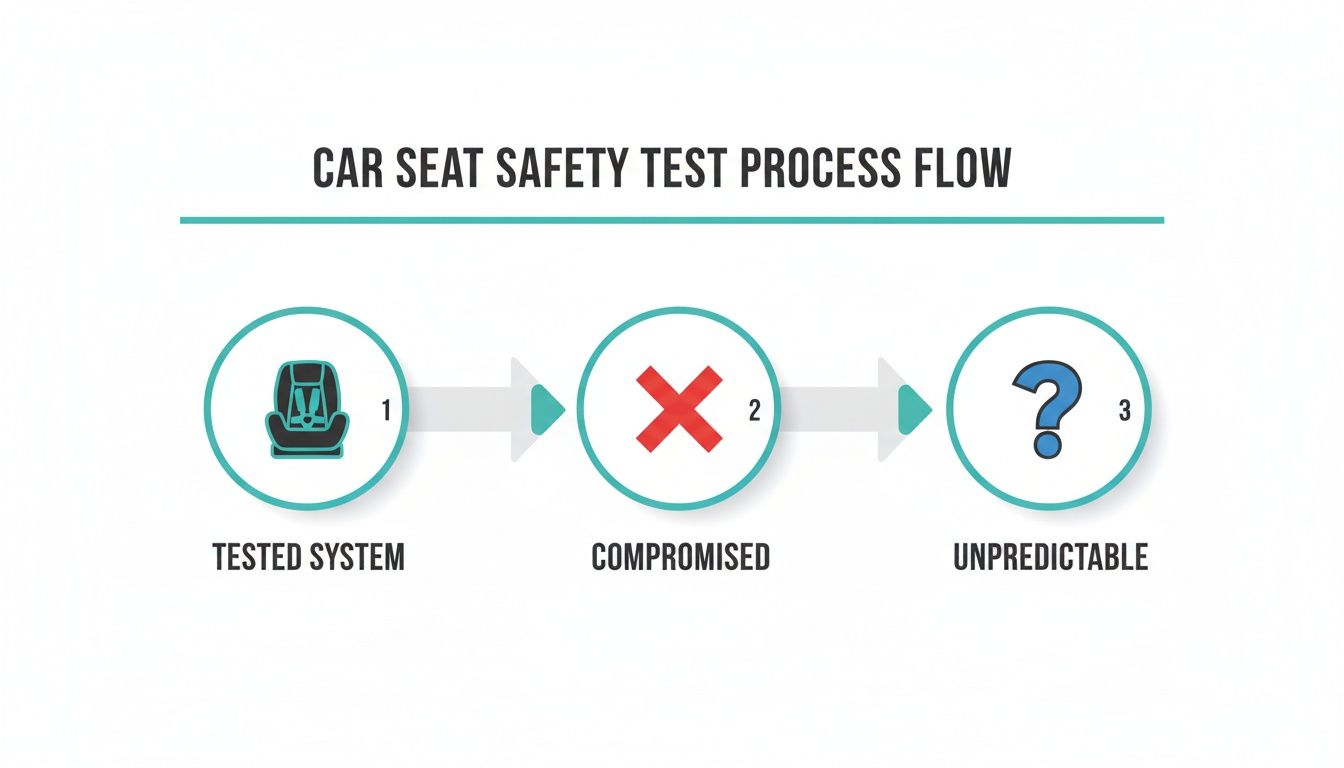
As you can see, once you alter a tested system, its performance in a crash becomes completely unpredictable. Sticking to a proper installation, however, ensures that the original safety system remains intact.
For families who are often on the move, mastering these installation skills is non-negotiable.
Car Seat Installation Checklist For Optimal Head Position
Nailing the installation is the best way to prevent head flop before it starts. This quick checklist can help you double-check your work and ensure your little one has the built-in support they need.
| Checklist Item | What To Look For (Rear-Facing) | Why It Matters For Head Support |
|---|---|---|
| Recline Angle | Check the recline indicator on the seat's side. It must be within the approved range for your child's age/weight. | This is the #1 factor. A correct angle uses gravity to gently cradle the head back, preventing it from falling forward. |
| Harness Height | Straps should come from at or just below your child's shoulders. | Straps that are too high can allow the torso to slump down, causing the head to follow. |
| Harness Tightness | Perform the "pinch test" at the collarbone. Your fingers should slide off the webbing without being able to pinch a fold. | A snug harness provides the core stability needed to keep the upper body and head in a secure, upright position. |
| Vehicle Seat Firmness | Ensure the car seat is installed tightly, moving less than one inch side-to-side or front-to-back at the belt path. | A loose installation can cause the car seat's angle to shift during travel, negating your perfectly set recline. |
| Inserts & Padding | Only use infant inserts that came with your car seat. Remove them when your child outgrows them per the manual. | Manufacturer-provided inserts are tested for safety and are designed to provide support for small infants. Aftermarket ones are not. |
Running through these key points every time you install the seat will give you confidence that your child is not only safe but also comfortable and well-supported.
Approved Alternatives for Head and Neck Support
After reading about all the risks that come with aftermarket products, you’re probably asking, "So what can I do to keep my baby's head from slumping?" It’s a great question, and the good news is there are simple, expert-approved solutions that don’t put your little one at risk. Instead of buying an add-on head holder, these tried-and-true methods use approved items to provide that extra bit of comfort and security.
These strategies all focus on adding support without getting in the way of the car seat’s harness system or changing how the seat is built to perform in a crash. This way, you can be sure your child is both cozy and safe on every trip.
Using Manufacturer-Provided Inserts
The absolute best and safest support you can use is often the one that came right in the box with your car seat. Most infant car seats today come with specially designed head and body inserts meant for newborns and smaller babies.
These aren't just cushy extras; they're considered part of the car seat's safety system. The manufacturer has crash-tested them with that specific seat to make sure they provide support without causing dangerous slack in the harness.
Always check the car seat manual for the weight and height limits on these inserts. As your baby gets bigger, you’ll need to take them out to maintain a snug and proper harness fit. For a closer look at car seats built with these features in mind, see our complete guide to choosing a car seat with head support.
The Rolled Receiving Blanket Trick
What if your car seat didn't include an infant insert, or your baby still seems to have a little too much wiggle room? There’s a simple trick, fully approved by Child Passenger Safety Technicians (CPSTs), that works wonders. It's incredibly effective and uses something you almost certainly have on hand.
The only item that is safe to add to a car seat is a tightly rolled receiving blanket placed alongside the infant's head and torso—after they have been properly buckled in. Never place anything under or behind the baby.
This technique is widely recommended by safety experts because it doesn't interfere with the harness at all. The rolled blankets just fill in that empty space on the sides, which helps prevent your baby’s head from tilting too far to one side.
Here’s the right way to do it:
- Buckle Baby In First: Get your infant settled in the car seat and tighten the harness straps until you can't pinch any excess webbing at their collarbone. This is crucial.
- Roll Up the Blankets: Take one or two small receiving blankets and roll them tightly, kind of like a burrito.
- Wedge Them In: Carefully place the rolled blankets on each side of your baby, between their body and the sides of the car seat. They should sit snugly from their shoulders down toward their hips.
This provides just enough gentle support to keep them centered and stable. It's the perfect example of a safe, common-sense alternative that puts both comfort and car seat safety first. By sticking to what’s approved, you can drive with complete peace of mind.
Answering Your Top Car Seat Safety Questions
We’ve dug into the details on everything from the hidden dangers of aftermarket products to the life-saving importance of a proper install. But chances are, you still have a few questions bouncing around in your head. Let’s tackle some of the most common concerns parents bring up, giving you clear, safety-first answers to build your confidence.
Think of this as your personal cheat sheet for navigating the confusing world of car seat accessories.
What About Head Holders That Don't Touch the Straps?
This is a big one, and it's easy to see why it causes confusion. Parents often think that if a head holder for car seat doesn't physically interfere with the harness straps, it must be okay. These are typically the soft bands that wrap around the car seat's headrest and your child’s forehead to keep their head from slumping.
Unfortunately, safety experts and CPSTs strongly advise against using them. Imagine the incredible forces at play during a car crash—any object not originally part of the car seat system can become a dangerous projectile. It could also shift in unpredictable ways, putting immense pressure on your child’s head or neck right when they need the most protection.
The best rule of thumb is also the simplest: if it didn't come in the box with your car seat or wasn't made by the manufacturer specifically for that model, don't use it.
Is Head Flop Dangerous for an Older Toddler?
For a newborn, head flop is absolutely a serious risk. Babies lack the neck strength to hold their heads up, and if their chin falls to their chest, it can obstruct their tiny airway, leading to positional asphyxiation.
But for older toddlers and preschoolers, the game changes. Once a child has developed solid head and neck control, a sleeping slump is generally a comfort issue, not a safety crisis. Their airway is more mature and less likely to be compromised. The real solution isn't a third-party gadget; it's making sure their harness is snug and the seat is installed correctly according to the manual.
Are the Infant Inserts That Came with My Car Seat Safe?
Yes, absolutely! Any padding, pillow, or insert that was included with your car seat at the time of purchase is safe to use. These aren't random add-ons; they are integral parts of the car seat’s safety system.
The manufacturer designed them and, most importantly, subjected them to rigorous crash testing along with the seat itself. Just be sure to read your car seat manual. It will give you the specific weight and height guidelines for when to use—and when to remove—these inserts to ensure your child has the proper support at every stage.
The core principle is that the car seat is a self-contained safety device. Manufacturer-provided inserts are part of that device; third-party products are not.
This idea of integrated safety is a massive focus in the automotive industry. In fact, the global market for active headrests—which includes advanced systems designed to prevent whiplash—was valued at $16.31 billion in 2024. These sophisticated systems can reduce neck injuries by 30-50% in certain crashes, which just goes to show how critical manufacturer-tested head support truly is. You can read more about the growth of the automotive headrest market to see where the technology is heading.
Beyond installation and accessories, remember that the car seat itself has a lifespan. Take a moment to learn more about car seat expiration dates to make sure your gear is always providing the best possible protection.
At Hiccapop, our mission is to give parents the knowledge and tools they need to keep their kids safe and comfortable. We firmly believe that understanding the "why" behind safety rules is the first step toward confident parenting. Explore our collection of thoughtfully designed baby and toddler essentials, all created with the highest standards of safety and quality in mind. Visit us at Hiccapop to learn more.